
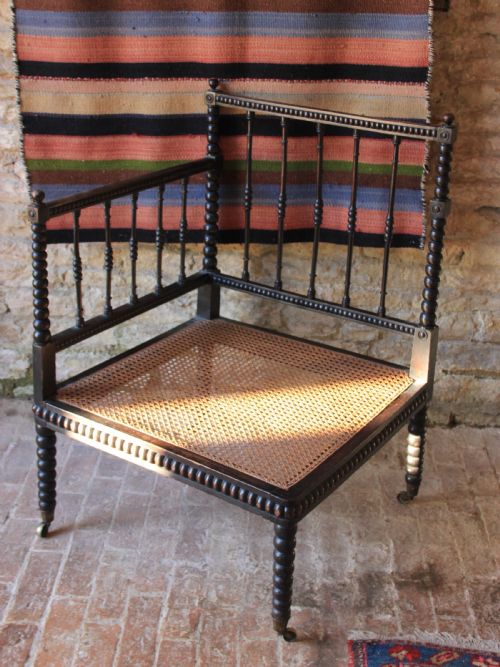


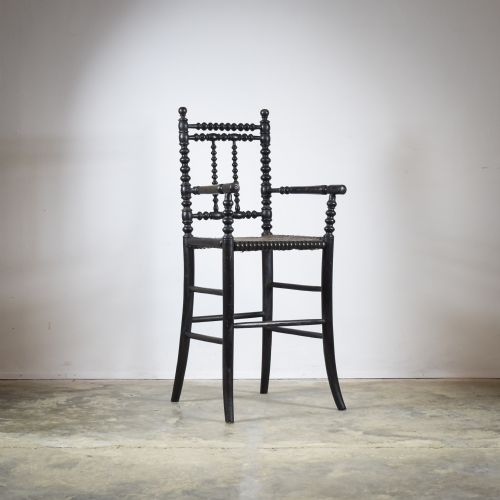
Victorian Spool Armchair
A Victorian spool armchair brings tactile turned wood and comfortable seating into a room with genuine nineteenth-century character.
Victorian Spool Armchair
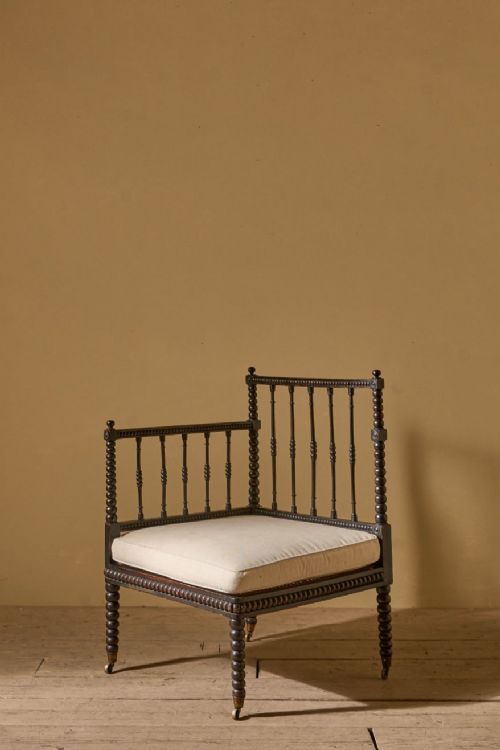
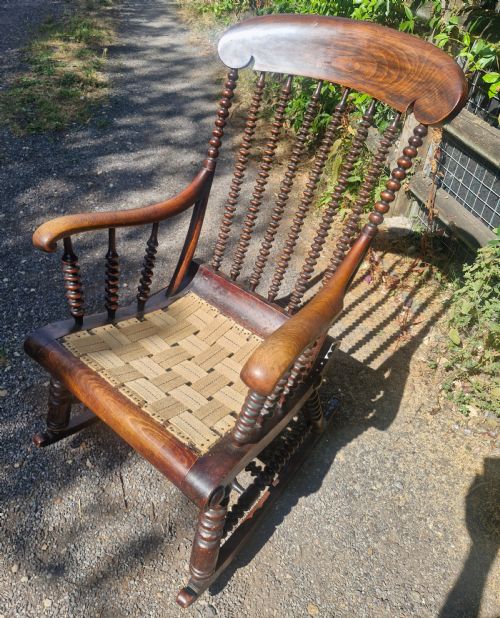
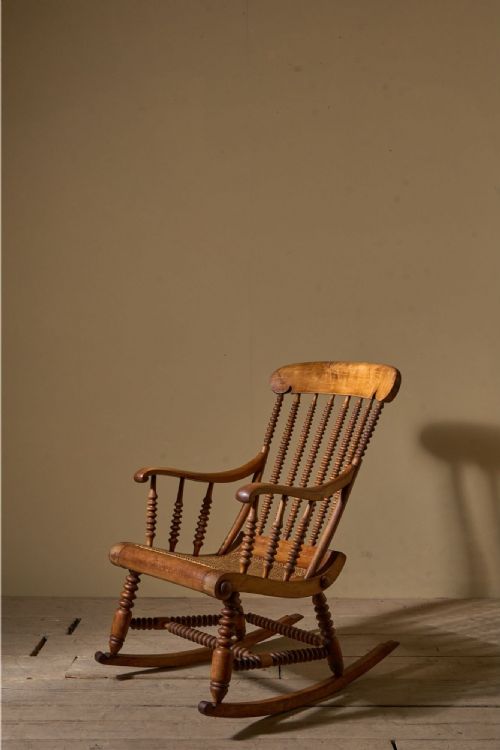
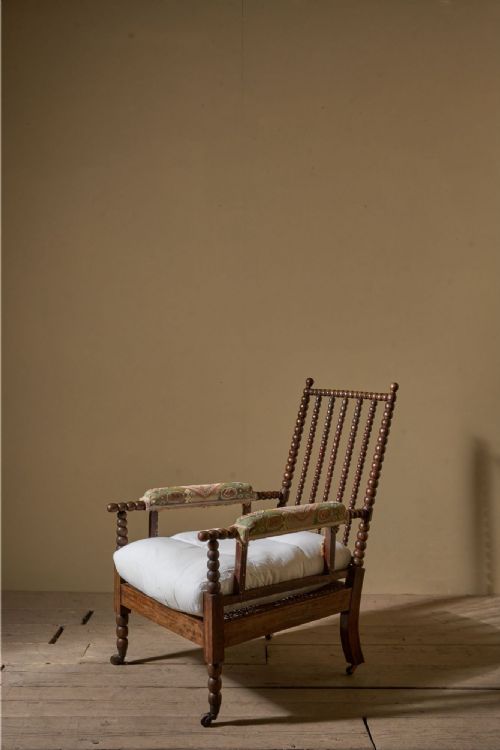
A Victorian spool armchair displays the distinctive turned woodwork that defines this group of nineteenth-century seating. These pieces range from open armchairs and rocking chairs to corner chairs and child's chairs spanning the period from eighteen-fifty to nineteen-hundred.
Buyers seek these chairs for their rhythmic wooden turnings and versatile forms that suit both traditional and modern interiors. The seating surfaces vary from upholstered textile and fabric to woven cane with matching cushions.
How they were made
Cabinet makers utilised lathe-turning techniques to produce the repetitive spool or bobbin shapes that form the frames of these armchairs. Woods like oak, walnut, and timber were shaped into cylindrical segments before assembly.
Frames were frequently ebonised or finished to simulate rosewood, providing a dark contrast to the turned details. Seats were constructed using cane work or upholstered with textiles and supported by brass fittings where required.
Listings span the nineteenth century, featuring materials such as brass, oak, fabric, cane, and ebonised timber across various armchair forms.
What varies in quality
The precision and depth of the lathe-turning separate standard examples from finer pieces in this category. Crisp, uniform spool work across the arms, legs, and back frames indicates superior workshop practice.
The choice of primary timber and secondary framing materials influences the structural integrity and finish. Pieces utilising solid walnut or carefully ebonised timber with intact cane seats represent the higher tier of nineteenth-century production.
The Victorian Spool Armchair Glossary
- Bobbin turning
- A form of woodturning characterised by a series of rounded, spool-like shapes resembling bobbins of thread. This technique creates a distinctive tactile surface along the frame members.
- Ebonised wood
- Timber treated with a dark stain or finish to imitate ebony. This dark surface finish was popular during the nineteenth century for highlighting turned details.
- Cane seat
- A seating surface woven from peeled rattan strips. It provides a lightweight, flexible base that often accommodates an additional textile cushion.
- Corner chair
- A chair designed to fit into the corner of a room, featuring a diagonal seat plan and a curved backrest supported by turned pillars.
Victorian Spool Armchair: Frequently Asked Questions
What is a spool armchair?
A spool armchair is a nineteenth-century seat featuring frames constructed from wood turned into cylindrical spool or bobbin shapes. These chairs include open armchairs, rockers, and corner variants.
They offer both decorative turned woodwork and functional seating, making them versatile additions to domestic spaces.
How do I care for cane seats?
Cane seats require gentle cleaning with a damp cloth and should be kept away from direct heat sources to prevent the natural material from drying out and snapping. Periodic light conditioning helps maintain flexibility.
Placing a fitted cushion on top distributes weight evenly and protects the woven cane from direct wear during daily use.
Are these chairs comfortable for daily use?
Many examples feature upholstered textile pads or cushions that provide adequate padding for regular seating. Open arm designs also allow for relaxed seating postures.
Rocking chair versions add motion, while standard armchairs offer stable support suited to living rooms and studies.
How do I identify a nineteenth-century piece?
Nineteenth-century pieces exhibit traditional joinery methods and specific timber selections such as walnut, oak, and ebonised wood. The turning styles reflect Victorian and vernacular design preferences of the era.
Examining the wear patterns on the turned wood and the construction of the frame helps confirm the nineteenth-century origin.