
18th Century Tallcase Clock
An 18th century tallcase clock anchors a room with its height and rhythmic tick, combining timekeeping with cabinetry.
18th Century Tallcase Clock
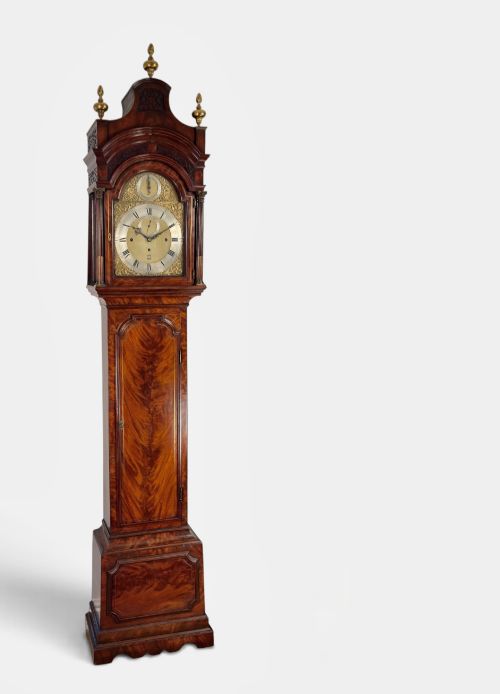
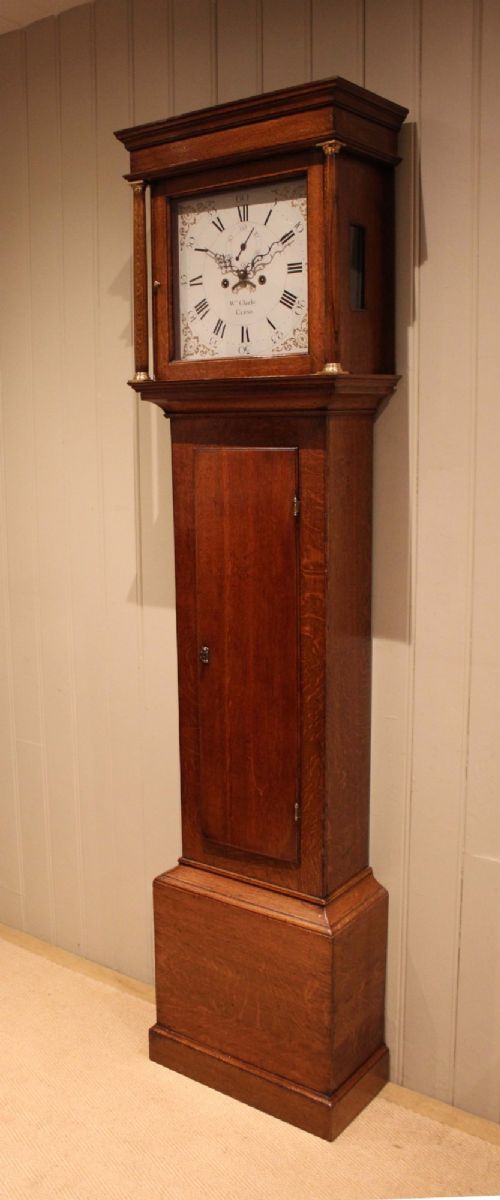
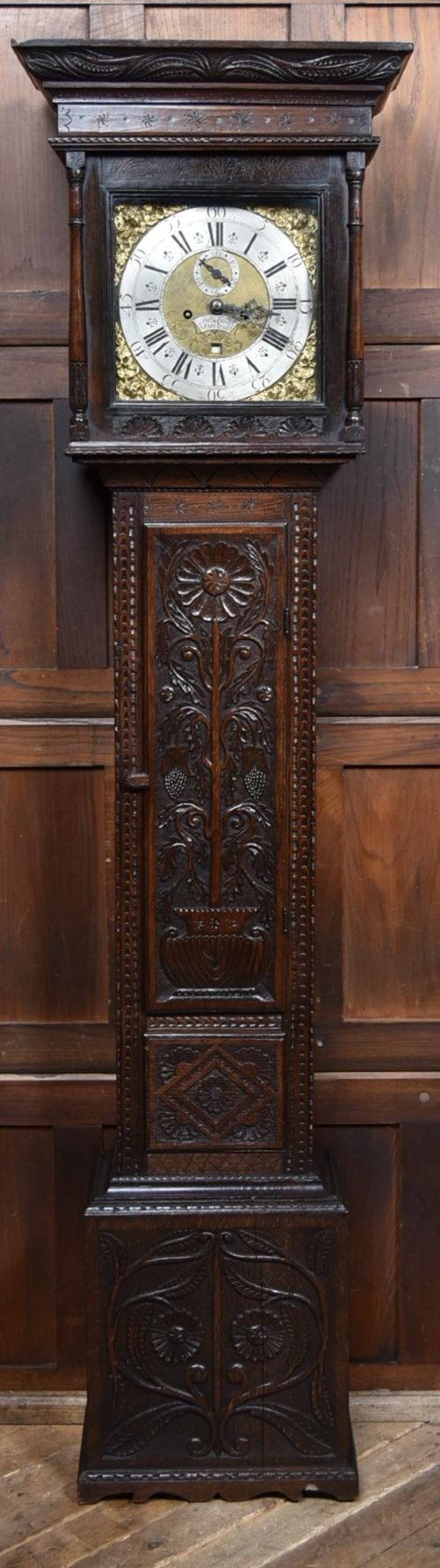
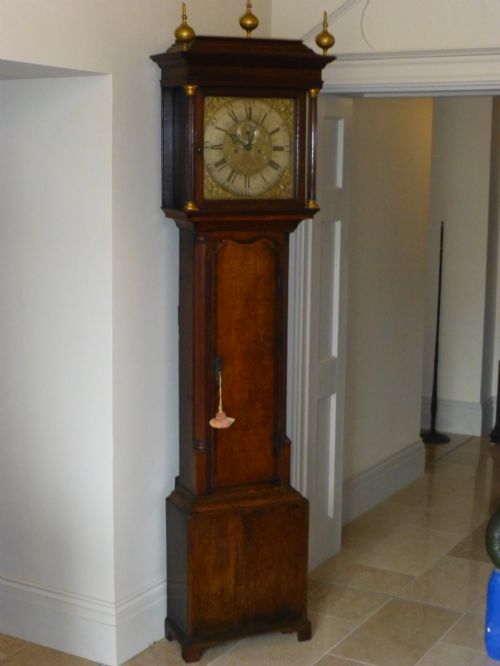
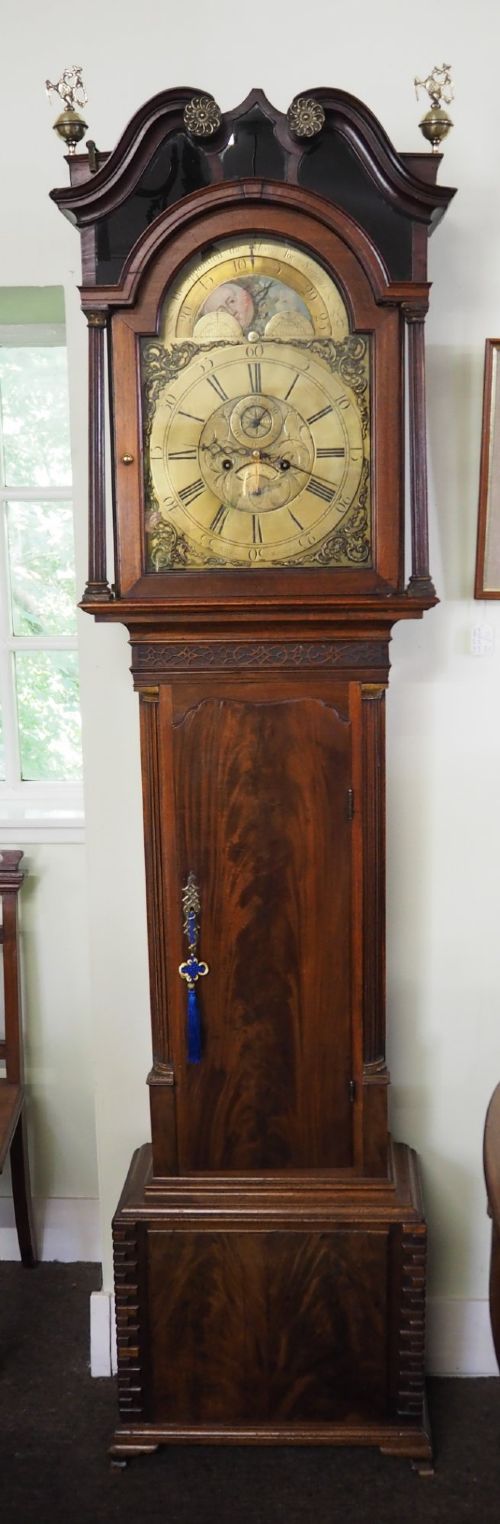
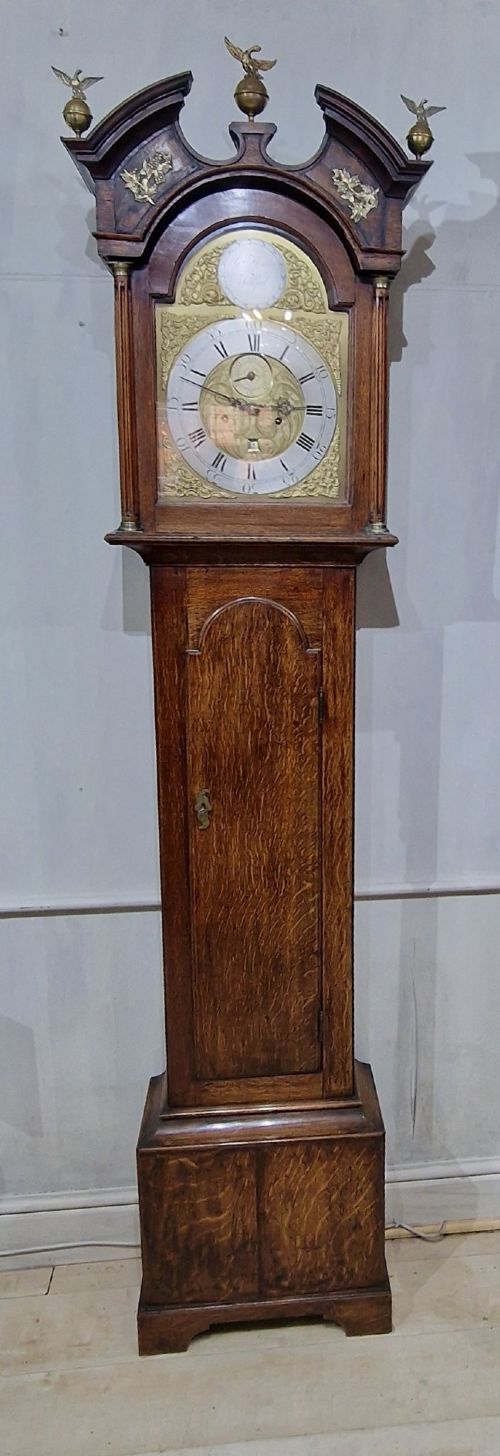
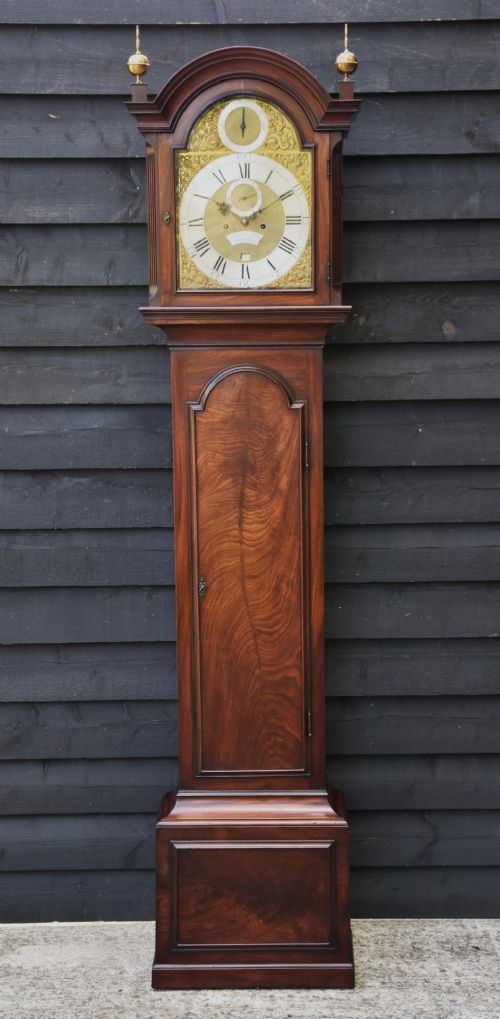
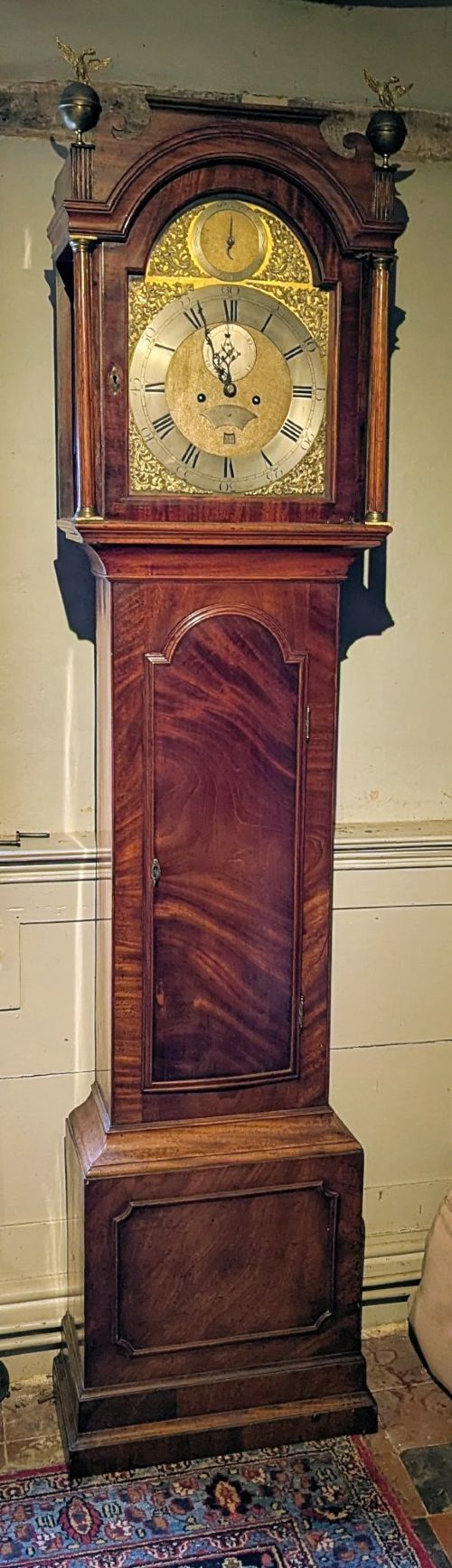
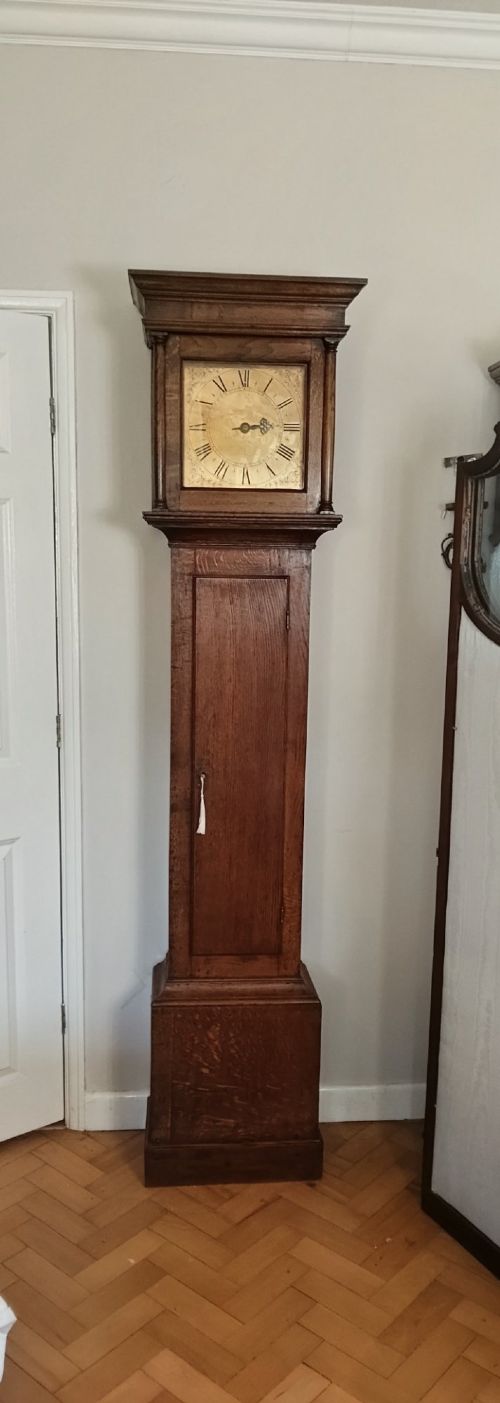
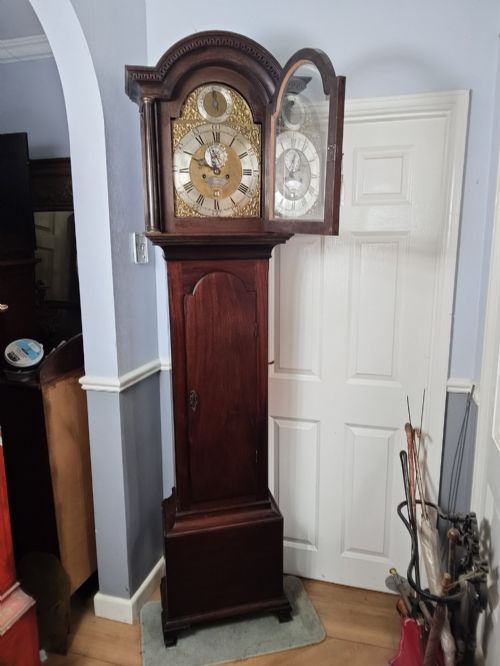
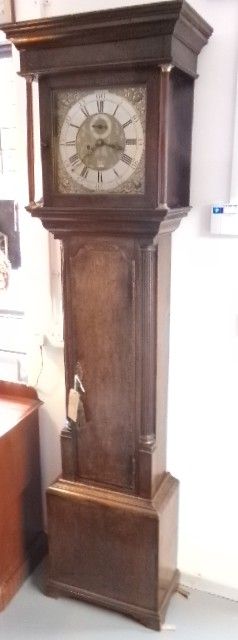
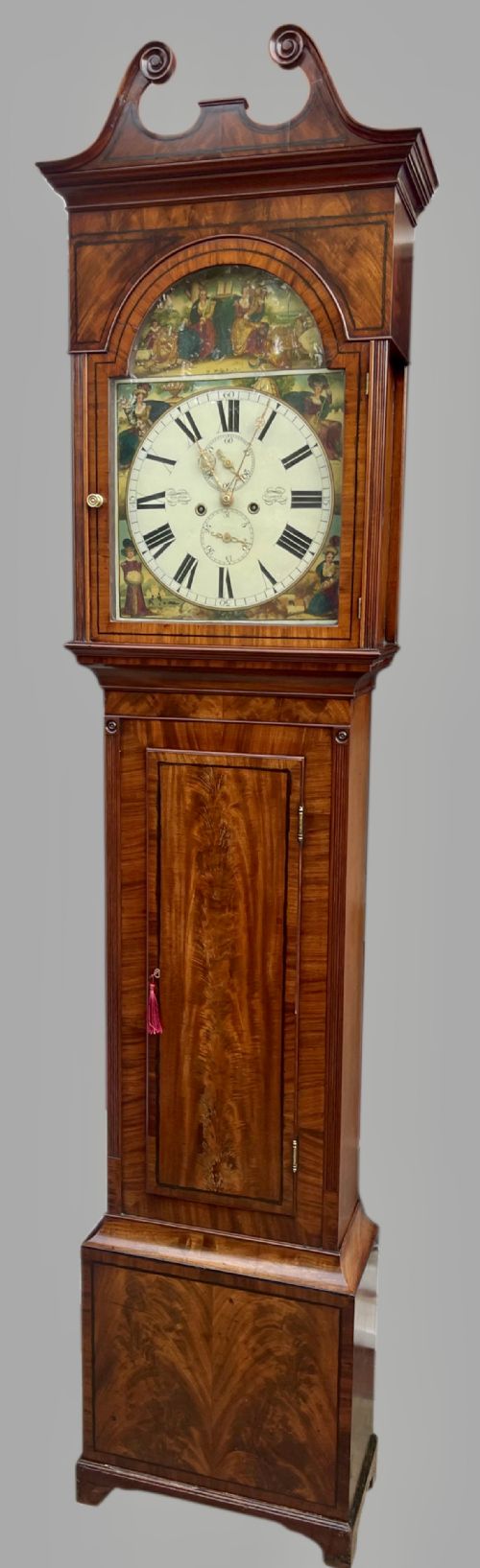
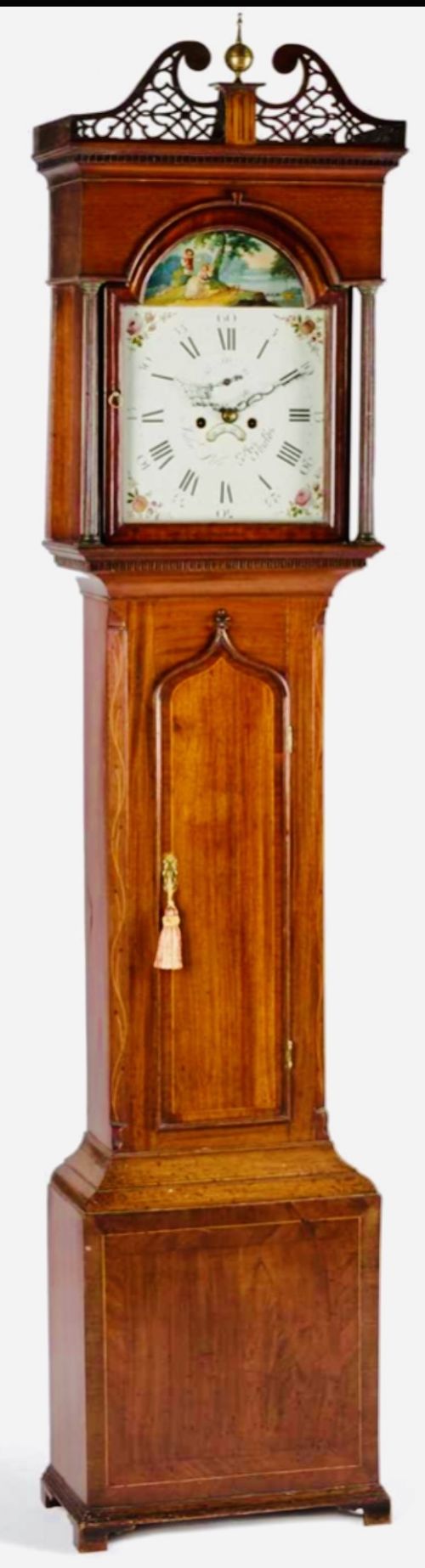
An 18th century tallcase clock stands as a floor-standing timepiece enclosing weights and a pendulum within a wooden trunk, often called a grandfather clock. The pieces available span periods from William and Mary through George III, with Georgian examples forming the core of the selection.
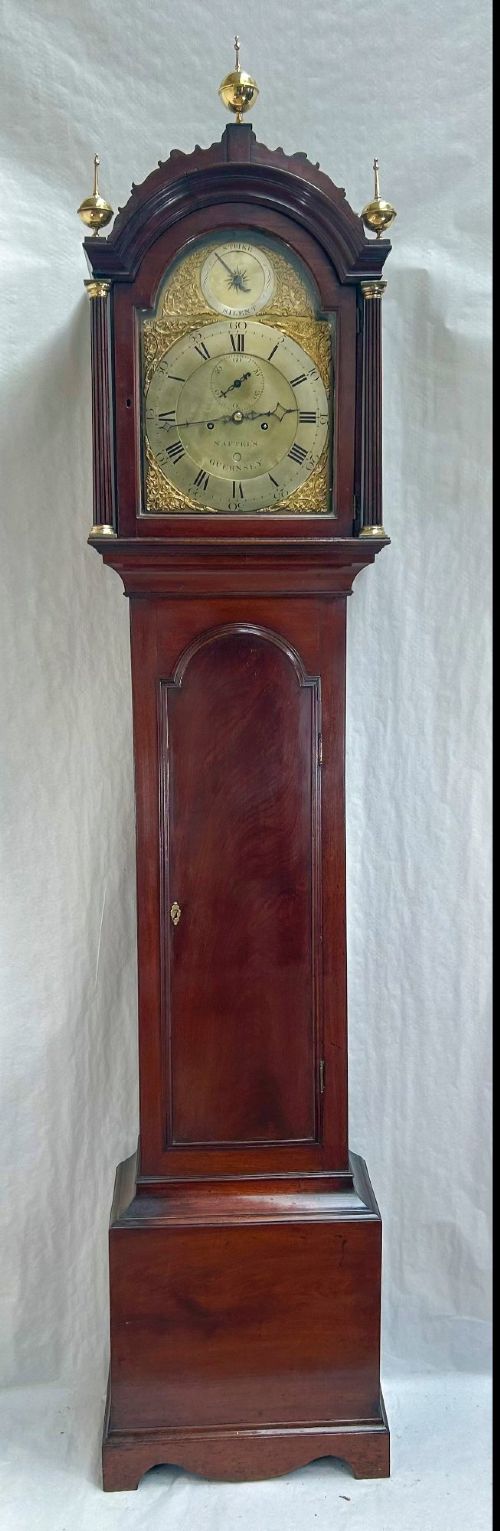
Most pieces meet the eye in regional oak or London mahogany, housing brass dials that measure the hours. Makers from London and provincial towns across England, Scotland, and Ireland signed these works, placing their names directly on the metal faces.
How They Were Made
Cabinetmakers built the tall wooden cases using native timbers such as oak and walnut alongside imported mahogany and lacquered wood for decorative Chinoiserie finishes. Glass protected the dial face, while brass and steel formed the intricate gear trains and strike mechanisms.
Dial faces combined engraved brass, silvered chapter rings, and cast brass spandrels in the corners. Advanced movements incorporated moon rollers, strike-silent levers, or quarter-striking capability executed by skilled horologists.
18th Century Tallcase Clock Retail Price Guide 2026
Typical asking prices for 18th century tallcase clock among the pieces listed under this phrase on Sellingantiques today, from the lower quarter to the upper quarter. They describe what is for sale here now, not the wider market.
Listings feature oak, mahogany, walnut, and lacquered wood cases spanning George I, George III, and Victorian periods.
What Varies In Quality
The refinement of the cabinetwork and the complexity of the movement set examples apart. Provincial pieces in plain oak display functional local carpentry, whereas London makers utilised choice mahogany, burr walnut, or marquetry with sophisticated architectural hoods.
Movement execution also dictates distinction. Standard thirty-hour trains contrast with complex eight-day movements featuring moon phases, multiple hands, or quarter-chiming work signed by prominent practitioners.
John Ellicott of London·Benjamin Taylor·William Kipling London·James Tregent of London·Langley Bradley
The 18th Century Tallcase Clock Glossary
- Longcase clock
- A weight-driven pendulum clock housed in a tall wooden case. This term is the correct historical designation for the form.
- Dial
- The face of the clock where hours and minutes are read. These surfaces are frequently brass or painted iron.
- Spandrel
- The decorative corner piece set between the dial circle and the square edge. They are typically cast in brass and chased.
- Chapter ring
- The circular ring on the dial that bears the numerals for the hours. They are often silvered to contrast against the brass dial plate.
18th Century Tallcase Clock: Frequently Asked Questions
How do I wind an 18th century tallcase clock?
Most eight-day movements require winding every week by pulling up the weights using a crank key inserted through holes in the dial face. Care must be taken not to overwind the mechanism.
Thirty-hour variants operate with a continuous chain or cord system where the weights are pulled directly down by hand. Regular gentle handling preserves the internal brass gearing.
What is the difference between oak and mahogany cases?
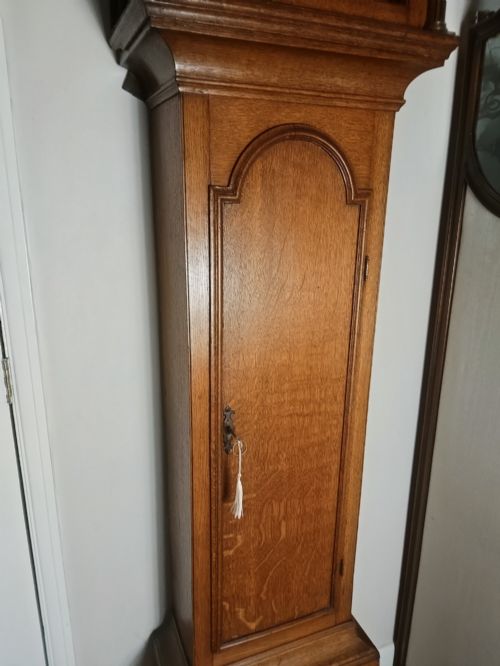
Oak cases typically originate from regional provincial makers working outside London, displaying sturdy vernacular construction and visible grain patterns. They suit country houses and simpler interiors.
Mahogany cases frequently indicate London production or affluent patronage, featuring darker reddish tones and finer cabinet detailing. These timbers allowed for carved mouldings and polished surfaces.
How do moon phase dials work?
Moon phase dials track the lunar cycle through a rotating disc positioned in the arch above the main chapter ring. Painted moons complete a full rotation every twenty-nine and a half days.
This complication required additional gearing driven from the hour motion work. It served a practical purpose for travel and tides before widespread illumination.
Where should I place a tallcase clock?
A tallcase clock requires a stable, level floor and solid wall attachment to ensure the pendulum swings evenly. Floor vibrations from heavy traffic can disrupt the beat.
Placement should avoid direct sunlight, damp areas, and extreme temperature fluctuations that affect wood movement and clock oil viscosity.