


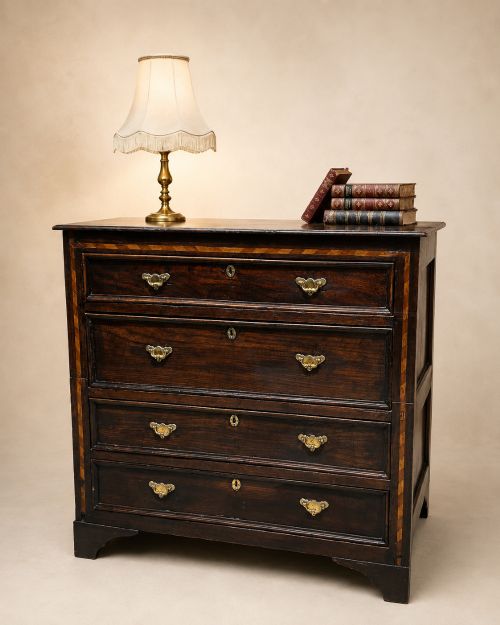
18th Century Tallboy Chest
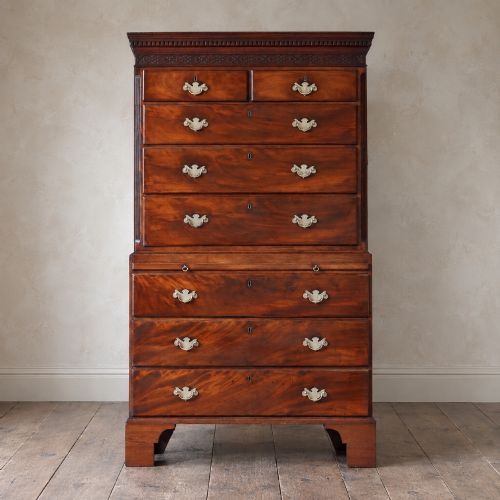
An 18th century tallboy chest is a towering, stacked storage piece built to hold linen and garments while anchoring a period interior.
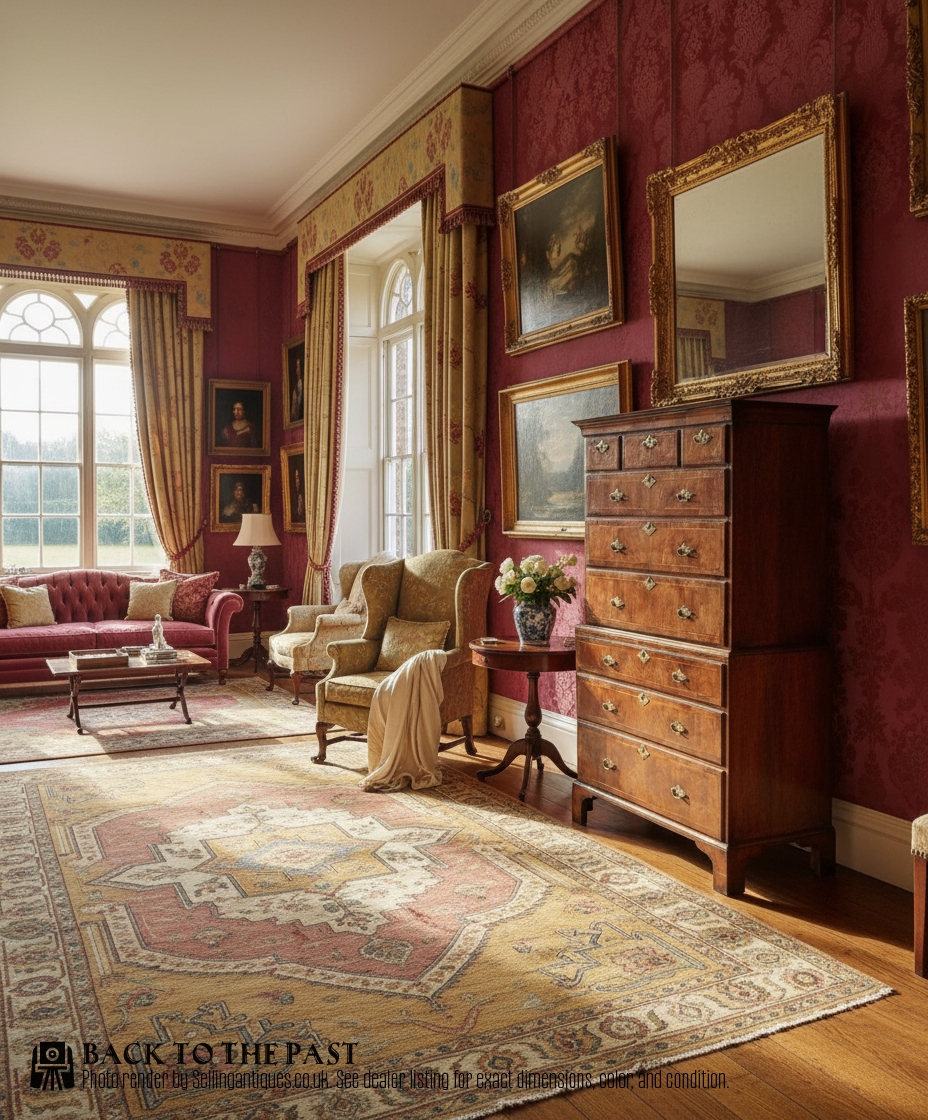
18th Century Tallboy Chest
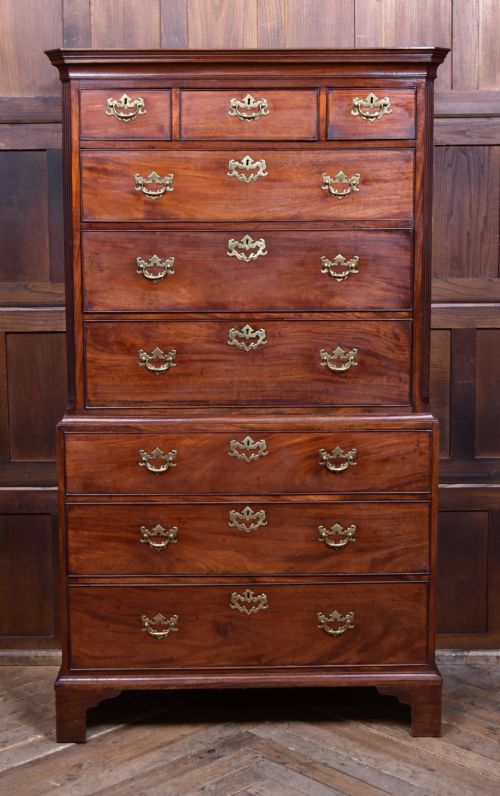
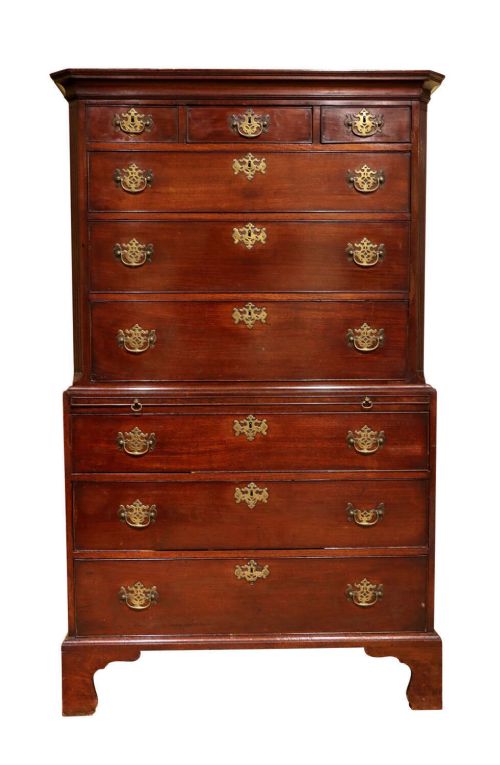
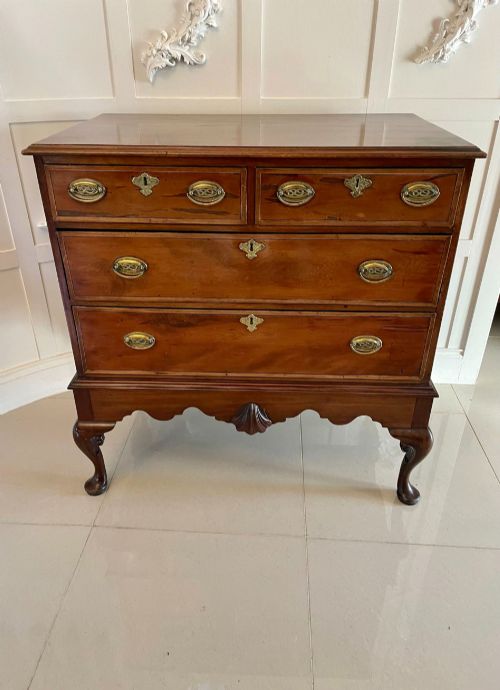
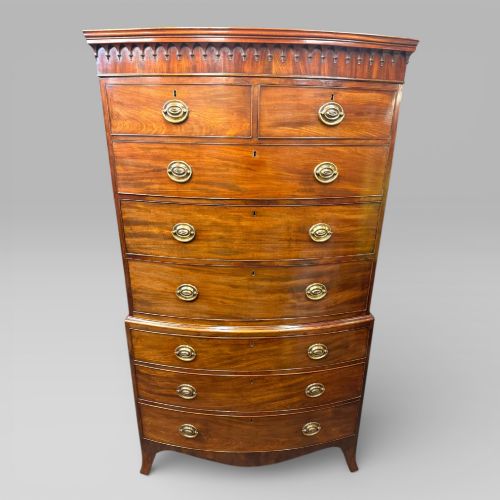
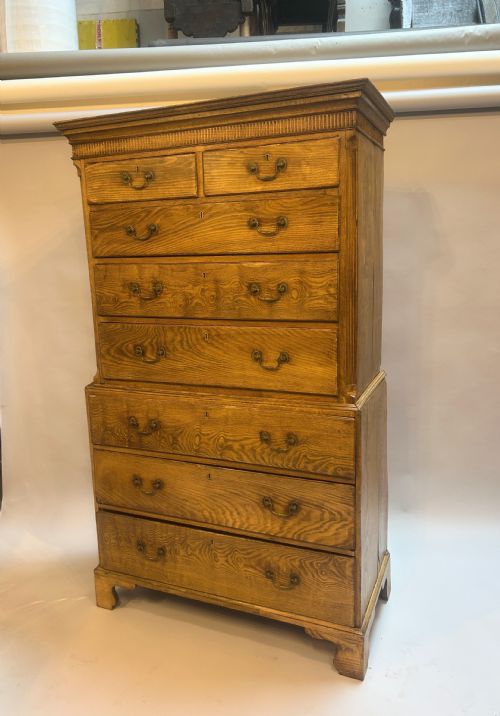
When you search for an 18th century tallboy chest, you enter a category defined by vertical storage, typically taking the form of a chest on chest or a chest on stand. These pieces combine a lower section of drawers with a narrower upper section, creating a commanding presence that maximises storage without consuming excessive floor space.
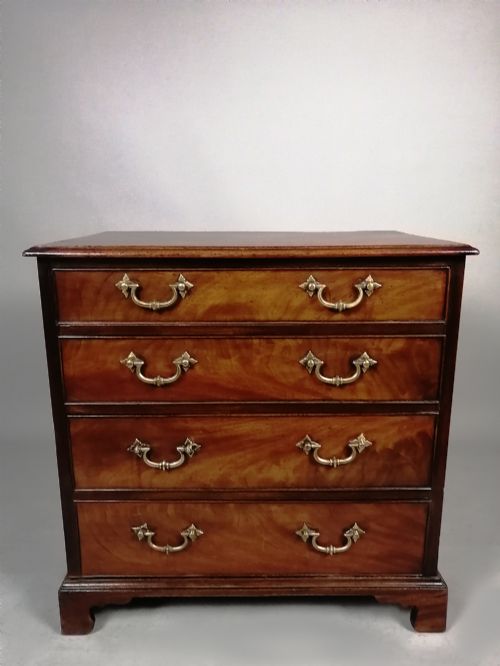
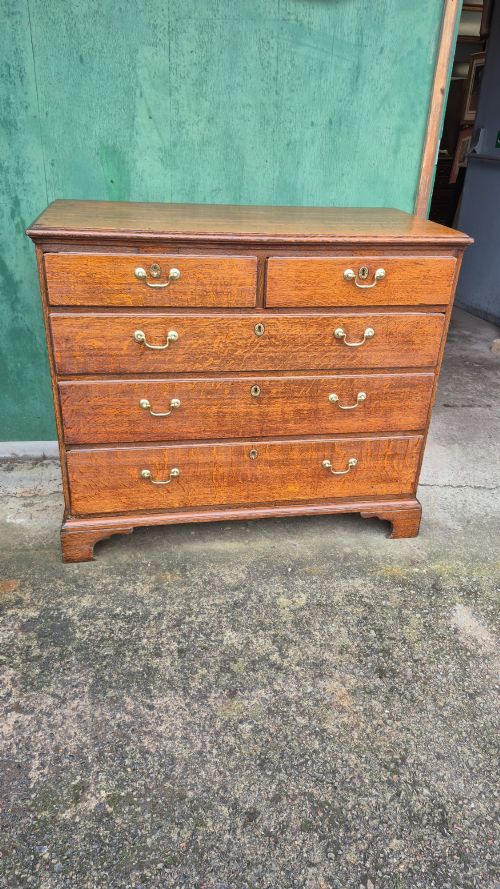
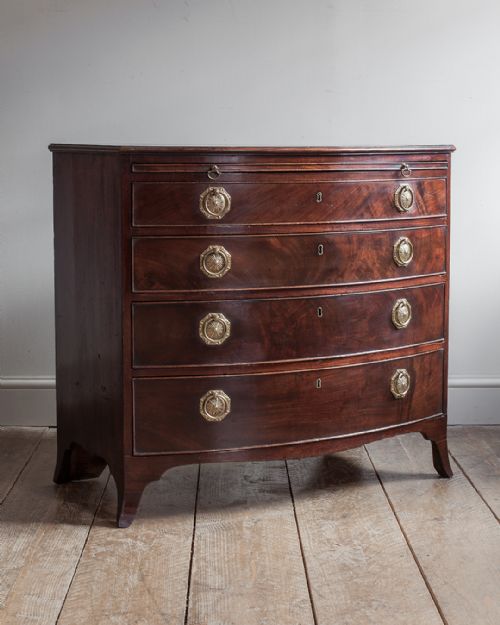
The versions you meet most frequently on this page date from the Georgian period, particularly the reign of George III, and are constructed primarily in mahogany or oak. Alongside standard drawer configurations, variations such as linen presses, wardrobes, and pieces featuring a pull-out brushing slide appear regularly across the listings.
How they were made
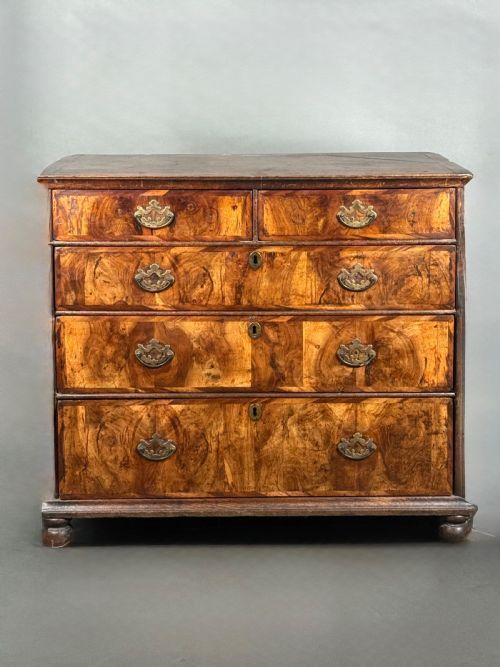
Cabinetmakers constructed these pieces using solid timbers like oak and mahogany, often applying figured walnut, burr walnut, or fruitwood veneers to the primary display surfaces. Geometric mouldings, herringbone banding, and floral marquetry inlay provide surface decoration on specific regional and period examples.
Hardware played an integral functional and decorative role, with brass handles and escutcheons secured to the drawer fronts. Secondary woods such as pine and cedar appear in internal drawer construction, supporting the exterior framework.
Some tallboys stand so high that owners historically required a small set of steps to reach the uppermost drawer.
What varies in quality
The standard of timber selection largely dictates the distinction between pieces, particularly the choice between plain boards and highly figured or burr walnut veneers. Mastery in matching grain patterns across multiple drawer fronts separates standard utilitarian items from exceptional commissions.
The finesse of subsidiary details, such as the crispness of carved mouldings, the integrity of inlaid marquetry, and the retention of original brass hardware, defines the upper tier of the range. Structural cohesion between the stacked upper and lower sections remains essential to the integrity of the design.
J Moorcroft
The 18th Century Tallboy Chest Glossary
- Tallboy
- A tall storage furniture piece formed by stacking one chest of drawers directly on top of another. This configuration provides substantial drawer capacity within a compact footprint.
- Chest on Chest
- An alternative designation for a tallboy where a wider chest forms the base and a slightly narrower chest sits securely on top.
- Brushing Slide
- A pull-out shelf integrated into the cabinet framework just above the drawers. It served as a temporary surface for folding garments or brushing clothes.
- Marquetry
- Decorative patterns formed by fitting small pieces of various coloured veneers into a prepared wood ground. Floral designs are frequently executed in this manner.
- Herringbone Banding
- Narrow strips of veneer laid diagonally to form a continuous V-shaped pattern, often used to border drawer perimeters on walnut furniture.
18th Century Tallboy Chest: Frequently Asked Questions
What is an 18th century tallboy chest?
An 18th century tallboy chest is a high-capacity storage unit consisting of a double-stacked configuration of drawers. These pieces provide vertical compartmentalisation for clothing and linens.
Originating primarily during the Georgian and Queen Anne eras, they utilise timbers such as mahogany, oak, and walnut. Their distinctive profile separates them from standard low chests of drawers.
How were tallboys used historically?
Historically, these tall chests served in bedchambers and dressing rooms for storing garments, linens, and personal accessories. The elevated drawer layout kept everyday items within reach while saving floor space.
Some variants incorporated a sliding shelf known as a brushing slide, which provided a flat surface for sorting clothes or grooming.
How do I identify a George III tallboy?
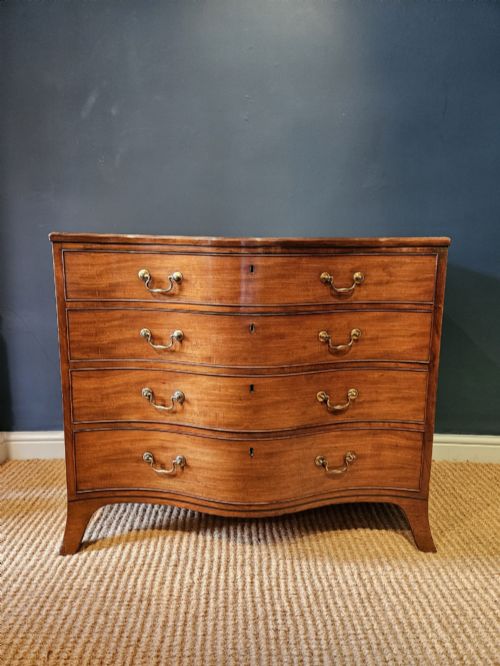
George III pieces frequently feature dense mahogany timbers, sometimes enhanced with decorative brass handles and bracket feet. The proportions tend to balance architectural restraint with refined surface grain.
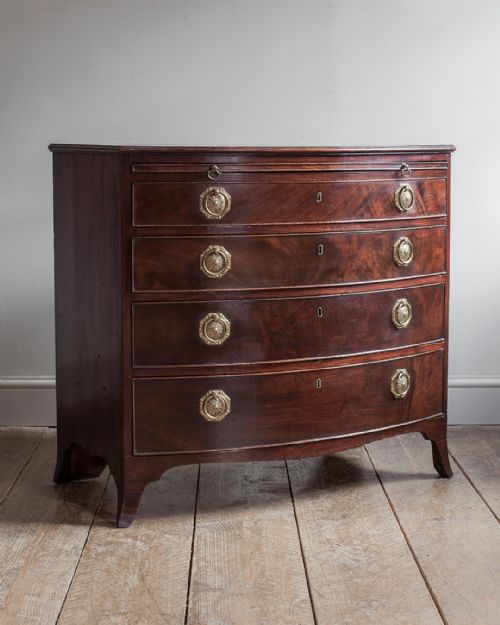
Later 18th-century examples may incorporate bow-front or serpentine front profiles, distinguishing them from earlier flat-front designs.
How do I live with an antique tallboy?
Living with a tallboy involves placing it against a stable wall where its height can be safely accommodated. Regular polishing with appropriate wax maintains the condition of historic wood surfaces.
Environmental stability is important, as fluctuating humidity can affect timber movement and drawer operation.