


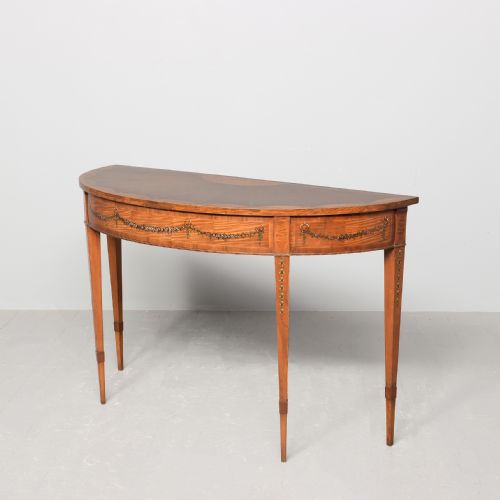


18th Century Painted Table
An 18th century painted table brings surface colour and domestic history into a room, offering practical use alongside period character.
18th Century Painted Table
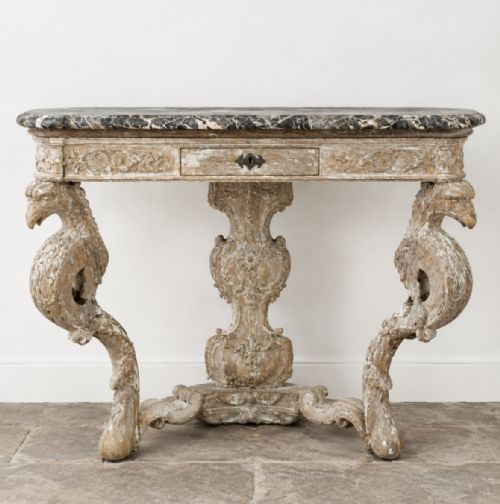
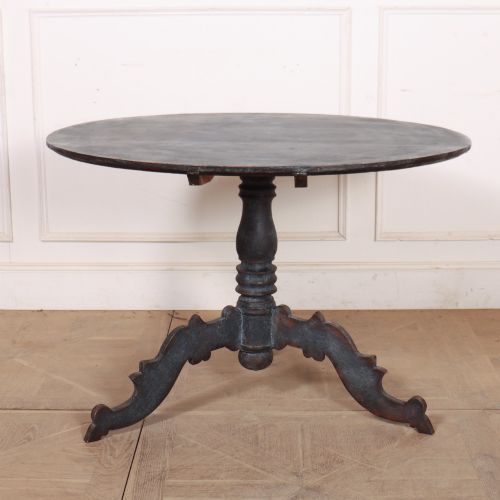
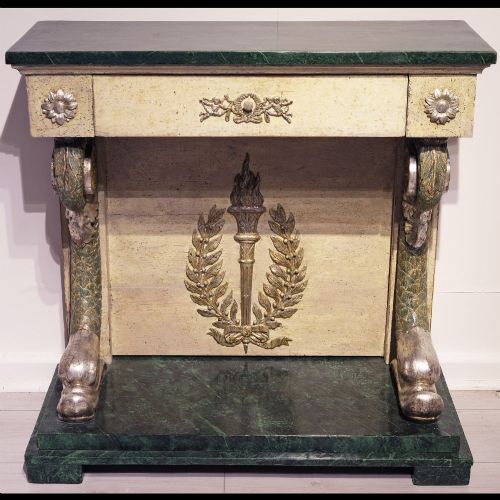
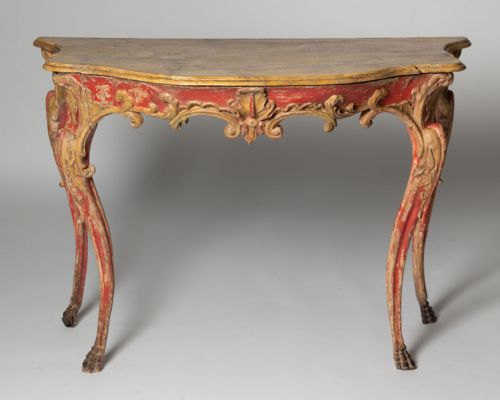
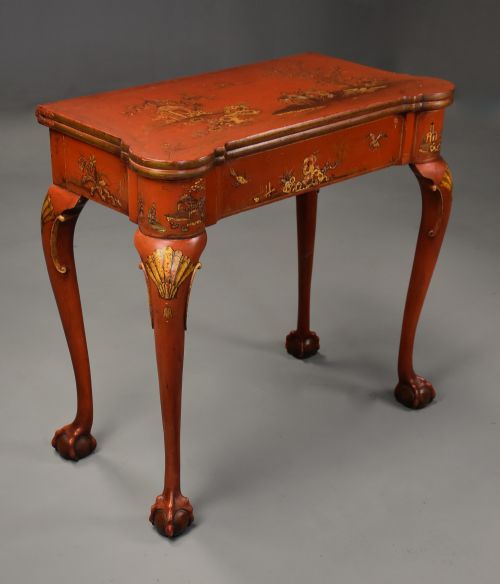
When searching for an 18th century painted table, buyers encounter a variety of forms designed for different domestic spaces, including console tables, side tables, lamp tables, and card tables. The selection ranges from English pine utility pieces to more elaborate continental console tables with Italian Neoclassical or French Rococo styling.
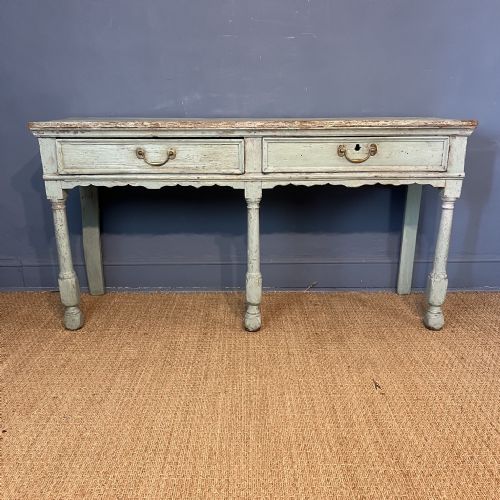
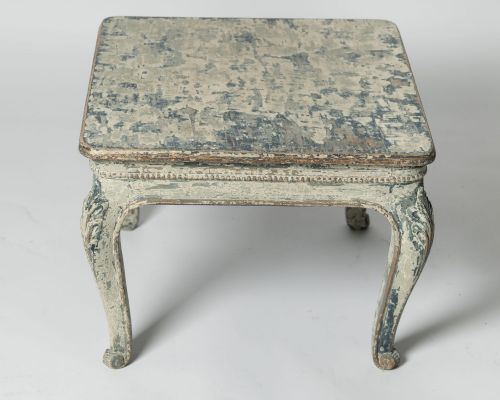
The version most commonly met on this page is the utilitarian pine side table or lamp table, often originating from English workshops or Scandinavian houses. These forms demonstrate how functional domestic furniture received decorative paint schemes either originally or during later periods.
Materials and construction
The underlying structure of these tables relies primarily on pine, oak, and satinwood, shaped by carpenters using traditional joinery methods suited to each regional workshop. Wood surfaces were then prepared and finished with layers of paint, sometimes incorporating faux finishes like faux porphyry or delicate inlaid details.
Decorative schemes utilise applied pigments on wood, occasionally paired with marble tops or intricate giltwood accents. The application ranges from simple regional painted pine to sophisticated satinwood card tables with detailed floral and pastoral motifs.
The inventory spans the 18th and 19th centuries, including distinct regional styles from Gustavian Sweden and neoclassical Italy.
Distinctions in quality
Quality in these pieces rests heavily on the preservation and authenticity of the surface finish. Tables retaining original decorative paint schemes, distinct patination, or untouched regional pigments command greater interest than those subjected to heavy later repainting.
The sophistication of the timber preparation and structural joinery also defines the standard of the piece. Finer examples exhibit precise inlay work, carefully shaped demi-lune tops, and harmonious proportions characteristic of high Georgian or continental design.
The 18th Century Painted Table Glossary
- Demi-Lune
- A half-moon shape used for console and side tables designed to sit flush against a wall. This profile became particularly popular during the Georgian period for serving and card tables.
- Console Table
- A table fixed to a wall or supported by front legs, traditionally designed to stand against a vertical surface. Many surviving examples feature decorative painted woodwork and marble tops.
- Satinwood
- A durable, yellowish timber native to India and Ceylon, prized for its lustrous grain. It was frequently utilised in high-end cabinet making during the 18th century.
- Gustavian
- The Swedish interpretation of French neoclassical style, characterised by lighter proportions and pale painted finishes. These pieces often feature restrained carving and functional elegance.
- Card Table
- A small folding table designed for evening games, featuring a turnover leaf supported by pivoting legs. Surviving examples often incorporate baize-lined surfaces and painted or inlaid framing.
18th Century Painted Table: Frequently Asked Questions
How do I spot original paint?
Examine the surface for natural craquelure, subtle wear patterns, and microscopic traces of underlying primer layers that indicate age. Genuine early paint finishes show consistent integration with the wood pores rather than sitting as a modern uniform skin.
Look closely at areas prone to handling, such as table edges and legs, where genuine use creates organic thinning of the pigment. Modern overpaint often conceals this gradual wear or leaves pooling in timber crevices.
Where were these tables used?
Console tables typically stood against drawing room or hallway walls, often beneath mirrors or paintings to display decorative objects. Smaller side and lamp tables functioned beside seating areas for illumination and holding small items.
Dining spaces and bedchambers accommodated utility pieces like pine kitchen tables and bedside cupboards. Their placement depended entirely on the room's social function within the domestic interior.
Can I use one daily?
These tables adapt well to modern domestic routines when treated with appropriate care for fragile antique surfaces. Using coasters and placing them away from direct heat sources protects the timber and historic paint layers from accidental damage.
Their sturdy joinery allows them to function reliably as lamp tables, side surfaces, or display areas in contemporary rooms. Regular dusting with a dry cloth is sufficient for ongoing maintenance.
What defines Gustavian style?
Gustavian pieces reflect Swedish assimilation of French neoclassical design under King Gustav III during the late 18th century. They feature simplified classical motifs, fluted legs, and a restrained palette of pale greys, whites, and creams.
This aesthetic prioritises light and proportion, making these painted tables well-suited to bright, airy interiors. The finish is typically matte, emphasising carved wooden details without heavy gilding.