






18th Century Oak Wardrobe
An 18th century oak wardrobe offers robust vernacular storage, combining deep historical character with practical timber architecture.
18th Century Oak Wardrobe
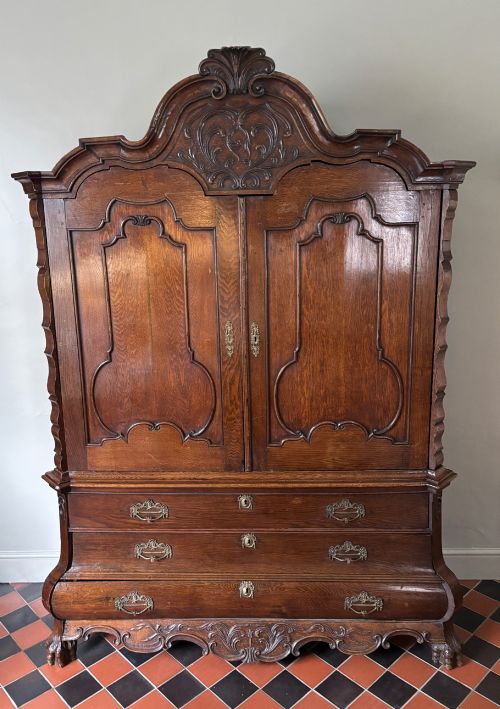
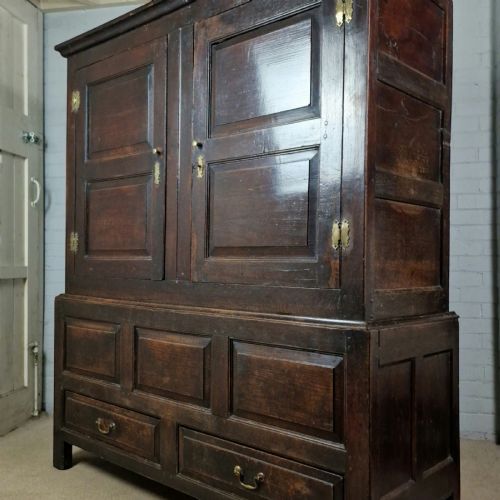
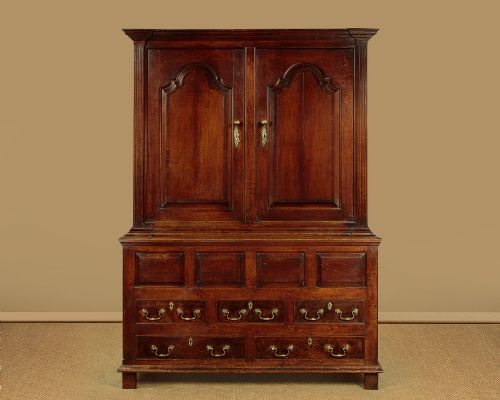
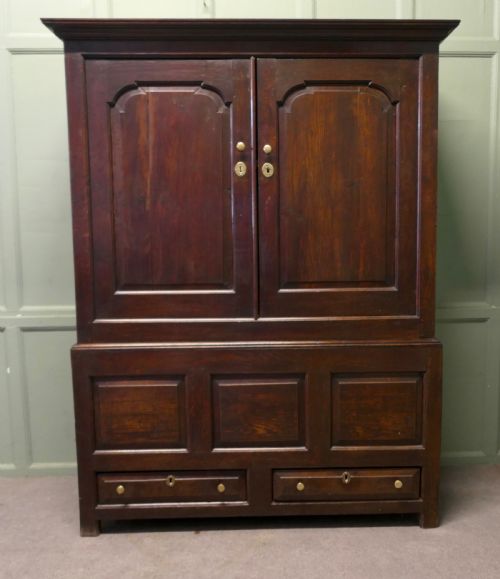
An 18th century oak wardrobe encompasses a variety of regional storage forms, most frequently appearing as livery cupboards, press cupboards, housekeeper's cupboards, and armoires. These domestic items provided essential storage for garments, linens, and household provisions in period homes.
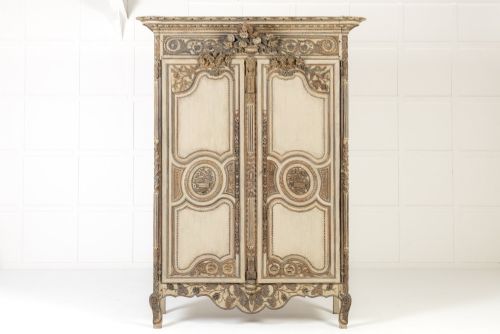
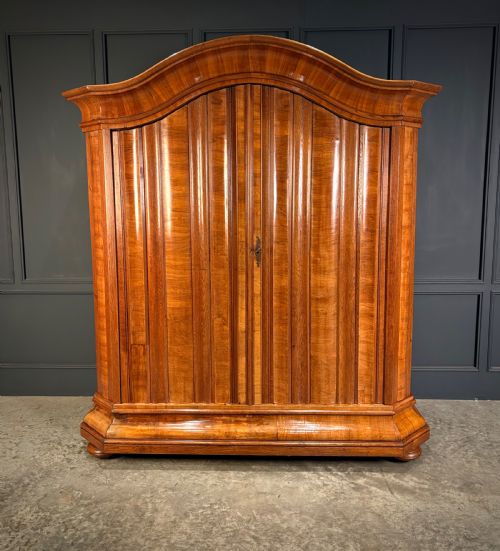
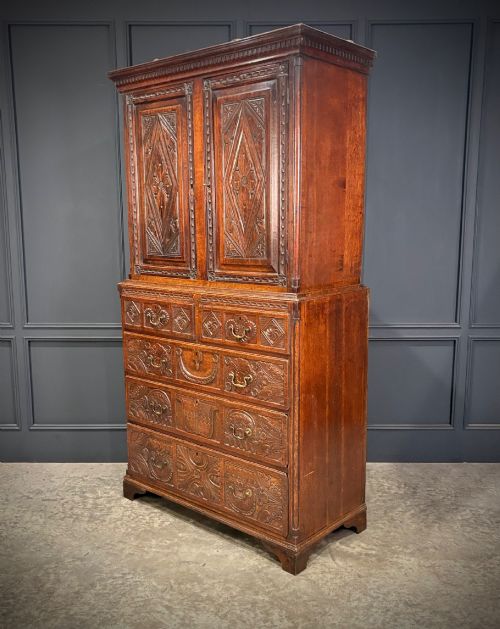
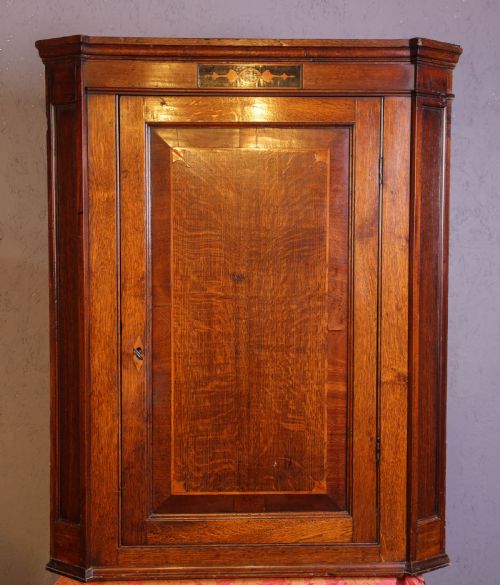
The specimens seen here span English country pieces, Welsh vernacular examples, and French provincial styles. Buyers searching for an 18th century oak wardrobe will frequently encounter two-stage press cupboards and panelled hanging cupboards built to serve domestic organisation.
How they were made
Constructed primarily from solid timber, these pieces utilise frame-and-panel techniques to accommodate the natural movement of the wood over centuries. Joinery relies on pegged mortise and tenon joints rather than modern mechanical fasteners.
Hardware consists of forged iron hinges and brass fittings that secure heavy doors and drawers. Surface treatments range from unadorned waxed timber to painted finishes and subtle wood inlay.
Several surviving pieces retain the original tack and harness arrangements once used for equine gear before finding new life as wardrobes.
What varies in quality
Proportion and architectural balance dictate the standing of a piece, separating straightforward utilitarian storage from finer cabinet work. The crispness of carved details and the clever integration of cross-banding or marquetry inlay elevate the visual weight of the timber.
Originality of surface finish and the retention of period brass or iron hardware determine the integrity of the piece. Substantial timber thickness and untouched interior shelving or hanging arrangements contribute significantly to desirability.
The 18th Century Oak Wardrobe Glossary
- Livery Cupboard
- A traditional storage unit originally used for provisions or clothing, frequently featuring panelled doors and internal shelving.
- Press Cupboard
- A dual-stage storage piece combining a wardrobe section with lower drawers or a linen press configuration.
- Housekeeper's Cupboard
- A large functional storage carcase designed for domestic linens and household supplies, often built in two parts.
- Armoire
- A large standing cupboard of continental European origin, utilised for hanging garments and folding textiles.
- Cross-banded
- A decorative border technique where veneer or timber strips are laid perpendicular to the grain of the surrounding surface.
18th Century Oak Wardrobe: Frequently Asked Questions
How do I use an 18th century oak wardrobe today?
These pieces serve effectively as freestanding wardrobes, linen stores, or hallway cupboards in contemporary homes. Their deep interiors provide substantial volume for modern clothing and household storage.
Interior configurations may require simple adjustments like removable hanging rails to suit modern garments without altering the historic timber structure.
What is the difference between a livery cupboard and a press cupboard?
A livery cupboard generally focuses on shelved storage behind panelled doors, suited for garments and general textiles. A press cupboard incorporates internal sliding trays or hanging space combined with lower drawers.
Both forms utilise robust oak construction but serve different organisational requirements within the traditional home.
How can I tell a Welsh vernacular piece from an English one?
Welsh vernacular pieces often display distinct regional carving patterns, local timber selections, and specific structural proportions associated with Cardiganshire or broader Welsh workshops. English country pieces tend to follow Georgian architectural norms with simpler raised panels.
Examining the secondary woods and construction methods inside the carcase usually reveals the regional origin.
How should I care for antique oak furniture?
Maintain a stable room temperature away from direct heat sources and strong sunlight to prevent the timber from splitting or warping. Apply traditional beeswax periodically to nourish the surface.
Avoid synthetic polishes and damp environments, allowing the historic oak to breathe and maintain its natural lustre.