


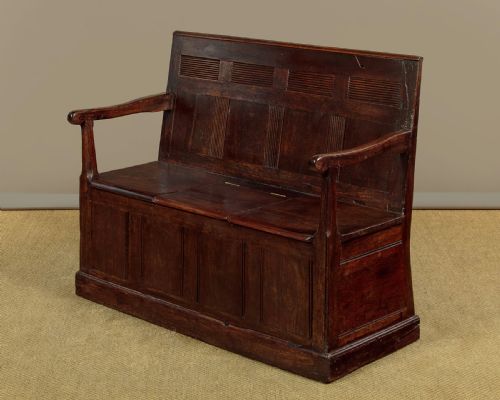

18th Century Oak Settle
An 18th century oak settle brings solid timber craftsmanship and high backs into a hallway or kitchen.
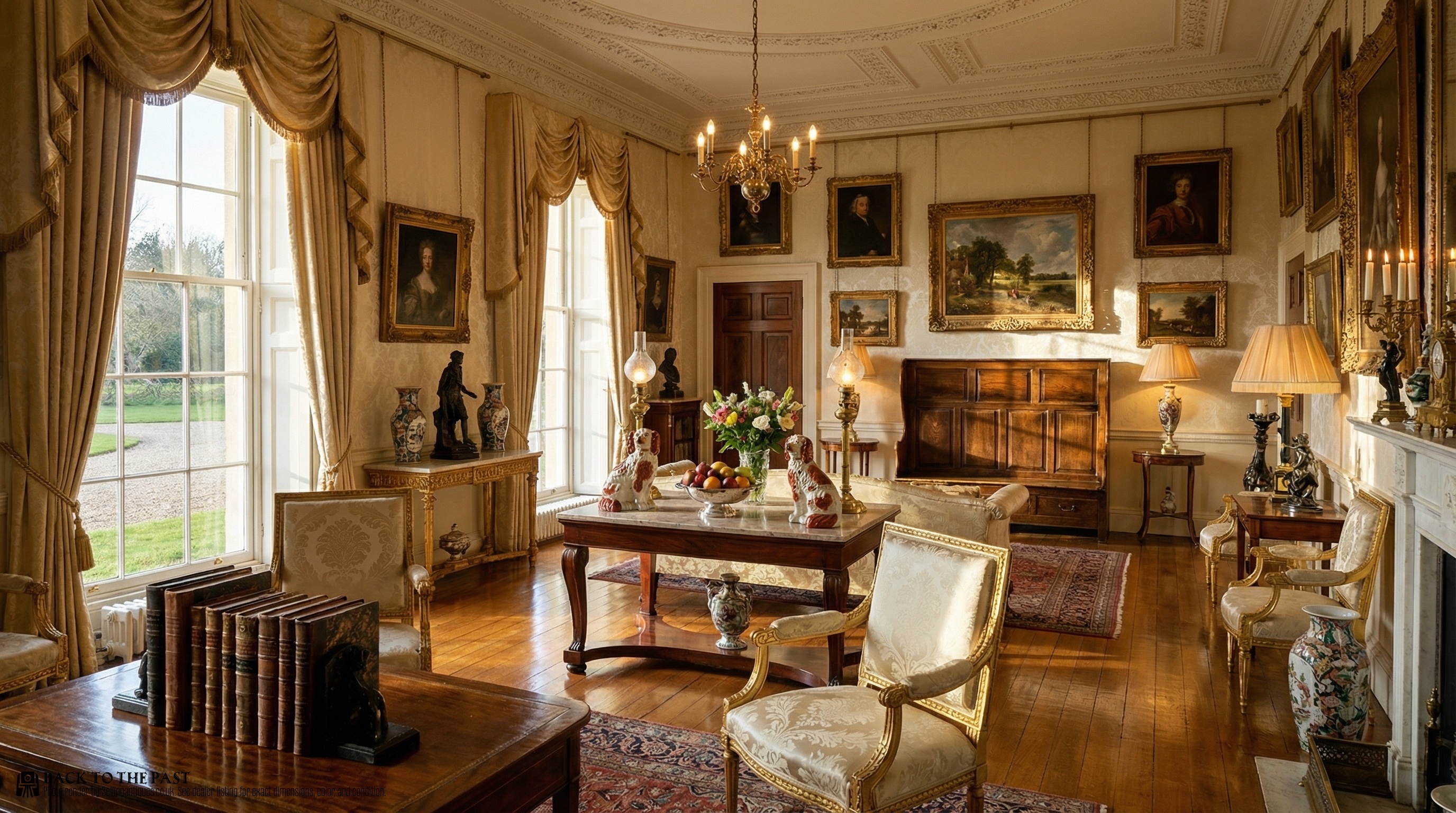
What an 18th century oak settle is
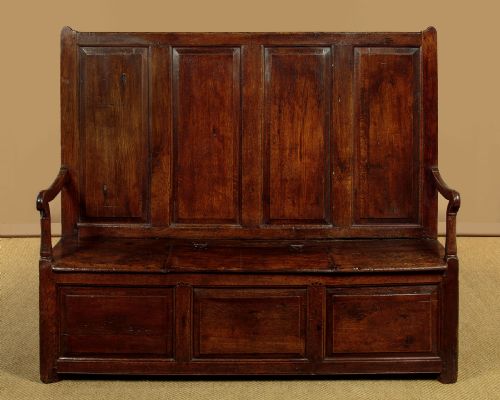
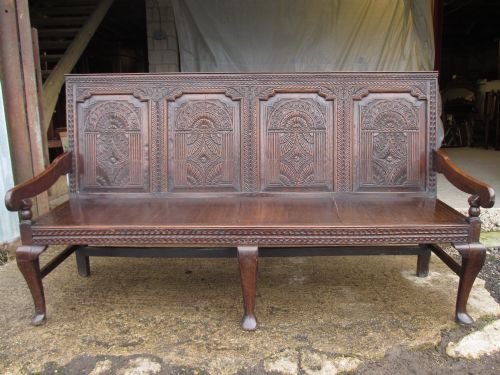
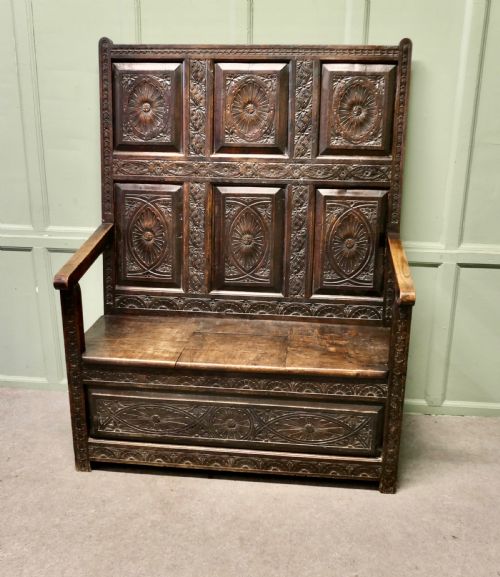
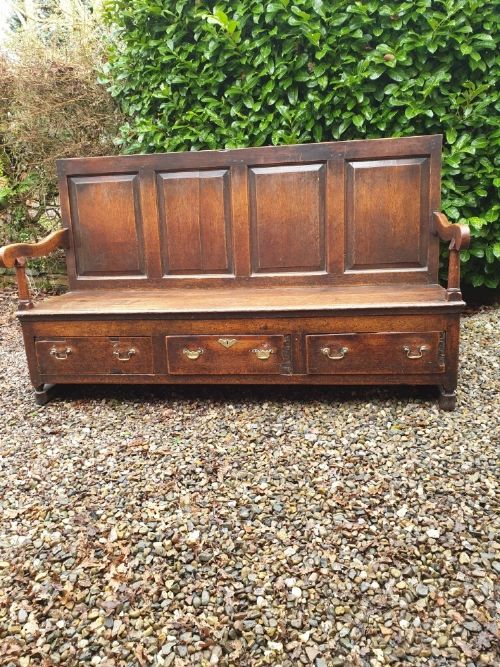
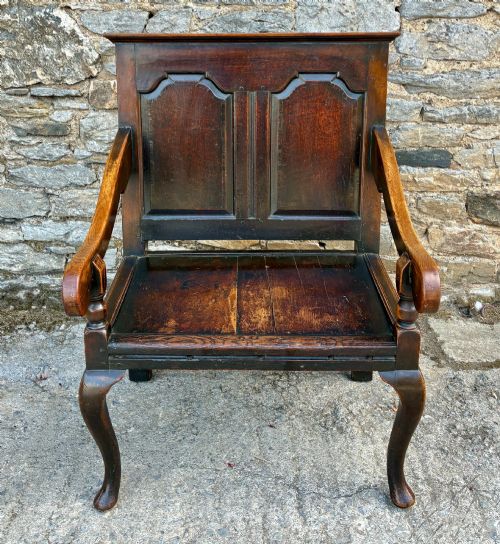
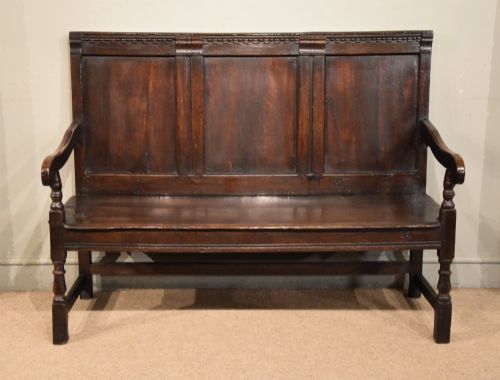
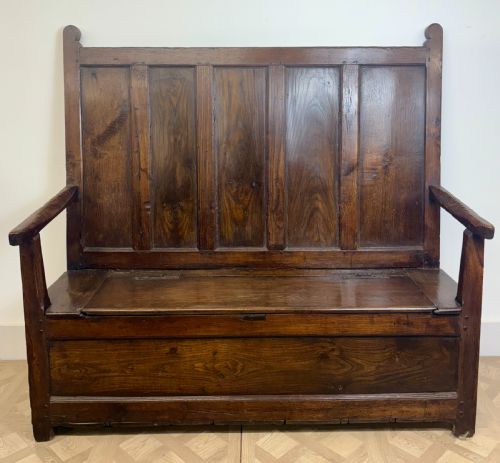
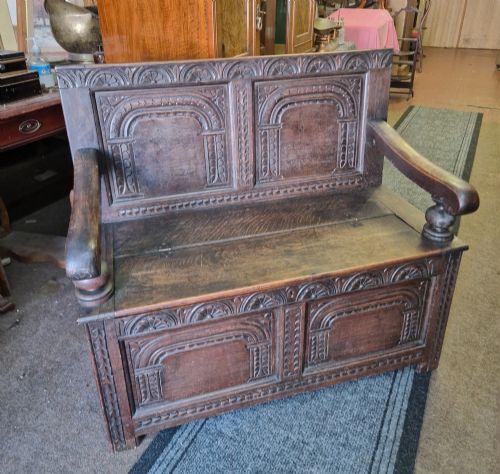
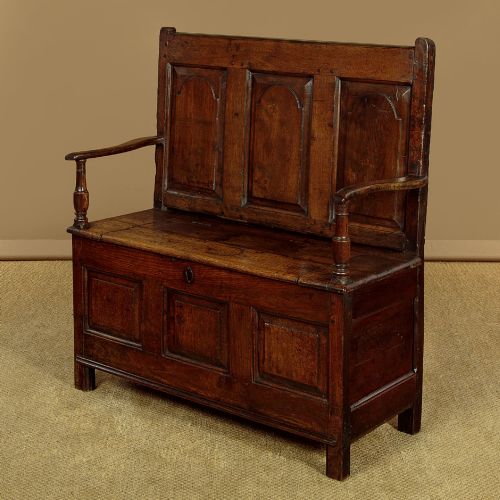
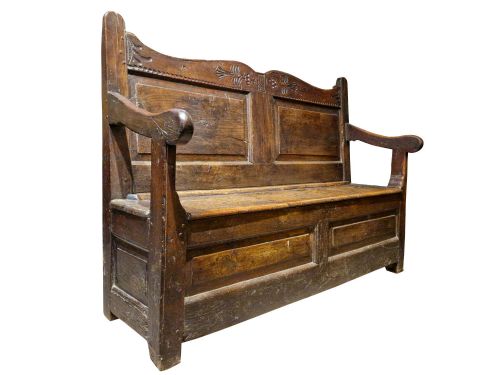
When buyers search for an 18th century oak settle, they are looking at heavy timber bench seating designed for draughty hallways and kitchens. The most common forms on this page include high-backed panelled benches and box settles with integrated storage beneath the seat. These pieces span English country houses, taverns, and provincial workshops from the seventeen-hundreds.
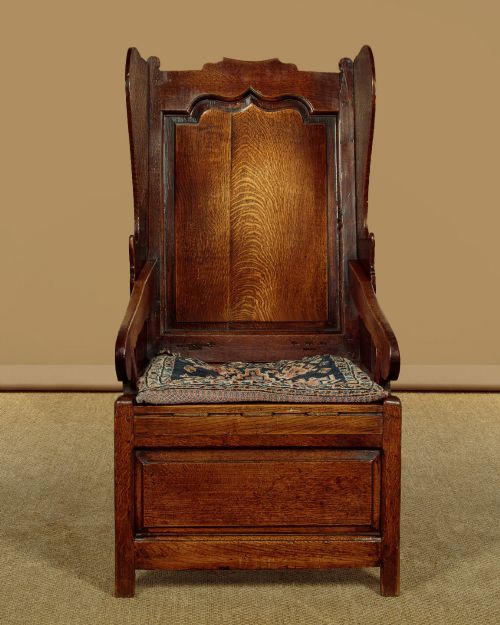
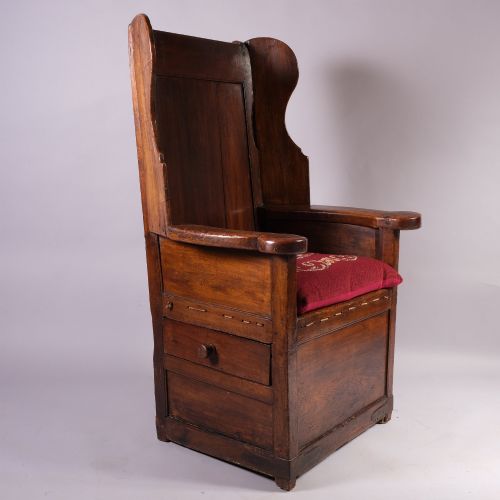
The selection ranges from small two-seater settles to large wingback and concave barrel designs. Many examples display regional characteristics such as carved panels or open arms, offering practical seating that once sheltered families from cold indoor drafts.
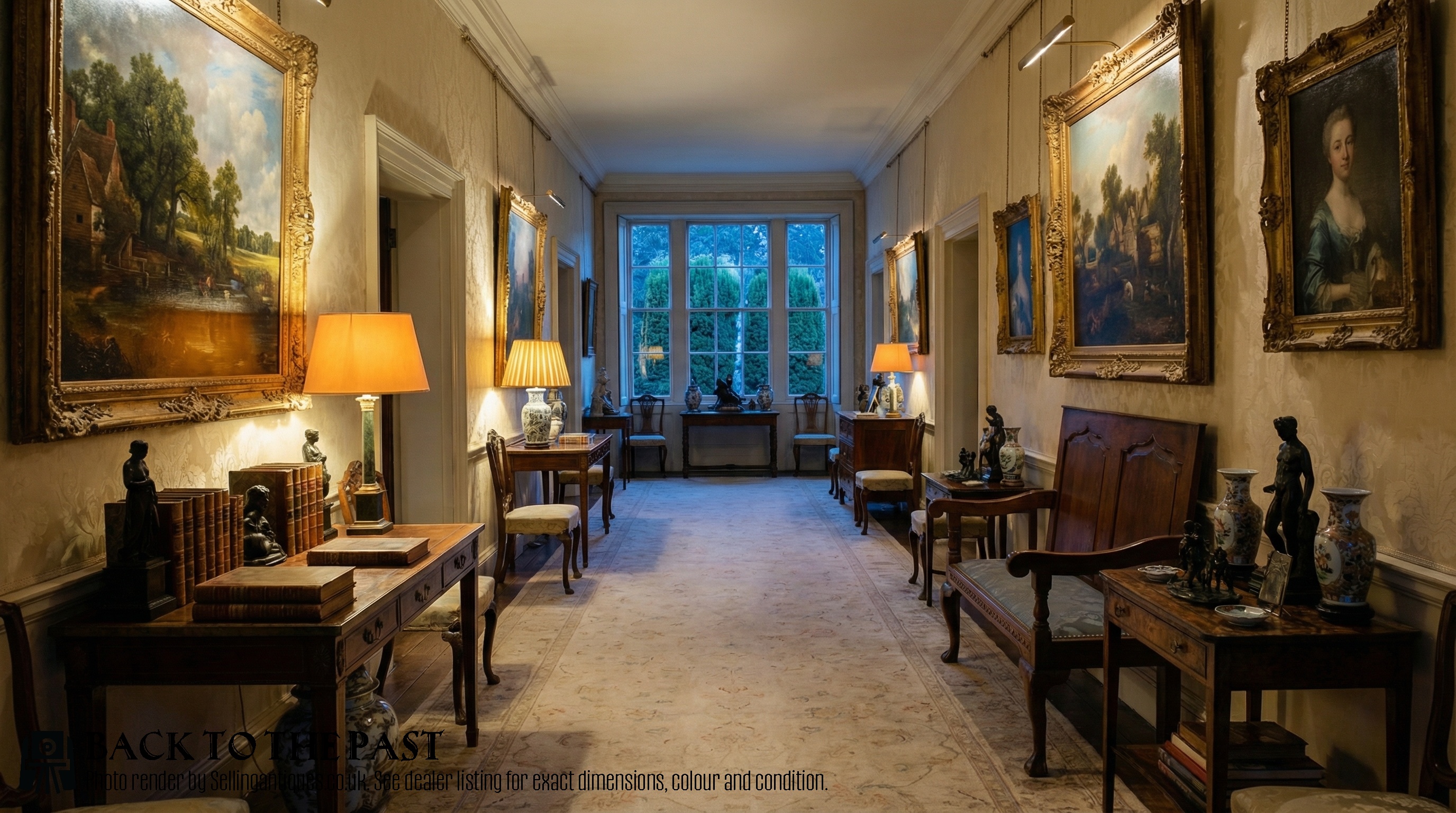
How they were made
These settles were constructed primarily from solid oak, sometimes combined with secondary timbers like elm and ash for internal boards or structural elements. Joinery relied on pegged mortise and tenon frames, panelled backs, and sturdy plank seats designed to withstand heavy daily use.
Hardware such as iron hinges and brass fittings secured lids on box settles, while surface finishes developed a natural silvery patina over centuries of polishing and wear.
Retail Price Guide 2026
Typical UK retail prices for 18th century oak settle, calculated from the Sellingantiques database of over a million retail prices indexed since 2003. This retail price guide relies exclusively on Sellingantiques data; no external sources or auction records are used, so the figures do not describe the wider market.
Listings feature 18th century oak settles alongside variants incorporating elm, ash, iron, and brass.
What varies in quality
Quality in an 18th century oak settle rests on the integrity of the timber, the crispness of any carved detailing, and the proportion of original components. Pieces retaining their deep silvery colour and undisturbed surface patination stand apart from those with excessive replacement boards.
Structural refinement also separates standard provincial benches from exceptional architectural forms like high-backed wingback or barrel settles, where curved panels and integrated storage box seats demand advanced carpentry skills.
The 18th Century Oak Settle Glossary
- Box settle
- A bench featuring a hinged seat that lifts to reveal a storage compartment underneath. This practical variant served to store blankets or household goods in busy kitchens.
- Barrel settle
- A high-backed seat with curved wooden wings wrapping around the sides to block draughts. These forms provided a sheltered microclimate near the hearth.
- Wainscot
- Timber panelling used to construct the backs of formal early settles. The term denotes panelled woodwork joined with traditional framing techniques.
- Vernacular
- Furniture built by local country craftsmen following regional traditions rather than urban pattern books. These pieces reflect utilitarian design adapted to domestic needs.
- Patina
- The surface sheen and mellow tone developed by wood over generations of use and exposure to light. It indicates genuine age and historical care.
Frequently Asked Questions
How were settles used originally?
Settles served as primary seating beside open hearths in kitchens and great halls. Their high solid backs and wing panels protected occupants from cold draughts sweeping across stone floors.
Many examples incorporated storage boxes beneath the seat to hold linens, fuel, or dry goods. In taverns and country houses, they acted as fixed partitions to create private seating areas near the fire.
Where should I place a settle?
A settle fits naturally into a spacious hallway, entryway, or kitchen where its high back creates an architectural focal point. Placing it against a long wall allows the solid timber panels and historical character to stand out.
Ensure you measure both floor space and ceiling height, as high-backed and barrel settles have a substantial physical presence. Adding a fitted cushion provides comfortable seating while protecting the historic plank seat from wear.
How do I care for antique oak?
Maintain antique oak by keeping it away from direct heat sources and rapid temperature shifts that cause timber to split. Dust the surface regularly with a dry cloth and apply a quality beeswax sparingly to nourish the wood.
Avoid modern liquid polishes containing silicone, which can penetrate open grain and dull the natural patina accumulated over centuries. Gentle handling preserves the dry silvery surfaces prized by collectors.
How can I tell the period?
Dating relies on examining joinery methods, tool marks, and the construction of the frame. Eighteenth-century pieces typically feature hand-riven oak panels, pegged joints, and heavy board seats showing natural wear.
Regional styles and vernacular construction details help narrow down the date range. Comparing the grain patterns and oxidation of internal boards against exterior surfaces reveals later repairs or alterations.