

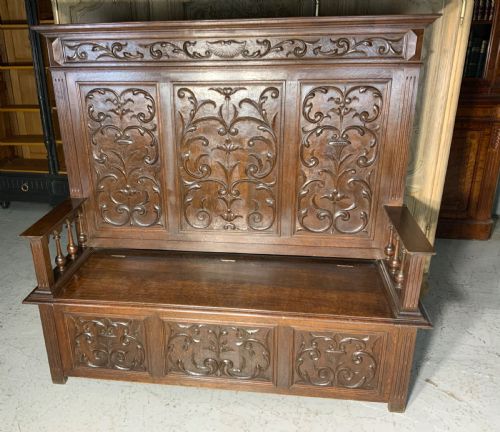

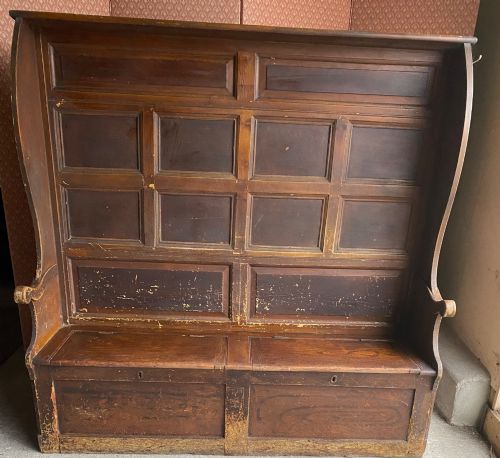
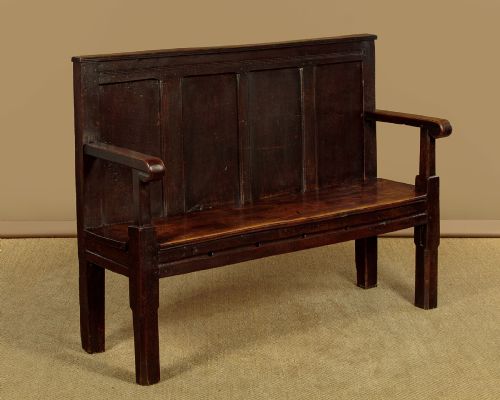
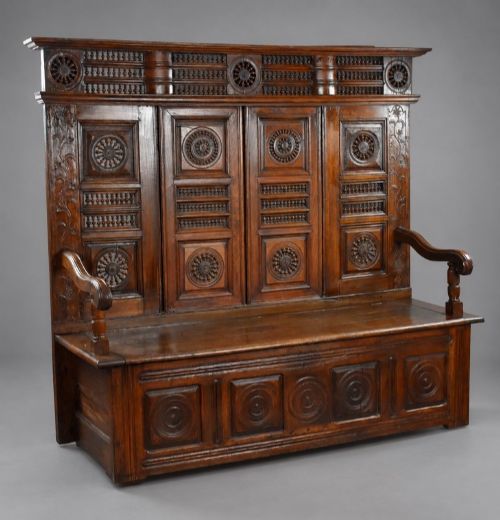
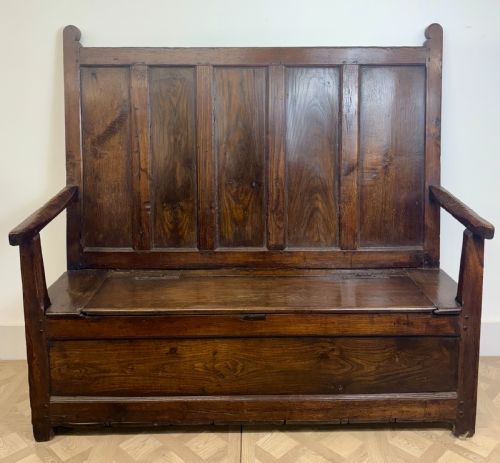
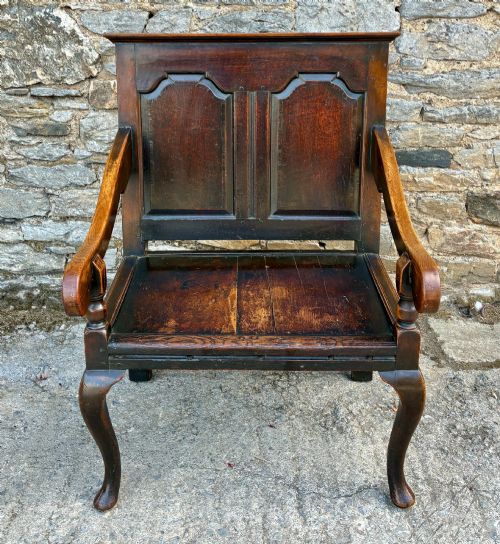
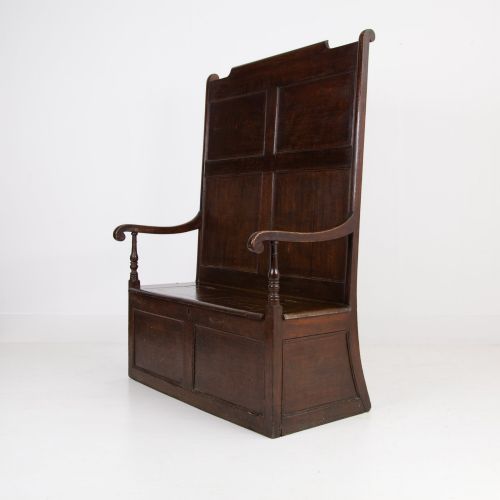
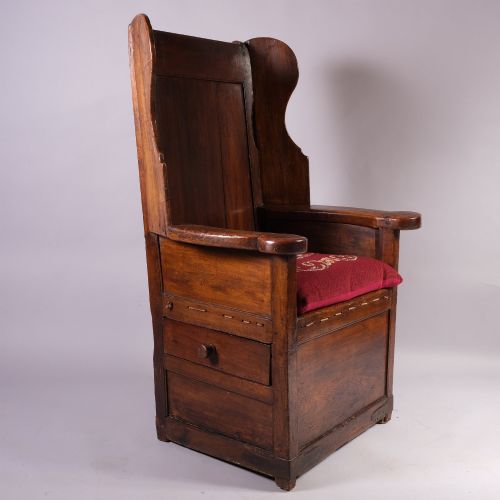
Panelled Back Oak Settle
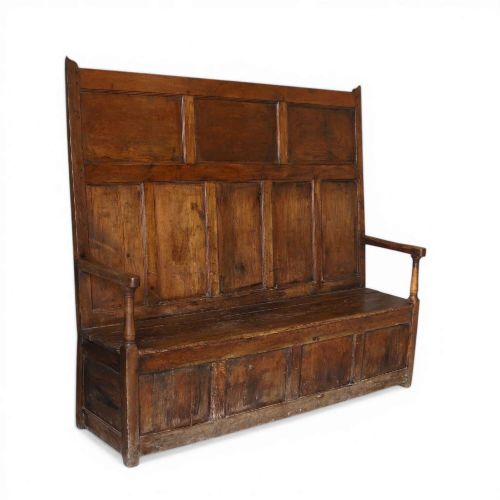
A panelled back oak settle is a rigid wooden bench built to keep draughts from the hearth.
Panelled Back Oak Settle
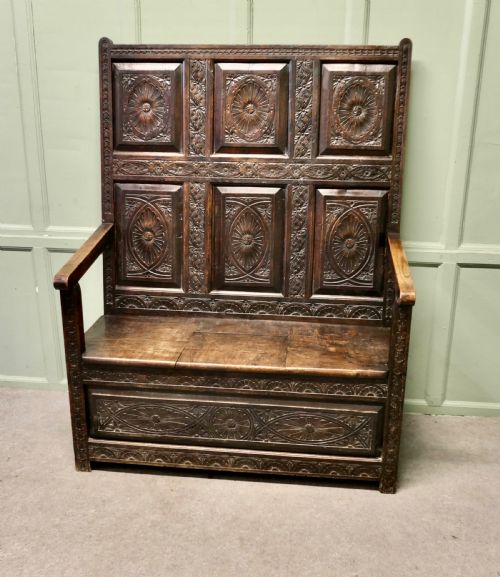
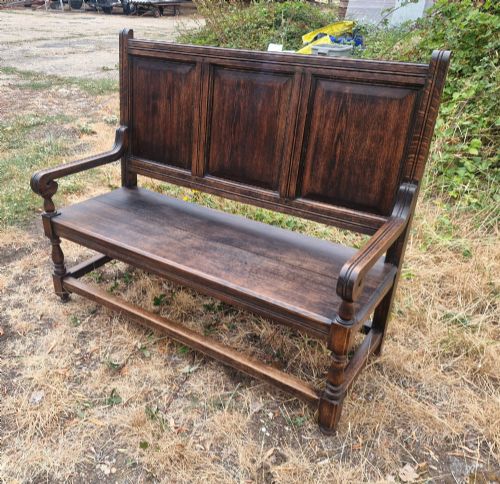
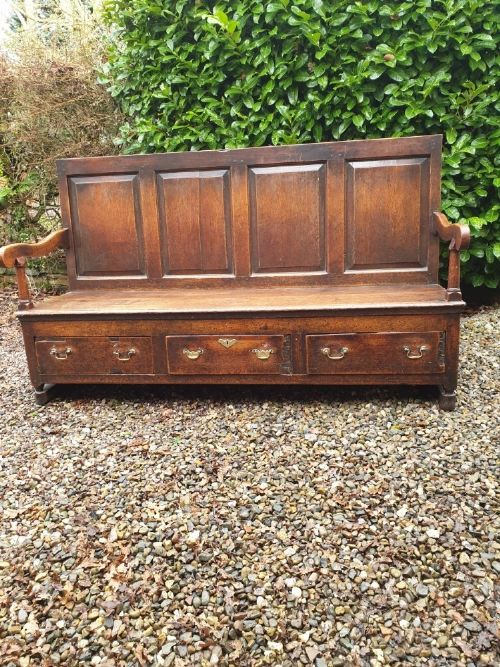
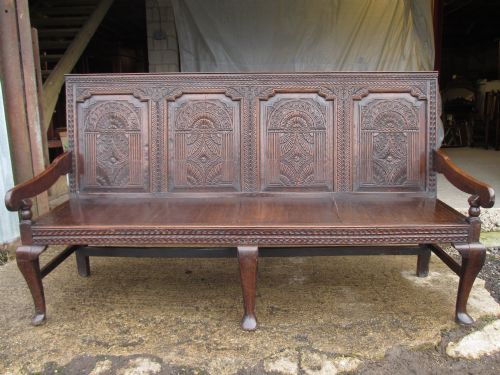
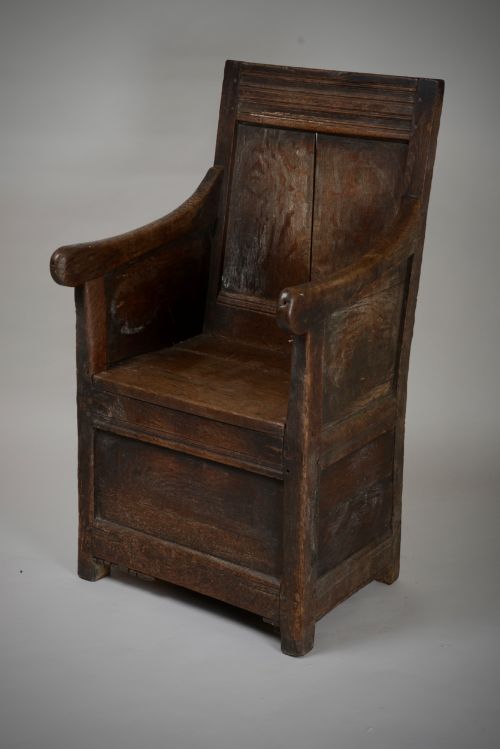
When you search for a panelled back oak settle, you are looking at heavy timber seating designed for domestic halls and farmhouses. These pieces range from seventeenth-century box versions with storage beneath the seat to eighteenth-century vernacular examples and nineteenth-century revivals.
The version you are most likely to meet on this page is an eighteenth-century or Georgian country piece featuring a tall wooden back constructed from fitted panels. Many incorporate enclosed box bases or wings designed to block cold air currents in open rooms.
How they were made
These benches rely on sturdy native timber, principally oak supplemented by ash and occasional secondary woods like walnut or pine. Joiners utilised traditional peg-joined frame and panel construction to allow the timber to expand and contract naturally without splitting.
Surface ornament was achieved through carved panels, tulip decoration, or fielded profiles. Iron and brass hardware occasionally secured lids and hinges on box compartments, while leather or fabric upholstery appeared on later or adapted examples.
Panelled Back Oak Settle Retail Price Guide 2026
Typical asking prices for panelled back oak settle among the pieces listed under this phrase on Sellingantiques today, from the lower quarter to the upper quarter. They describe what is for sale here now, not the wider market.
The listings show regional oak settles spanning the seventeenth, eighteenth, and nineteenth centuries, including vernacular styles from Wales and Northern England.
What varies in quality
The character of a panelled back oak settle depends heavily on the integrity of its original timber and the depth of its joinery. Pieces retaining their early boarded seats and unthinned uprights demonstrate a higher degree of structural survival.
Proportion and regional style also separate standard examples from finer country workshop pieces. Well-defined panel mouldings and integrated box compartments reflect greater care from the original maker than later assembled or heavily restored variants.
The Panelled Back Oak Settle Glossary
- Box settle
- A wooden bench featuring an enclosed storage compartment beneath the seat, often accessed via a hinged lid.
- Fielded panel
- A wooden panel with bevelled edges raised toward the centre, creating depth and shadow within the frame.
- Lambing chair
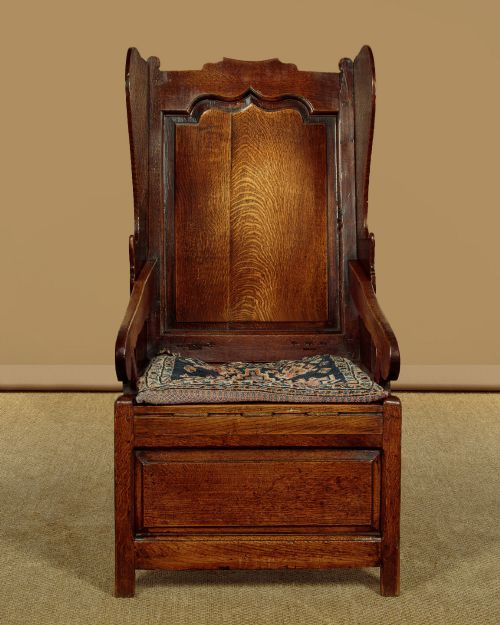
- A high-backed wooden armchair or settle featuring solid side wings designed to shield the occupant from draughts.
- Peg joined
- A method of securing mortise and tenon joints using driven wooden dowels instead of metal nails.
- Vernacular
- Furniture built by local country craftsmen following regional traditions rather than urban pattern books.
Panelled Back Oak Settle: Frequently Asked Questions
What is a panelled back oak settle?
A panelled back oak settle is a heavy wooden bench featuring a tall, compartmentalised wooden back designed to block cold draughts in older homes. They were traditionally placed near the hearth to trap warmth for those sitting closest to the fire.
Most examples feature high wooden arms and many include a concealed box base for storing household goods. Their sturdy construction allowed them to serve as the primary seating for families in farmhouses and country cottages.
How were settles used in historical homes?
These benches served as communal seating near the main fireplace, where the high solid back protected occupants from cold air circulating through large rooms. The enclosed base kept blankets or dry goods close at hand.
In larger country houses, they were positioned in hallways or draughty entryways to control airflow and provide a firm seat for visitors. Their substantial weight ensured they remained firmly in place on flagstone or wooden floors.
How do I tell an 18th century settle from a Victorian one?
Eighteenth-century pieces typically show natural timber oxidation, hand-planed surfaces, and pegged joinery consistent with regional country workshop practices. Their proportions reflect domestic utility and older structural methods.
Victorian pieces often display crisper machine-sawn elements, revivalist carving styles influenced by Jacobean or Gothic tastes, or altered components. Examining the underside and the wear around the foot timbers helps clarify the age.
Where should I place a settle in a modern room?
A settle fits well against a blank hallway wall or in a large kitchen where its tall back can act as a room divider. Because of its solid footprint, it benefits from open space rather than tight corners.
Pairing the wooden seat with a simple loose cushion softens the firm surface for daily seating. Keep the piece away from direct heat sources to prevent the dry oak panels from shrinking or cracking.