


18th Century Oak Buffet
An 18th century oak buffet brings robust provincial character and practical storage to a room through centuries of hard-wearing utility.
18th Century Oak Buffet
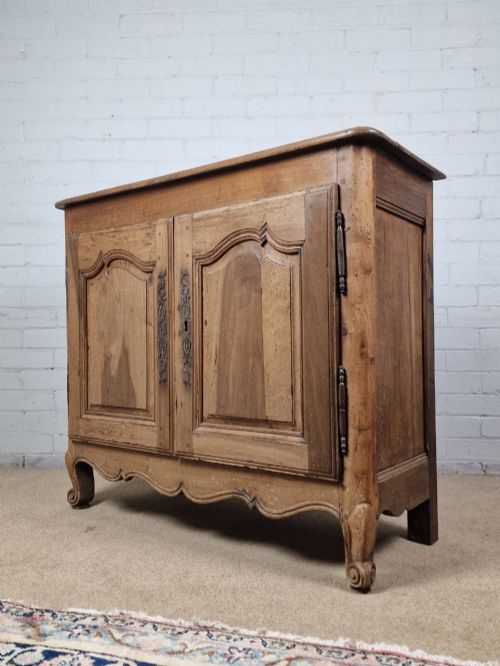
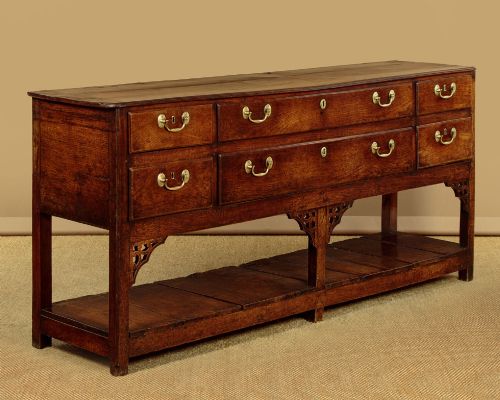
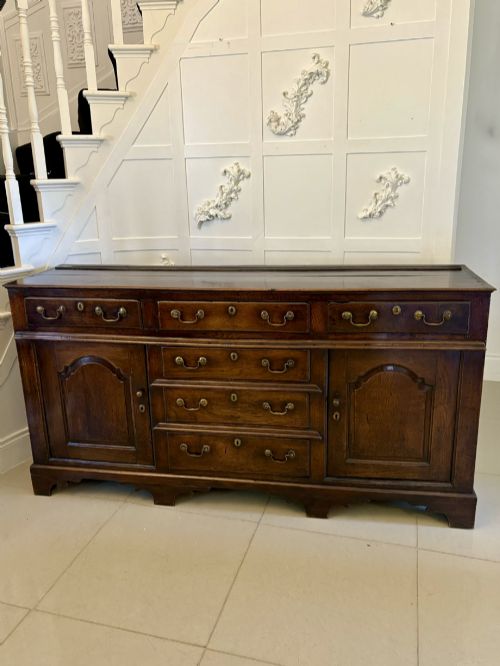
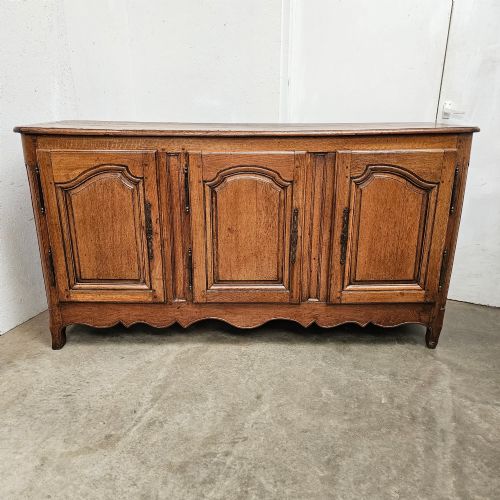
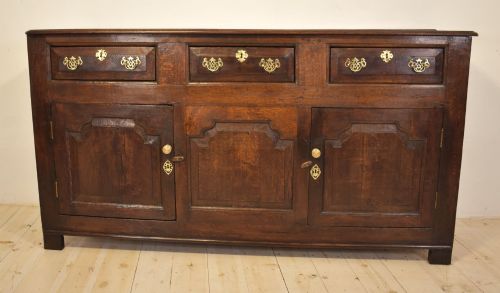
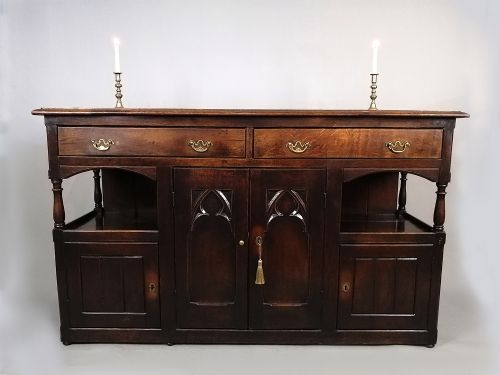
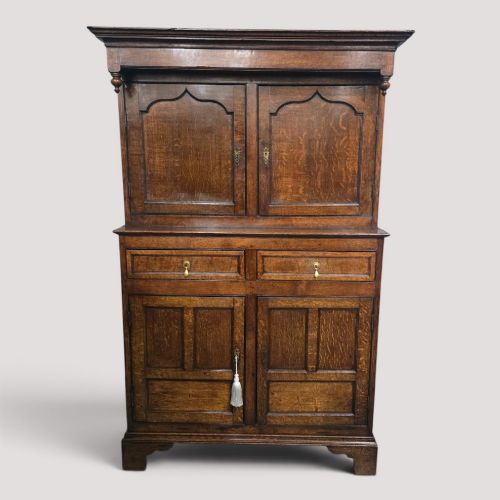
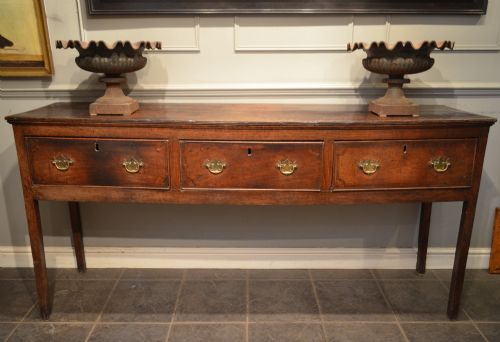
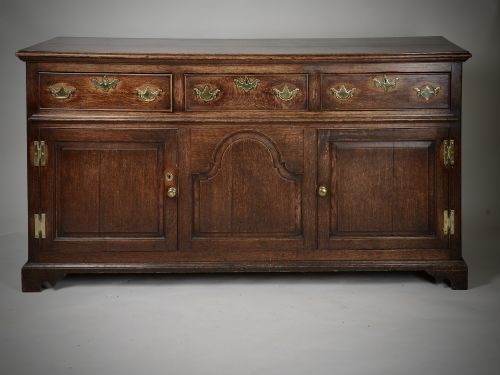
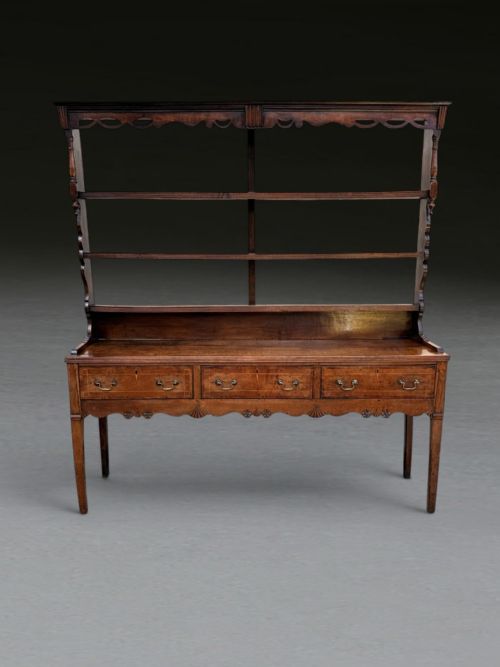
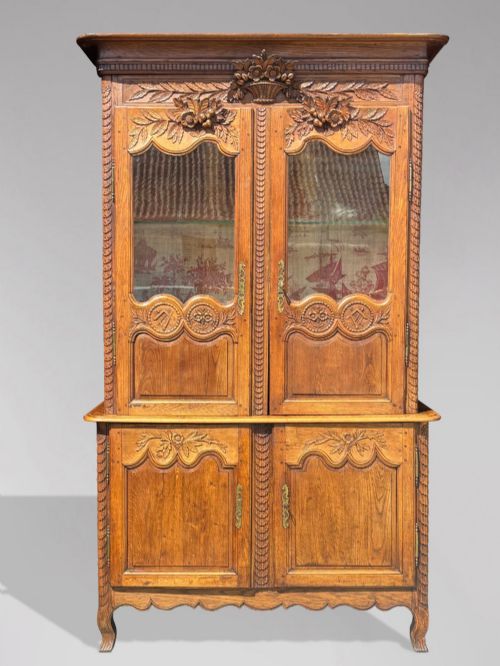
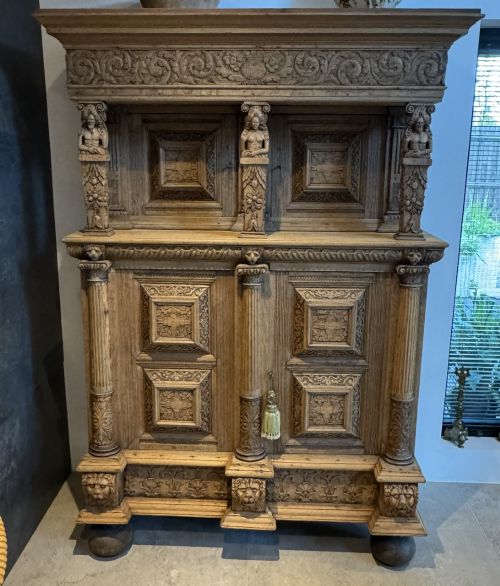
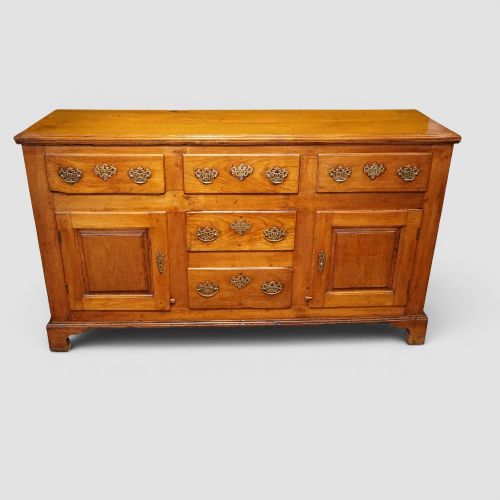
An 18th century oak buffet encompasses low servers, potboard dresser bases, and multi-tiered cupboards designed for domestic storage and display. The selection leans heavily toward English Georgian and French provincial forms, where heavy timber meets functional domestic architecture.
Buyers encounter regional variations such as Welsh potboard bases, French enfilades, and Flemish cabinets. These forms serve as sideboards, serving tables, and low kitchen units within modern and traditional interiors alike.
How they were made
Carpenters utilised solid oak, supplemented occasionally by fruitwood, walnut, or deal for secondary timbers, assembled using traditional pegged mortise and tenon joints. Surfaces reveal the tool marks of hand-planing alongside wrought iron hinges and brass drawer pulls.
Construction methods vary from joined frame and panel techniques to robust board construction designed to support heavy household goods. Finishes range from stripped timber to remnants of historic paint and wax patination accumulated over generations.
Several survivalists of the oak buffet era bear the mysterious knife scars of centuries of kitchen chopping upon their work surfaces.
What varies in quality
Quality rests in the proportion of the carcass, the integrity of the timber, and the subtlety of hand-carved mouldings. Pieces retaining original brass hardware, unblemished potboards, and untouched surface patination command greater interest from collectors.
Structural alterations, replaced timbers, and aggressive stripping diminish the historical integrity of an 18th century oak buffet. The balance between utilitarian function and refined regional detailing dictates the standing of each individual example.
The 18th Century Oak Buffet Glossary
- Potboard
- An open lower shelf beneath a dresser base or buffet, historically used for storing earthenware and pots. It distinguishes many English and Welsh regional forms from standard enclosed cupboards.
- Buffet deux corps
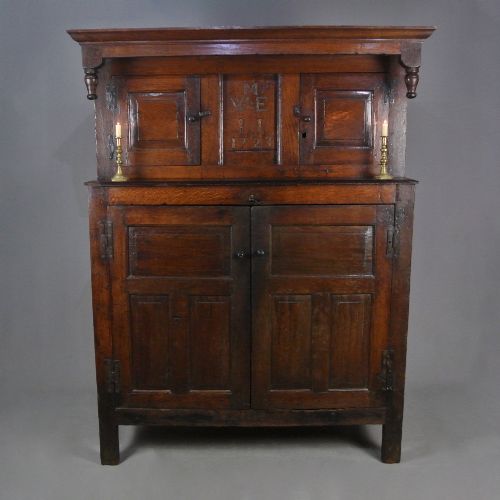
- A tall two-tier cupboard originating in France, featuring an upper cabinet set upon a lower buffet base. These substantial storage pieces often display carved panels and provincial mouldings.
- Enfilade
- A long low sideboard or cabinet featuring multiple doors, commonly found in French provincial dining spaces. The form provides extensive surface and internal storage capacity.
- Court cupboard
- An antique enclosed cupboard used for storing food and utensils, often constructed with a recessed upper section supported by turned posts. They represent earlier domestic storage traditions.
- George III
- The stylistic period spanning the reign of George III, characterised by architectural proportions and restrained classical ornamentation applied to regional furniture.
18th Century Oak Buffet: Frequently Asked Questions
How were these buffets originally used?
These pieces served as functional storage furniture in kitchens, halls, and dining rooms for holding food, serving dishes, and domestic utensils.
Lower surfaces provided space for food preparation and serving, while cupboards and drawers kept provisions and tableware secure.
Where were most of these pieces made?
The pieces originate from various regions across Britain, France, and the Low Countries, reflecting local timber supplies and workshop traditions.
English and Welsh pieces often feature potboards and straight lines, whereas French examples tend toward panelled enfilades and buffet deux corps forms.
How do I care for an antique oak surface?
Maintain the timber by applying traditional beeswax sparingly and buffing with a soft cloth to preserve the natural patination.
Keep the furniture away from direct heat sources and dramatic humidity fluctuations to prevent timber splitting and joint movement.
Can I use an antique buffet in a modern kitchen?
These robust sideboards integrate well into contemporary kitchens and dining areas as freestanding storage or serving stations.
Their durable construction and generous surface areas accommodate modern appliances and dining accessories while adding historical texture.
How do I distinguish between regional styles?
Examine the hardware, moulding profiles, and timber choices to identify specific British or continental provincial origins.
Welsh and English pieces frequently display open potboards, whereas French and Flemish examples often incorporate elaborate raised panels and enclosed cabinet sections.