



18th Century Marquetry Cabinet
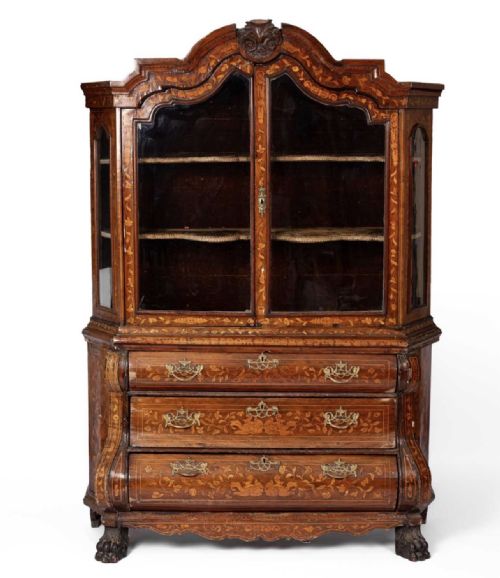
An 18th century marquetry cabinet brings complex floral wood inlay and substantial storage together into a striking focal point for a room.
18th Century Marquetry Cabinet
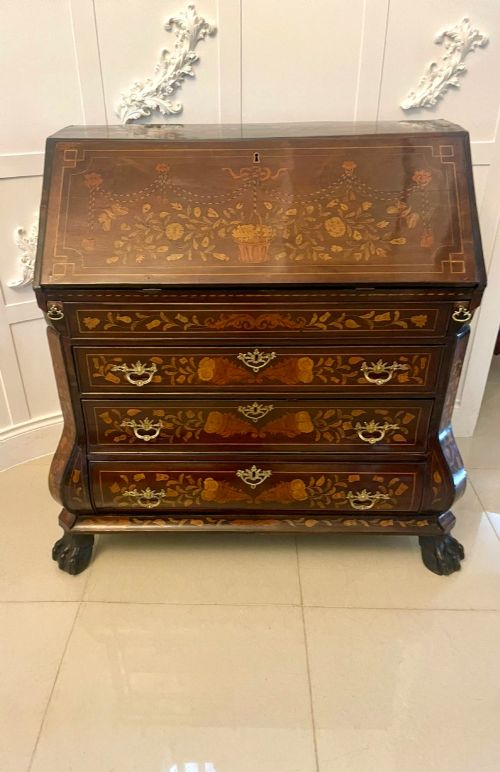
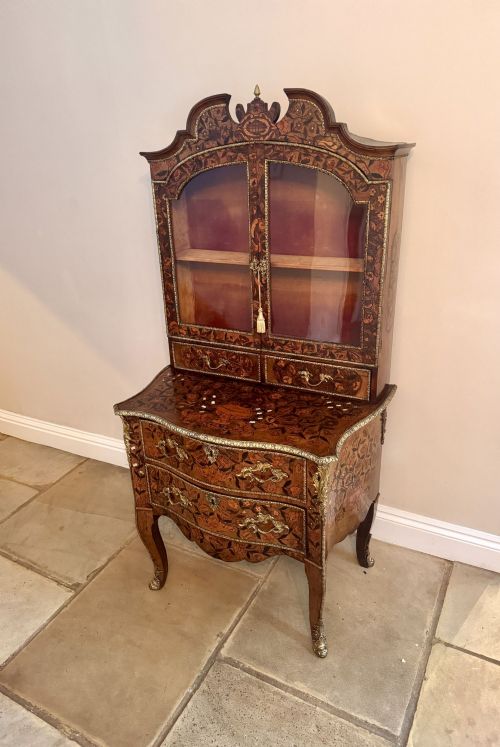
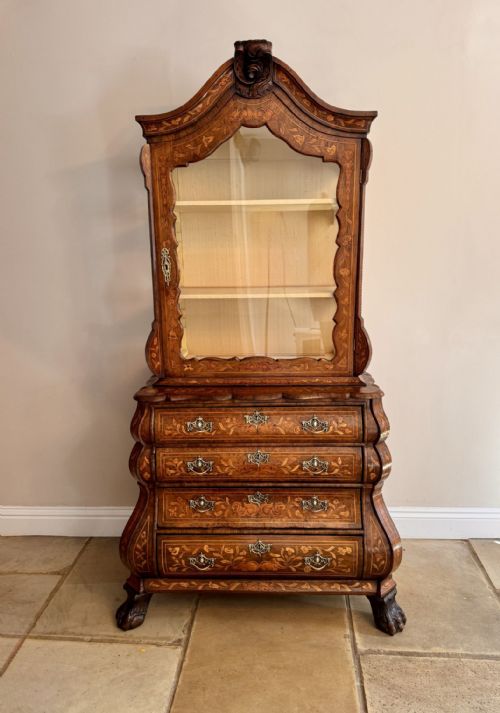
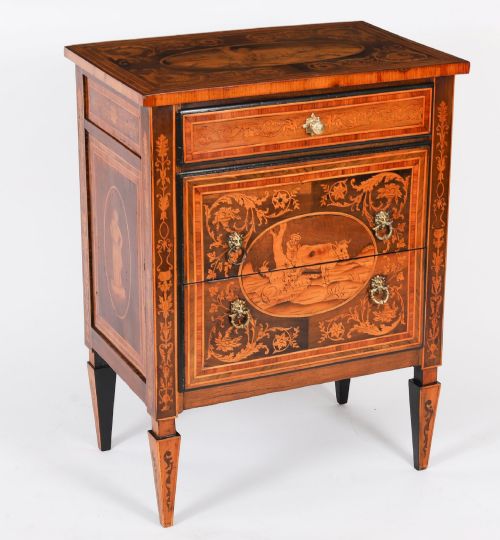
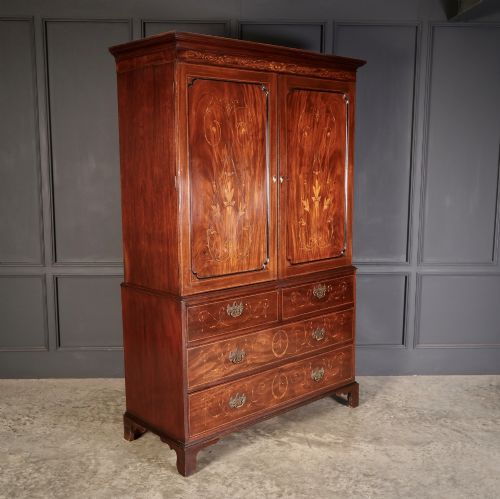
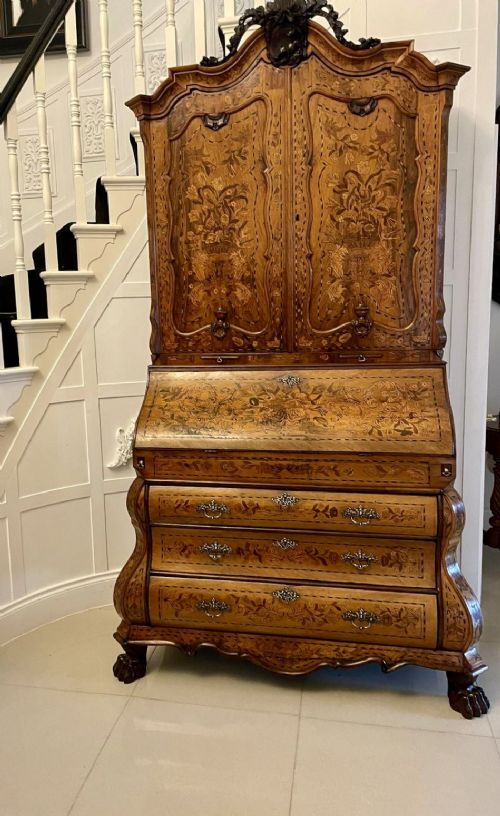
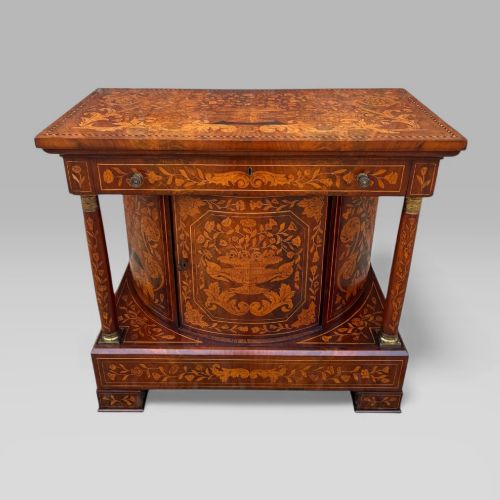
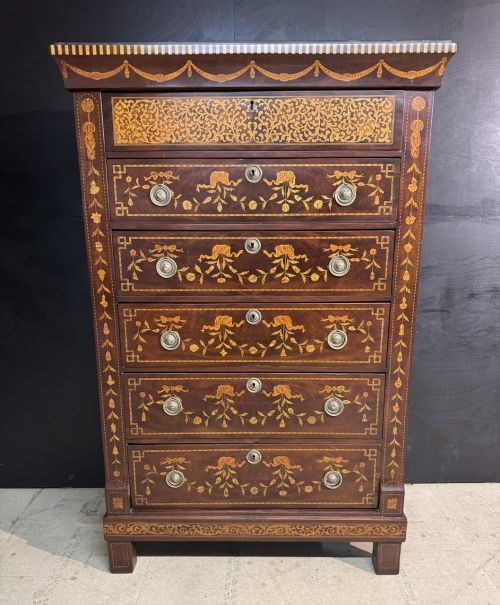
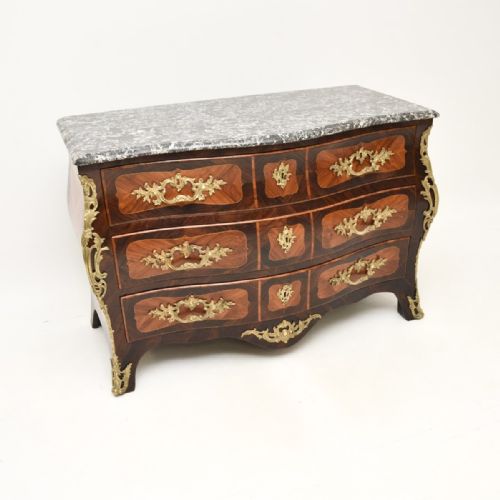
When searching for an 18th century marquetry cabinet, one encounters a diverse group of case furniture spanning bureau bookcases, tall chests of drawers, display cabinets, and commodes. These pieces originate primarily from Dutch, English, and Italian workshops, each reflecting regional preferences in form and decorative motifs.
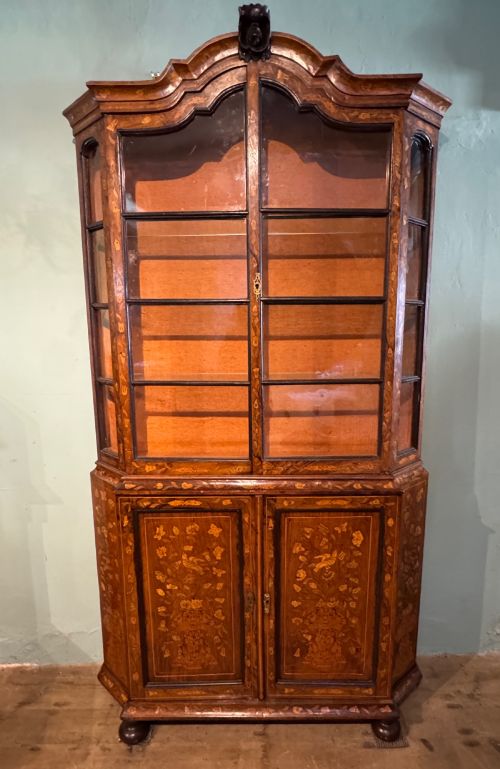
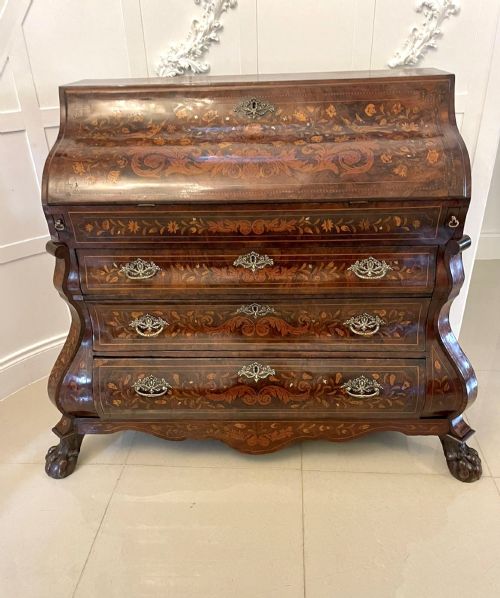
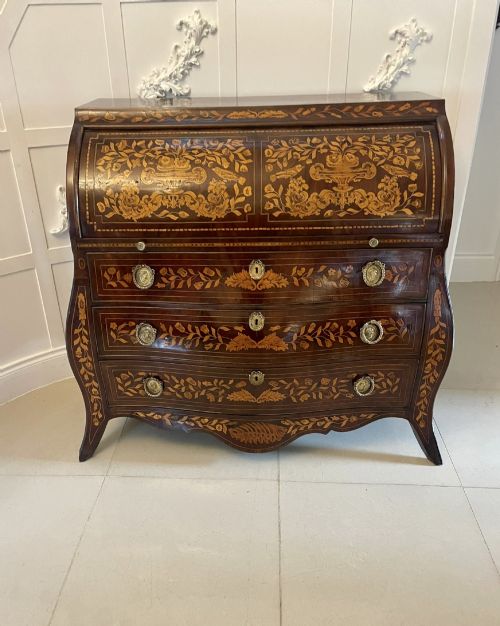
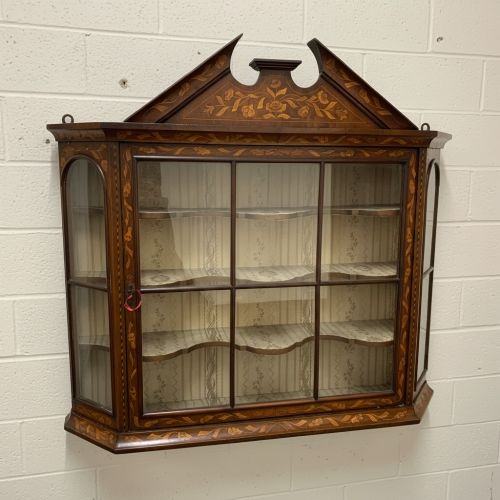
The most common examples on this page are Dutch bureau bookcases and cabinets executed in walnut or burr walnut, featuring elaborate floral inlay across curved and bombe surfaces. Alongside these, English Georgian and Italian Neoclassical pieces appear in mahogany, satinwood, and various fruitwoods.
How they were made
Cabinetmakers constructed carcass frames using native and imported timbers such as oak, walnut, and mahogany, applying fine veneers to primary surfaces. Artisans then utilised meticulous marquetry techniques, cutting contrasting pieces of fruitwood, satinwood, and burr timbers to form floral and foliate pictorial scenes.
Brass hardware, including cast drop handles and escutcheons, was fitted to drawers and doors alongside hand-cut dovetail joints. Glazed display sections incorporated individual glass panes held within slender timber glazing bars.
18th Century Marquetry Cabinet Retail Price Guide 2026
Typical asking prices for 18th century marquetry cabinet among the pieces listed under this phrase on Sellingantiques today, from the lower quarter to the upper quarter. They describe what is for sale here now, not the wider market.
Several bureau bookcases manage to hide secret compartments behind deceptively innocent pigeonholes for storing private letters.
What varies in quality
The intricacy and precision of the marquetry cutting dictate much of the distinction between standard and superior examples, with master craftsmen achieving seamless intersections and subtle shading using heat-treated veneers. Grain selection also plays a vital role, where choice burr walnut or figured mahogany exhibits depth and movement across the facade.
Structural integrity, the retention of original brass fittings, and the preservation of the delicate inlaid surface without excessive restoration separate workshop pieces of high artistic ambition from more utilitarian storage.
Jacques Bircklé
The 18th Century Marquetry Cabinet Glossary
- Marquetry
- Decorative veneer work forming pictorial patterns by fitting together small pieces of wood, bone, or ivory within a background veneer.
- Bombe
- A swelling, outward-curving contour found on the front and sides of certain case furniture, typical of Baroque and Rococo designs.
- Bureau bookcase
- A writing desk with a sloping flap enclosing pigeonholes, surmounted by a glazed or panelled shelved cabinet.
- Linen press
- A tall piece of furniture featuring upper sliding trays for textiles above a chest of drawers.
- Commode
- A low standing chest of drawers, often associated with French and Italian cabinetmaking of the period.
18th Century Marquetry Cabinet: Frequently Asked Questions
How were these cabinets used?
Owners utilised them for writing correspondence, storing household textiles, and displaying valued ceramics and glassware behind glass panels. The upper sections served as bookcases or vitrines while lower drawers handled general storage.
In prosperous households, they functioned as formal furniture pieces in reception rooms and private chambers.
How do I care for a marquetry cabinet?
Keep the wood away from direct sunlight and sudden temperature shifts to protect the delicate veneer and prevent timber splitting. Maintain stable indoor humidity and apply microcrystalline wax sparingly to nourish the surface.
Avoid placing heavy liquids or damp objects directly on the polished top.
How do I distinguish Dutch and English styles?
Dutch examples frequently display exuberant floral marquetry across bombe or serpentine walnut carcasses with prominent brass hardware. English pieces of the period tend towards architectural mahogany and satinwood forms with restrained inlay and straight lines.
Regional differences extend to the interior fittings and the specific choice of secondary framing timbers.