




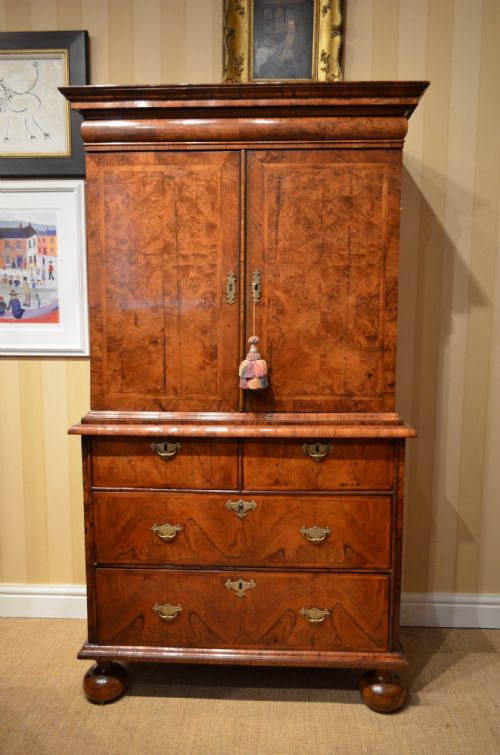


William and Mary Cupboard
A william and mary cupboard brings deep walnut tones and dramatic grain patterns into a room, offering both historic presence and practical storage.
William and Mary Cupboard
When you search for a william and mary cupboard, you encounter elevated case furniture spanning cabinets on stands, chests, and corner cupboards. These pieces originate primarily from the seventeenth and eighteenth centuries, alongside later revivals from the twentieth century.
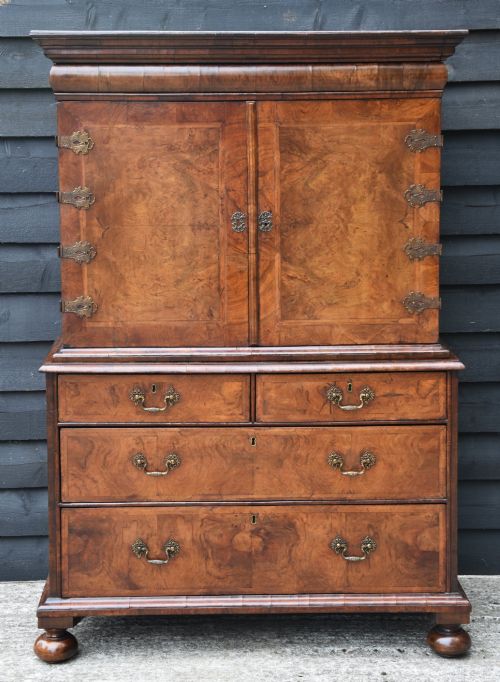
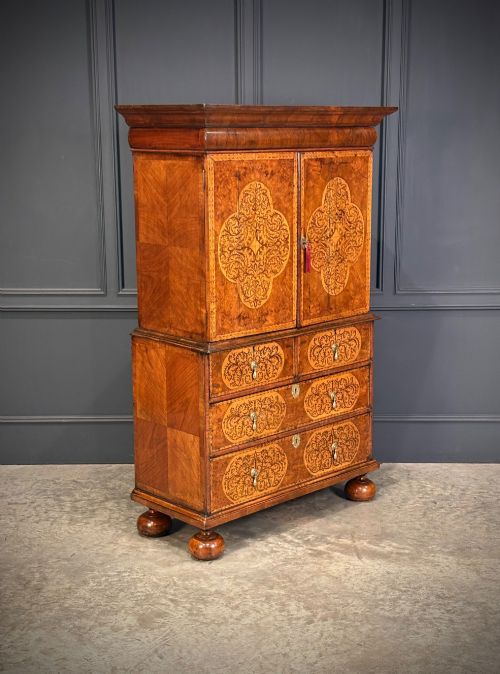
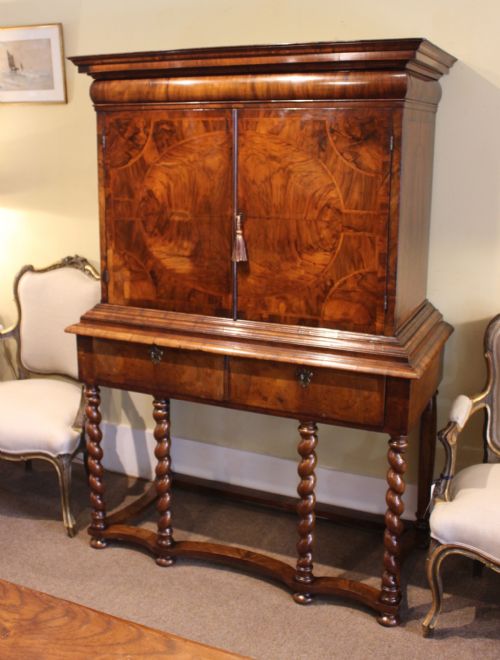
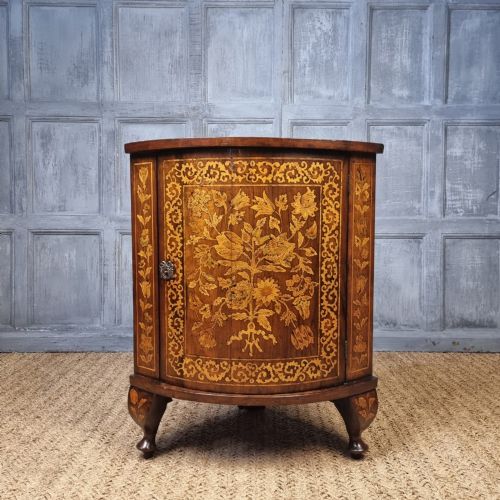
The most common form on this page is the walnut cabinet on stand or chest, frequently finished with intricate veneer work. You also find oak spice cupboards, corner units, and occasional miniature examples reflecting the domestic storage needs of the period.
Origins stretch from English workshops to continental centres, particularly Dutch makers who mastered complex marquetry and parquetry. Buyers select these forms to anchor a room with architectural proportion and rich timber surfaces.
Materials and construction methods
Carpenters built the carcases using sturdy foundational timbers such as oak, then applied decorative surface veneers of walnut, burr walnut, olive wood, and kingwood. These exotic and native woods provided striking colour contrast and visual movement across the facade.
Craftsmen utilised specialised techniques like oyster veneering, cutting small cross-sections of branches to create circular ripple patterns across the doors and drawers. Marquetry and parquetry in boxwood and fruitwood added intricate floral or geometric designs to the panels.
Brass hardware, including drop handles, escutcheons, and hinges, secured the doors and drawers while adding metallic accents to the dark wood. Stand bases often incorporated turned legs and stretchers to support the weight of the heavy upper cabinets.
William and Mary Cupboard Retail Price Guide 2026
Typical asking prices for william and mary cupboard among the pieces listed under this phrase on Sellingantiques today, from the lower quarter to the upper quarter. They describe what is for sale here now, not the wider market.
Listings feature seventeenth-century and eighteenth-century examples alongside twentieth-century revival pieces, constructed in walnut, oak, kingwood, and olive wood.
Evaluating craftsmanship and condition
Quality rests upon the precision of the veneer work and the preservation of the original timber surfaces. Finer examples display symmetrical grain matching and tightly fitted parquetry that remains stable across the panels.
The integrity of the structural supports, whether a dedicated stand or a chest base, dictates the balance and authenticity of the piece. Integrated brass mounts and period locks further distinguish high-grade workshops from later adaptations.
The William and Mary Cupboard Glossary
- Oyster veneer
- A method of cutting small branches obliquely to produce concentric circular patterns resembling oyster shells. This technique gained popularity during the late seventeenth century.
- Marquetry
- The art of applying decorative pieces of veneer to a structure to form intricate pictorial designs. Craftsmen utilised woods like boxwood and fruitwood for contrast.
- Parquetry
- Geometric mosaic woodwork used to cover floors or furniture surfaces. It creates repeating patterns across cabinet doors and drawer fronts.
- Cabinet on stand
- A tall storage case raised on a separate support frame with legs. This form lifted valuable contents away from damp floor levels.
William and Mary Cupboard: Frequently Asked Questions
What is a william and mary cupboard?
A william and mary cupboard refers to case furniture produced during the late seventeenth and early eighteenth centuries, characterised by architectural proportions and rich wood veneers. These pieces range from tall cabinets on stands to smaller wall-hung spice cupboards.
Craftsmen utilised native and exotic timbers like walnut, oak, and olive wood, often enhanced with marquetry or oyster veneering. They served to store valuables, textiles, or documents while displaying the owner's taste.
How were these cupboards used historically?
Households used these elevated cabinets to store domestic valuables, linens, and spices away from cold, damp floors. The enclosed spaces protected delicate items from dust and light.
Larger cabinets on stands functioned as primary storage fixtures in reception rooms and bedchambers. Smaller corner cupboards and spice units utilised otherwise wasted wall space in domestic interiors.
How do I care for a walnut cabinet?
Maintain stable indoor humidity levels and keep antique walnut away from direct heat sources and strong sunlight. Sudden temperature shifts can cause historic veneers to lift or crack.
Apply microcrystalline wax sparingly to nourish the timber surface without building up residue. Dust gently with a dry, soft cloth to preserve the historic polish.
How can I distinguish period pieces from later revivals?
Examine the construction methods, timber movement, and secondary woods used inside the carcase and drawer linings. Period pieces display tool marks consistent with historic hand-working techniques.
Revival pieces, such as those from the early twentieth century, often utilise standardised fixings and cleaner, more uniform internal timber. Look for natural wear patterns and structural integration that align with seventeenth or eighteenth-century practices.