





18th Century Library Table
An 18th century library table brings enduring utility and architectural grace to a room, offering ample surface and fitted compartments for serious writing.
18th Century Library Table
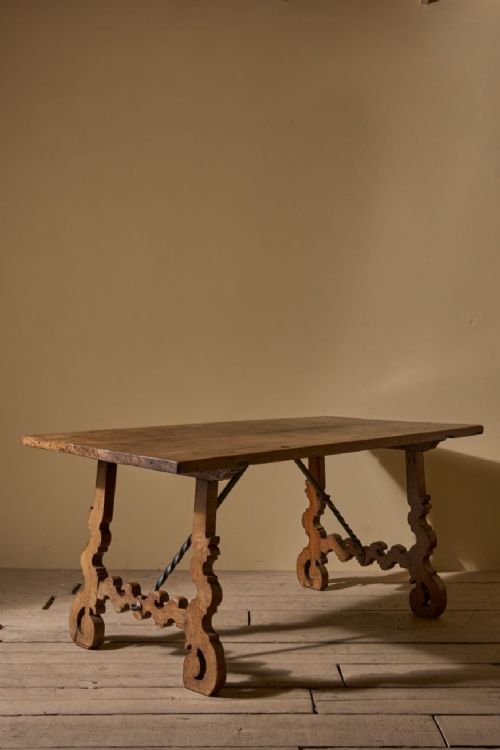
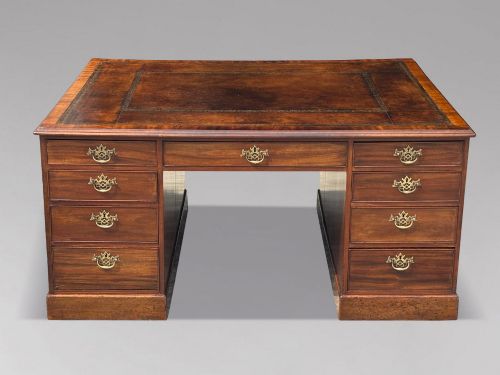
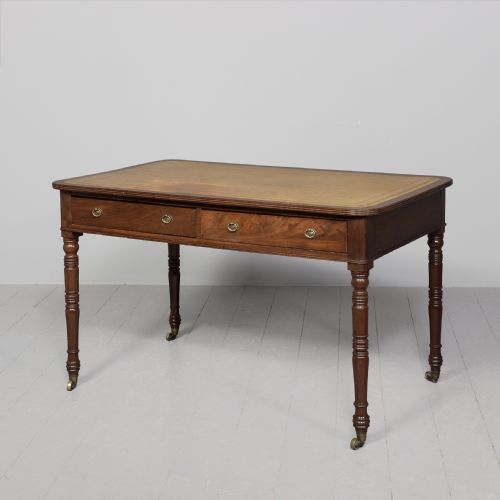
An 18th century library table spans several regional variations, with Georgian and George III examples dominating the selection alongside Spanish and Portuguese pieces. The forms include partners desks, drum tables, architects tables, and writing tables designed for scholarly or administrative work.
The material palette reflects the period's preference for rich timbers, primarily mahogany, walnut, and satinwood, often complemented by leather writing surfaces and brass hardware. These tables serve both practical study and formal interior display, acting as central fixtures within period libraries and studies.
Materials and construction
Cabinetmakers utilised solid and veneered timbers, predominantly figured mahogany and walnut, supported by brass handles, locks, and castors. Leather inserts provided a durable writing surface, while inlaid satinwood added decorative contrast to the primary wood.
Joinery methods of the period involved precise dovetailing for drawers and robust framing to support heavy writing tops and metamorphic mechanisms. Secondary woods such as oak and pine were typically used for interior drawer linings and hidden structural components.
Listings feature mahogany, walnut, and satinwood alongside brass and leather components.
Craftsmanship and distinction
The degree of figuration in the timber grain and the precision of inlaid details separate standard items from superior pieces. Fine examples display carefully matched veneers and crisply carved mouldings rather than plain or heavily restored surfaces.
Original hardware, functional mechanisms for reading or height adjustment, and authentic locks elevate the standing of a desk. The integration of secondary woods and the integrity of the original leather writing insert further define the grade of the construction.
Nairne & Blunt·W. Priest·G. Adams·Gillows
The 18th Century Library Table Glossary
- Partners desk
- A large double-sided writing table designed for two people to work opposite one another, featuring drawers on both long sides.
- Drum table
- A circular library table with a revolving or stationary top surrounded by an apron of alternating real and dummy drawers.
- Architects table
- A specialised writing table with an adjustable slanted top supported by a ratcheted ratchet mechanism for drafting and reading.
- Metamorphic table
- A piece of furniture incorporating hidden mechanical devices that transform its shape or function, such as adjustable reading stands.
- Kneehole desk
- A compact writing desk featuring a central recess for the user's legs, flanked by pedestals of smaller stacked drawers.
18th Century Library Table: Frequently Asked Questions
What is an 18th century library table?
An 18th century library table is a substantial wooden desk or writing surface created for studies, libraries, and administrative rooms during the Georgian era. These pieces often feature multiple drawers, leather inserts, and specialised mechanisms.
They reflect the cabinetmaking standards of the period, utilising dense timbers like mahogany and walnut alongside brass fittings. Their primary purpose was to provide a stable, organised workspace for reading, writing, and map storage.
How were partners desks used?
Partners desks were built with drawers and cupboards on both opposing sides, allowing two people to work at the same piece of furniture simultaneously. They typically stood in the middle of a room rather than against a wall.
This layout suited professional partnerships, such as lawyers, bankers, or scholars who needed shared access to documents and writing materials within a grand library setting.
How do I care for a mahogany table?
Maintaining a mahogany library table involves keeping it away from direct sunlight and heat sources to prevent the wood and leather from drying out. Regular dusting with a dry, soft cloth preserves the polished finish.
Applying occasional appropriate wax feeds the timber and maintains its natural sheen without building up a heavy, sticky residue that attracts dirt.
How do I identify a George III table?
Identifying a George III table involves examining the timber selection, construction methods, and stylistic cues typical of the late eighteenth century. These pieces frequently showcase figured mahogany, subtle string inlay, and brass drop handles.
Internal elements like hand-cut dovetails on the drawer sides and secondary woods such as oak offer further clues to the period of manufacture.