

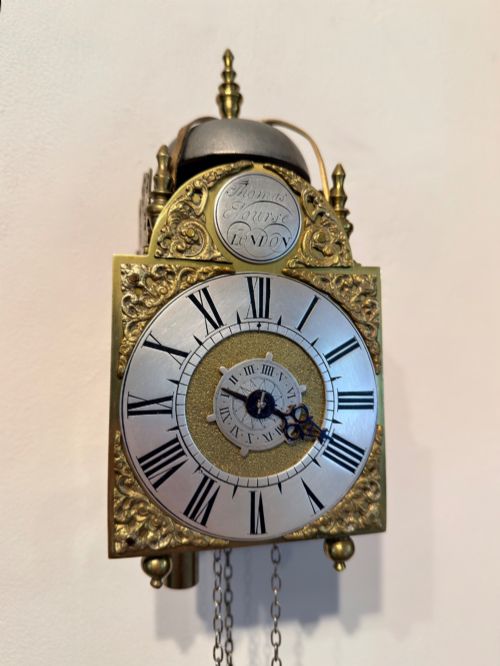
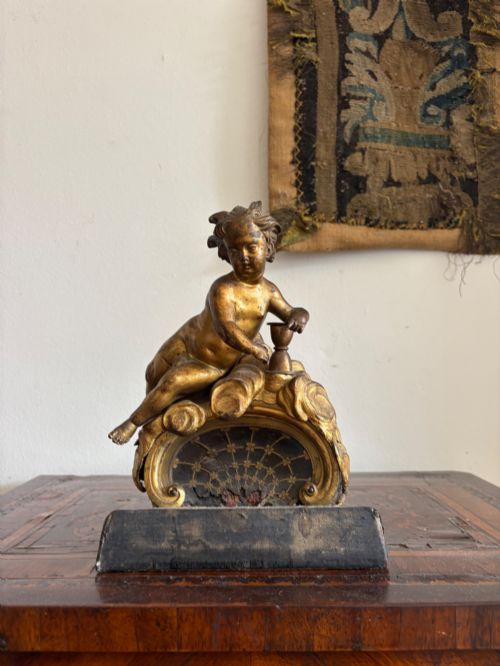
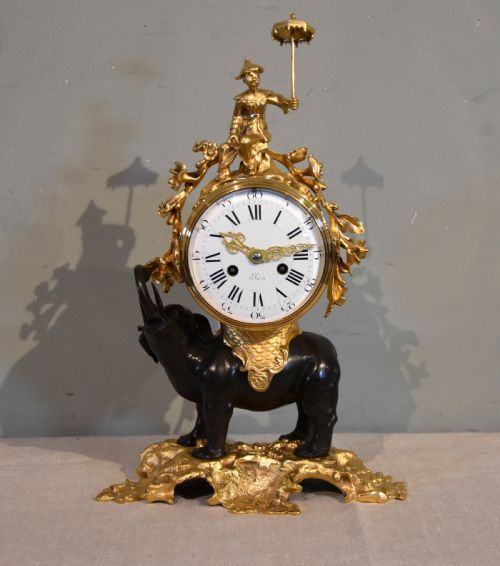

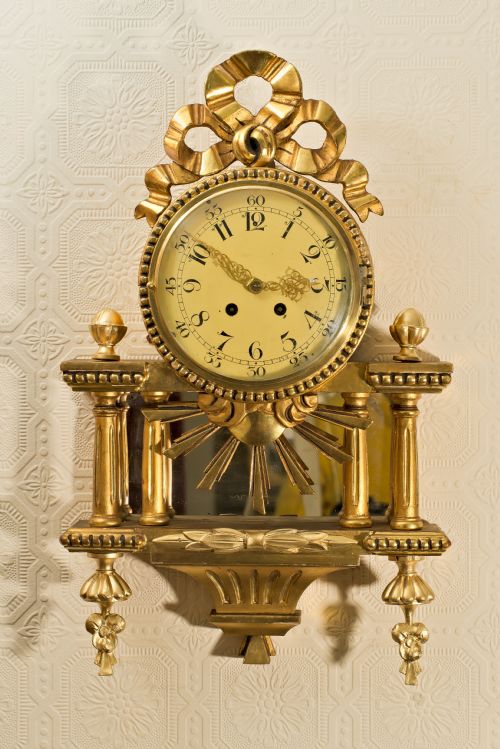


18th Century Gilt Clock
An 18th century gilt clock brings together rich metallic surfaces and precise timekeeping to anchor a room with period character.
18th Century Gilt Clock
An 18th century gilt clock encompasses substantial floor-standing longcase pieces, wall-hanging cartel designs, and intricate mantel pieces. The records show a strong presence of tall grandfathers and decorative wall clocks originating from English and French workshops.
Buyers encounter longcase forms adorned with lacquered finishes alongside polished ormolu wall clocks styled in the French taste. These items range from imposing floor clocks to smaller bracket and table variations.
The selection bridges British craftsmanship and continental design movements, providing mechanical timepieces that double as sculptural objects. Each form relies on the interplay of gilt surfaces and traditional dial layouts.
How They Were Made
Maker's workshops utilised brass movements housed within cases constructed from wood, often finished with detailed lacquer or giltwood carvings. Ormolu and gilt bronze mounts were cast and chased to add relief decoration to marble and timber bodies.
Dials integrated painted enamel elements and intricate metal hands driven by weights or spring-powered fusee movements. The integration of lacquer work required multiple layers of finish applied to wood substrates to achieve deep green and gold decorative schemes.
18th Century Gilt Clock Retail Price Guide 2026
Typical asking prices for 18th century gilt clock among the pieces listed under this phrase on Sellingantiques today, from the lower quarter to the upper quarter. They describe what is for sale here now, not the wider market.
The documented periods span from the early Georgian era through the Victorian period, reflecting 18th and 19th-century manufacturing.
What Varies in Quality
The distinction between standard examples and finer works rests upon the crispness of the gilt bronze chasing and the complexity of the clock movement. Master clockmakers of the period signed their brass dials, marking works that required advanced engineering.
Cabinetwork quality shows in the depth of the lacquering and the preservation of original carved wood details. Superior items retain harmonious proportions between the decorative case and the internal mechanical components.
William Kipling London·Wetterstrands·Sacre·Wise of Reading·Gardner of London·Chater And Son London·John Leroux London·William Webster London·Ferdinand Berthoud
The 18th Century Gilt Clock Glossary
- Ormolu
- Gilt bronze created by applying a mercury and gold amalgam to a bronze base and heating it until the mercury vaporised. This technique produced a durable golden finish seen on French mantel and wall clocks.
- Cartel clock
- A wall clock housed in an ornate frame made of giltwood, bronze, or ormolu. These designs emerged strongly during the Rococo and Louis periods.
- Longcase clock
- A tall pendulum clock enclosed in a wooden case standing directly on the floor. Often referred to as a grandfather clock, these tall forms frequently feature lacquered or chinoiserie decoration.
- Fusee
- A conical pulley used in spring-driven clocks to equalise the driving force as the mainspring unwinds. This mechanism improves timekeeping accuracy across the power reserve.
- Chinoiserie
- European decorative style reflecting Chinese artistic motifs, popular on lacquered clock cases of the Georgian era. It involves painted and gilt scenes set against dark coloured backgrounds.
18th Century Gilt Clock: Frequently Asked Questions
Where were these clocks made?
The records indicate production centred primarily in English and French workshops. London masters signed many of the longcase and bracket clocks.
Continental pieces, particularly from French makers, display distinct ormolu mounts and marble integrations associated with Parisian design.
How do I wind a fusee movement?
Winding requires a matching key inserted into the dial aperture to tension the mainspring via the internal fusee cone. Care must be taken not to overwind the mechanism.
Many antique movements require attention from a specialist to maintain proper function without damaging historical components.
What is a cartel clock?
A cartel clock is designed to hang directly on a wall rather than rest on a mantel or floor. They feature elaborate frames cast in bronze or carved from wood.
These decorative wall pieces became prominent during the 18th century in French interiors.
How do I identify a chinoiserie case?
Chinoiserie cases feature hand-painted golden motifs depicting figures, pavilions, and landscapes against a dark lacquered background. Green and black finishes appear frequently among the recorded items.
This decorative technique gained popularity in England during the early Georgian period.