




French Rococo Table Clock
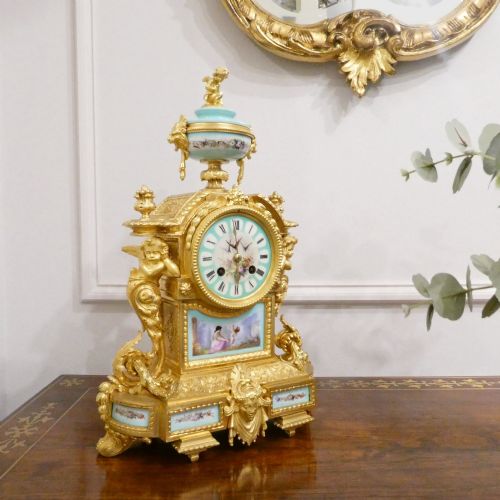
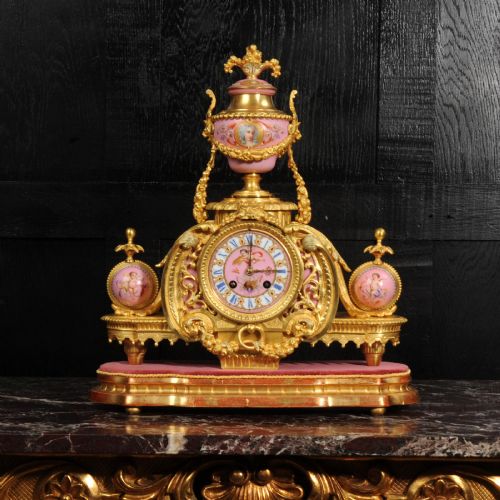
When you handle a french rococo table clock, you meet an ornate brass or gilt bronze timepiece shaped by nineteenth-century revival taste.
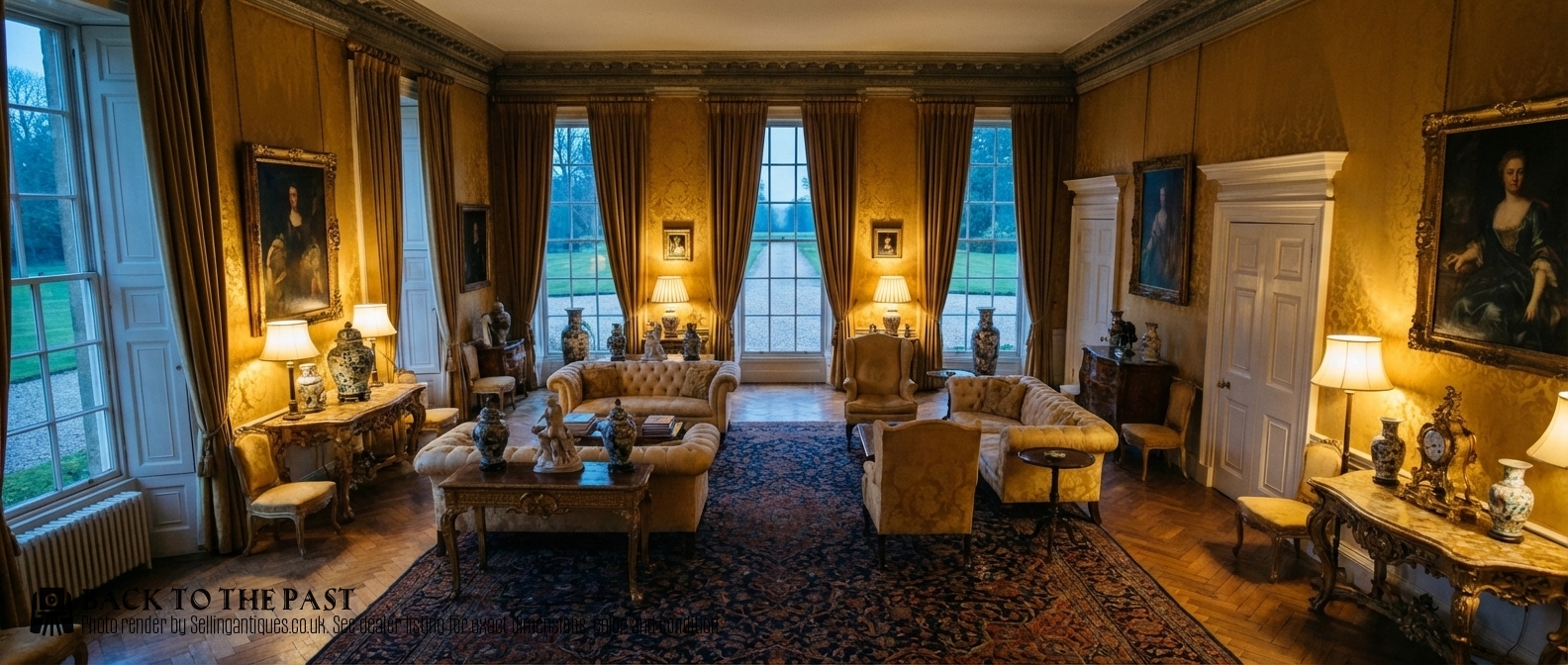
French Rococo Table Clock
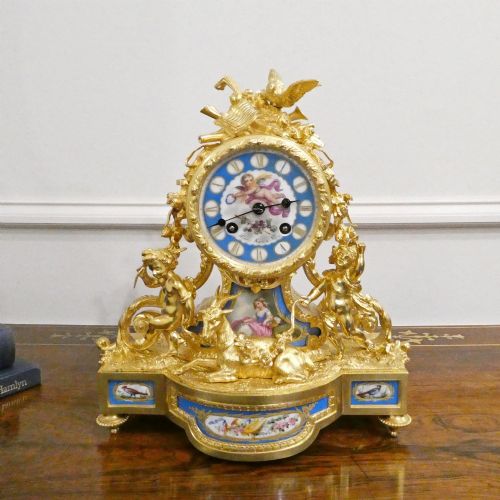
A french rococo table clock brings together nineteenth-century mantel timepieces and smaller boudoir formats shaped by revival styles. You will encounter mantel clocks, desk clocks, and clock sets dating from the Victorian period through to around 1910.
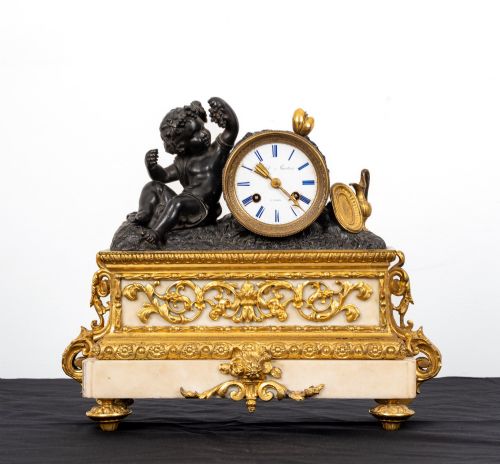
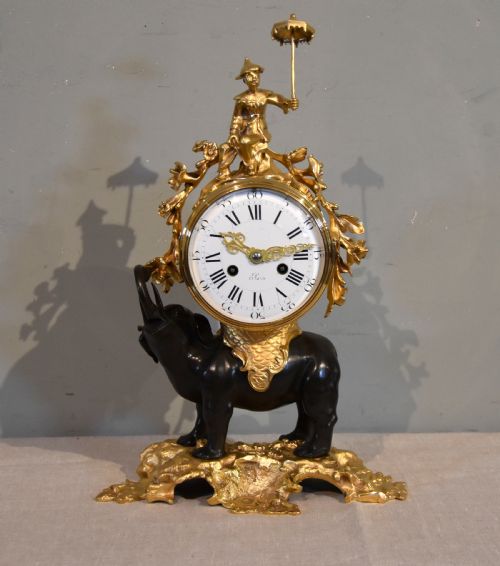
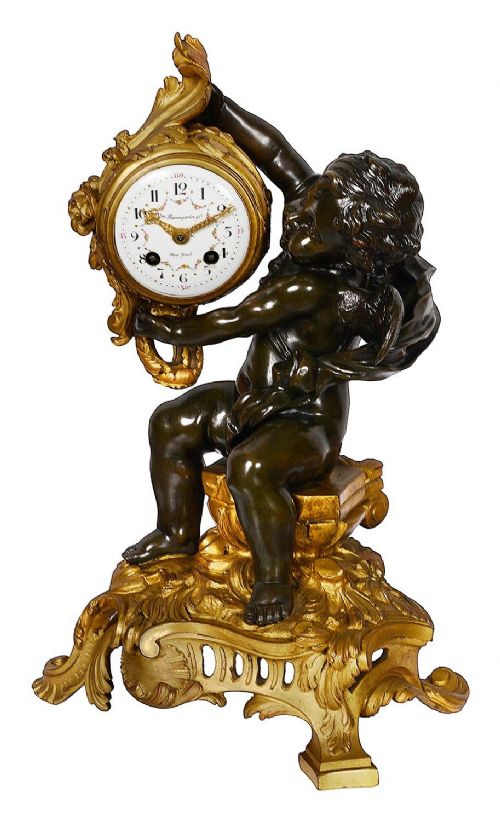
The dominant aesthetic draws heavily on Louis XV and Louis XVI design vocabularies, featuring asymmetrical scrollwork, floral motifs, and figural elements such as cherubs or animal forms. These decorative timepieces served both practical and ornamental purposes in period interiors.
How they were made
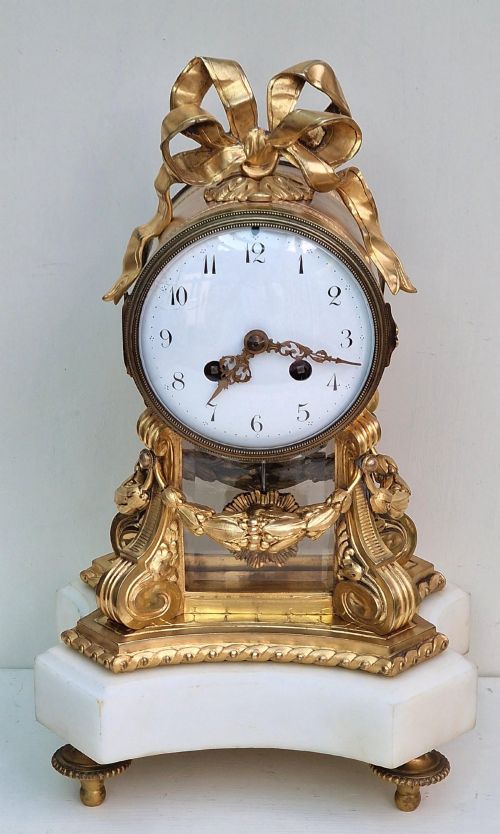
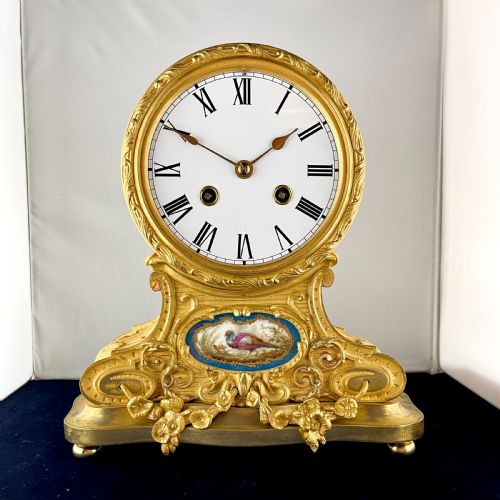
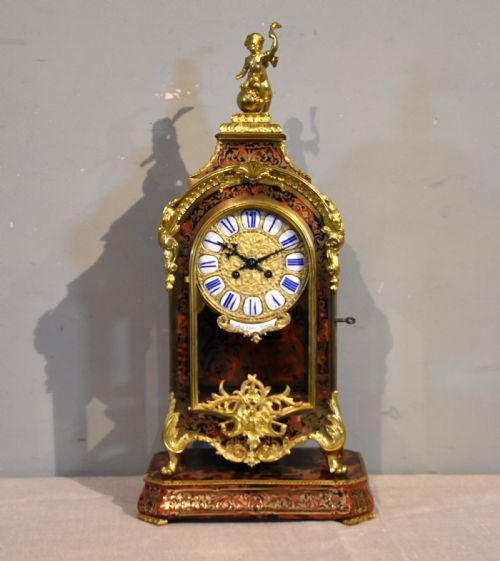
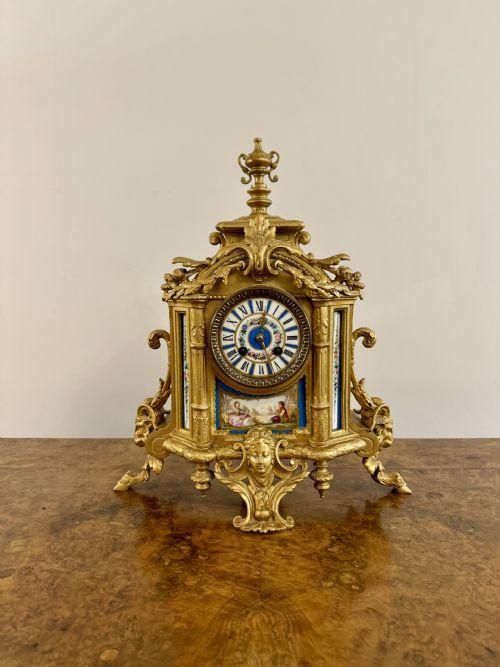
Maker workshops utilised cast ormolu, gilt bronze, and brass to form elaborate architectural and figural cases, often pairing metalwork with porcelain panels, enamel dials, and marble bases. Tortoiseshell and walnut also appear within select cabinetwork constructions.
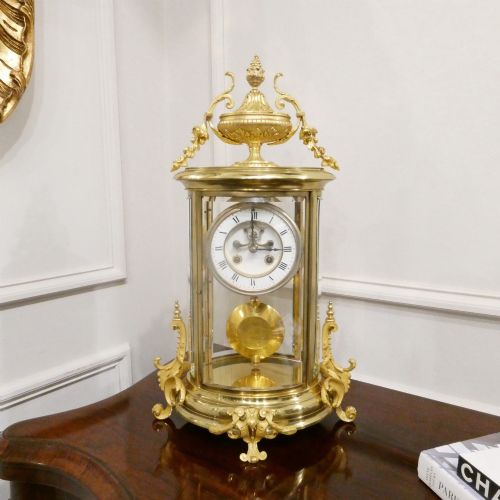
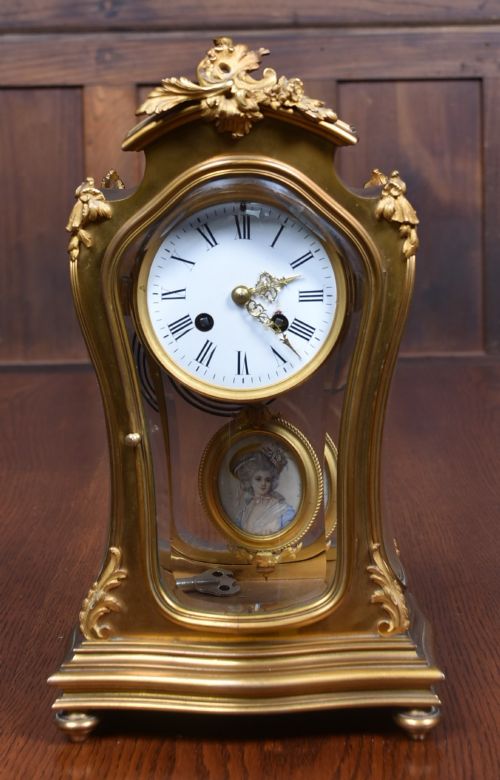
Clockmakers incorporated precision mechanical movements supplied by established French firms, housing them securely behind bevelled glass or within four-glass panelled structures that allowed the interior gear train to remain visible.
An elephant-form clock stands ready to remind guests that nineteenth-century French horologists enjoyed exotic creatures just as much as cherubs.
What varies in quality
The standard of a piece rests on the crispness of the bronze or ormolu chasing and the depth of the casting. Finer examples display sharp, hand-finished ornamentation rather than soft, mass-produced surface detailing.
The reputation of the movement maker heavily influences overall merit. Signed dials and movements from recognised Parisian horologists indicate higher workshop standards than unsigned equivalents.
Achille Brocot·Samuel Marti·Henry Marc·Siffel and Cartier·Japy Freres·Leroy Paris·Leon Message·Jollet et Cie·PH Mourey·A D Mougin·Viner London·Delettrez
The French Rococo Table Clock Glossary
- Ormolu
- Gilded bronze produced by applying a mercury-gilding amalgam to a cast bronze base. This technique creates a rich, lasting metallic sheen characteristic of high-status nineteenth-century French clocks.
- Champleve
- An enamelling technique where troughs are dug into a metal surface and filled with vitreous enamel powder before firing. It provides vibrant colour accents on bezels and mounts.
- Boulle
- Marquetry style utilising tortoiseshell and brass inlay developed in France. It adds striking pattern and contrast to wooden clock cases.
- Four glass clock
- A mantel timepiece encased in four glass panels supported by a brass or gilt frame. This design reveals the mechanical movement from all angles.
- Drumhead clock
- A timepiece featuring a circular drum-shaped movement housing mounted on a base. This minimalist form contrasts with heavier figural designs.
French Rococo Table Clock: Frequently Asked Questions
How do I wind the clock?
Use the provided key to turn the arbors located on the enamel dial gently until you feel resistance. Avoid over-winding to protect the internal spring mechanism.
Ensure the clock rests on a completely level surface to keep the pendulum swinging evenly and to maintain accurate timekeeping.
What is ormolu?
Ormolu refers to finely cast bronze that has been gilded using a mercury and gold mixture. It provides the bright metallic finish seen on many nineteenth-century French clock cases.
Unlike solid gold, the underlying metal is bronze, which requires gentle dusting rather than harsh chemical cleaning to preserve the gilding.
Are these clocks quiet?
Most antique mechanical clocks produce a distinct ticking sound from the escapement and may strike a bell or gong on the hour and half-hour. The acoustic presence varies depending on the case material and glass panels.
Solid marble or bronze cases tend to muffle internal sounds slightly more than open four-glass models.
How do I date my clock?
Check the backplate of the movement for stamped maker marks, serial numbers, or exhibition awards. These stamps often correspond to specific operating periods of the workshop.
Stylistic cues such as the presence of porcelain plaques, cherub figures, or specific revival motifs also help narrow down the decade of manufacture.