


18th Century Foldover Table
An 18th century foldover table brings versatile surface space and refined cabinetmaking into a room with understated elegance.
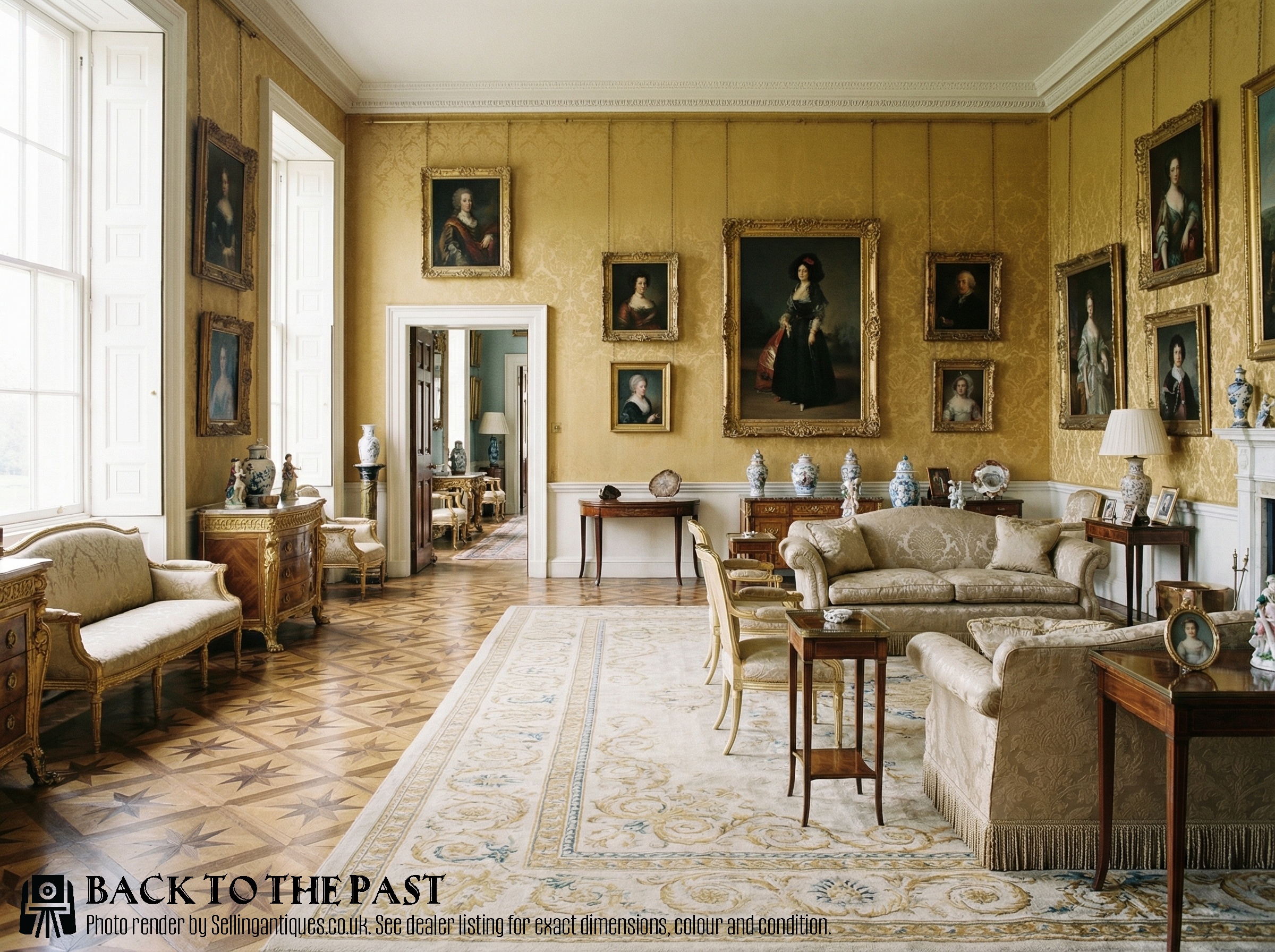
18th Century Foldover Table
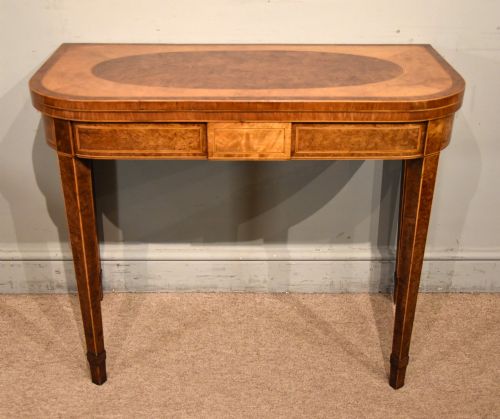
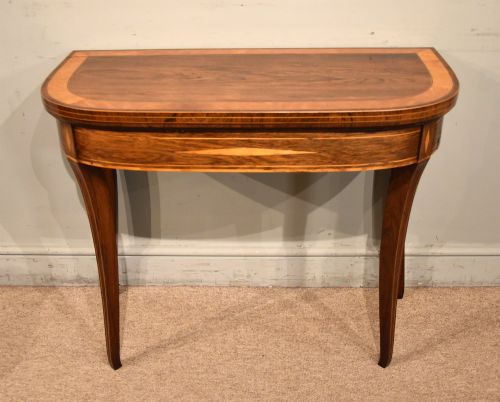
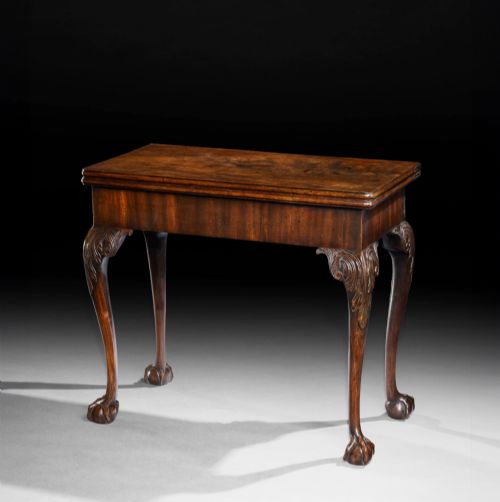
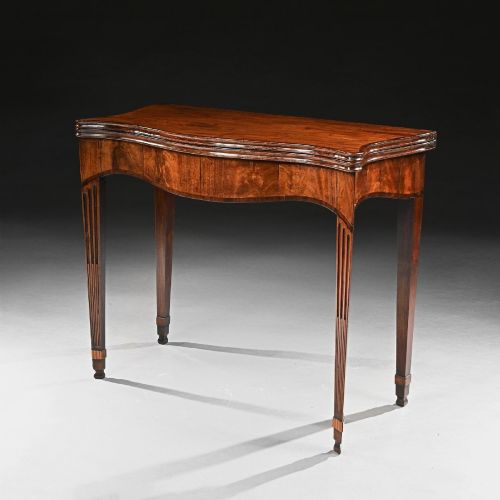
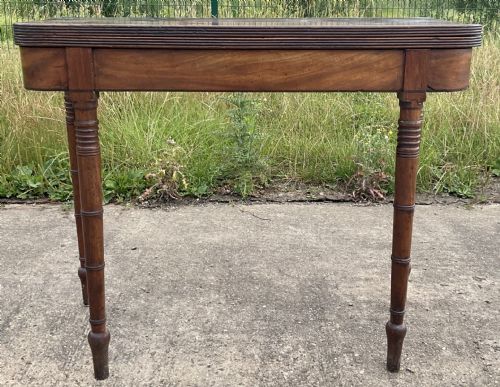
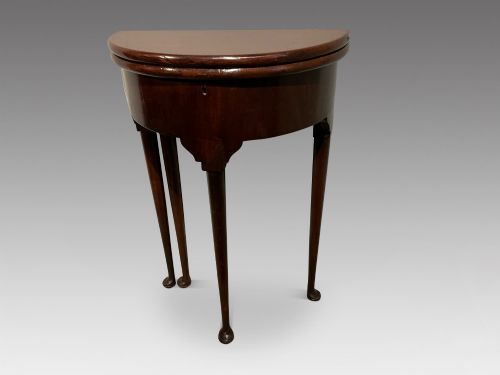
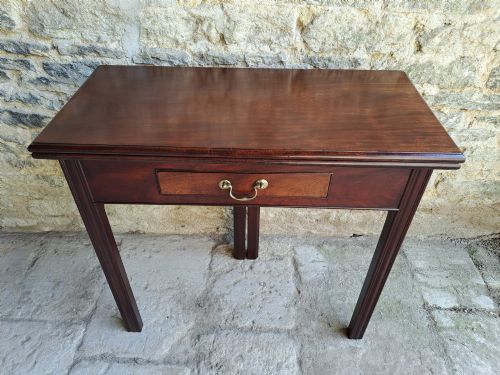
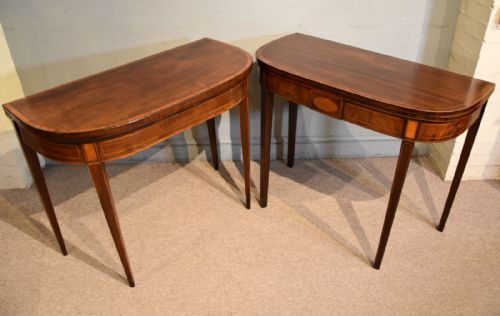
When you search for an 18th century foldover table, you encounter a specialised form designed to adapt from a compact side piece into a dedicated surface for tea or card games. The pieces appearing here predominantly span the Georgian era, encompassing George II, George III, and Late Georgian periods, alongside Dutch walnut marquetry examples.
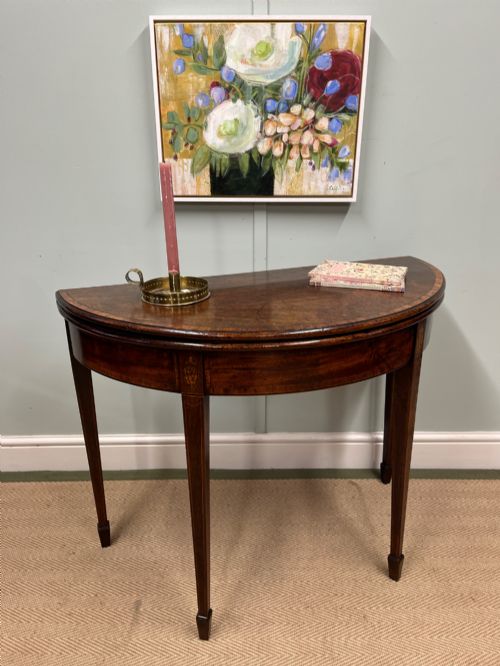
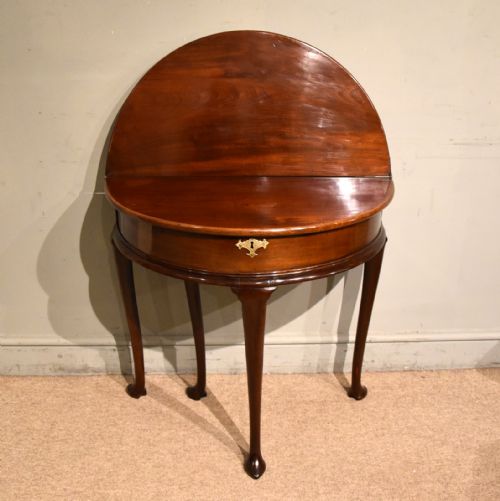
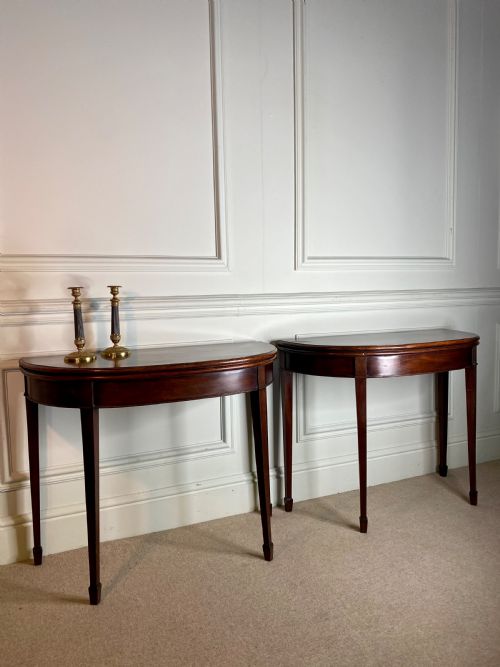
The physical configurations vary significantly across these origins, ranging from demilune and D-shaped side tables to rectangular tea tables and trifold games surfaces. Card tables and games tables frequently feature dished gaming wells or concertina actions, while tea tables prioritize smooth mahogany or satinwood surfaces meant to stand against a wall until needed.
Mahogany dominates the material palette, supported by decorative veneers such as burr yew wood, satinwood, and rosewood, often accented with boxwood or general wood inlay. Cabinetmakers of the period engineered these hinged tops to swivel or fold open cleanly, concealing internal storage compartments or green baize playing areas.
Distinguishing Quality
Quality rests heavily on the crispness of the timber figure and the depth of the natural paturation accumulated across the centuries. Superior examples display carefully matched veneers on the foldover flaps, ensuring the grain pattern continues seamlessly when the table opens.
The mechanical integrity of the folding mechanism and the weight of the brass hinges differentiate standard utility pieces from high-end drawing room furniture. Finely carved edge mouldings, painted satinwood details, and harmonious proportions separate workshop output from master cabinetmaker commissions.
Secret candle slides tucked beneath the top remind us that eighteenth-century card players relied entirely on flickering wax to track their losses.
Giles Grendey
The 18th Century Foldover Table Glossary
- Demilune
- A half-moon shape commonly utilised for card and side tables designed to sit flush against a wall when closed. This profile allowed furniture to occupy minimal floor space in smaller eighteenth-century parlours.
- Concertina action
- An expanding table frame construction that pulls outward on hinged rails to support all four corners when the top unfolds. This mechanism distributes weight evenly and eliminates the need for a swinging gate leg.
- Marquetry
- The art of applying decorative pieces of veneer to a structural structure to form intricate pictorial or geometric designs. Craftsmen used various contrasting woods to achieve tonal depth.
- Dished gaming wells
- Recessed circular or oval depressions carved into the wooden surface of a card table to hold counters, coins, or candles securely during play. These wells distinguish specialised gaming furniture from standard tea tables.
- Parquetry
- A geometric mosaic of wood pieces used for decorative surfaces, resembling parquet flooring on a miniature scale. It frequently appears on the tops of fine gaming tables.
18th Century Foldover Table: Frequently Asked Questions
How do I use a foldover table daily?
These tables function well as console or side surfaces against a living room wall, holding lamps or decorative objects in their closed position. When hosting guests, simply unfold the hinged top to create an instant dining space or a dedicated area for board games.
Because the internal construction handles frequent movement, opening the leaf requires steady lifting rather than forcing the hinges. Placing coasters on the polished wood prevents moisture rings from disrupting the historical finish during everyday use.
What is the difference between a tea table and a card table?
Tea tables generally feature flat wooden tops designed to display porcelain tea service sets, resting flush against room perimeters when not in use. Card tables incorporate specialised interior surfaces, often lined with baize or featuring coin wells, built specifically for evening entertainment.
While both share the characteristic foldover mechanism, card tables often employ concertina frames or swing legs to support the heavier weight of the doubled top. Examining the interior configuration clarifies whether the piece was commissioned for dining hospitality or parlour recreation.
How do I identify a Georgian period piece?
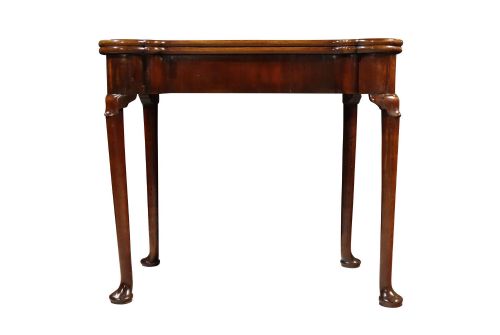
Georgian tables display distinct stylistic traits aligned with the reigns of the Georges, moving from early cabriole legs with pad feet toward straight tapered legs with delicate inlay. Woods transition from heavy dark walnut to rich Cuban mahogany and eventually bright satinwood highlights near the end of the eighteenth century.
Construction methods inside the frieze drawer and beneath the tabletop reveal hand-cut dovetails and traditional timber shrinkage patterns consistent with eighteenth-century workshop practices. Comparing the hardware, such as brass hinges and swing brackets, helps confirm the era of production.
Can I place these tables on modern heated floors?
Solid mahogany and veneered tabletops respond sensitively to fluctuating humidity and direct heat sources, which can cause timber to split or veneers to lift. Positioning them away from radiators and underfloor heating zones preserves the structural integrity of the antique glue and wood.
Maintaining a stable indoor climate ensures the concertina actions and folding leaves continue to operate without jamming or warping. Gentle polishing with traditional beeswax nourishes the dry eighteenth-century grain against environmental changes.