





18th Century Fold Top Table
An 18th century fold top table brings flexible timber engineering into the parlour for tea and gaming.
18th Century Fold Top Table
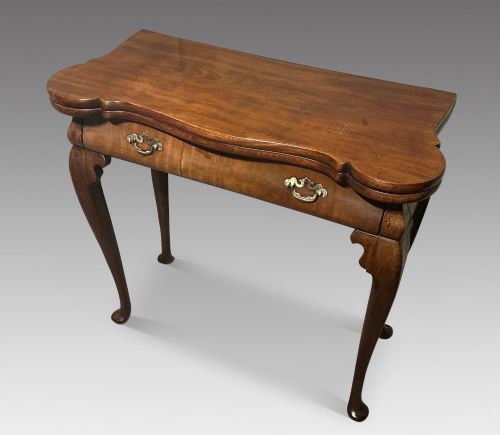
Most pieces date from the Georgian era, spanning George I, George II, and George III reigns, alongside specific examples from the late 17th century and the 19th century. Cabinet makers built these items in mahogany, walnut, oak, elm, amboyna, and satinwood, often incorporating folding leaves, baize linings, and drawers.
Quality variations
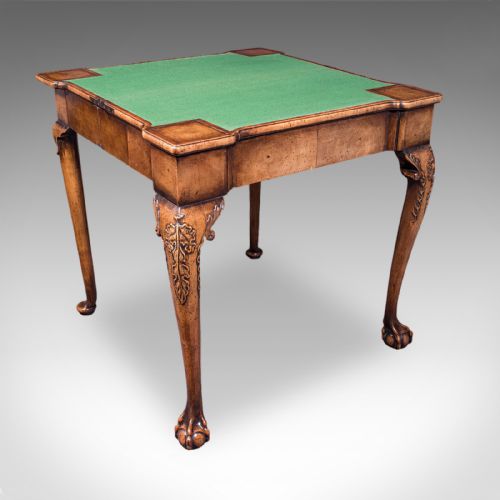
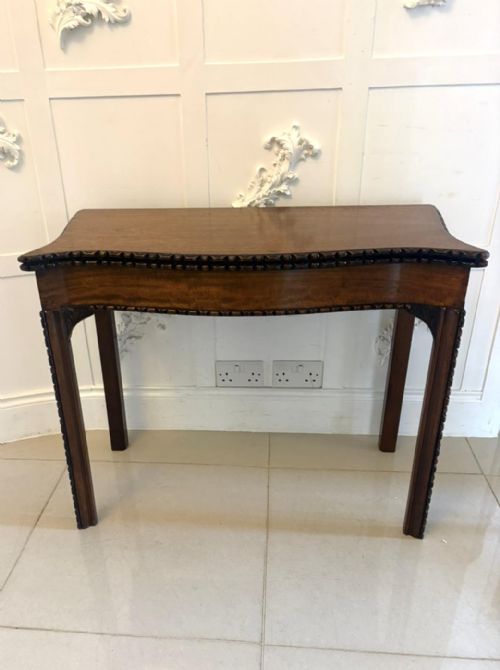
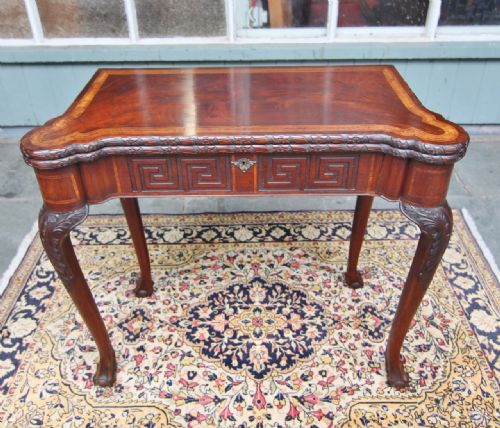
The degree of carving on the legs and the choice of figured timber on the top set exceptional pieces apart from standard utility items. Sharp relief carving in the mahogany, such as Chippendale style details, signals superior workshop execution.
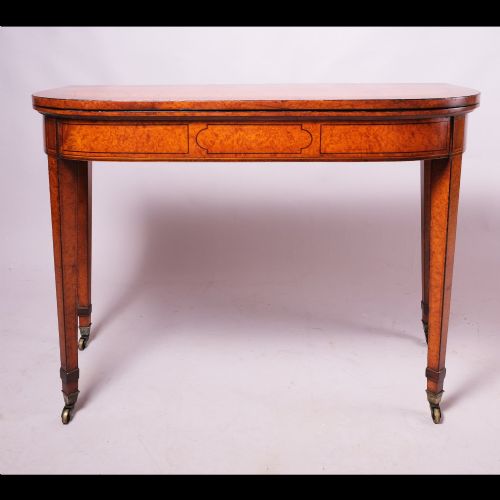
The precision of the folding mechanism and the integration of secondary woods like satinwood inlay or brass hardware determine the overall refinement. Original surfaces with deep patination hold more integrity than heavily restored examples.
Listings feature mahogany, walnut, oak, elm, satinwood, and amboyna, paired with baize linings, brass hardware, and iron fittings.
The 18th Century Fold Top Table Glossary
- Concertina action
- A table frame that extends outward on a hinged framework, allowing all four legs to move in symmetry when the top unfolds. This complex mechanism supports the opened leaf without needing a swing leg.
- Baize
- A coarse woollen fabric, typically green, used to line the interior surfaces of card and games tables. It provides a durable playing surface for cards and counters.
- Demi-lune
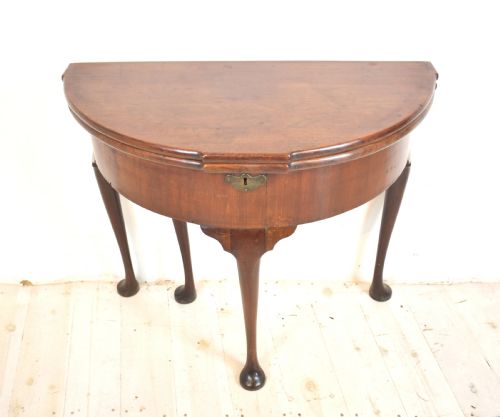
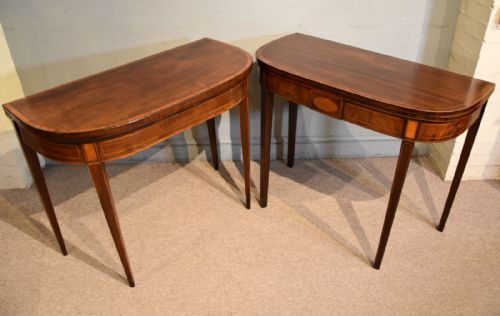
- A half-moon shape used for the tops and frames of side and console tables. These pieces fit flat against a wall when closed.
- Gateleg
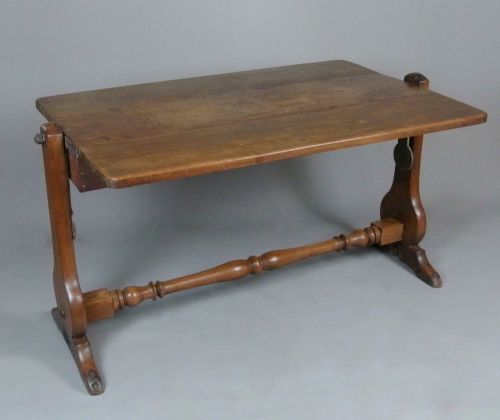
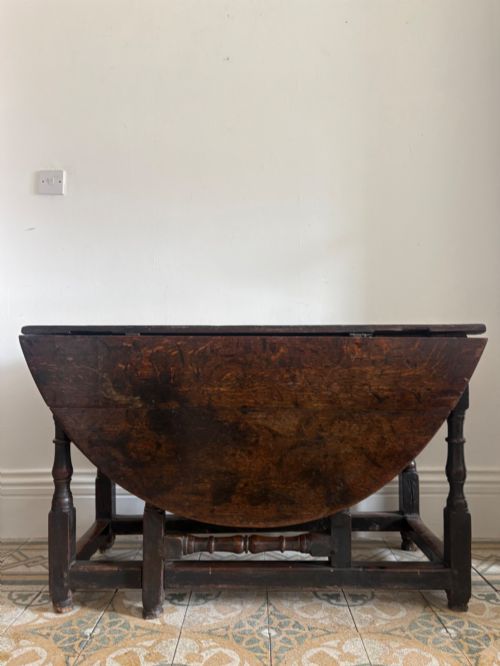
- A table construction where a hinged leg swings outward like a gate to support a drop-leaf or fold-over top. This design provides structural support under an extended surface.
18th Century Fold Top Table: Frequently Asked Questions
What is an 18th century fold top table?
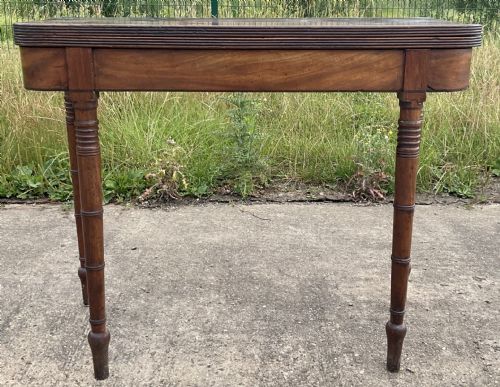
These pieces are dual-purpose wooden tables built to save space in domestic interiors by folding closed when not in use. They transform from narrow console or side tables into larger surfaces for dining, tea, or card games.
Craftsmen engineered the tops with hinges, swing legs, or concertina frames to support the extra weight safely. They served social functions in Georgian drawing rooms and parlours.
How were card tables used?
Card tables hosted evening gaming sessions for pastimes like whist, piquet, and patience. Players gathered around the unfolded top, which often featured coin wells, candle corners, and a baize lining.
When the games ended, servants folded the top back against the wall to clear the floor space. The internal compartments stored counters, cards, and markers.
How do I identify a George III table?
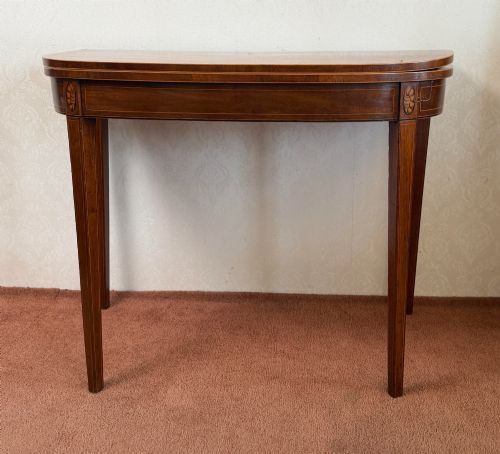
George III pieces often display straight tapered legs, spade feet, or refined mahogany veneers with satinwood inlay. The styles shift from heavier early structures toward lighter, neoclassical proportions.
Cabinet makers during this period utilised D-shaped or demi-lune formats, alongside serpentine fronts. Makers also incorporated triple-top designs for multi-use functionality.
Where should I place one at home?
These tables suit hallways, living rooms, and dining spaces as console or side pieces against a flat wall. Their fold-over function lets you open them up when hosting guests for drinks or games.
Keep them away from direct sunlight and strong heat sources to protect the polished wood and delicate veneers. Use coasters on the timber surface to prevent moisture rings.