


Georgian Semi Circular Table
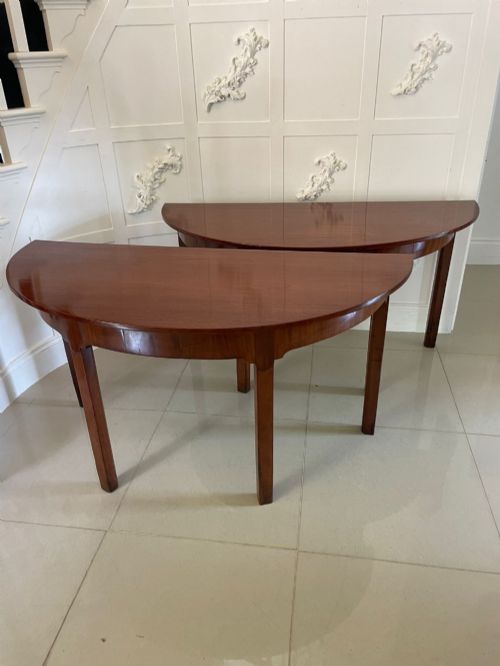
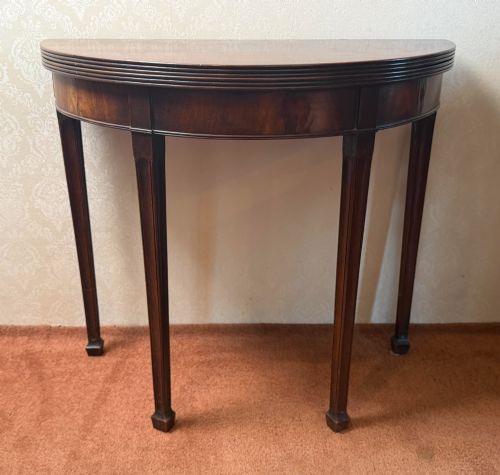
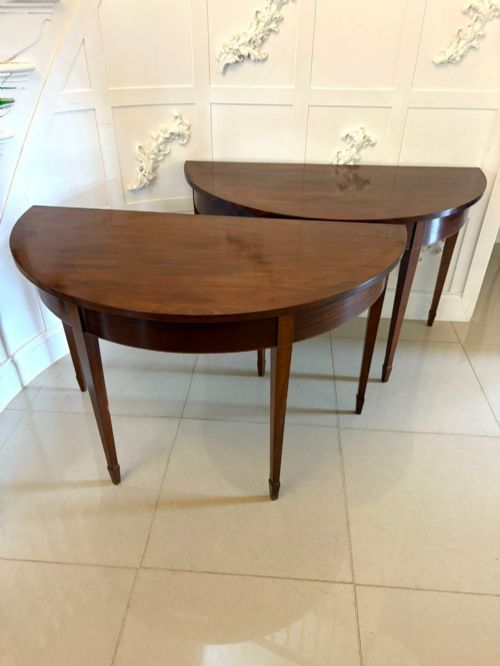
A georgian semi circular table offers a graceful half-moon profile that sits flat against a wall, making it a practical choice for period interiors.
Georgian Semi Circular Table
A georgian semi circular table typically takes the form of a console, tea, or card table designed to fit compactly in hallways and reception rooms. These half-moon pieces appear frequently as fold-over top models intended for games or tea, alongside fixed top console tables.
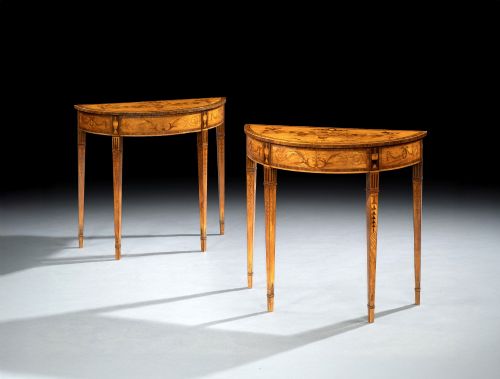
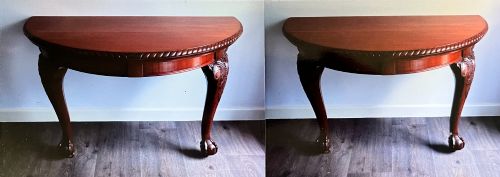
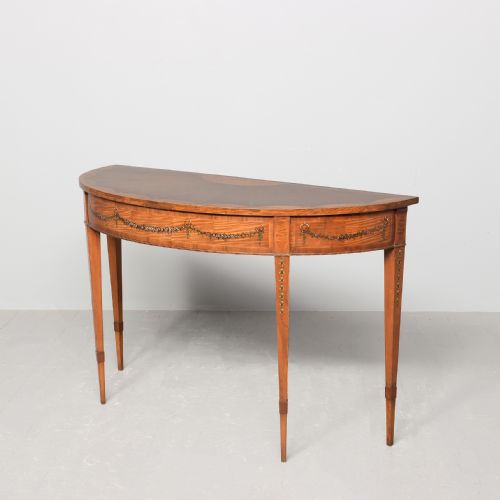
The materials and construction span the eighteenth century and the Regency era, with later twentieth-century revival interpretations also appearing. The selection includes plain mahogany variants as well as more decorative pieces featuring satinwood and painted surfaces.
Materials and construction
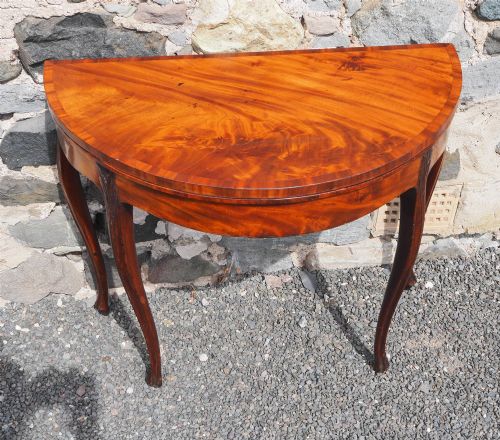
Cabinet makers utilised solid mahogany and flame mahogany veneer as the primary structural and visual timber, often enhanced by contrasting boxwood inlay and crossbanding. Satinwood also appears frequently, providing a lighter surface for marquetry decoration.
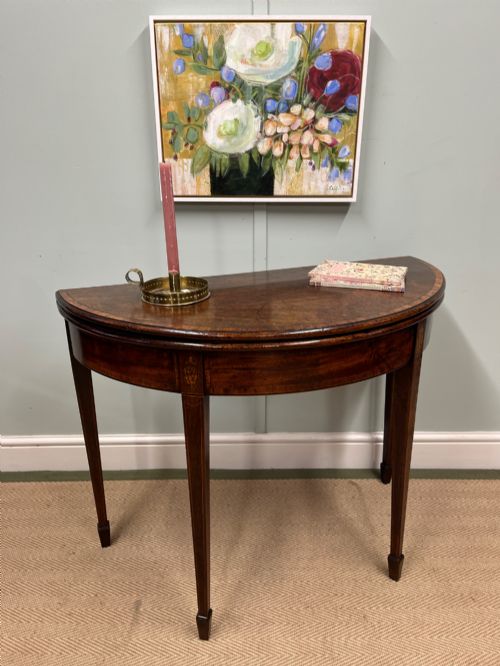
Many examples incorporate folding tops supported by clever pivoting leg mechanisms to convert a console into a card or tea table. Edge mouldings, brass fittings, and painted motifs further distinguish the surface work of these pieces.
Listings feature mahogany, satinwood, and boxwood inlay across eighteenth-century and nineteenth-century periods, including twentieth-century revival console and card tables.
Assessing quality and craftsmanship
The distinction between ordinary and superior pieces rests on the choice of timber and the precision of the veneer work, particularly on curved tops. Figured mahogany and finely executed satinwood marquetry elevate a table from a simple utility item to a statement of fine cabinet making.
Proportion and the handling of inlaid details dictate the visual balance of the piece. Tables with crisp boxwood inlay and harmonious painted decoration demonstrate a higher level of workshop skill than plainer equivalents.
The Georgian Semi Circular Table Glossary
- Demi-lune
- A half-moon shape used to describe tables with a flat back and a curved front edge.
- Crossbanding
- A strip of veneer applied to the border of a table top, often running perpendicular to the grain of the central panel.
- Marquetry
- Decorative patterns formed by fitting together small pieces of coloured wood veneer onto a grounded surface.
- Console table
- A table designed to stand flat against a wall, frequently supported by brackets or legs at the front.
Georgian Semi Circular Table: Frequently Asked Questions
How were these tables used?
These tables served multiple functions in period homes, often placed against hallway walls as serving surfaces or pulled into the centre of a room for tea and card games. Fold-over top versions allowed households to save space when entertainment concluded.
Their shallow depth made them suitable for narrow corridors and drawing rooms where rectangular furniture would obstruct movement while still providing a decorative display surface.
What is a demilune table?
A demilune table is simply a piece built with a semi-circular top and a flat straight edge at the rear. This geometry allowed the furniture to sit flush against a wall.
Cabinet makers favoured this shape during the Georgian and Regency periods because the curved front softened the rigid lines of traditional panelled rooms.
How do I date a table?
Dating relies on examining the secondary timbers, the style of the leg supports, and the specific type of veneer or inlay work applied. Earlier eighteenth-century pieces often display robust mahogany construction, while Regency and later revival items introduce painted satinwood or different edge profiles.
Comparing the construction methods of the hinge mechanisms and frame assembly helps narrow down the period of manufacture.
Where should I place one?
These tables fit naturally into entrance halls, stair landings, or against living room walls beneath a mirror or painting. Their shallow profile ensures they occupy minimal floor space.
Pairing them with a lamp or decorative ceramic bowl complements their historical function as display and occasional furniture.