



Antique Game Table Fold Out
An antique game table fold out offers ingenious versatility, expanding from a slender console to a proper surface for play.
Antique Game Table Fold Out
When you search for an antique game table fold out, you encounter pieces designed to transform from compact furniture into dedicated spaces for cards and board pursuits. The selections here span the Georgian, Regency, Victorian, and Edwardian eras, reflecting shifts in drawing room furniture over two centuries.
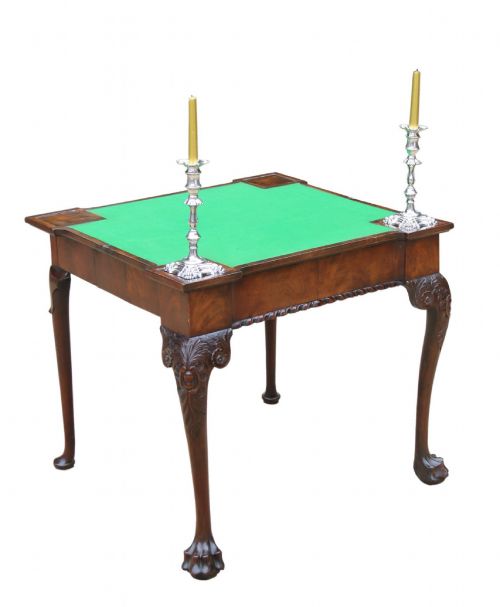
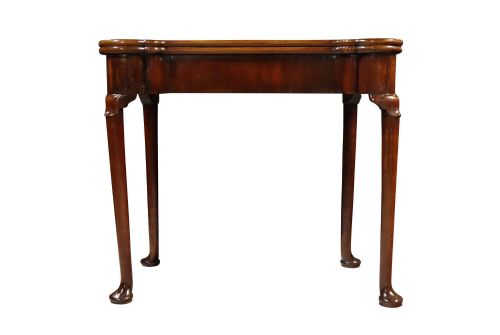
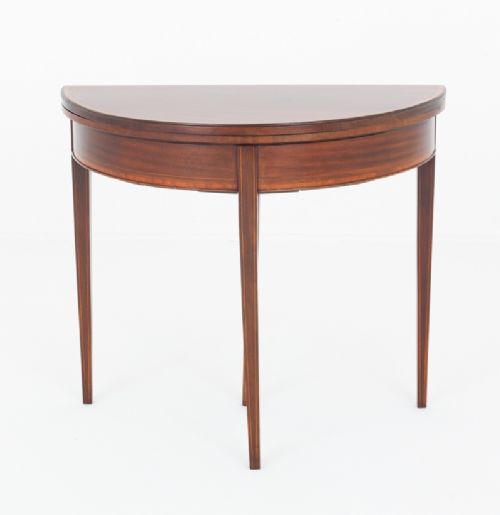
You are most likely to meet mahogany examples from the Edwardian and Georgian periods, alongside satinwood demi-lune pieces and envelope card tables. Formats vary from concertina action frames and dished gaming wells to simple fold-over tops.
The objects served as social furniture in wealthy homes, remaining discreet until guests gathered for evening entertainment. Their survival demonstrates the enduring appeal of clever mechanical design paired with fine cabinet-making.
How they were made
Cabinet-makers relied heavily on solid and veneered mahogany, often embellished with satinwood, boxwood inlay, and intricate marquetry. These timbers provided the structural stability needed for hinged tops and folding mechanisms.
Interiors frequently incorporate contrasting baize to provide a tactile playing surface for cards. Brass fittings secure the pivoting and concertina actions that allow the frames to expand safely under load.
Antique Game Table Fold Out Retail Price Guide 2026
Typical asking prices for game table fold out among the pieces listed under this phrase on Sellingantiques today, from the lower quarter to the upper quarter. They describe what is for sale here now, not the wider market.
Secret wells inside these tables once held hidden fortunes in ivory counters and midnight wagers.
What varies in quality
The distinction between ordinary and exceptional pieces lies in the precision of the folding mechanism and the crispness of the cabinet-maker's joinery. Superior examples maintain perfect alignment when closed and operate smoothly without sagging when extended.
Decorative restraint and timber selection also set pieces apart, where subtle boxwood inlay or figured satinwood veneer elevates the overall presence without relying on excessive ornamentation.
The Antique Game Table Fold Out Glossary
- Concertina action
- An expanding frame mechanism that allows four legs to move outward symmetrically when the table opens, providing stable corner support.
- Demi-lune
- A half-moon shape popular for console tables that sit flat against a wall until unfolded into a full circle or square.
- Baize
- A coarse woollen fabric traditionally used to line the playing surfaces of card tables, reducing noise and friction.
- Envelope table
- An Edwardian card table design featuring four triangular flaps that rotate and fold open together like an envelope.
Antique Game Table Fold Out: Frequently Asked Questions
How do you open an antique fold out game table?
Most pieces feature a hinged top that swivels ninety degrees and unfolds over a vacant frame, or relies on a concertina action where the rear legs pull outward to support the secondary leaf.
Care must be taken to lift and pivot the panels gently rather than forcing stiff hinges that have settled over decades of disuse.
What was the baize used for?
The woollen baize lining provided a soft, non-slip surface for dealing cards and counting counters during evening parlour games.
It also protected the polished wooden interior from scratches caused by wooden gaming pieces and heavy pewter or ceramic counters.
How do I date a game table?
Dating relies on observing the timber species, inlay techniques, leg profiles, and the complexity of the folding mechanism. Georgian pieces often display substantial mahogany frames, while Edwardian versions frequently utilise lighter satinwood and envelope mechanisms.
Construction marks and secondary woods hidden inside the frame also offer clues to the exact period of manufacture.
Can these tables be used daily?
These pieces function well as side consoles or display surfaces when closed, adapting easily to modern living rooms and hallways. Opening them should be done with care to protect the original hinges and internal folding structures.