


18th Century English Delftware
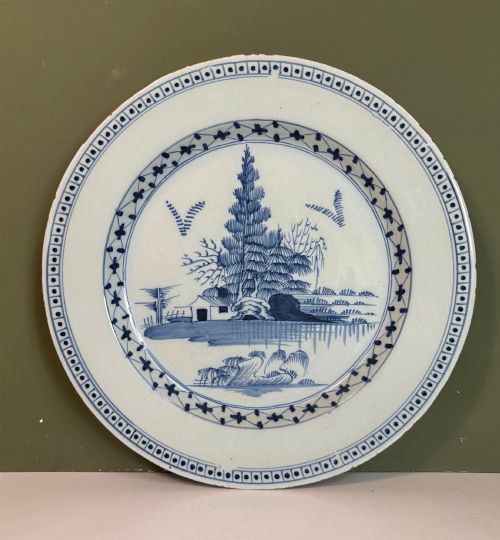
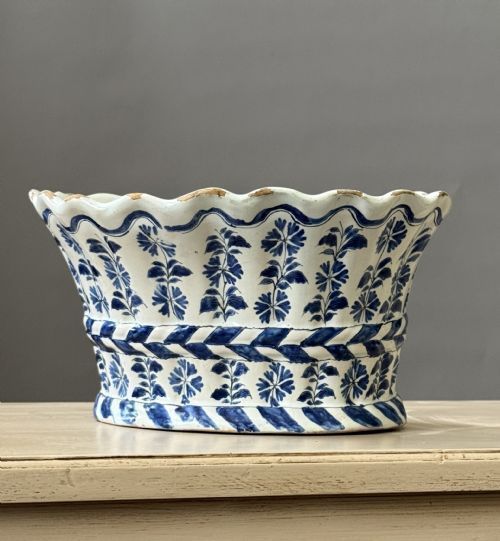
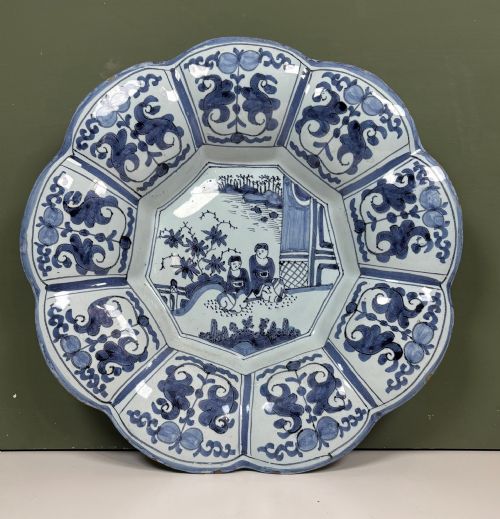
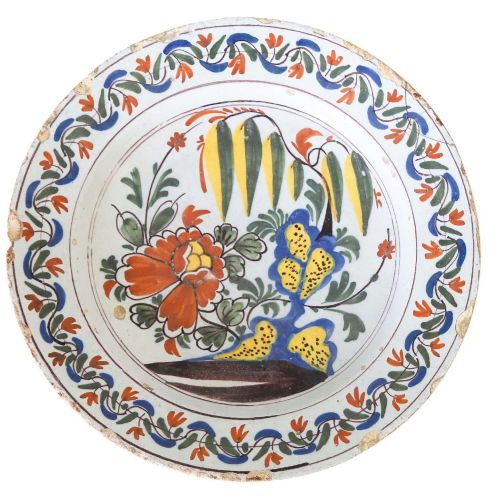
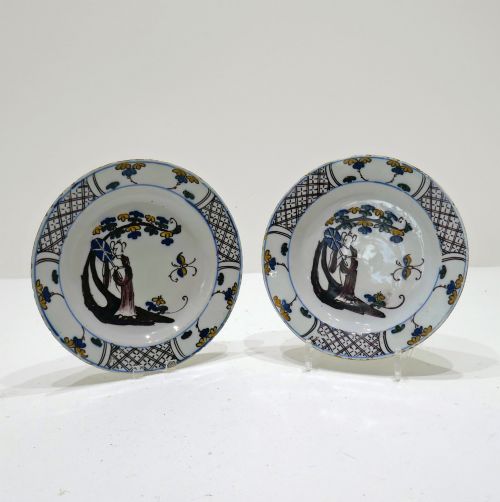
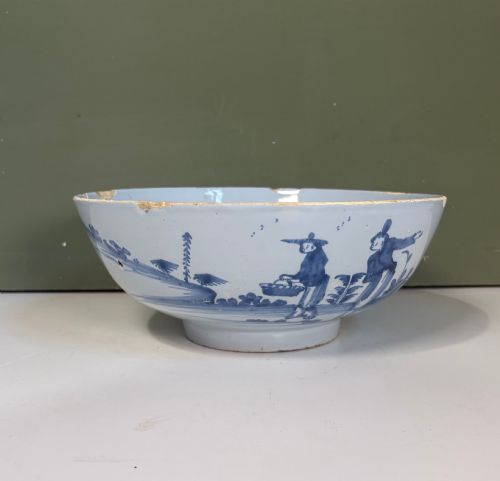
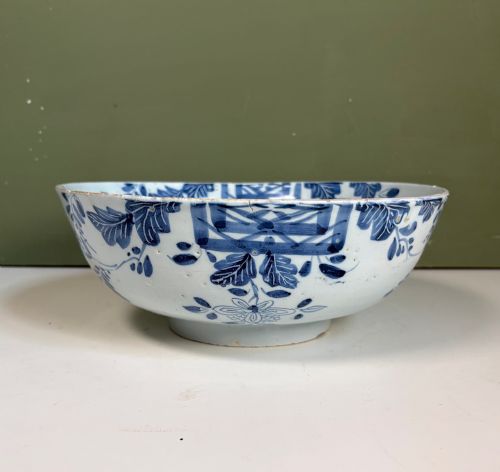
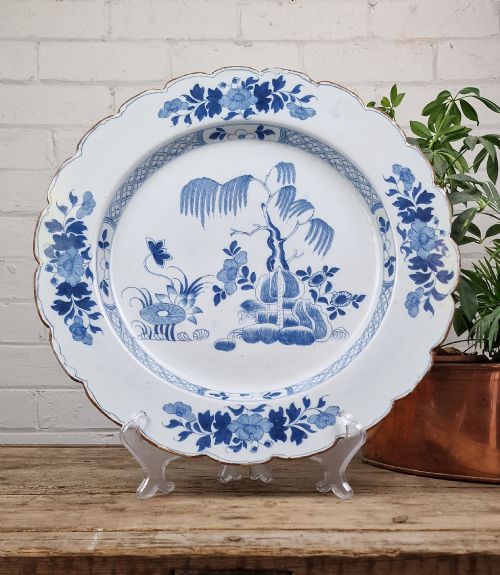
These pieces of 18th century English delftware bring tin-glazed earthenware into a room, offering collectors hand-painted earthenware with blue and white or polychrome decoration.
18th Century English Delftware
When you search for 18th century English delftware, you encounter chargers, plates, dishes, bowls, bough pots, drug jars, and puzzle jugs. These items form the core of domestic ceramic production from the period.
The objects span domestic tableware and apothecary vessels, including wet drug jars, posset pots, salt cellars, and marriage plates. Blue and white or polychrome palettes dominate the selection.
Production centres such as Bristol and Lambeth supply many of the chargers and plates seen here. Bristol and Lambeth potteries account for the identifiable regional output in the records.
How they were made
Makers shaped earthenware bodies and coated them in tin glaze to create an opaque white surface for painting. Cobalt pigment and other colours were then applied directly onto the unfired glaze.
Hand-painted floral decoration, Chinoiserie motifs, and apothecary inscriptions were executed using cobalt oxide and polychrome pigments. The pieces were subsequently fired to fuse the pigments with the tin glaze.
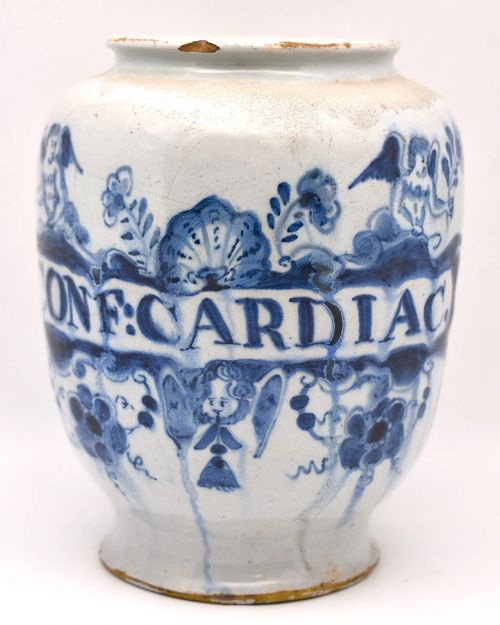
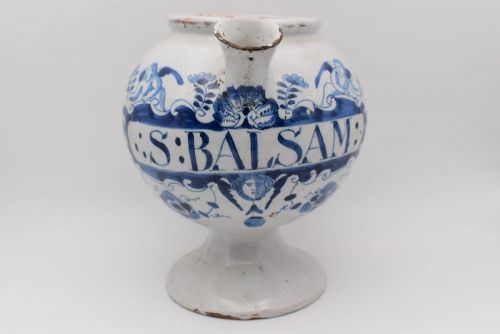
Medical supplies once rested in apothecary jars marked for cardiac remedies and balsam.
What varies in quality
The clarity and execution of hand-painted brushwork distinguish standard utilitarian wares from more ambitious decorative chargers and specialised apothecary jars. Controlled cobalt pigment application and vibrant polychrome hues elevate certain plates and bowls above simpler production.
The preservation of the tin glaze and the complexity of forms such as posset pots, puzzle jugs, and bough pots determine the standing of individual pieces. Survival of complete lids on posset pots or intact apothecary labelling adds further distinction.
Bristol·Lambeth Pottery
The 18th Century English Delftware Glossary
- Tin Glaze
- An opaque white earthenware glaze containing tin oxide. This surface provides the background for painted blue and white or polychrome decoration.
- Charger
- A large decorative plate or dish intended primarily for display on a wall or dresser rather than for practical table service.
- Polychrome
- Decoration employing multiple colours rather than a single pigment. On these earthenwares, it typically includes greens, yellows, blues, and reds.
- Chinoiserie
- European artistic styles reflecting Chinese motifs and landscapes. This style appears frequently on plates and chargers from the period.
- Drug Jar
- An apothecary vessel used for storing medical preparations and ointments. Examples include wet drug jars inscribed with specific medicinal contents.
18th Century English Delftware: Frequently Asked Questions
What is 18th century English delftware?
It is tin-glazed earthenware produced in England during the seventeen-hundreds, featuring hand-painted decoration in blue and white or polychrome.
Potters shaped clay into items such as plates, chargers, bowls, and apothecary jars before coating them with a white tin glaze.
How were drug jars used?
Apothecaries used these ceramic vessels to store medicines, syrups, and dry ingredients in shops and dispensaries.
Many bear specific Latin labels or names of contents alongside painted decoration such as cherubs or shells.
How do you display chargers?
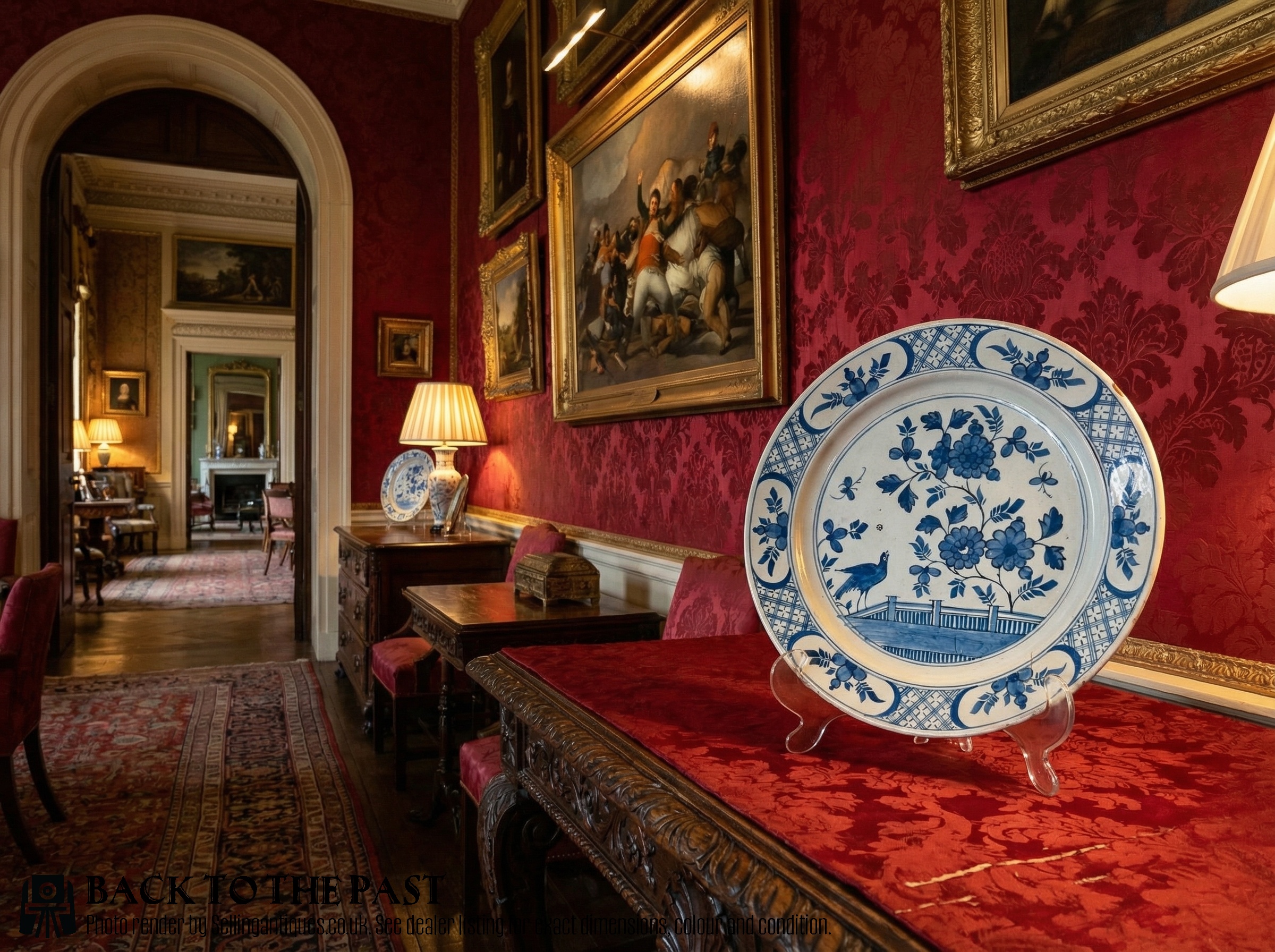
Chargers were historically displayed on sideboards, dressers, or hung directly on walls for decorative effect.
Their large scale and painted central motifs make them suitable for wall mounting using proper plate hangers.
How can you tell Bristol from Lambeth pieces?
Attribution relies on recorded pottery locations, glaze characteristics, and specific stylistic traits associated with known workshop outputs.
Bristol and Lambeth represent the primary manufacturing centres documented in surviving pieces.