




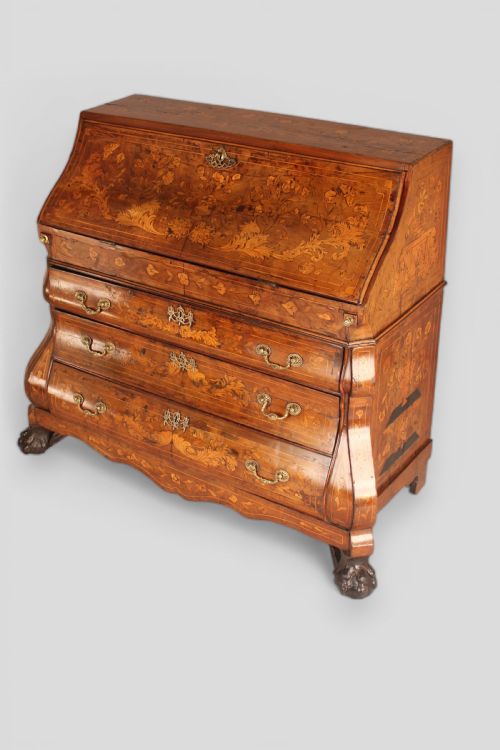
18th Century Dutch Desk
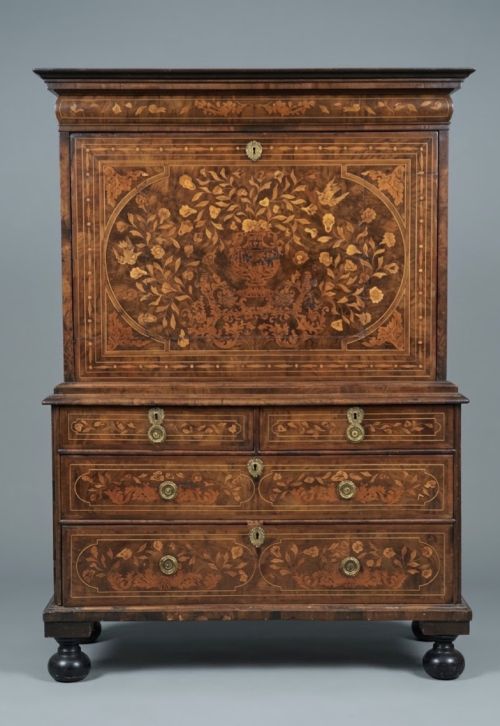
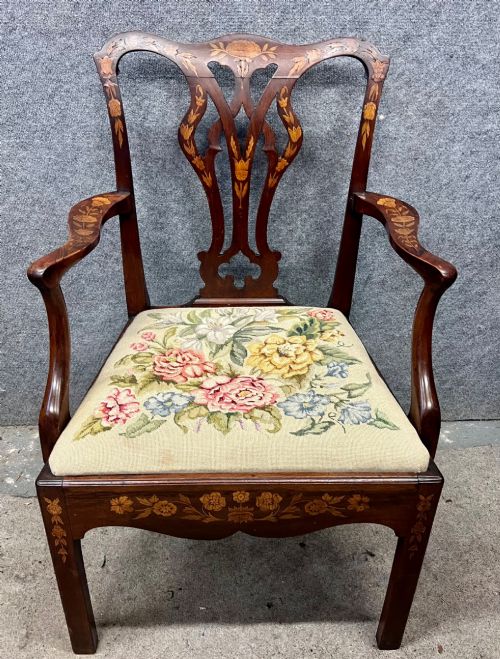
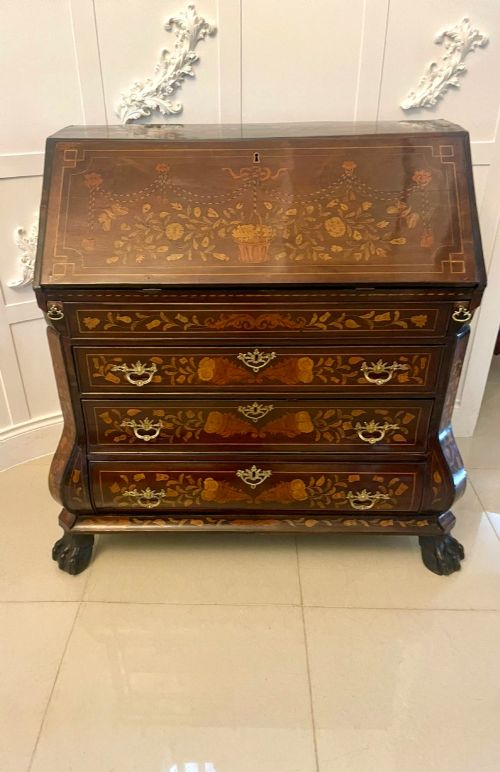
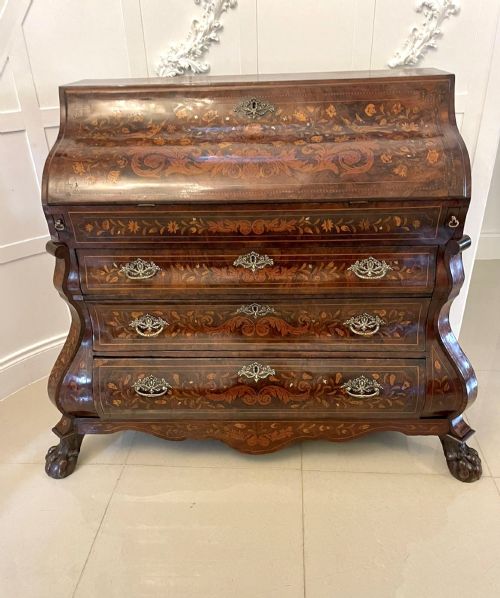
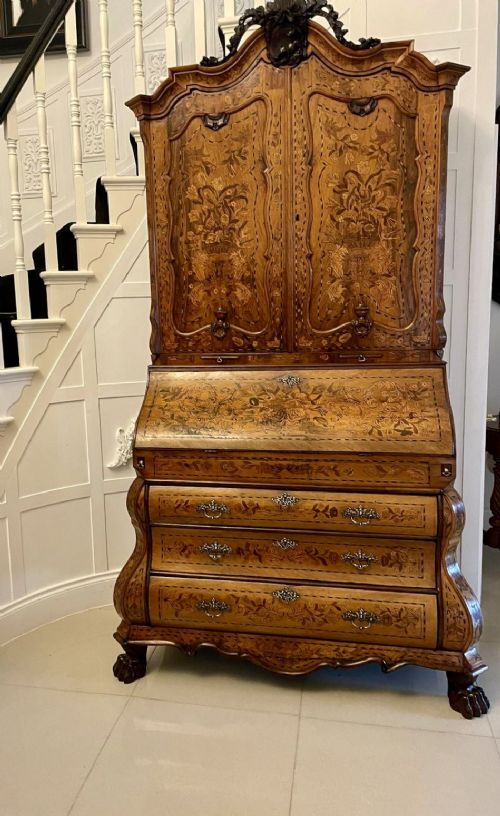
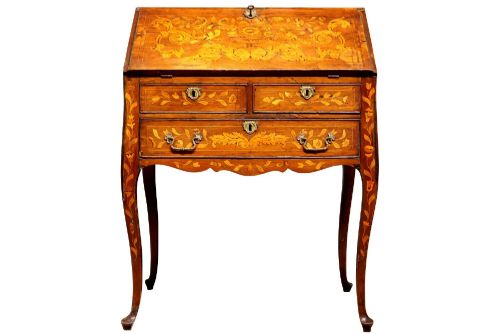
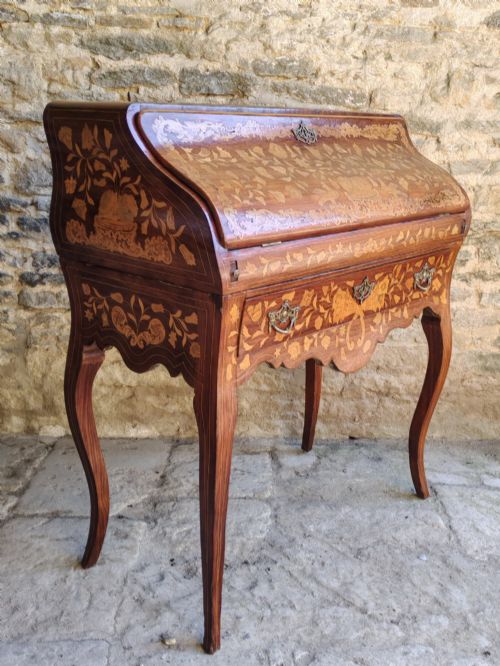
These substantial 18th century dutch desk examples bring distinct floral marquetry and bombe forms to a room.
18th Century Dutch Desk
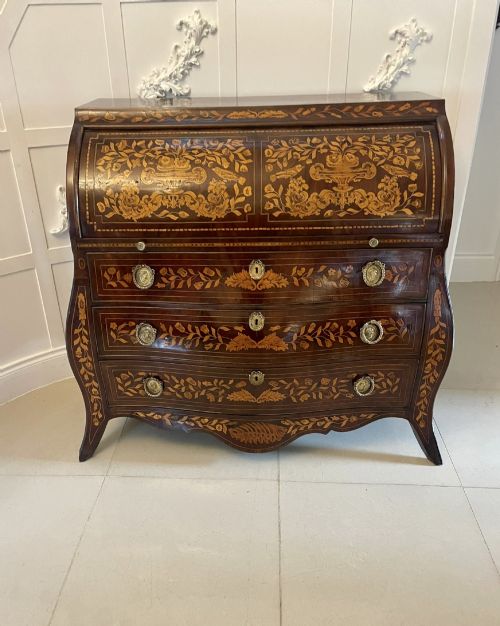
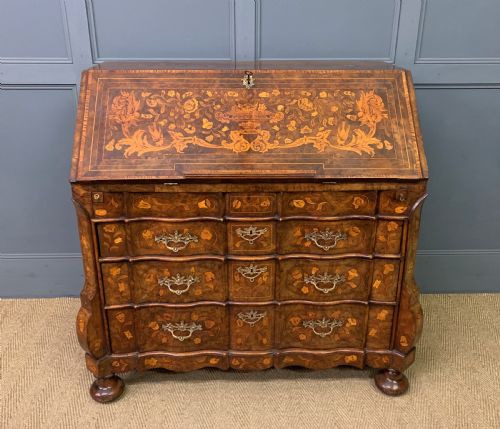
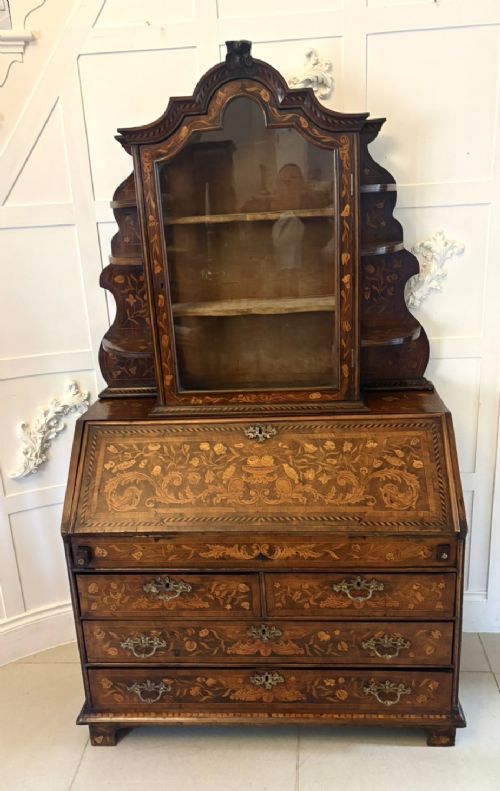
An 18th century dutch desk typically presents as a bureau, bureau bookcase, or cylinder bureau featuring pronounced bombe shaping. Walnut, burr walnut, and mahogany form the foundational carcases for these writing cabinets.
Makers often embellished these writing pieces with elaborate floral marquetry and fruitwood inlay depicting flowers and birds. Bureau bookcases combine a sloping fall-front desk workspace with upper shelving enclosed by doors.
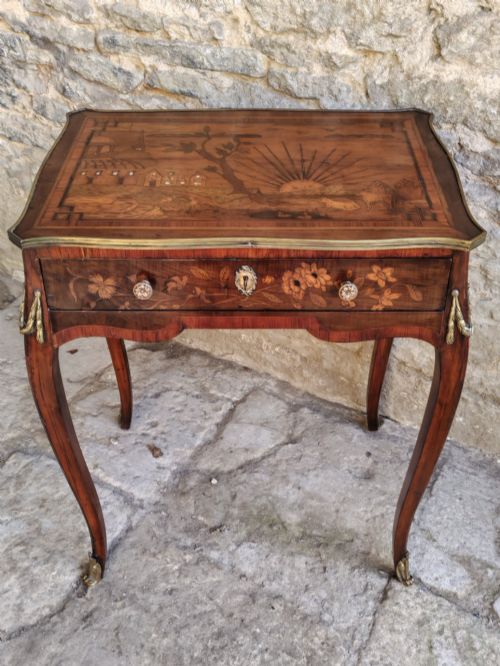
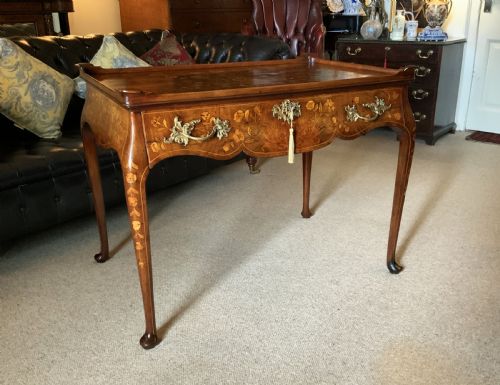
Examples span the 18th century alongside later interpretations from around 1800 and the 19th century. Alongside standard writing desks, the category encompasses related forms like architects tables, side tables, and games tables.
Materials and Construction
Cabinet makers constructed the primary structures from walnut, burr walnut, and mahogany timbers. Fruitwood inlay and marquetry were meticulously hand-cut and set into the wood surfaces to create detailed floral and avian motifs.
Brass hardware, including escutcheons and drop handles, complemented the dark timber tones and shaped drawer fronts. Bombe profiles required advanced woodworking techniques to achieve the characteristic outward sweep of the lower drawer sections.
18th Century Dutch Desk Retail Price Guide 2026
Typical asking prices for 18th century dutch desk among the pieces listed under this phrase on Sellingantiques today, from the lower quarter to the upper quarter. They describe what is for sale here now, not the wider market.
Watch for wooden birds perched among the marquetry flowers, keeping silent company with your stationery.
Evaluating Quality
The density and grain pattern of the burr walnut or mahogany veneer set the baseline for visual depth. Finely executed floral marquetry displays crisp shading and tight joints between the contrasting fruitwood elements.
Structural complexity such as a bombe front or a fitted bureau bookcase interior demands advanced cabinet making skill. The integration of the fall-front writing surface with internal pigeonholes and secret drawers reflects the maker's precision.
The 18th Century Dutch Desk Glossary
- Bombe
- A bulging or outward-curving swollen profile seen on the lower sections of desks and chests. This contour requires specialised shaping of both timber and veneer.
- Marquetry
- Decorative veneer work forming pictorial patterns using various tinted woods. Floral and bird motifs are common subjects in this tradition.
- Bureau
- A sloping desk with a hinged flap that opens to reveal a writing surface and interior compartments. These often sit atop a chest of drawers.
- Burr Walnut
- Wood cut from a walnut tree growth featuring swirling, irregular grain patterns. It provides a highly decorative surface for cabinet facades.
- Cylinder Bureau
- A desk featuring a rolling semi-cylindrical shutter that conceals the writing slide and internal pigeonholes. This mechanical top retracts when opened.
18th Century Dutch Desk: Frequently Asked Questions
What is a bombe front?
A bombe front curves outward toward the base, creating a distinct swelling contour on the lower portion of the desk.
This sculptural form defines many prominent pieces from the period and requires skilled joinery to execute successfully.
How do I use a bureau bookcase?
The sloping fall-front folds down to create a flat writing surface above the lower drawers. Upper doors open to reveal shelving for display and storage.
Internal compartments organise correspondence while the main surface handles daily writing tasks.
What is Dutch marquetry?
Dutch marquetry involves intricate floral and avian inlay using various fruitwoods set into a walnut or mahogany ground. Craftsmen cut these pieces by hand to achieve layered pictorial designs.
This decorative technique covers much of the visible exterior surfaces on these desks.
How do I distinguish 18th century pieces?
Eighteenth century examples rely on period timber selection, hand-cut marquetry details, and traditional joinery methods. Later interpretations from around 1800 or the 19th century reflect evolving proportions and manufacturing techniques.
Examining the secondary woods and interior construction helps clarify the production era.
Where should I place a desk?
These pieces function well as focal points in studies, libraries, or drawing rooms where their decorated facades remain visible. Sufficient clearance allows the fall-front writing flap to open fully without obstruction.
Keeping them away from direct heat sources protects the antique veneers and fruitwood marquetry.