
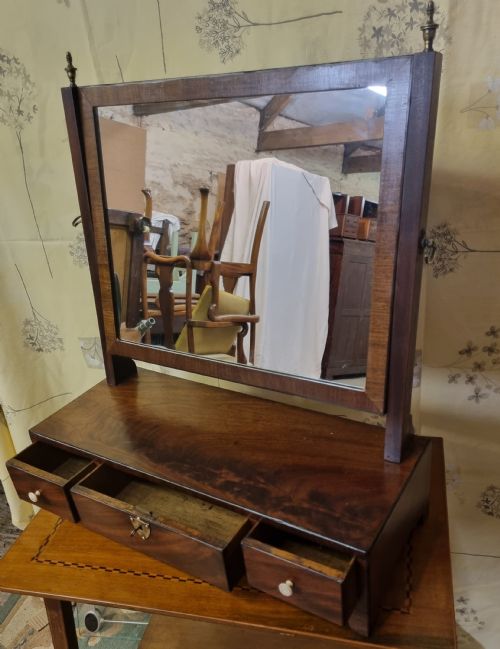
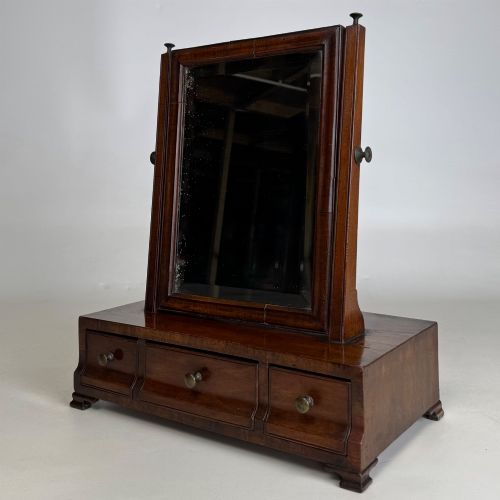
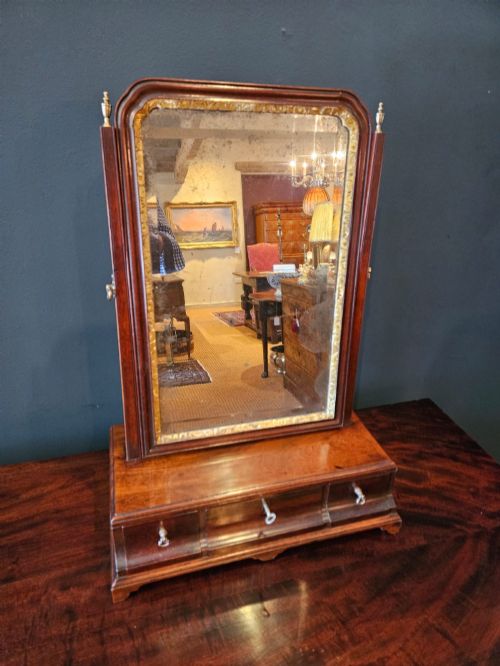
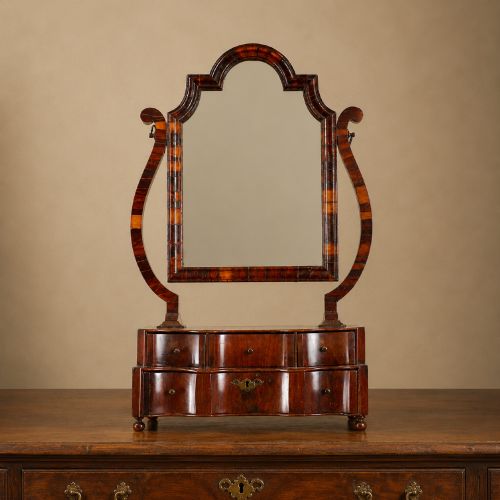


18th Century Dressing Mirror
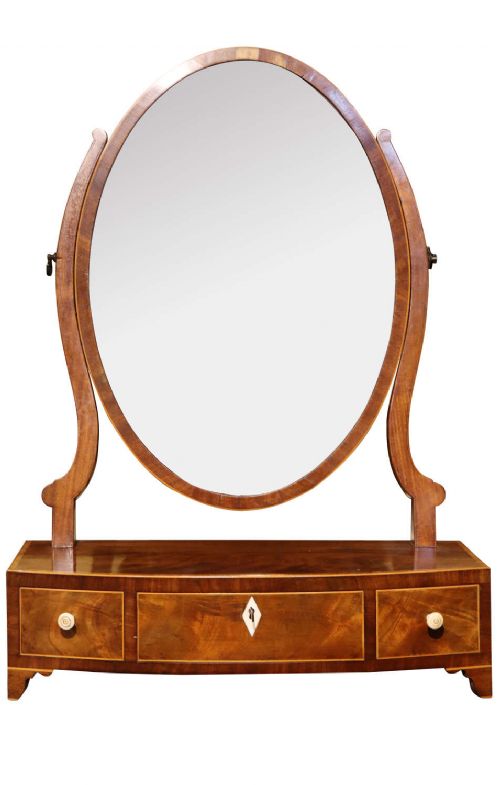
An 18th century dressing mirror sits upon a chest or table, offering a portable looking glass framed in rich timber.
What an 18th century dressing mirror is
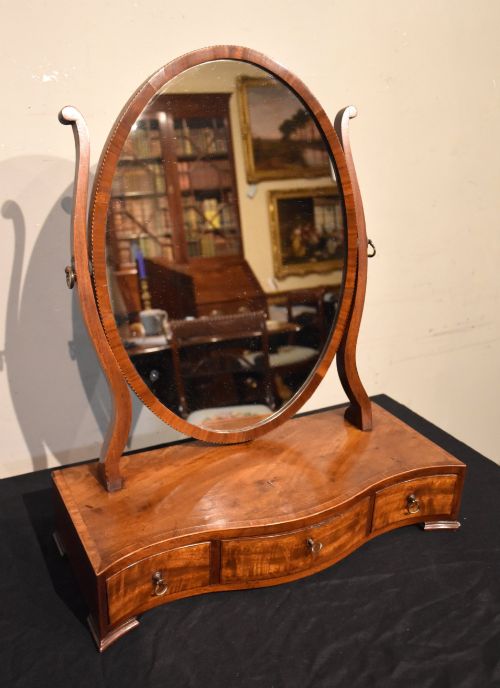
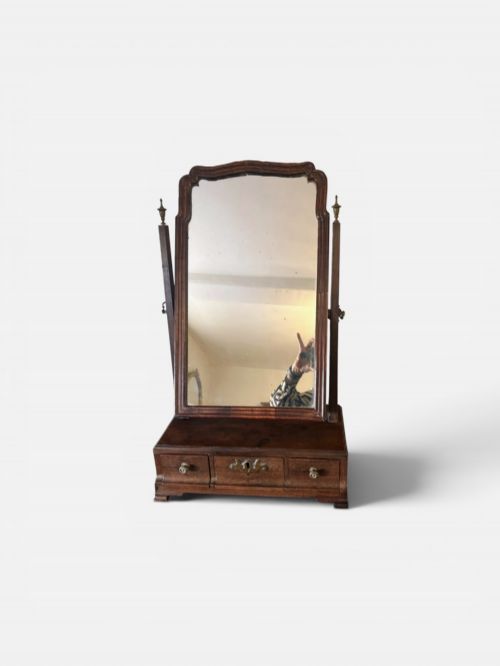
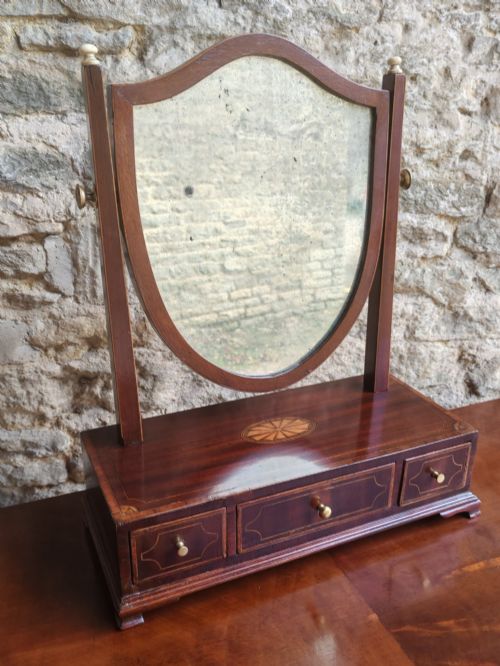
An 18th century dressing mirror is a compact toilet glass designed to sit on a larger surface, housing small drawers in its base for personal items. Buyers searching this phrase will find a variety of forms including toilet mirrors and dressing table mirrors dating from the Georgian period.
The pieces on this page span the 18th century, incorporating Queen Anne, George II, and George III styles. Mahogany and walnut dominate the offerings, occasionally accompanied by yew, satinwood, and boxwood inlay.
Most examples take the form of an adjustable glass plate mounted between upright posts on a box base. Serpentine fronts and oval mirror frames appear regularly alongside rectangular glass plates.
How they were made
Cabinetmakers constructed these mirrors using solid timbers and veneers such as mahogany, walnut, and yew. Brass fittings, including pivot screws and small drawer knobs, secure the glass frame and accent the woodwork.
Boxwood inlay adds linear detail to select mahogany and walnut surfaces. Gilded wood and carved elements appear on specific stylistic examples, while glass provides the reflective plate.
Retail Price Guide 2026
Typical UK retail prices for 18th century dressing mirror, calculated from the Sellingantiques database of over a million retail prices indexed since 2003. This retail price guide relies exclusively on Sellingantiques data; no external sources or auction records are used, so the figures do not describe the wider market.
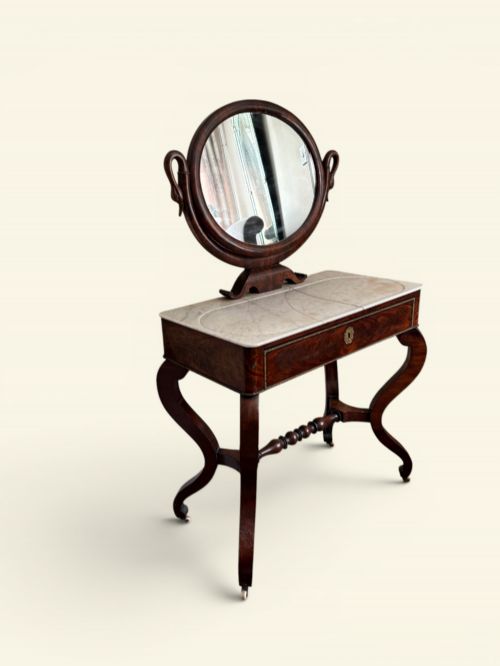
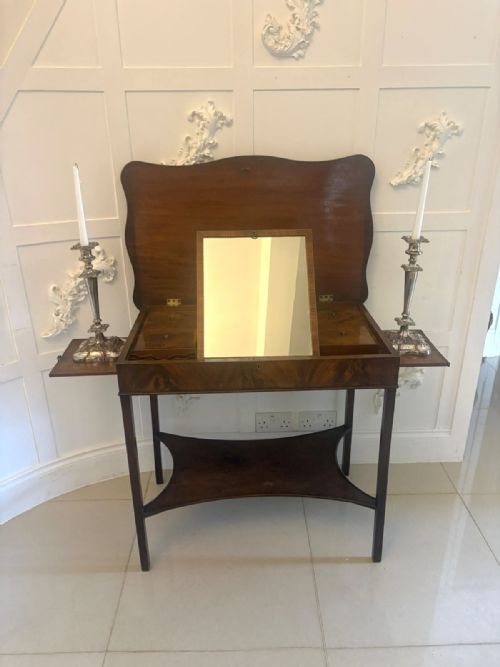
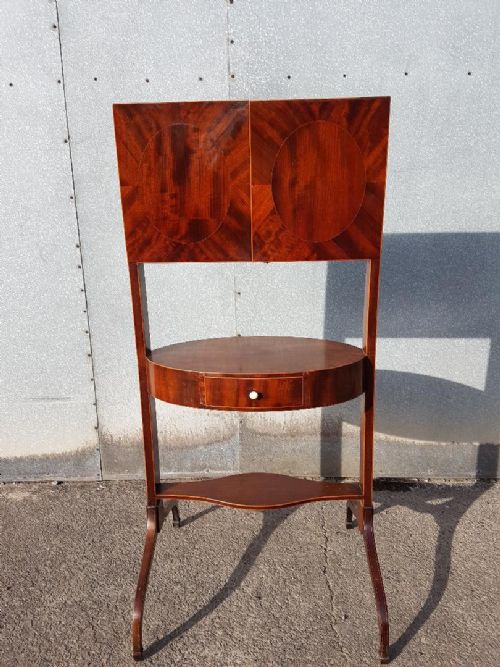
Object forms span dressing table mirrors, toilet mirrors, and wall-convertible designs.
What varies in quality
The choice of timber and veneer figure dictates the visual impact of the base and frame. Figured walnut, Cuban mahogany, and select yew elevate the standing of a piece.
Refinement in the joinery of the miniature drawers and the delicacy of the fretwork or serpentine shaping distinguish finer examples. The retention of original brass hardware and glass plates contributes to the integrity of the object.
The 18th Century Dressing Mirror Glossary
- Toilet mirror
- A smaller table-standing mirror intended for personal grooming, often equipped with small drawers in the base. These pieces were historically placed on dressing tables or chests of drawers.
- Serpentine
- A curved shape featuring a convex centre flanked by concave sides, frequently seen on the drawer fronts of Georgian mirrors. This contour requires precise woodworking skill.
- Boxwood inlay
- Contrasting light-coloured wood inserted into recesses of a darker timber to create geometric lines or decorative borders. It provides crisp definition to mahogany and walnut surfaces.
- Queen Anne
- An early 18th-century style characterised by curved lines and polished walnut surfaces. Mirrors from this period often display restrained elegance and rich grain patterns.
Frequently Asked Questions
Where should I place a dressing mirror?
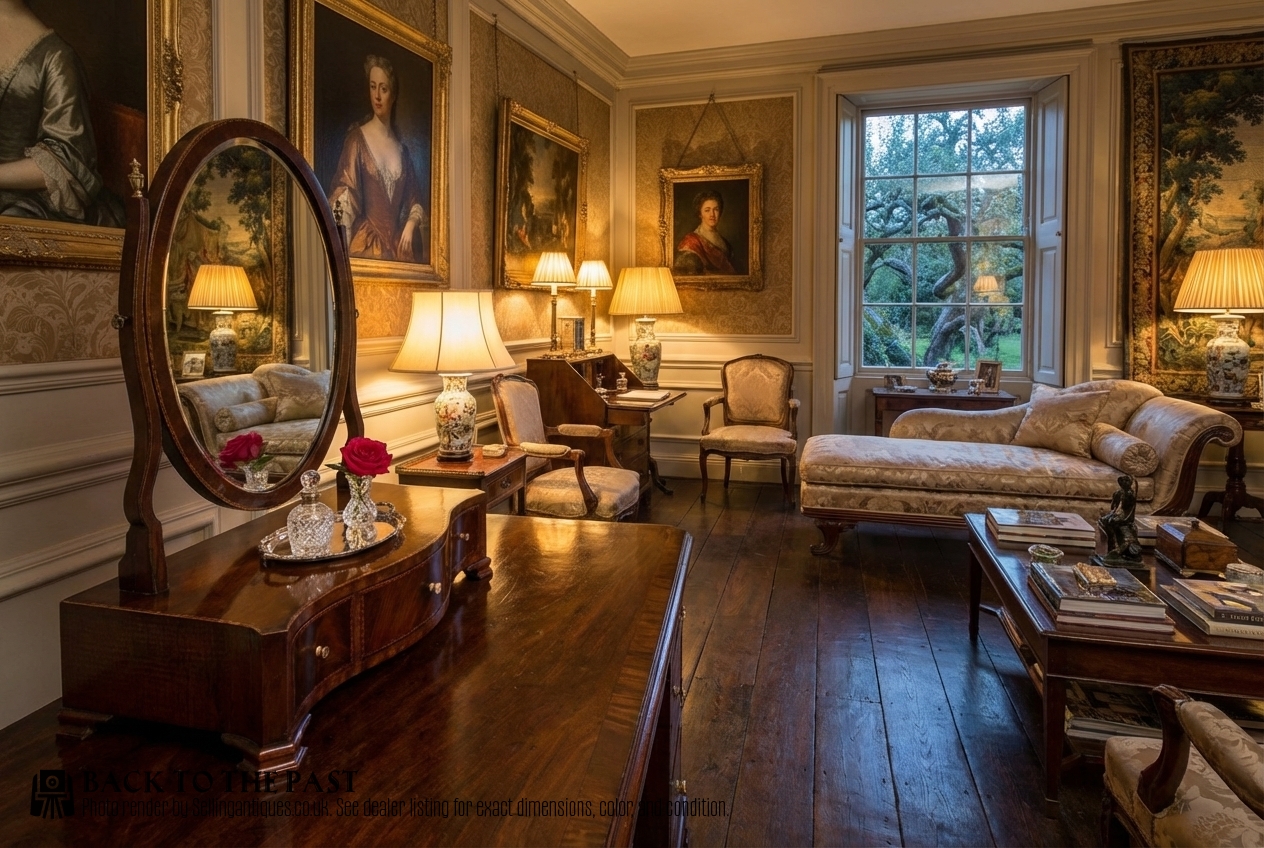
These mirrors suit dressing tables, low chests of drawers, or sideboards where their compact footprint allows them to sit securely. They also function well on console tables in living spaces.
Ensure the surface is stable and deep enough to support the base without overhang. Placing them away from direct moisture protects the wood and the silvering on the glass.
How do I adjust the glass angle?
Most examples use brass pivot screws or threaded bolts passing through the upright arms into the sides of the mirror frame. Tightening or loosening these hardware elements controls the tension.
Handle the frame gently with both hands while making adjustments to avoid stressing the surrounding wood. Older brass fittings should be turned with care to preserve their original threads.
Are the mirror plates original?
Many surviving pieces retain their historic glass plates, which often show slight foxing, minor speckling, or subtle distortions. These traits are normal characteristics of period glass.
Replacement glass plates do occur due to breakages over the centuries. Examining the backboards and fixings often reveals clues about the history of the glass.
What is the difference between walnut and mahogany pieces?
Walnut was predominantly used in the earlier part of the 18th century, displaying rich brown tones and decorative grain figures. Mahogany gained widespread popularity later in the century, offering a denser and often darker reddish-brown surface.
Both timbers were treated with different finishing techniques appropriate to their respective decades. The choice of wood often aligns closely with specific stylistic periods like Queen Anne or George III.