


Serpentine Box Mirror
These serpentine box mirror examples offer an elegant Georgian and Regency solution for dressing table grooming, combining fitted drawers with adjustable looking glasses.
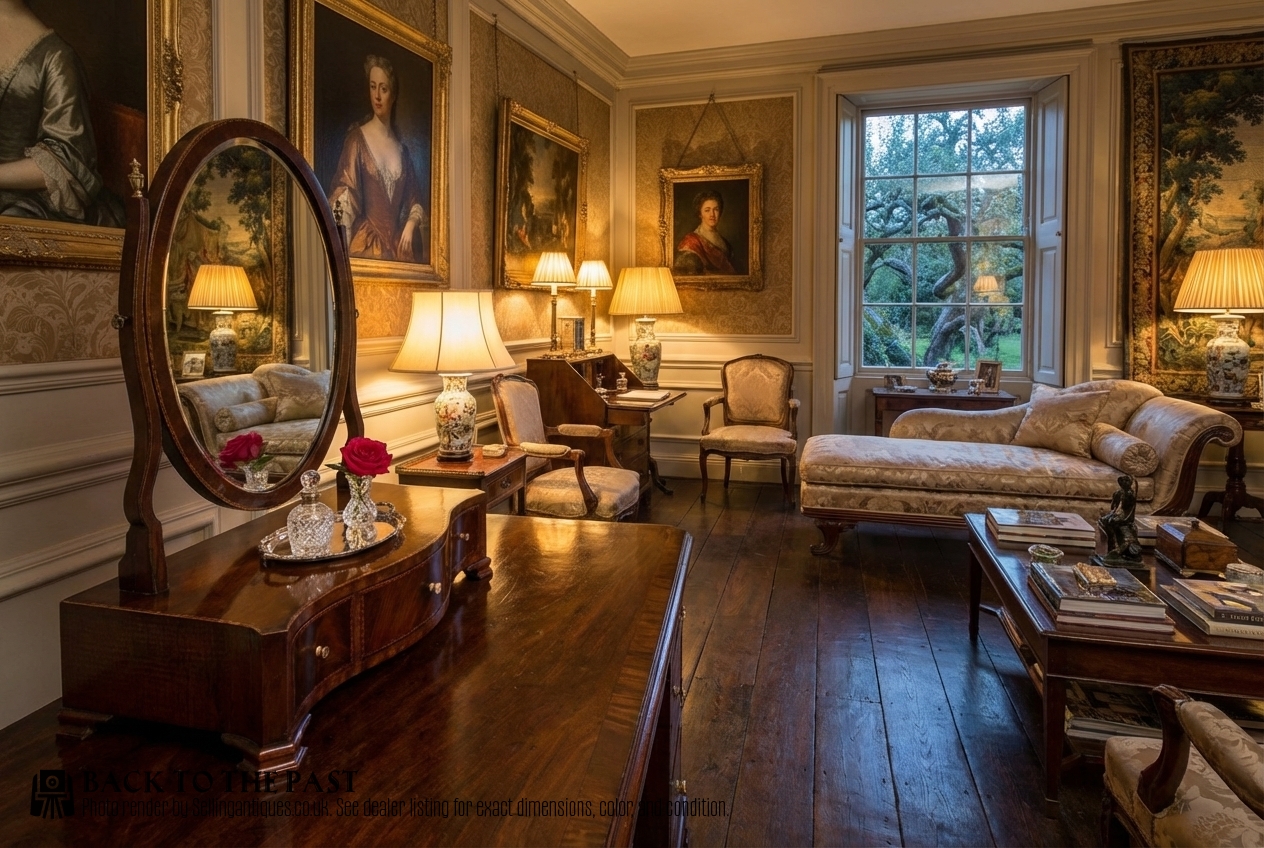
Serpentine Box Mirror
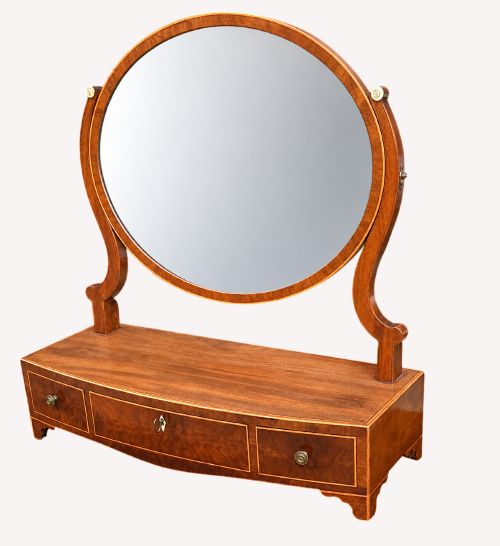
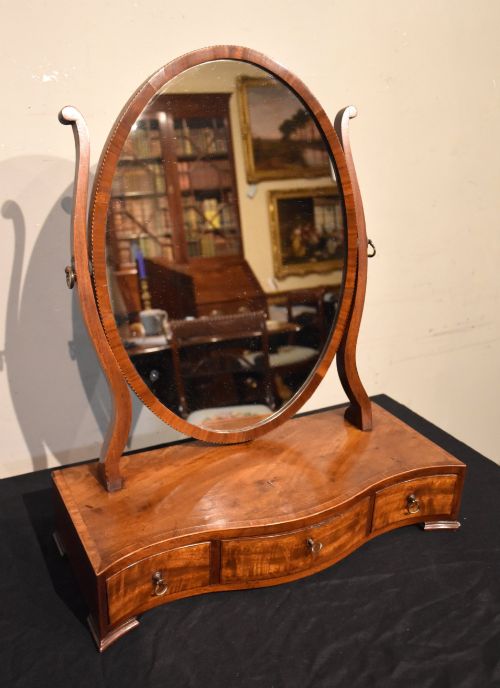
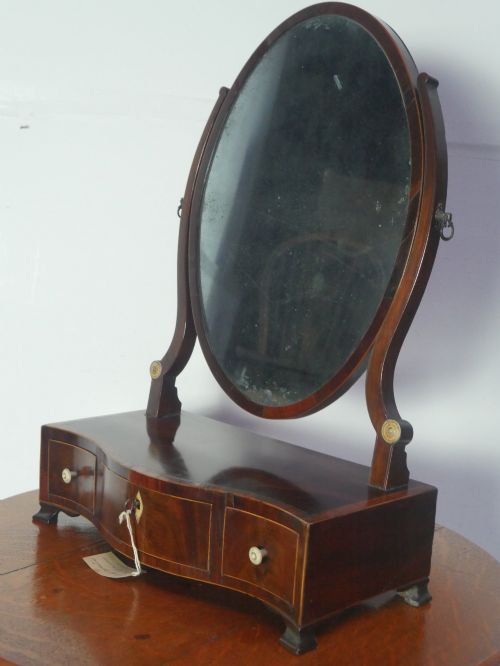
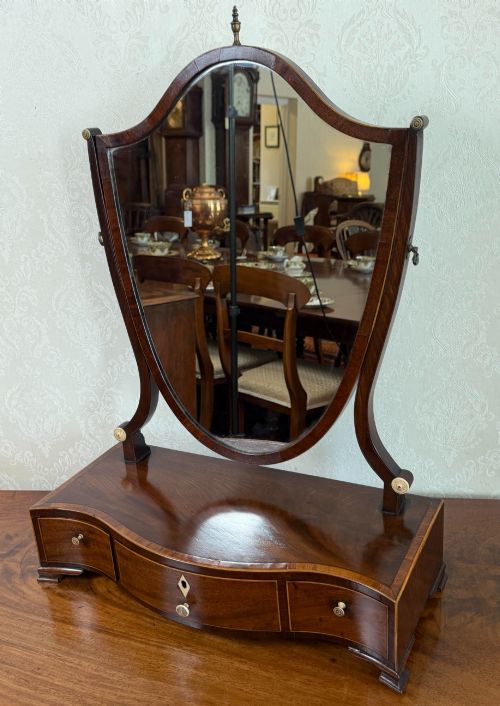
A serpentine box mirror combines a pivoting dressing glass mounted between upright arms above a small plinth base fitted with drawers. These pieces served as essential toilet furnishings on dressing tables during the Georgian and Regency periods.
The defining characteristic is the undulating curved front of the box base, which softens the rigid geometry typical of standard table mirrors. Most surviving examples date from the eighteenth and nineteenth centuries, spanning George II through to Victorian eras.
Makers utilised various scales, from compact single-drawer compartments to larger three-drawer variants designed to hold personal trinkets and cosmetics safely out of sight.
How they were made
Cabinetmakers constructed the main carcase and framing from dense timbers such as mahogany and walnut, occasionally applying lighter veneers like satinwood to create subtle visual contrast.
Fine decorative detailing often involved contrasting stringing and inlay work executed in boxwood, alongside small turned bone pulls or brass hardware for the miniature drawers.
Serpentine Box Mirror Retail Price Guide 2026
Typical asking prices for serpentine box mirror among the pieces listed under this phrase on Sellingantiques today, from the lower quarter to the upper quarter. They describe what is for sale here now, not the wider market.
Many tiny box base drawers still retain hidden compartments once used for concealing secret love letters or stray pins.
What varies in quality
The fluidity and precise execution of the serpentine curve across the timber front dictate the primary visual distinction between standard production and superior cabinet work.
Integration of secondary decorative elements, such as delicate boxwood stringing and well-figured grain matching on the drawer fronts, separates finer examples from plainer utility items.
The Serpentine Box Mirror Glossary
- Serpentine front
- A furniture contour characterised by a convex central section flanked by two concave curves, creating an undulating outline.
- Toilet mirror
- A smaller movable dressing glass designed to sit upon a chest of drawers, dressing table or washstand.
- Boxwood stringing
- Thin inlaid lines of pale boxwood set into contrasting darker timber surfaces to define panels and drawer borders.
- Box base
- The enclosed plinth compartment situated beneath the mirror frame, typically fitted with one or more small storage drawers.
Serpentine Box Mirror: Frequently Asked Questions
How do I date a serpentine box mirror?
Examination of construction methods, timber choice and drawer dovetailing provides the primary chronological clues for these dressing pieces.
Earlier examples from the mid-eighteenth century often display specific walnut or early mahogany grain patterns and hand-cut joinery distinct from later nineteenth-century production.
Were these mirrors used by men or women?
Upper-class individuals of both sexes utilised dressing table mirrors for morning grooming, hair arrangement and shaving routines in private chambers.
The inclusion of small fitted drawers within the box base kept personal implements and cosmetics close at hand during daily preparation.
How do I maintain the glass and timber?
Gentle dusting with a dry microfibre cloth protects the polished timber surfaces without stripping historical wax layers. Avoid chemical cleaning agents on both the old glass and the surrounding veneer.
Keeping the piece away from direct sunlight and sudden temperature shifts prevents timber warping and protects the delicate boxwood stringing.
What is the difference between Georgian and Regency styles?
Georgian pieces often feature richer timber patination and robust proportions, while Regency versions introduce slightly crisper linear details and lighter contrasting stringing.
Both periods share the characteristic serpentine box base, though Regency examples frequently incorporate three small graduated drawers.