




18th Century Delft Vase
An 18th century delft vase brings tin-glazed earthenware into a room, offering blue-and-white patterns or polychrome colours rooted in Dutch pottery traditions.
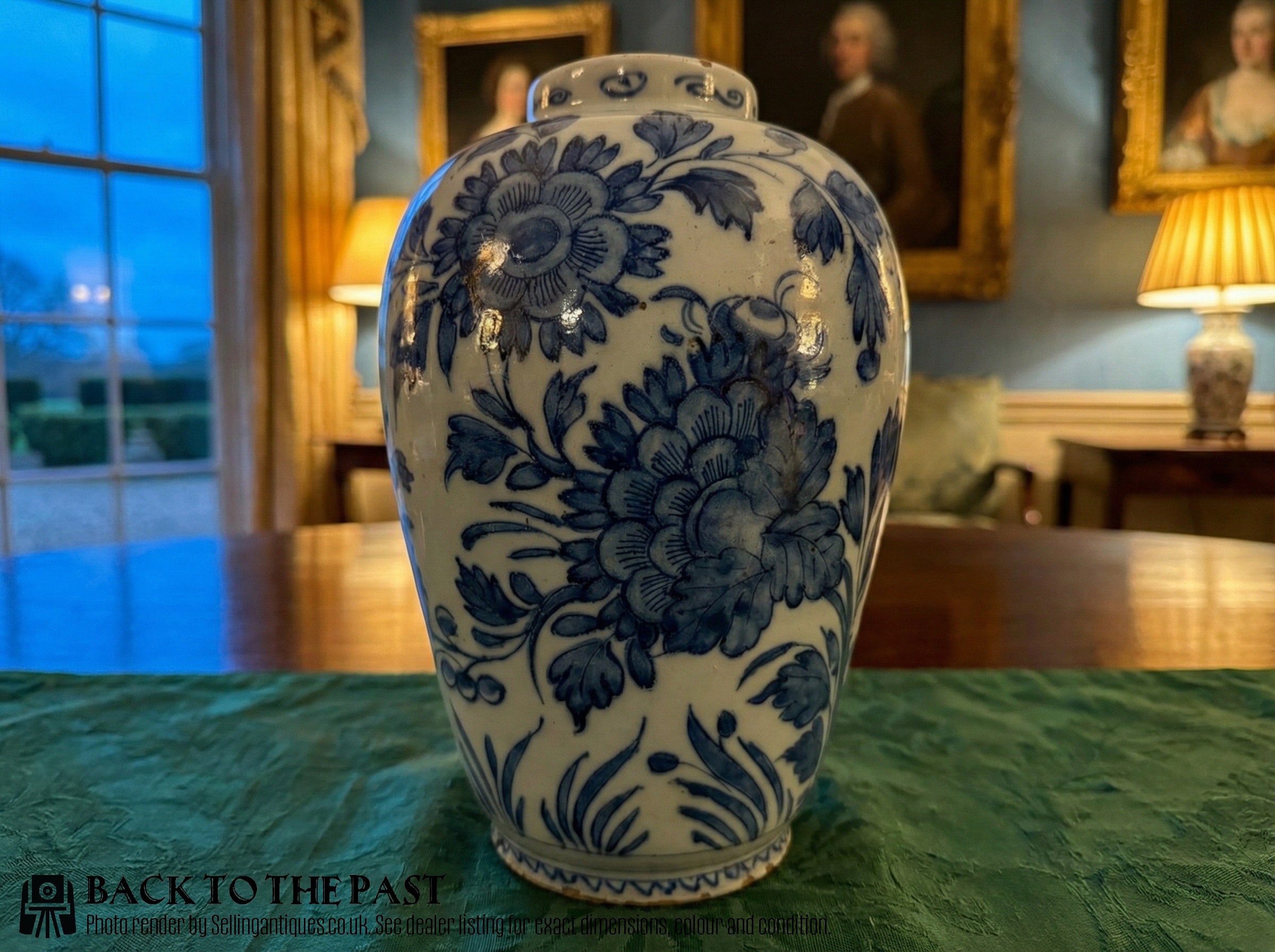
18th Century Delft Vase
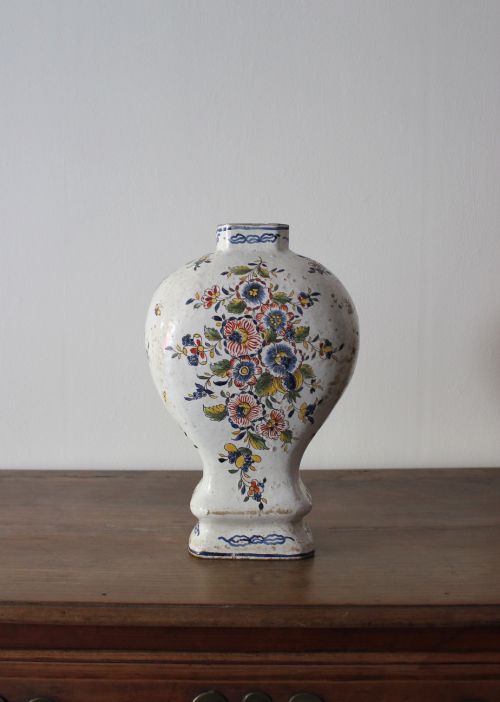
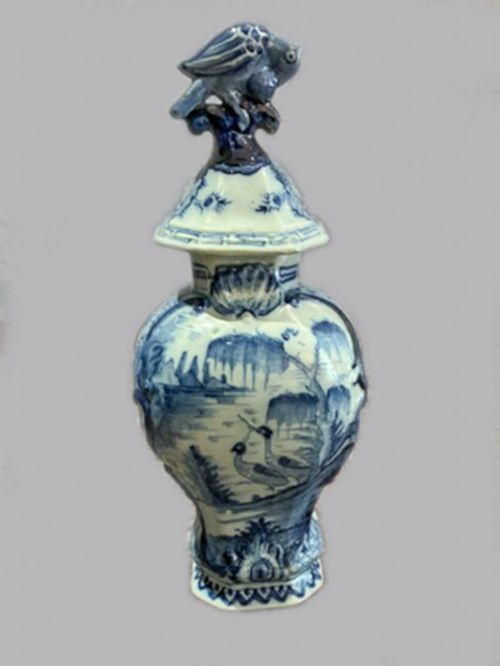
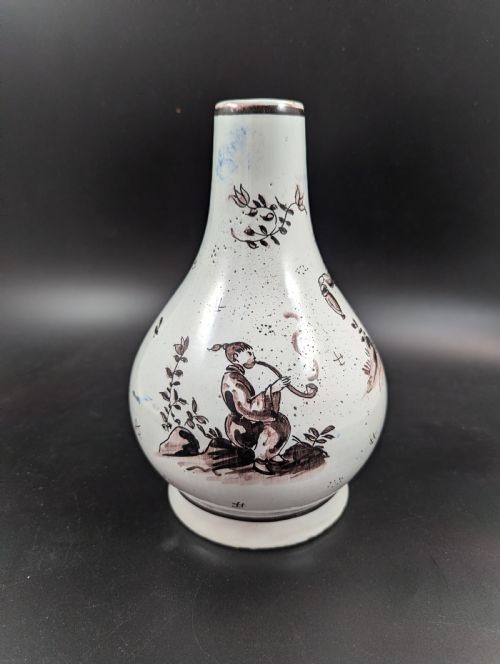
When you search for an 18th century delft vase, you encounter tin-glazed earthenware vessels shaped as balusters, jars, beakers, and garden urns. These pieces originate primarily from Dutch workshops, following styles such as Dutch Delftware, Dutch Baroque, and Chinoiserie.
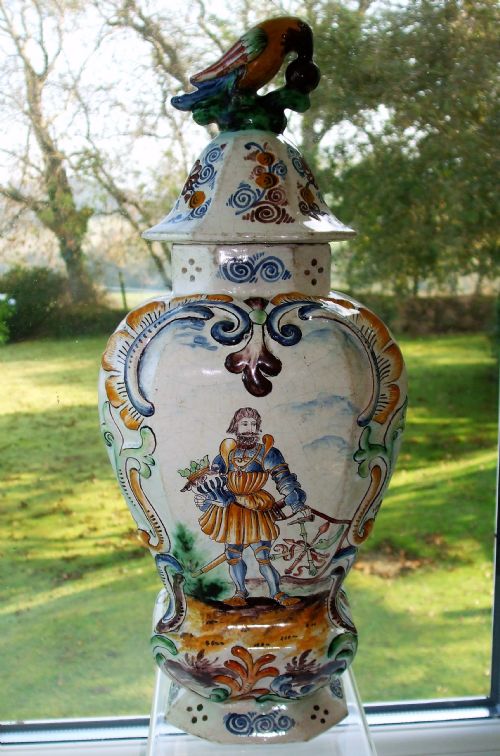
The pieces you meet most often on this page take the form of blue-and-white or polychrome vessels, sometimes paired as sets or adapted later into table lamps with brass or wooden elements. Lidded jars and bulbous gourde vases also appear among the selections.
Dating ranges chiefly through the 17th, 18th, and early 19th centuries, reflecting the period when tin-glazed pottery production flourished in Europe under strong East Asian aesthetic influences.
How they were made
Makers shaped earthenware bodies from local clays, firing the ceramic base before applying an opaque white tin glaze that created a smooth canvas for painting. Painters applied cobalt blue or polychrome pigments directly onto this absorbent unfired glaze layer.
Potters subjected the glazed and painted vessels to a high-temperature kiln firing, which fused the pigments into the tin glaze and produced the characteristic glossy surface sheen. Lids and covers were potted separately to fit the neck tolerances of jars and baluster vases.
Later modifications on these ceramics sometimes incorporated timber bases or brass fittings when artisans converted antique jars and vases into table lamps during subsequent centuries.
Several vases carry the weight of centuries inside their glaze, having survived centuries of fireside mantelpiece gossip.
What varies in quality
The clarity and detail of the hand-painted brushwork separate ordinary vessels from finer examples, particularly in complex Chinoiserie scenes and floral motifs. Crisp cobalt application without excessive bleeding indicates superior control by the painter.
The consistency and coverage of the tin glaze across the earthenware body dictate the visual weight of the piece, with even surfaces showing fewer pinholes or pooling. Surviving lids, matching pairs, and original uncompromised ceramic bodies retain greater integrity than adapted or heavily restored vessels.
3 BELLS Drie klokken Factory·HATCHET FACTORY·Louis Victor
The 18th Century Delft Vase Glossary
- Tin-Glazed Earthenware
- Earthenware pottery coated with a glaze containing tin oxide to yield a white, opaque surface. This material serves as the primary ground for painted decoration.
- Polychrome
- Decoration employing multiple colours rather than a single hue. On these ceramics, this typically involves palettes of red, green, yellow, and blue.
- Chinoiserie
- European decorative style reflecting Chinese artistic influences. Artists utilised these motifs extensively on Dutch delft vases.
- Baluster Vase
- A vase with a bulbous lower body tapering to a narrow neck and flared rim. This form appears frequently in pairs and sets.
- Faience
- European tin-glazed earthenware produced in imitation of porcelain. The term shares technical characteristics with Dutch delftware.
18th Century Delft Vase: Frequently Asked Questions
Are lamps original?
Most lamp fittings and rewiring additions represent later adaptations where antique jars or vases were converted for modern lighting use.
The underlying ceramic body retains its eighteenth-century origin while the brass or wooden components reflect subsequent utilitarian updates.
How do I spot Chinoiserie styles?
Chinoiserie designs feature European interpretations of Chinese motifs, including imaginary landscapes, pagodas, and figures in garden settings.
Painters rendered these scenes in cobalt blue or polychrome enamels across the white tin glaze surface.
What is polychrome delft?
Polychrome delft refers to tin-glazed earthenware painted with a multi-coloured palette rather than traditional cobalt blue alone.
These pieces integrate red, green, yellow, and manganese purple pigments into the floral or figurative compositions.