


Tin Glazed Ceramic Vase
A tin glazed ceramic vase brings centuries of painted earthenware history into a room, offering striking blue and white patterns or vibrant polychrome glazes.
Tin Glazed Ceramic Vase
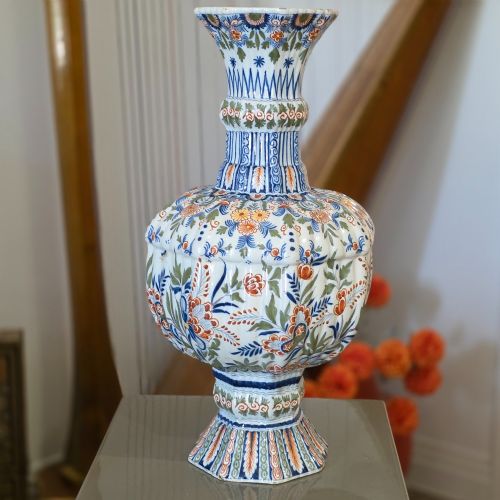
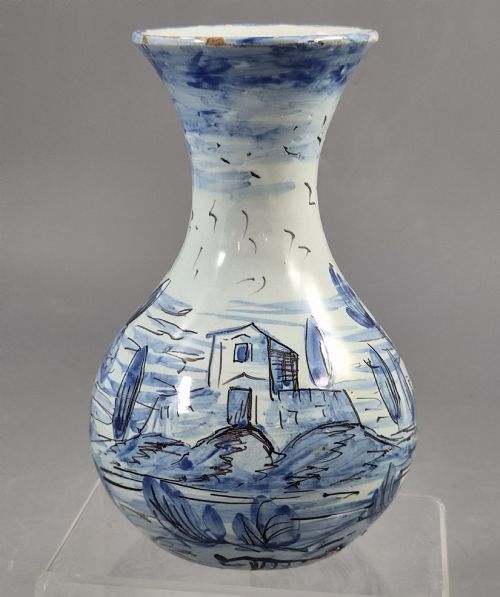
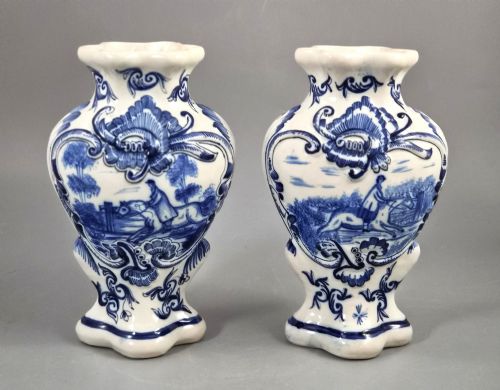
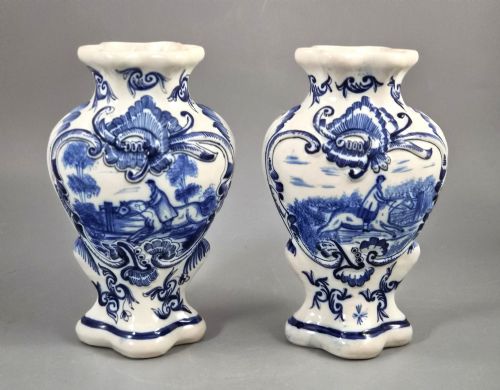
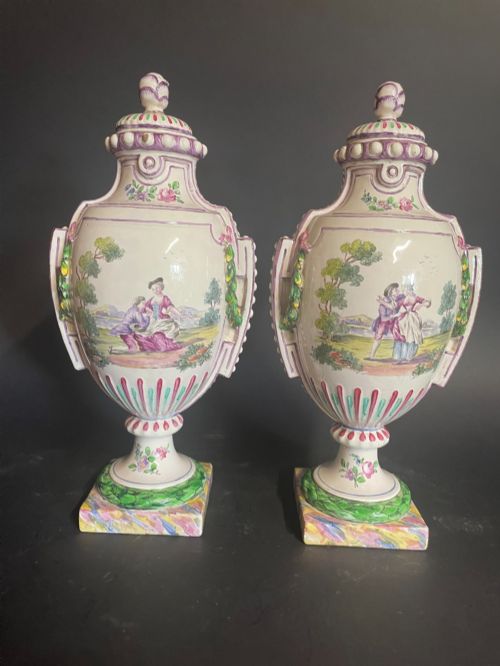
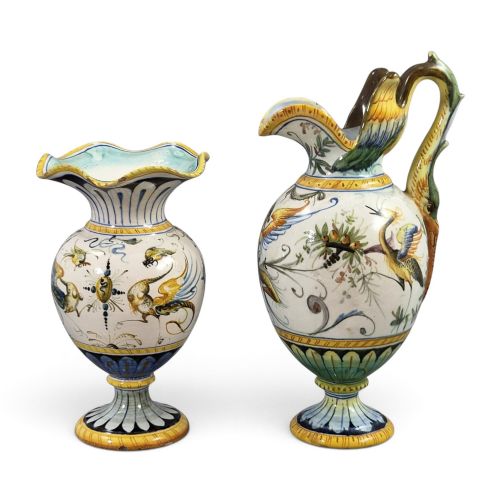
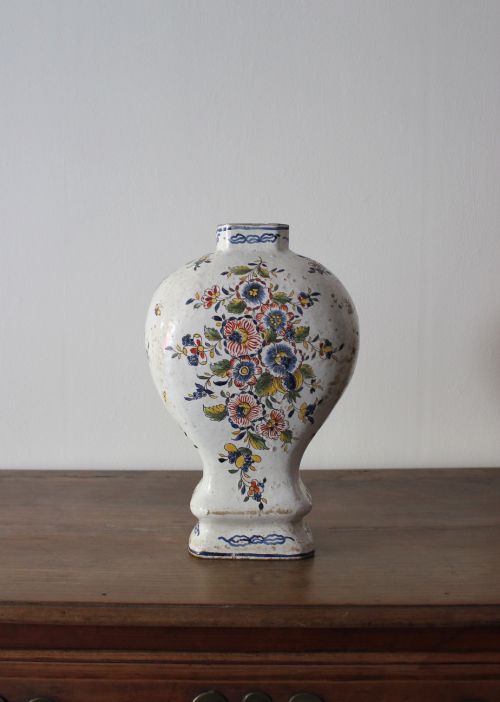
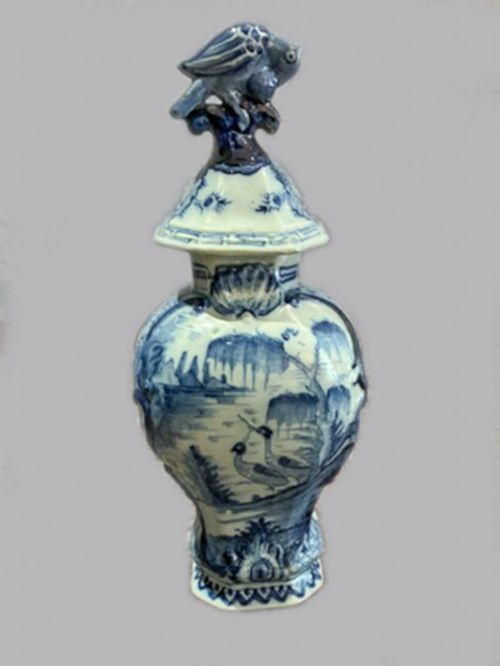
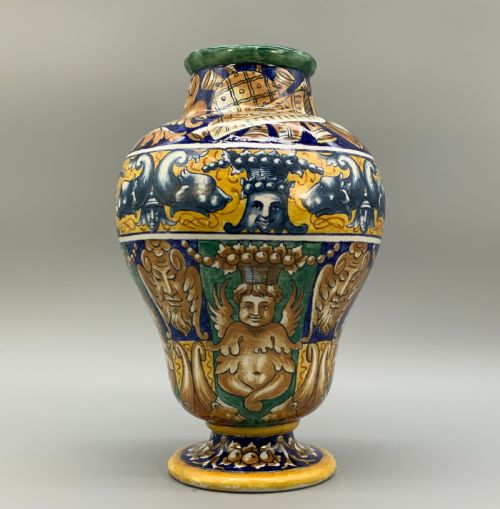
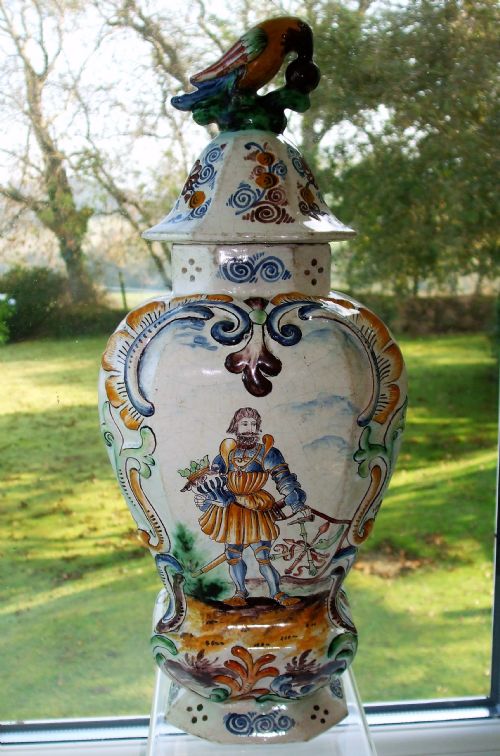
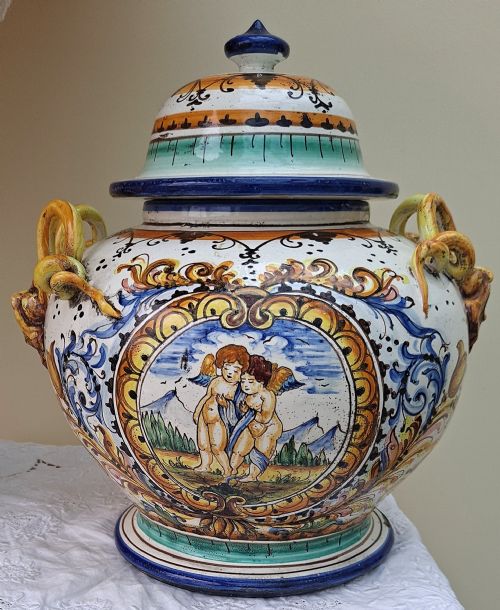
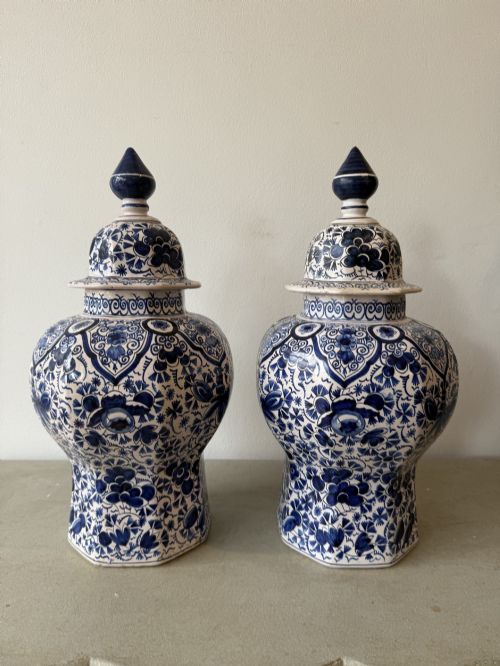
A tin glazed ceramic vase spans multiple centuries of European pottery traditions, originating in major production centres across England, France, Holland, and Italy. The selection on this page centres heavily on Dutch Delftware, Italian majolica, and French faience from the seventeenth to the nineteenth centuries.
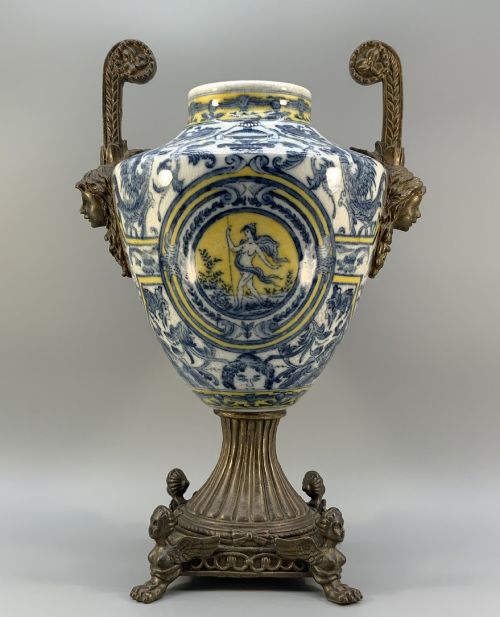
Buyers frequently encounter blue and white baluster vases, lidded jars, apothecary vessels, and decorative urns. Many examples reflect revival styles, such as Renaissance Revival and Dutch Baroque, alongside functional conversions like table lamps fitted with electrical wiring.
How they were made
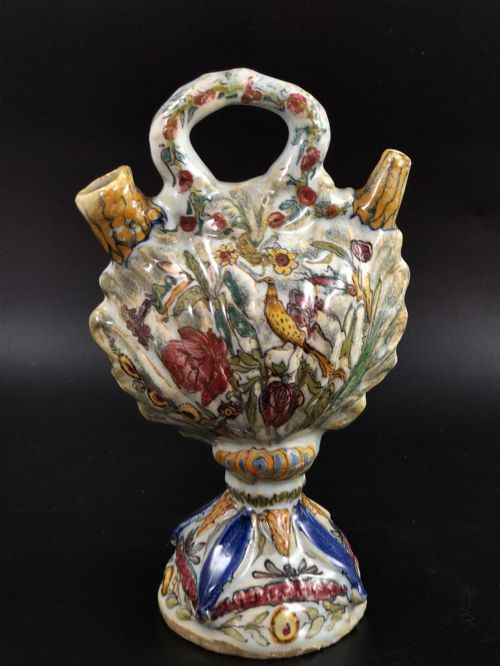
Potters shaped earthenware bodies on the wheel or moulded them into forms like pilgrim flasks, scallop shells, and ribbed beakers. These vessels received an opaque white tin glaze that provided a smooth surface for hand-painted mineral pigments.
Painters applied cobalt blue, manganese, and polychrome oxides directly onto the unfired or slightly fired glaze before placing the pieces into a kiln. Metal mounts in brass or bronze occasionally finish nineteenth-century revival pieces.
Listings feature earthenware vessels spanning the seventeenth, eighteenth, and nineteenth centuries, alongside revival pieces.
What varies in quality
The precision and detail of the hand-painted decoration distinguish standard production from exceptional studio work. Fine pieces display confident brushwork in floral, bird, or chinoiserie motifs, whereas lesser examples show hurried execution.
Completeness alters desirability, particularly for lidded jars, urns, and baluster vases that retain their original matching covers. The depth of the tin glaze and the complexity of the form also dictate the tier of the piece.
Cantagalli·Fourmaintraux-Courquin·Sceaux·Drie klokken Factory·Ulisse Cantagalli
The Tin Glazed Ceramic Vase Glossary
- Tin-Glazed Earthenware
- Pottery covered with a lead glaze made opaque by the addition of tin oxide. This technique forms the white surface essential for traditional painted decoration.
- Majolica
- Italian tin-glazed earthenware typically decorated with rich polychrome colours. The term also describes nineteenth-century revival pieces produced in this historic style.
- Delftware
- Tin-glazed earthenware originating in England or the Netherlands, most famously recognised for blue and white designs inspired by imported Chinese porcelain.
- Albarello
- A cylindrical earthenware jar used by apothecaries and pharmacists for holding drugs and ointments. These vessels often feature a waisted body for a secure grip.
- Faience
- French tin-glazed pottery produced across various factories and regions. It shares technical roots with Italian majolica and Dutch delft.
Tin Glazed Ceramic Vase: Frequently Asked Questions
How do I clean an antique tin glazed vase?
Dust the surface gently with a dry, soft cloth to prevent accumulation. Avoid using water, chemical cleaners, or immersion, as moisture can penetrate old earthenware through microscopic craquelure.
Keep these vessels away from direct sunlight and areas with high humidity to protect the integrity of the glaze and pigments.
Were these vases originally made for display?
Many forms served practical purposes in households and apothecary shops before becoming decorative objects. Pharmacy jars and drug containers held dry goods or medicines, while large garden urns stood on terraces.
Over time, collectors prized them for their artistic merit, leading to domestic display on mantelpieces and tables.
How can I tell Dutch delft from Italian majolica?
Dutch delft typically relies on a distinct palette of blue and white, often featuring tin-glazed earthenware painted with European interpretations of Chinese motifs. Italian majolica frequently employs a broader polychrome spectrum with vibrant yellows, greens, and oranges.
Examining the base and glaze characteristics helps confirm the regional workshop and production period.
Is it normal for converted lamp bases to show wear?
Older vessels converted into table lamps often bear the marks of domestic adaptation from past decades. Rewired electrical components make them functional for modern living while preserving the antique ceramic body.
Inspect the mounting points to ensure the original earthenware remains unaltered beneath the hardware.