

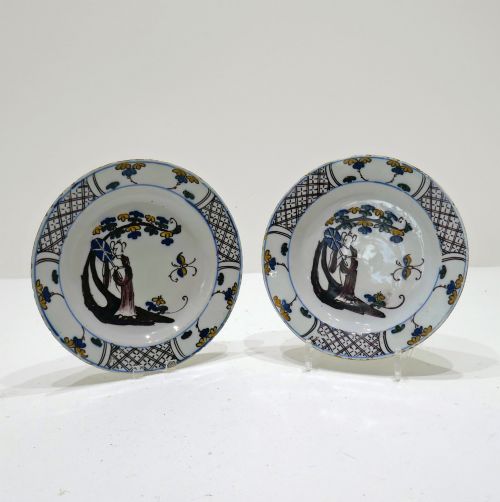
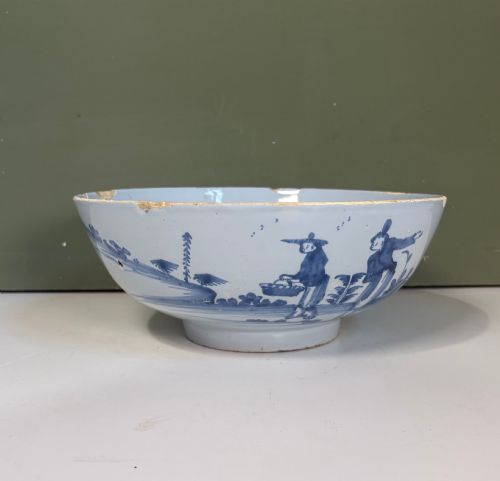


18th Century Chinoiserie Pottery
These pieces of 18th century chinoiserie pottery bring hand-painted narrative scenes and tin-glazed surfaces directly into modern interiors.
18th Century Chinoiserie Pottery
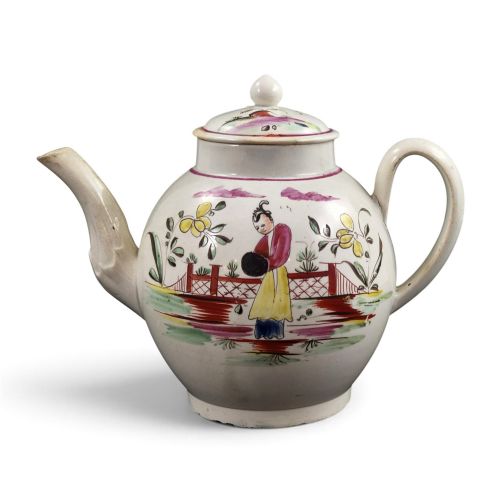
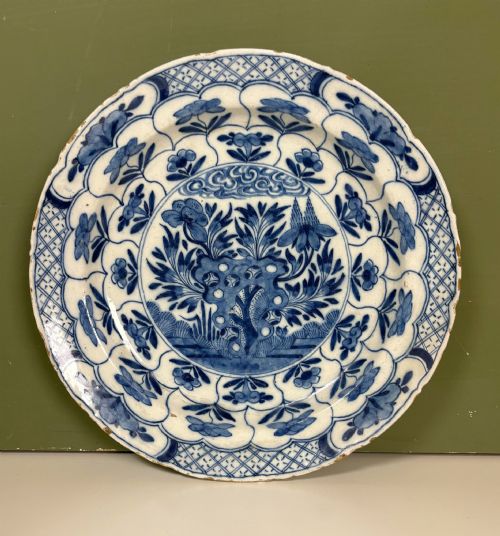
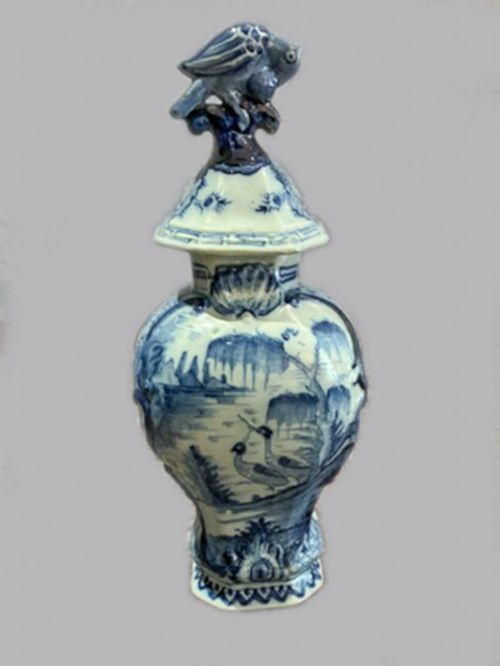
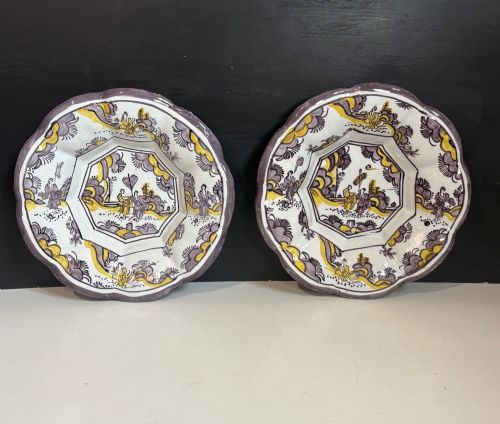
When someone searches for 18th century chinoiserie pottery, they encounter plates, chargers, bowls, and vases shaped by English and Dutch potteries. These items display imagined oriental landscapes, pagodas, and figures executed during the Georgian period and the broader seventeen-hundreds.
Dutch Delftware and English delftware dominate this selection, frequently appearing as blue and white chargers or polychrome plates. Creamware and pearlware alternatives also emerge, widening the range of ceramic bodies and decorative finishes available on the page.
Materials and Technique
Potters shaped earthen materials into vessels and flatware before applying an opaque tin glaze to create a smooth white canvas. Cobalt pigment and oxide provided the primary blue tones for hand-painted motifs, while polychrome versions incorporated additional mineral colours.
Subsequent firing set the glaze and pigments, fixing the decorative brushwork onto the ceramic body. Later pearlware pieces utilised refined bodies under translucent glazes, reflecting evolving ceramic techniques toward the end of the century.
Listings feature earthenware, pearlware, and tin-glazed bodies decorated with cobalt pigment across the 18th century and Georgian periods.
Craft and Character
Quality rests in the confidence of the brushwork and the clarity of the painted narrative across the tin glaze. Pieces with sharp cobalt detail and balanced compositions separate themselves from simpler, repetitive brush applications.
The stability of the glaze and the precision of the pottery's original form further distinguish the range. Subtleties in the tin-glazed surface and the depth of the polychrome or blue pigment determine the visual weight of each plate, charger, or vase.
Caughley·Lambeth Pottery·Louis Victor
The 18th Century Chinoiserie Pottery Glossary
- Delftware
- Tin-glazed earthenware produced in England or the Netherlands, known for a porous ceramic body and an opaque white surface. Potters painted oriental scenes directly onto this absorbent glaze before firing.
- Charger
- A large decorative plate intended for display on a wall or dresser rather than everyday dining. These wide surfaces provided ample space for detailed chinoiserie landscapes.
- Polychrome
- Decoration employing multiple colours rather than a single pigment like cobalt blue. Makers added various mineral oxides to achieve diverse hues within the painted design.
- Pearlware
- A refined earthenware developed during the late eighteenth century featuring a fine white body and a subtle bluish glaze. This material bridged the gap between creamware and later porcelains.
- Baluster
- A vase form characterised by a swelling lower body that tapers toward the neck. This architectural shape offered a stable silhouette for expansive oriental scenes.
18th Century Chinoiserie Pottery: Frequently Asked Questions
What is 18th century chinoiserie pottery?
These items comprise tin-glazed earthenware, creamware, and pearlware decorated with European interpretations of East Asian art. Artisans painted pavilions, figures, and flora onto plates, chargers, and vases.
Production centered largely in English and Dutch workshops during the seventeen-hundreds. The resulting ceramics combine local potting traditions with fantasy oriental imagery.
How do I clean my pottery?
Dust these antique ceramic surfaces gently with a dry, soft cloth to remove everyday particles. Avoid soaking or using abrasive detergents that might harm historic glazes.
Display pieces safely away from areas prone to heavy moisture or sudden temperature shifts. Careful handling protects the fragile tin-glazed body over time.
How are English and Dutch pieces told apart?
English delftware often exhibits specific regional characteristics linked to centres like Lambeth or Bristol. Dutch delft frequently displays distinct border patterns and characteristic potting weights.
Comparing the blue pigment intensity and body thickness helps identify the workshop origin. Markings remain uncommon, relying stylistic traits for attribution.
Were these items used daily?
Large chargers and decorative plates were primarily intended for visual display on walls or sideboards. Smaller bowls and tableware occasionally served functional roles in wealthy households.
Over centuries, surviving examples shifted from practical items to collectable objects of art. Their survival reflects careful preservation by generations of owners.