




18th Century Chinoiserie Plate
An 18th century chinoiserie plate brings European interpretations of East Asian motifs into domestic spaces through painted earthenware and porcelain.
18th Century Chinoiserie Plate
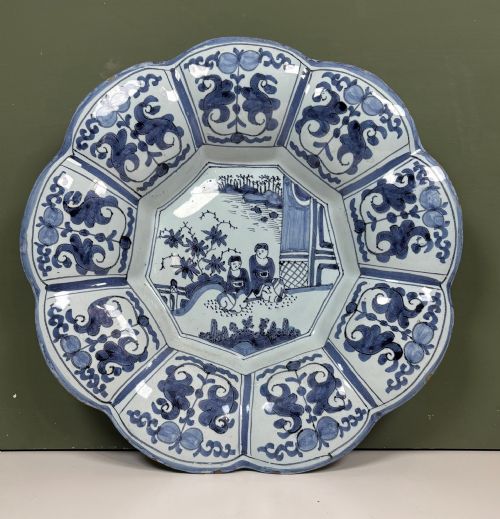
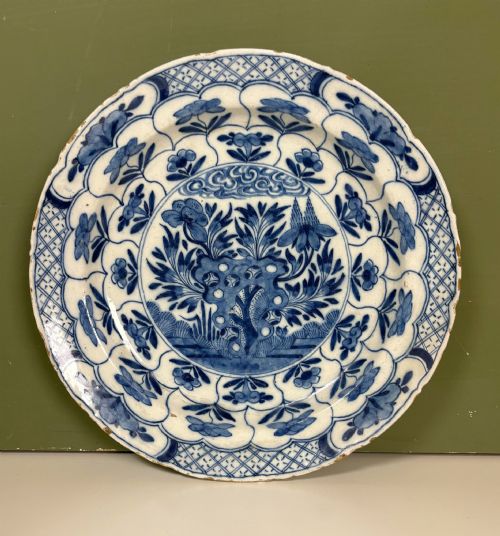
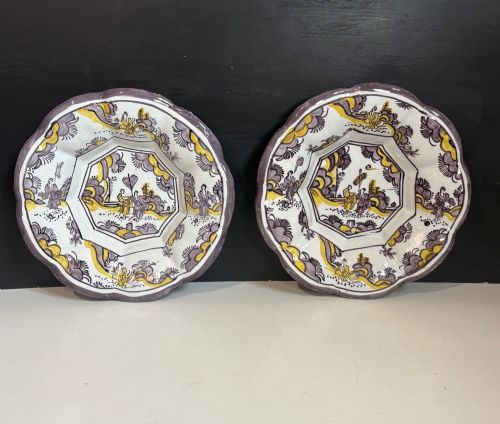
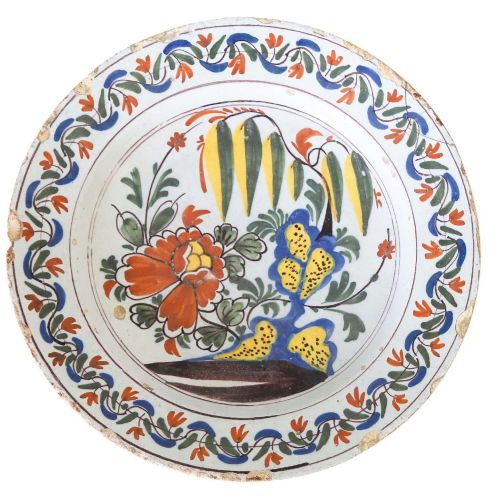
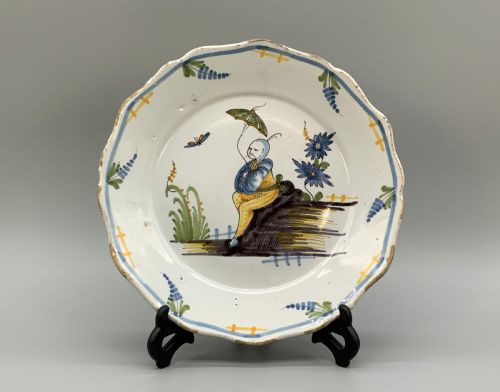
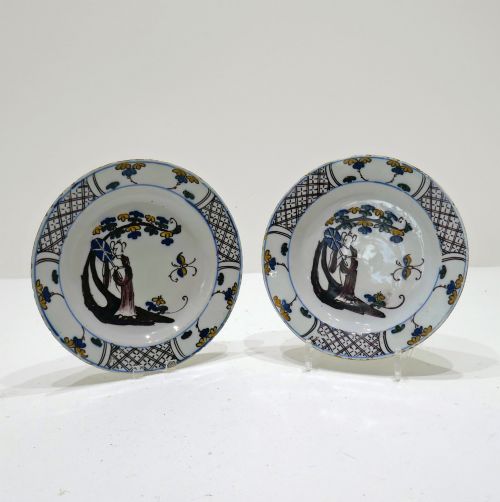
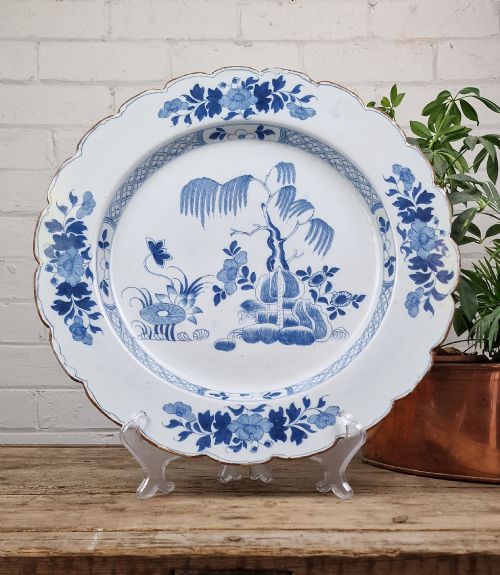
An 18th century chinoiserie plate comprises shallow circular vessels and chargers decorated with European fantasies of Chinese landscapes, figures, and architectural pagodas. These ceramics range from large decorative chargers to table plates and saucers originating in English, Dutch, and French potteries.
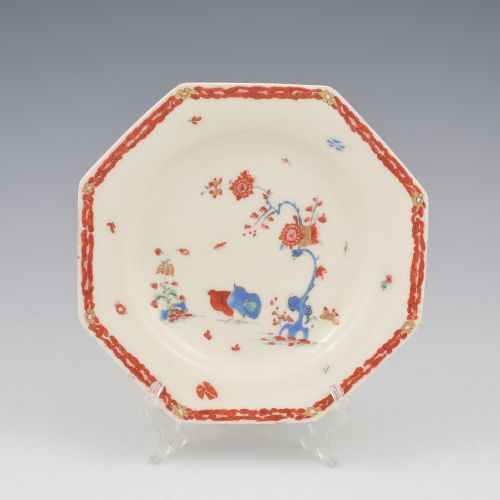
The dominant forms on this page are tin-glazed earthenware dishes and delftware chargers painted in blue and white or polychrome palettes. Alongside these earthenwares appear soft-paste porcelain plates and pearlware chargers carrying traditional pagoda and bird patterns.
Makers and potteries from English centres such as Bristol, Lambeth, and Worcester work alongside continental Dutch and French faience producers. Pieces span the Georgian era and the broader eighteenth century, capturing an era of intense European fascination with oriental design.
How they were made
Potters shaped earthenware bodies and coated them in tin glaze to create an opaque white surface suitable for painting. Artisans applied cobalt pigment and polychrome enamels directly onto the raw glaze before firing.
Porcelain manufactories utilised soft-paste clay bodies and moulded octagonal or round plates before applying hand-painted underglaze blue and enamel designs. Firing took place in traditional kilns where brushwork absorbed into the glaze layers.
Early painters populated these imaginary landscapes with fishermen casting lines into impossible rivers and birds arguing over invisible crumbs.
What varies in quality
Quality rests in the precision and fluidity of the hand-painted brushwork across the tin glaze or porcelain body. Confident, expressive cobalt strokes and vibrant polychrome pigment application distinguish superior items from stiffer decorative work.
The stability of the ceramic body and the uniformity of the tin glaze layer determine the preservation of the surface. Plates with minimal glaze pooling and crisp pictorial composition represent the finer end of the surviving range.
Caughley·Bow Porcelain
The 18th Century Chinoiserie Plate Glossary
- Tin Glaze
- A lead glaze made opaque with tin oxide, providing a white background for painted decoration on earthenware. This technique defines European delftware and faience production.
- Chinoiserie
- European artistic style reflecting Chinese motifs and landscape elements. Artisans interpreted imported porcelain designs through local decorative traditions.
- Soft-paste Porcelain
- An artificial ceramic body fired at lower temperatures than hard-paste porcelain. English factories utilised this material for domestic tableware and decorative plates.
- Charger
- A large ornamental plate intended for display on sideboards or walls rather than dining use. These substantial dishes often showcase the most elaborate painted compositions.
18th Century Chinoiserie Plate: Frequently Asked Questions
How do I display an antique charger?
These large plates suit wall mounting using specialised wire hangers or placement on plate stands across wooden dressers. Their scale and visual weight make them focal points in traditional rooms.
Keep them away from direct sunlight and areas of high moisture to protect the tin glaze and painted enamel surfaces over decades of display.
Were these plates used for dining?
While standard plates saw service at dining tables, large chargers served primarily as decorative display pieces or serving platters during formal meals.
The soft earthenware bodies and delicate tin glazes meant daily use caused gradual wear, leading many surviving examples to be preserved for visual display.
How do I tell English and Dutch delft apart?
English and Dutch delftware share tin-glaze techniques, but subtle variations in clay bodies and palette hues help distinguish regional workshops. Bristol and Lambeth pieces often exhibit distinct secondary pigment tones.
Examining the foot ring and glaze characteristics on the reverse of the plate provides further clues to the specific pottery origin.
What is the Kakiemon pattern?
Kakiemon design refers to Japanese export porcelain styles featuring asymmetric floral arrangements, birds, and distinct enamels. English factories like Bow adopted these motifs during the eighteenth century.
Plates bearing the two quail or partridge pattern demonstrate this cross-cultural exchange between Asian aesthetic traditions and European porcelain manufacture.