


18th Century Carved Oak Box
An 18th century carved oak box brings tactile warmth and enduring utility to any room through centuries-old joinery.
18th Century Carved Oak Box
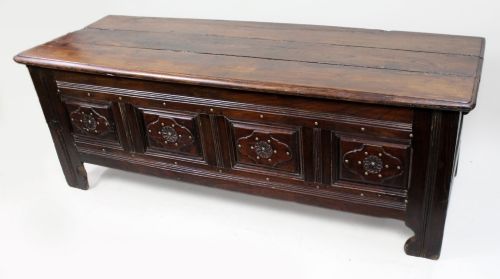
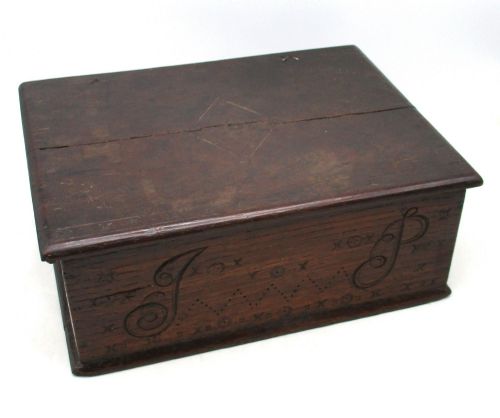
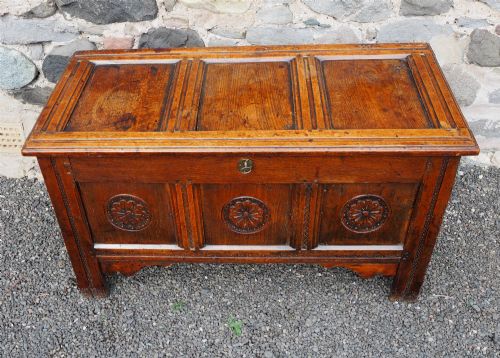
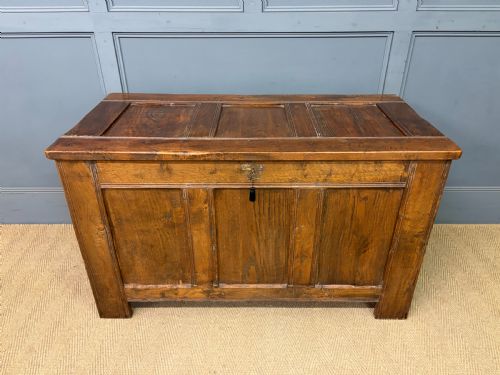
An 18th century carved oak box encompasses a variety of utilitarian vessels designed for storage and daily household life. Buyers encounter document boxes, Bible boxes, candle boxes, and larger coffers alongside regional seating forms that incorporate lidded storage. These domestic objects reflect the period's reliance on sturdy native timber for safeguarding valuables and family papers.
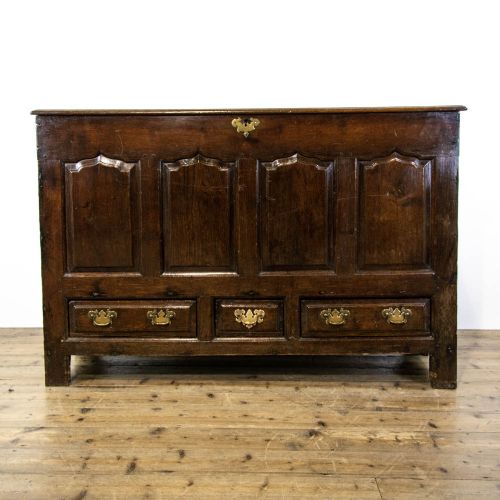
The selection ranges widely across English, Welsh, French, and Frisian origins, showing stylistic traits from Georgian country work to provincial folk art. Smaller desk boxes and salt boxes appear alongside robust mule chests fitted with lower drawers. Each survivor demonstrates the practical needs of past households, executed in solid timber by regional joiners.
How they were made
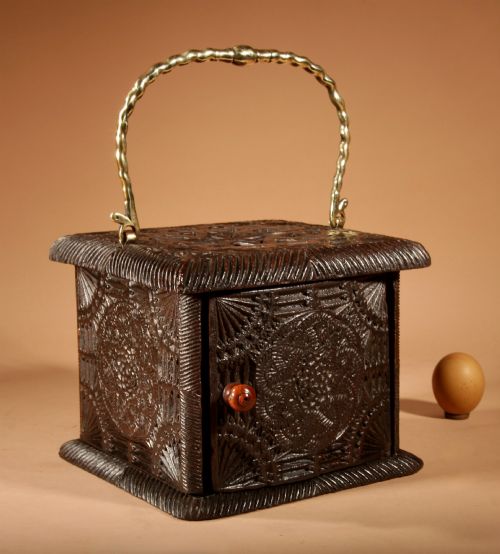
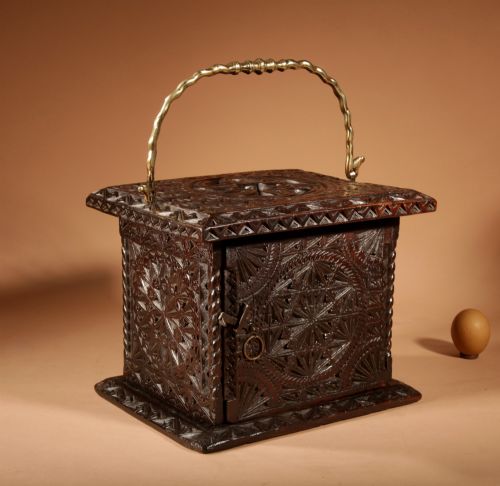
Makers constructed these boxes using solid oak boards joined by pegged mortise and tenon joints, panel frame construction, and hand-cut dovetails. Surfaces frequently display chip carving, scratch carving, or geometric panel detailing executed with basic gouges and chisels. Secondary timbers such as pine or burr elm appear in internal panels or subordinate framing.
Hardware consists of hand-forged iron hinges, latches, and strap work fastened directly to the wood. Some examples retain traces of original red paint or iron hardware, whilst interior compartments often house small internal till boxes or candle boxes fitted beneath the hinged lid.
Listings feature regional variations spanning English country, Welsh vernacular, French provincial, and Frisian folk art traditions.
What varies in quality
Quality rests upon the crispness of the hand-carved decoration and the integrity of the original joined construction. Finer examples retain their original iron hardware, undisturbed backboards, and untouched surface patination built up over generations of use. Heavy replacement of boards or poorly executed later carving diminishes the integrity of the piece.
Proportion and scale also dictate distinction, with miniature boxes or intricate coffer bache variants commanding particular attention for their refined execution. The choice of timber grain, such as figured burr elm panels set within the oak framework, elevates the visual depth of the object.
The 18th Century Carved Oak Box Glossary
- Coffer
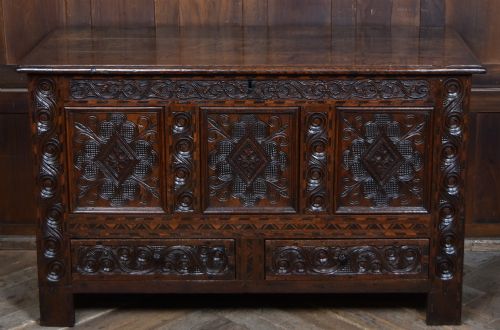
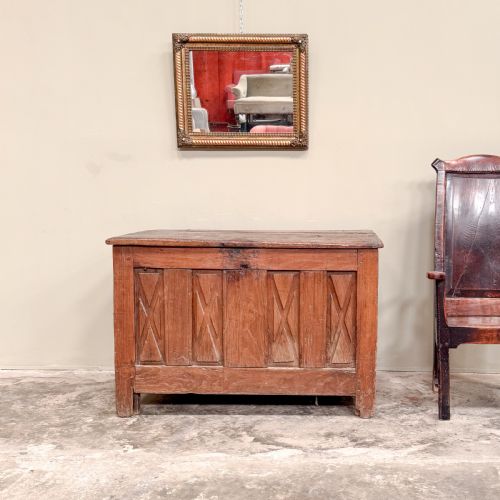
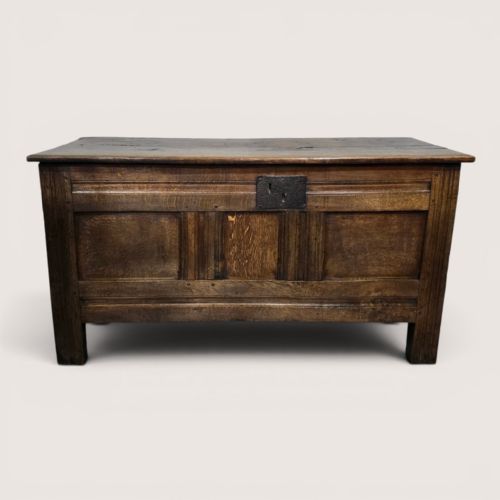
- A large rectangular chest with a hinged lid used primarily for storing textiles and valuables. These heavy pieces form a core part of early domestic storage.
- Bible Box
- A small tabletop box featuring a sloping or flat hinged lid designed to hold sacred texts and writing materials. They often sit upon side tables or desks.
- Mule Chest
- A storage chest equipped with one or more drawers beneath the main lidded compartment. This form bridges the evolution between simple coffers and modern drawer chests.
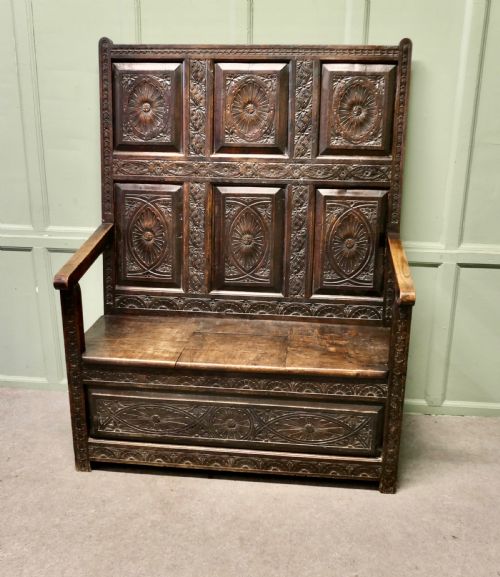
- Box Settle
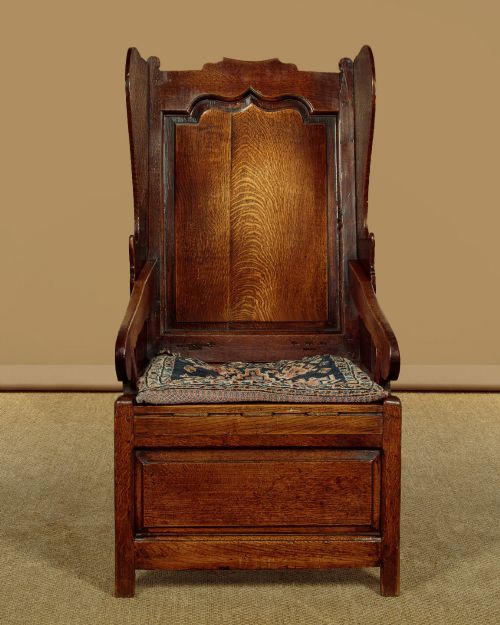
- A high-backed wooden bench incorporating a lidded storage compartment beneath the seat. These dual-purpose seats offered warmth and storage in communal rooms.
- Chip Carving
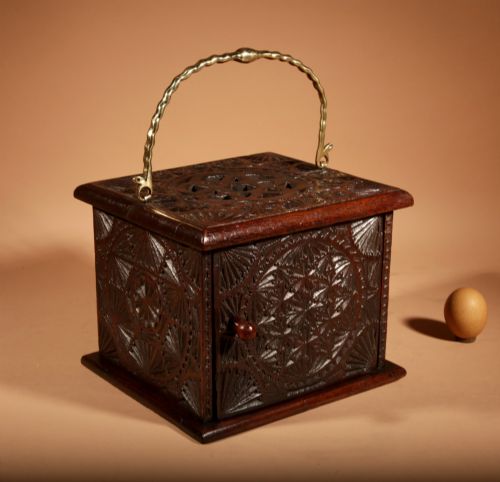
- A decorative technique where small chips are removed from the surface of the wood to form geometric patterns. It appears frequently on regional folk boxes and foot warmers.
18th Century Carved Oak Box: Frequently Asked Questions
What is the difference between a Bible box and a document box?
Bible boxes typically feature sloping lids designed for reading and writing sacred texts, whereas document boxes tend to have flat lids tailored for stacking papers and deeds.
Both small box types share sturdy oak construction and hand-carved fronts, serving secure storage functions in domestic settings.
How were these wooden boxes used in daily life?
Households utilised these lidded containers to safeguard family Bibles, legal documents, candles, and precious textiles from dampness and theft. Larger variants doubled as seating or sturdy tables when floor space was limited.
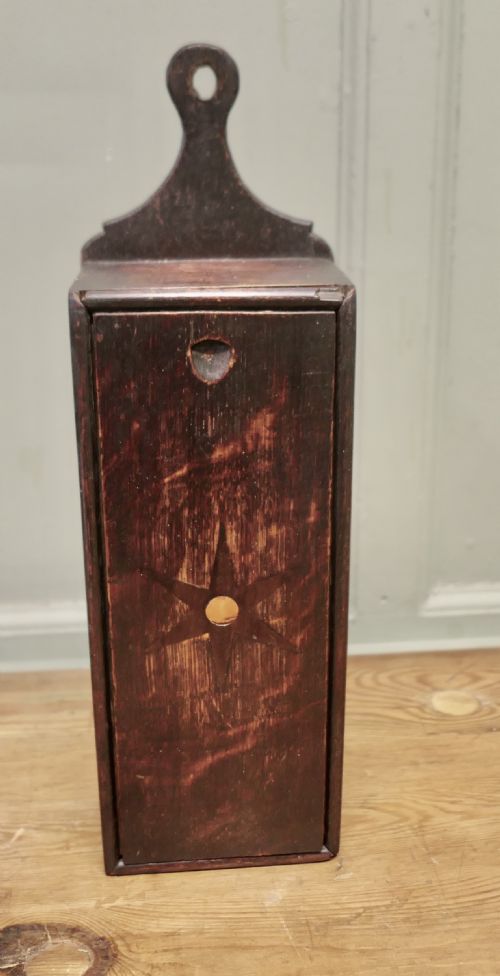
Specialised forms like salt boxes hung securely on kitchen walls, protecting dry goods from household pests.
How can I identify a regional style?
Regional characteristics reveal themselves through specific carving motifs, assembly methods, and local timber choices. Welsh pieces often display distinct proportions, whilst Frisian and French examples show characteristic folk art carving patterns.
Examining the secondary woods inside the piece helps confirm its geographical origin.
Should original iron hardware affect my choice?
Original iron hinges, latches, and lock plates significantly enhance the authenticity and historical value of an oak box. Hand-forged hardware demonstrates the period work of village blacksmiths.
Replaced hinges or modern screws indicate later repairs that alter the original condition of the piece.