




Georgian Carved Oak Coffer
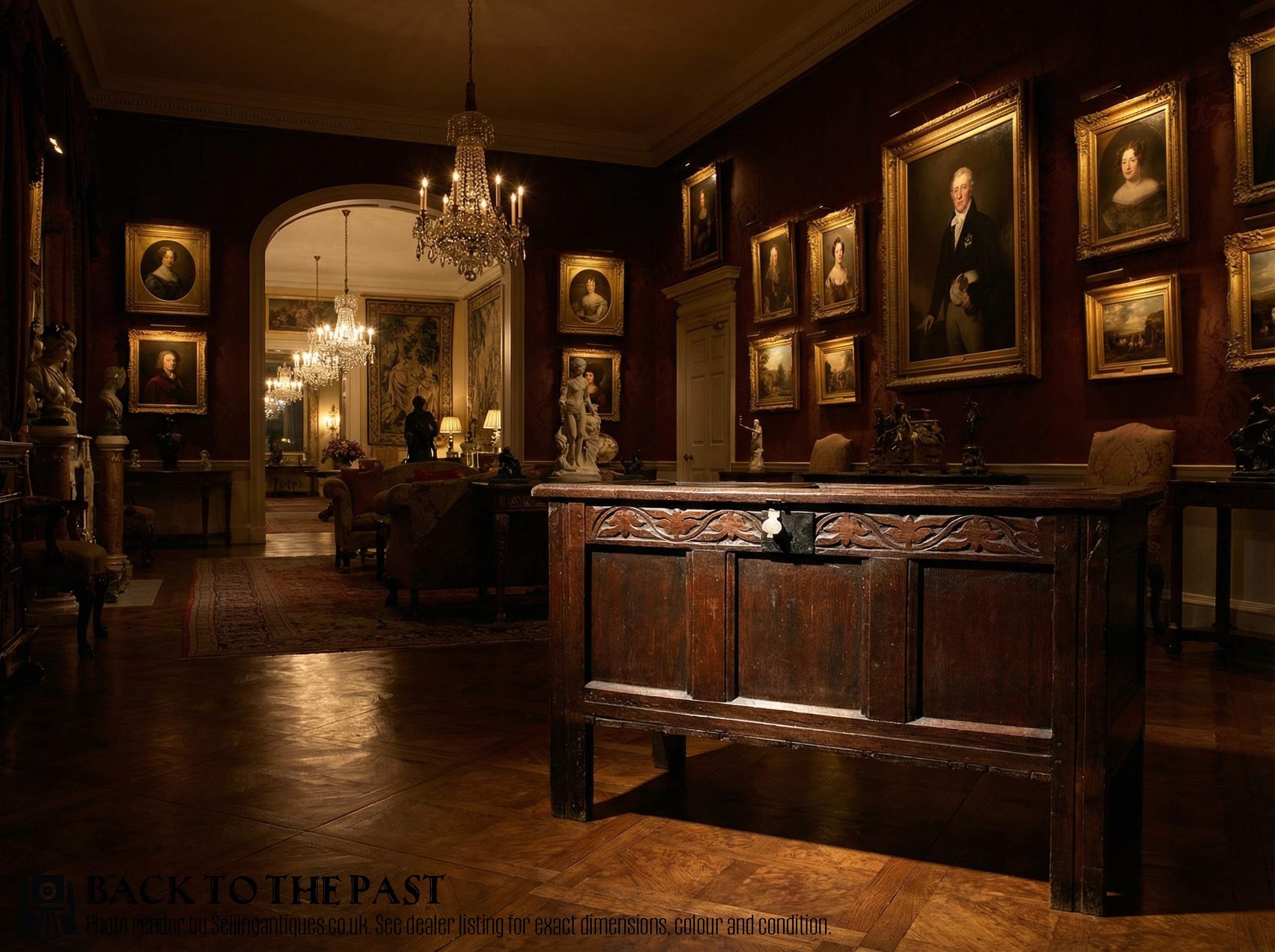
A georgian carved oak coffer brings rugged English and Welsh vernacular storage and character directly into a modern hallway or living space.
Georgian Carved Oak Coffer
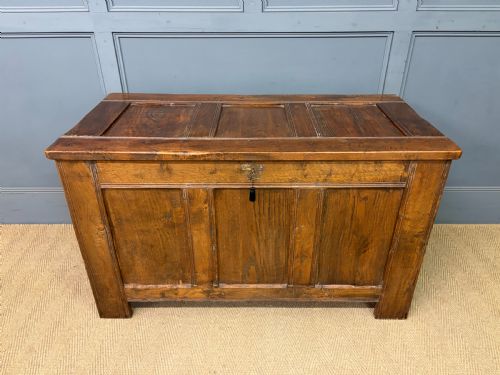
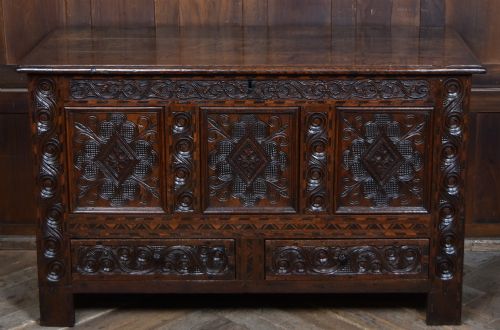
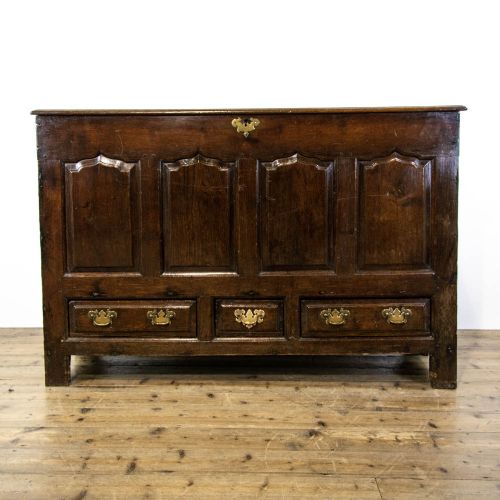
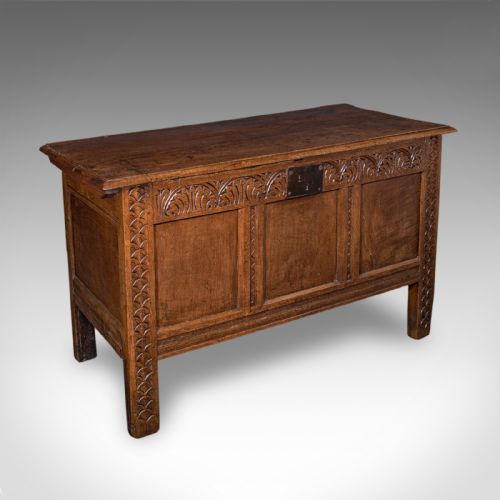
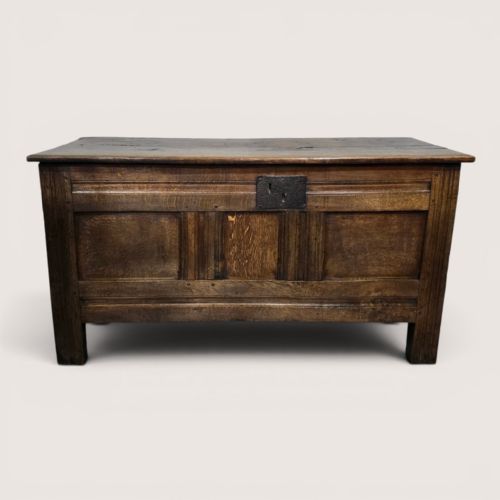
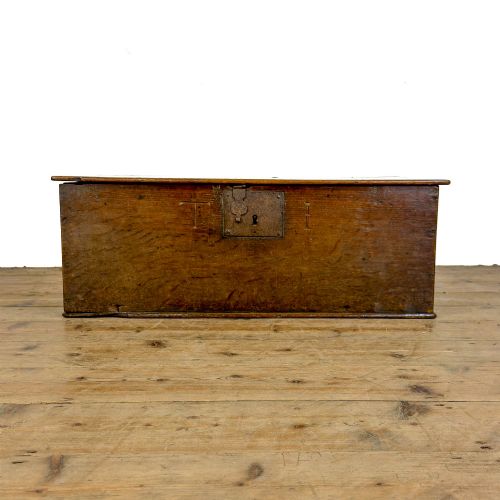
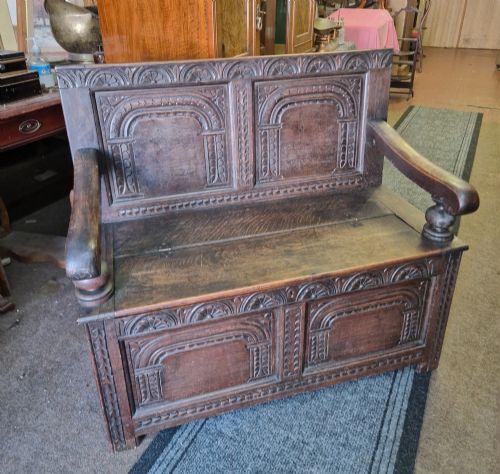
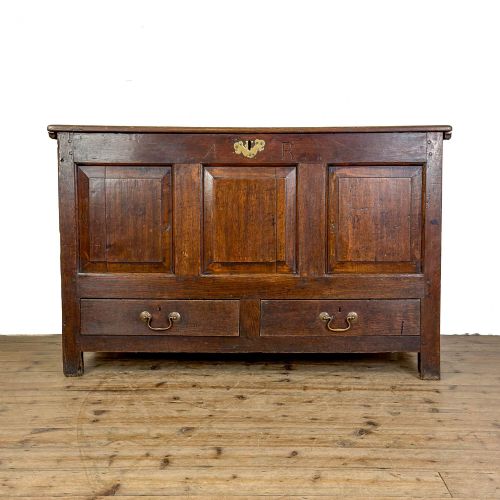
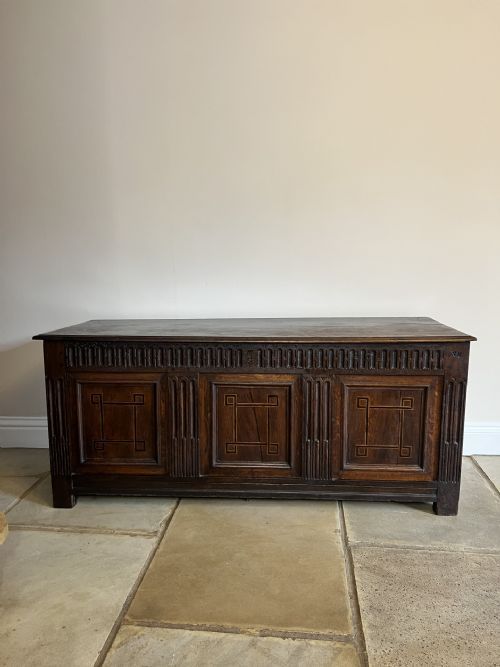
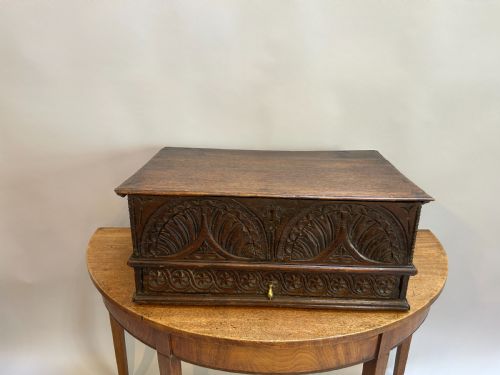
A georgian carved oak coffer is a sturdy domestic storage chest built from robust native timber, often displaying traditional relief carving across the front panels. These pieces span standard blanket chests, mule chests fitted with lower drawers, and smaller coffer bach formats originating from Welsh workshops.
The surviving examples range from plain panelled construction to heavily detailed geometric and floral motifs associated with English country craftsmanship. Many retain internal candle boxes or original locking mechanisms, recording their long history of household utility.
How they were made
Cabinet makers utilised solid oak timbers, joining panels with traditional frame and panel construction to accommodate natural wood movement over centuries. Secondary woods such as pine appear in internal compartments, while burr elm or fruitwood inlay occasionally accentuates select panels.
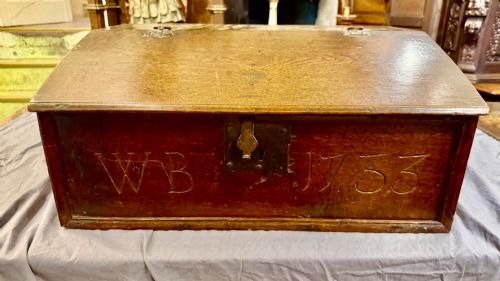
Forged iron hinges, brass escutcheons, and functional locks secure the heavy lids, combining structural durability with simple decorative metalwork. Hand tools left distinct chisel marks and surface textures across the carved fronts and joined boards.
Internal candle boxes survive inside these chests, protecting fragile tallow dips from the textiles stored below.
What varies in quality
The depth and crispness of the carved ornamentation separate standard country pieces from finer workshops, where carvers applied intricate patterns with greater confidence. Proportion also dictates value, with unusually small proportions, miniature coffers, and mule chests featuring lower drawers commanding particular attention.
Surface patination and the survival of original structural elements, such as feet, hinges, and candle boxes, determine the integrity of each individual trunk.
The Georgian Carved Oak Coffer Glossary
- Coffer
- A heavy wooden chest traditionally used for storing valuables, textiles, or documents before fitted wardrobes became common.
- Mule chest
- A storage chest featuring one or more drawers built into the base beneath the main compartment.
- Settle
- A wooden bench with a high solid back and a box seat that often doubles as a coffer.
- Candle box
- A small internal lidded compartment fixed inside a chest to hold tallow candles away from linens.
Georgian Carved Oak Coffer: Frequently Asked Questions
What is a coffer bach?
A coffer bach is a miniature Welsh coffer produced during the eighteenth century, typically serving as a presentation piece or dowry chest.
These diminutive boxes share the same construction methods and carved details as full-sized examples but on a much smaller scale.
How do mule chests differ from coffers?
Mule chests include one or more drawers beneath the main lift-top storage compartment, bridging the gap between a traditional chest and a chest of drawers.
This hybrid form emerged to provide more accessible storage without requiring users to lift items out from the top well.
Where were these chests used?
These sturdy pieces served primarily in domestic settings, from substantial country houses to modest Welsh farmhouses, storing woollens, blankets, and dry goods.
Today, their flat lids allow them to function easily as window seats, hall benches, or coffee tables in contemporary rooms.
How can you spot regional variations?
Regional differences appear in the style of carving, timber selection, and overall proportions, with Welsh vernacular pieces often displaying distinctive lettering or framing.
English country examples tend to favour robust three-panel frontages with geometric or floral relief work typical of local trade traditions.