

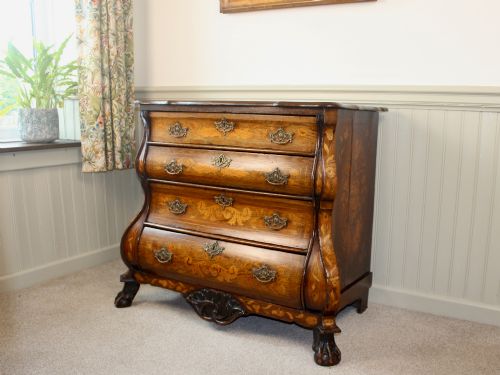


18th Century Bombe Chest
An 18th century bombe chest brings sweeping, swelling lines and rich timber figuring to a room.
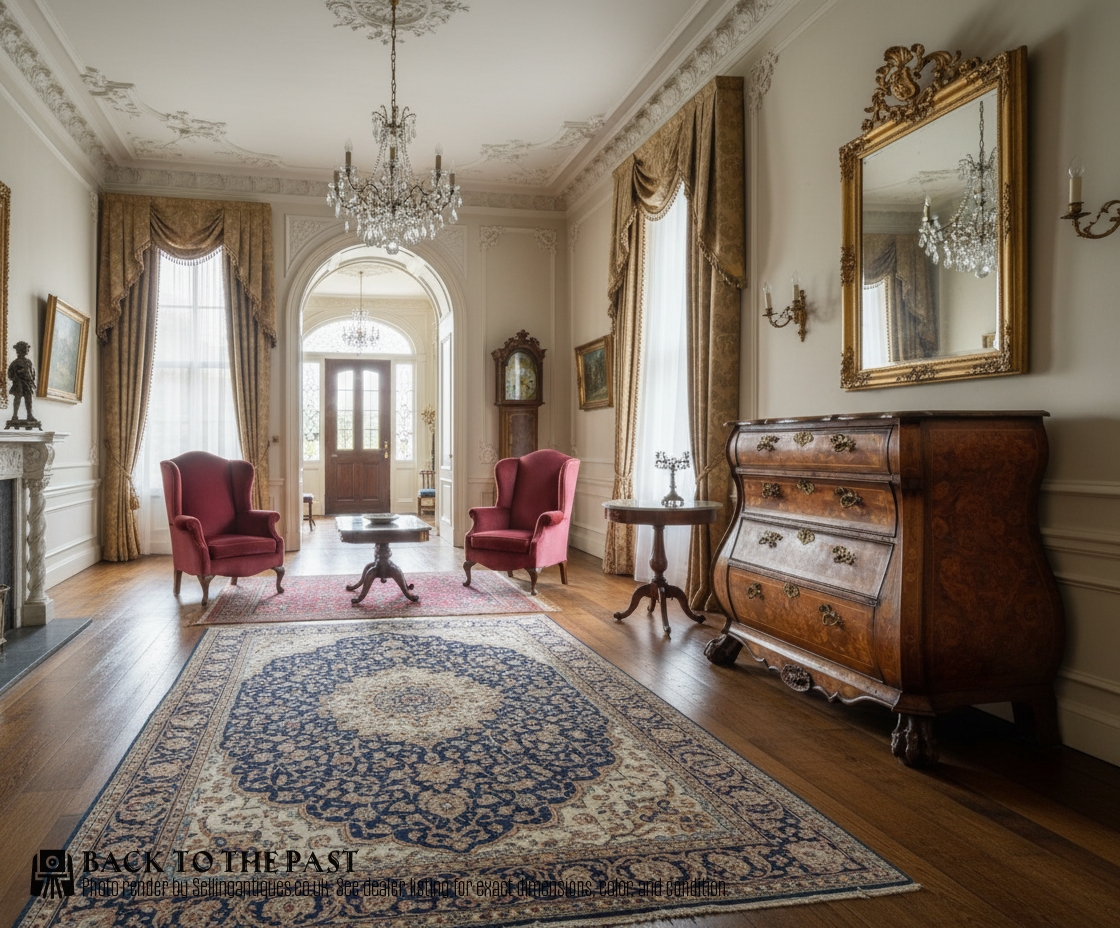
18th Century Bombe Chest
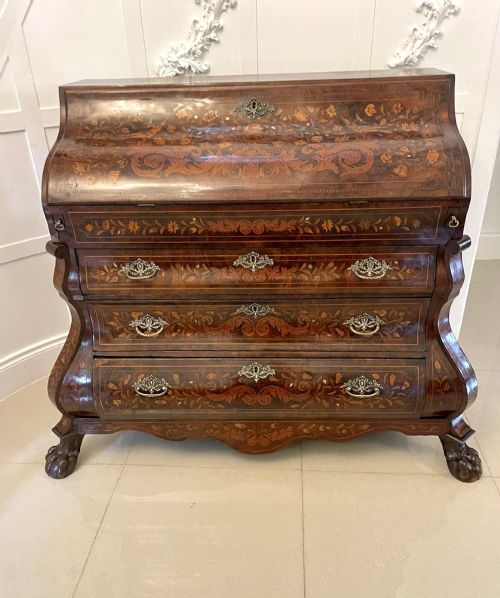
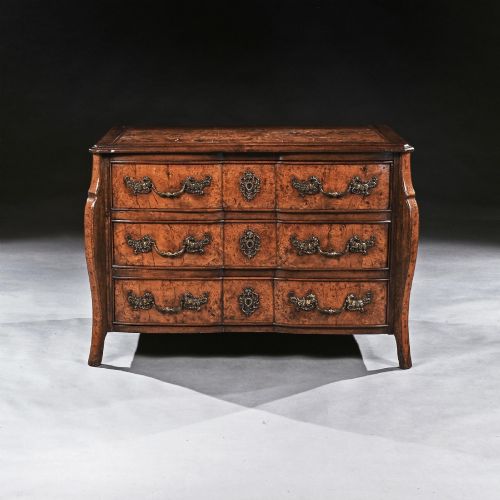
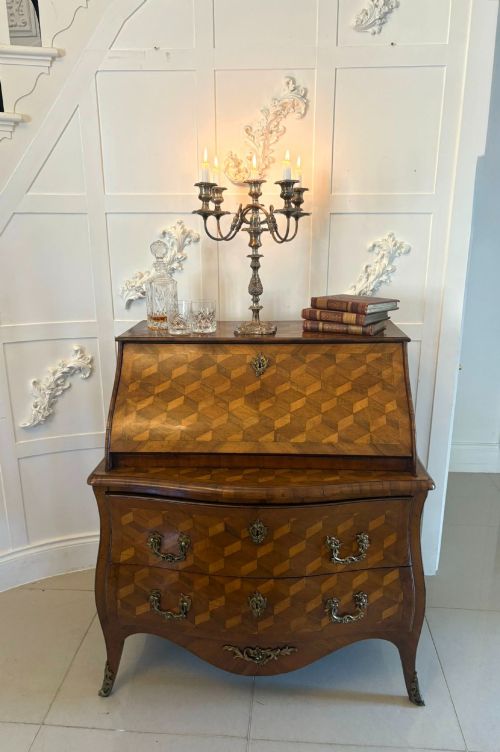
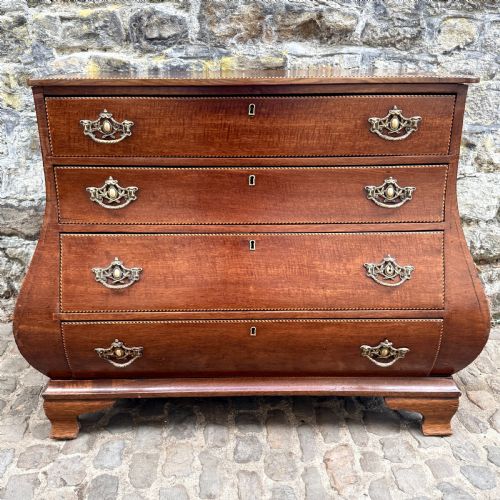
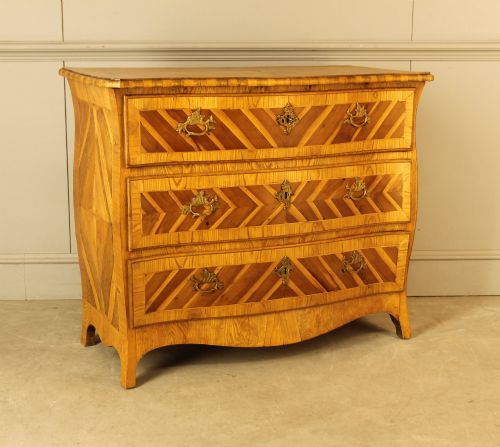
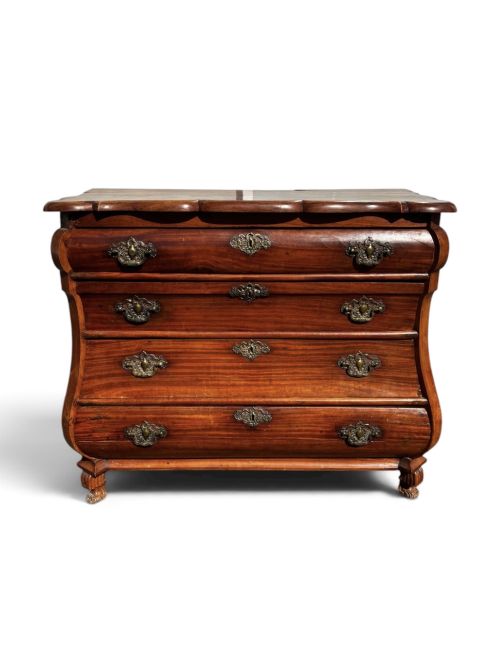
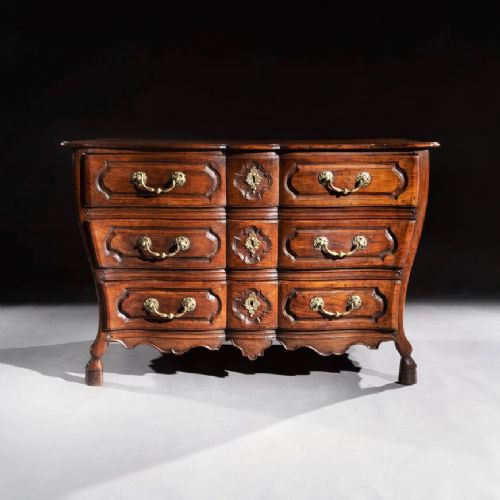
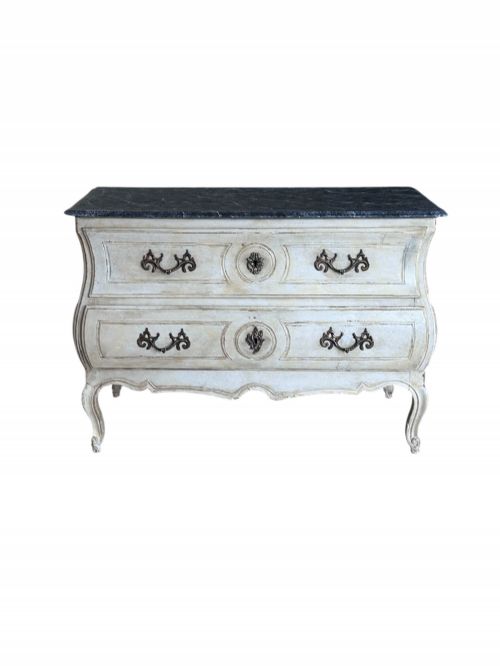
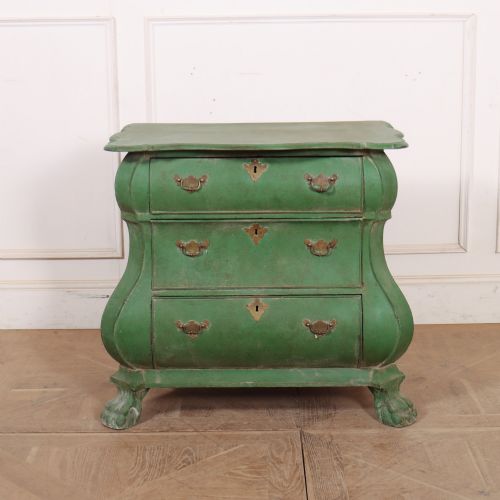
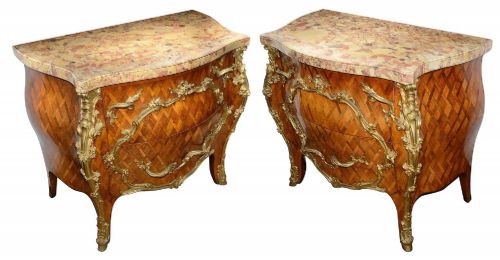
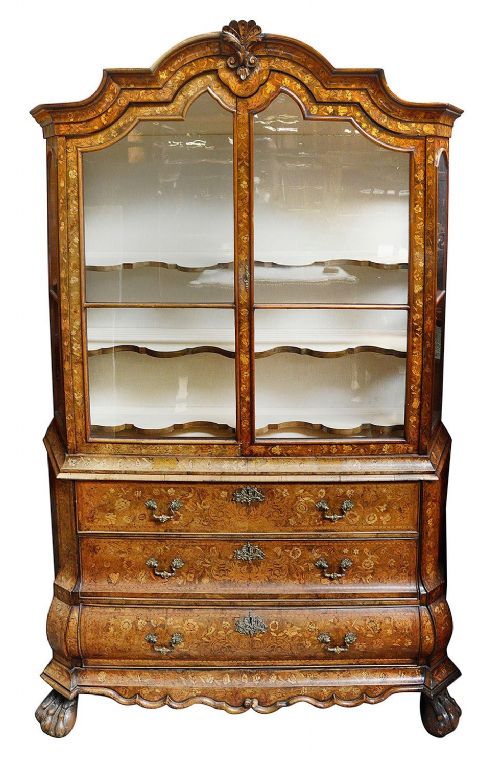
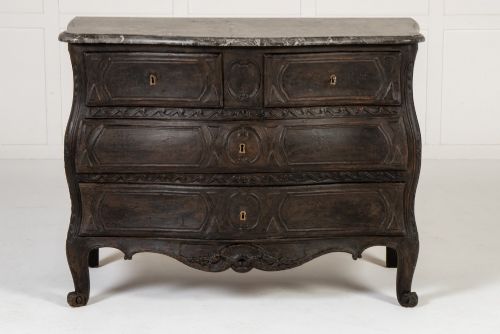
An 18th century bombe chest is a substantial storage piece defined by its bulging, convex front and sides, frequently encountered in Dutch and French regional forms. The selection ranges from commodes with curving drawer fronts to bureaus and display cabinets resting on shaped feet.
Most examples originate from the 18th century or follow Georgian and Louis XV styles, constructed as chests of drawers, commodes, or bureau bookcases. Walnut, mahogany, and oak form the structural backbone of these pieces, often paired with elaborate marquetry.
Dutch and French workshops produced the majority of these bulging forms, utilising regional timbers like burr walnut, fruitwood, and kingwood. Buyers meet both straightforward oak storage pieces and heavily inlaid floral marquetry versions.
How they were made
Cabinetmakers shaped the distinctive swelling sides by building up thick timber cores or applying shaped framing to create the convex profile. Veneers of burr walnut, kingwood, or mahogany were then sawn by hand and laid down in symmetrical patterns across the curved surfaces.
Marquetry panels were assembled from various contrasting woods, creating floral and geometric designs that followed the difficult contours of the bombe shape. Brass handles, escutcheons, and occasional ormolu mounts were secured to complete the drawer fronts and corners.
Listings feature 18th-century and 19th-century periods alongside Dutch Baroque, Louis XV, and Swedish Rococo styles in walnut, oak, and kingwood.
What varies in quality
The sophistication of the timber figuring and the precision of the marquetry dictate the upper tier of these pieces, where floral inlays flow seamlessly across undulating drawers. Lesser examples rely on plain mahogany or simpler oak without the complex grain alignment.
Construction methods reveal the standard of the workshop, particularly in how cleanly the convex curves meet the corners and how smoothly the drawers operate within their shaped housings. Superior pieces retain crisp carving on the feet and borders, whereas provincial versions show simpler execution.
The 18th Century Bombe Chest Glossary
- Bombe
- A swelling, convex shape characteristic of continental furniture from the 18th century. The sides and front bulge outward in a continuous curve.
- Marquetry
- The art of inlaying different coloured veneers into a background to form decorative patterns. Floral motifs frequently appear on Dutch walnut pieces.
- Commode
- A low chest of drawers, often French in origin, standing on short legs. These pieces usually feature marble tops or elaborate mounts.
- Bureau
- A sloping desk with a hinged writing flap enclosing small drawers and pigeonholes. Several examples combine this writing surface with a bombe base.
18th Century Bombe Chest: Frequently Asked Questions
How do I identify a Dutch bombe chest?
Dutch examples typically display pronounced swelling fronts executed in burr walnut with dense floral marquetry. They frequently rest upon ball and claw feet or compressed bracket feet.
French commodes from the same period favour kingwood, mahogany, or painted finishes with bronze mounts rather than elaborate marquetry work.
Where were bombe chests used?
These prominent storage items stood in principal reception rooms, parlours, and grand bedrooms of 18th-century townhouses. Their decorative surfaces served to display porcelain and silver.
Today, they function as statement sideboards or hall chests where the curved profile commands visual attention.
Are all bombe chests from the 18th century?
While the form originates in the 18th century, revival periods during the 19th and early 20th centuries produced faithful copies. Georgian and Louis XV styles were heavily replicated around eighteen-eighty to nineteen-thirty.
Construction details, timber shrinkage, and secondary woods help distinguish original 18th-century pieces from later interpretations.
How should I care for burr walnut veneer?
Burr walnut requires stable room humidity and protection from direct sunlight to prevent the delicate veneer from lifting. Gentle dusting with a dry cloth maintains the polished surface.
Avoid placing damp items or heavy stoneware directly onto the timber top to protect the historic polish.