
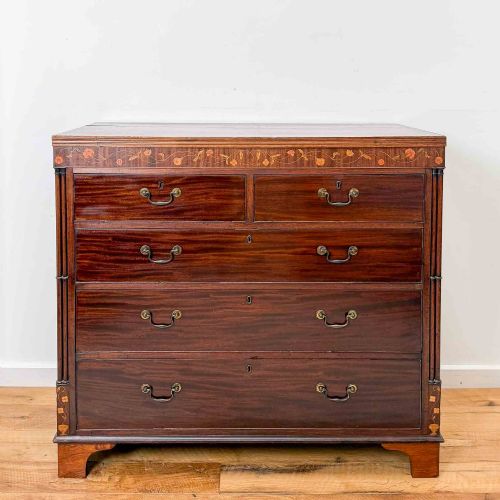
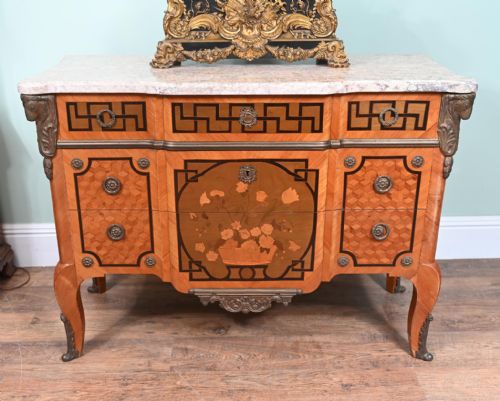
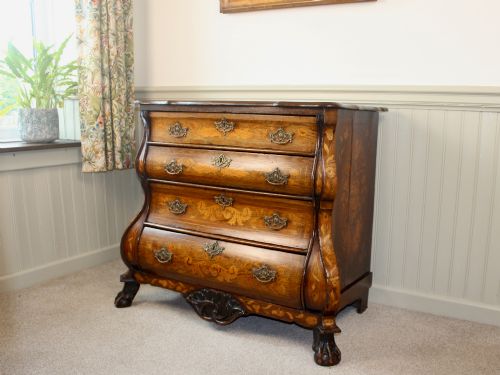


Floral Inlaid Dresser
A floral inlaid dresser brings together centuries of timber and detailed marquetry for storage that commands any room.
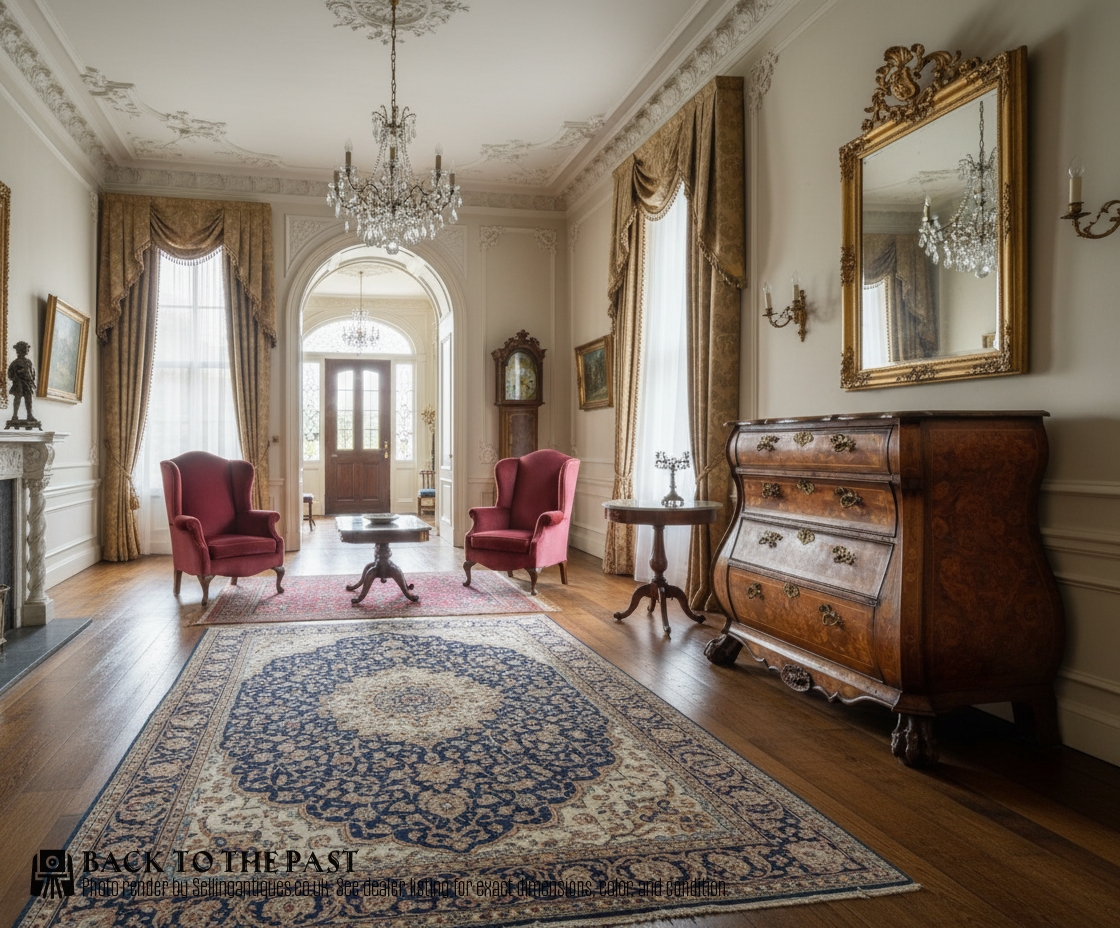
Floral Inlaid Dresser
A floral inlaid dresser encompasses chests of drawers, commodes, and dressing tables adorned with botanical marquetry. These pieces originate from periods spanning the seventeenth century through to the twentieth century.
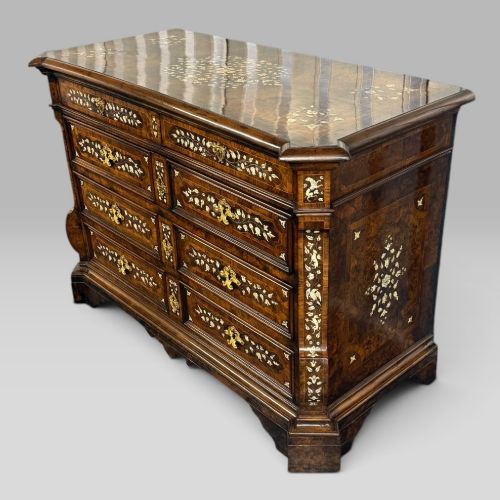
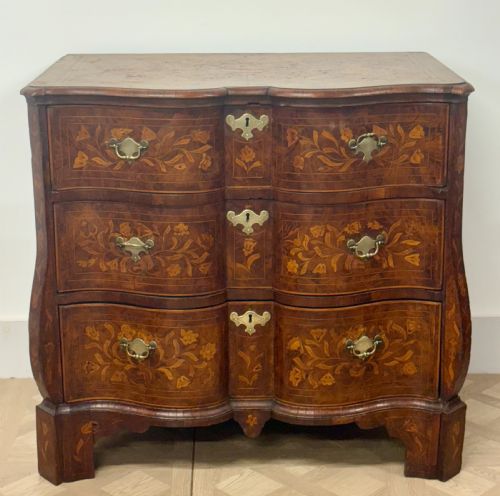
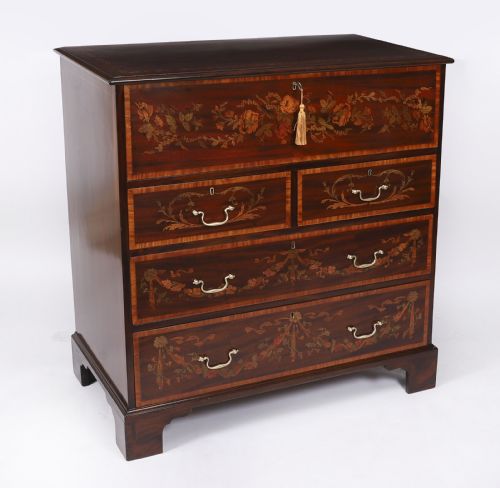
The most common forms on this page are chests of drawers and commodes featuring elaborate floral designs across their drawer fronts and surfaces. Makers from Dutch, Italian, and English traditions produced these storage pieces.
Earlier examples often display William and Mary or Baroque characteristics in walnut and oak, while later items embrace Revival styles and satinwood.
Materials and construction methods
Craftsmen built these carcasses from timbers such as walnut, mahogany, oak, and fruitwood, often applying veneers to stable underlying woods. Marquetry inlay techniques combined contrasting woods and fruitwood inlay to form intricate floral motifs across the visible surfaces.
Brass handles, escutcheons, and occasional ormolu mounts complete the hardware of these pieces, fixed securely to drawers and doors. Carpenters utilised dovetail joints for drawer construction and shaped serpentine or bombe profiles using specialised cutting tools.
Current listings feature pieces spanning the 17th, 18th, and 19th centuries, constructed from walnut, mahogany, oak, and fruitwood.
Distinctions in craftsmanship and design
The precision of the marquetry inlay defines the upper tier of these pieces, where floral motifs remain crisp and tightly fitted without visible gaps. Simpler examples show broader botanical patterns with less variation in tone among the woods.
Structural integrity and the retention of original brass hardware or ormolu mounts alter the standing of a piece significantly. Subtly shaped serpentine and bombe forms demand advanced joinery compared to flat-fronted alternatives.
Ollivant and Botsford
The Floral Inlaid Dresser Glossary
- Marquetry Inlay
- A decorative technique of applying veneer pieces to a structure to form detailed pictures or patterns. It uses various coloured woods to create floral designs.
- Bombe
- A swollen or bulging outward profile found on the sides and fronts of certain commodes and chests. This curved shape requires skilled timber manipulation.
- Serpentine
- A shaped furniture front or top curving outward in the centre and inward at the sides. This contour appears frequently on eighteenth- and nineteenth-century chests.
- Ormolu
- Gilt bronze mounts applied to furniture for decorative effect and corner protection. It appears on revival pieces and continental commodes.
Floral Inlaid Dresser: Frequently Asked Questions
How do I clean floral marquetry?
Dust surfaces regularly with a soft, dry cloth to prevent dirt accumulation within the grain.
Avoid liquid cleaners and apply a traditional beeswax polish sparingly to maintain the timber lustre.
Where should I place a chest?
Position the piece away from direct sunlight and heat sources to prevent timber warping and veneer lifting.
Ensure adequate clearance in hallways or bedrooms to showcase the curved serpentine or bombe profiles.
How do I date these pieces?
Examine the secondary woods inside the drawers, such as oak or pine, alongside the construction joints.
Compare the style of the floral inlay and hardware against known periods like William and Mary or George III.
What is a bombe commode?
A bombe commode is a low storage chest featuring prominent convex curves on its front and sides.
This continental furniture form gained popularity during baroque and revival periods for its dramatic silhouette.