
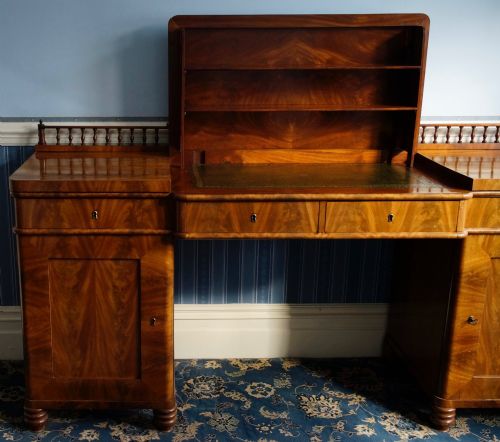
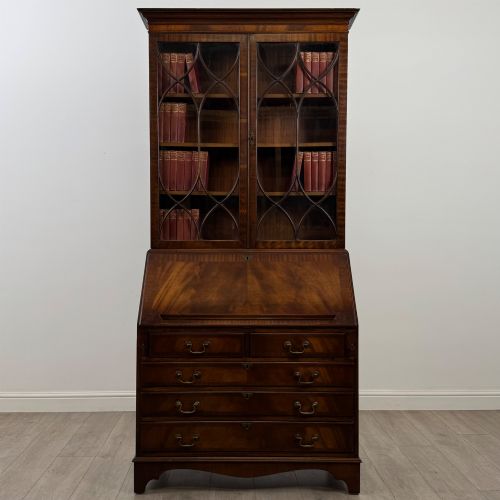
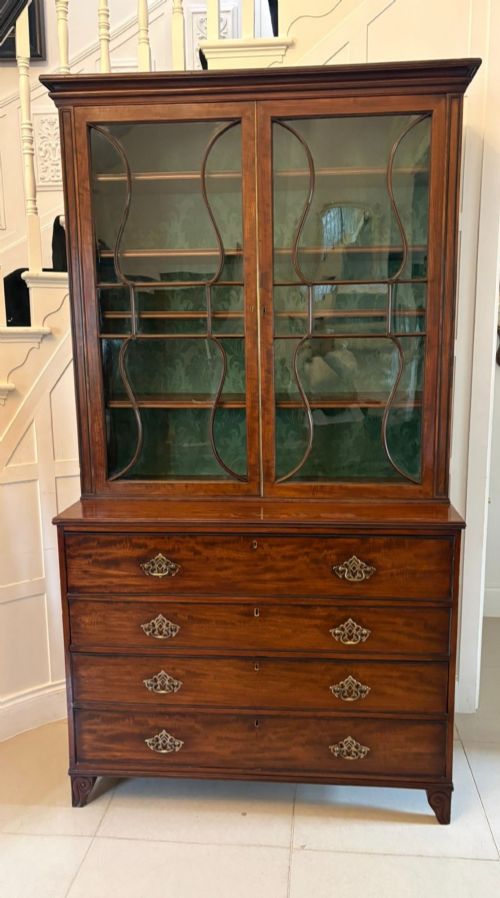
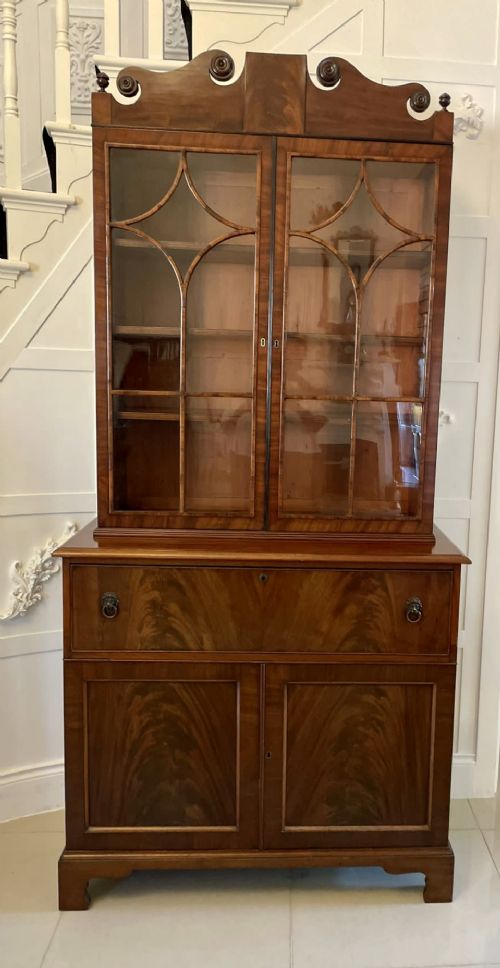
Dark Mahogany Writing Cabinet
A dark mahogany writing cabinet brings together deep timber and fitted drawers for correspondence, turning a corner of a room into a place for serious thought.
Dark Mahogany Writing Cabinet
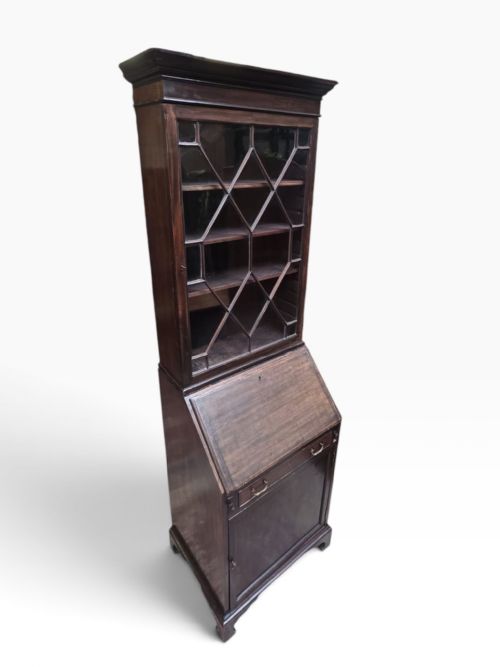
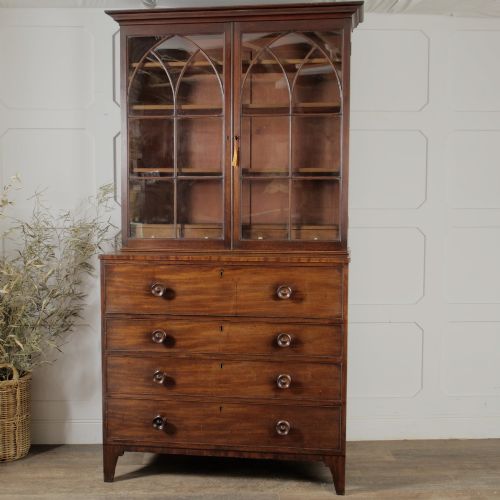
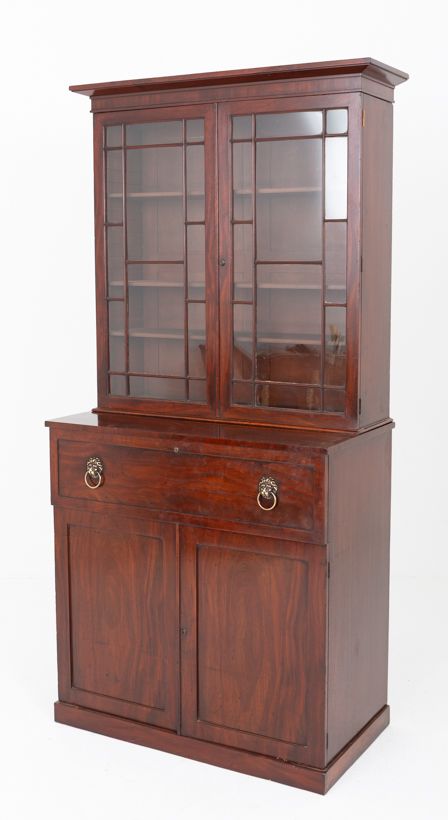
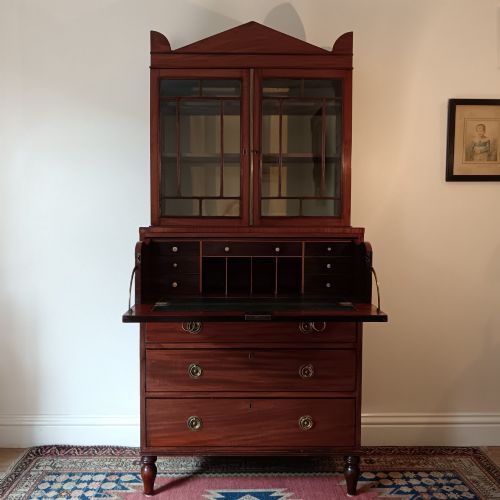
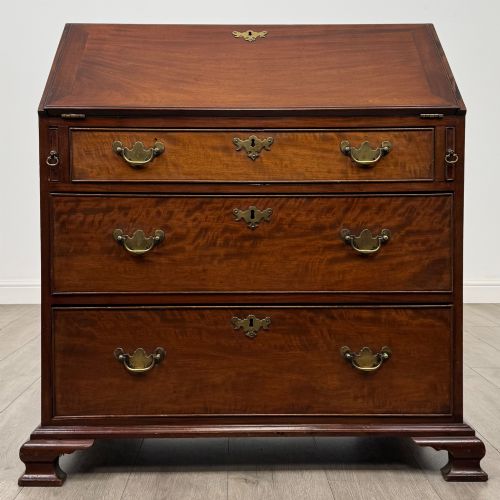
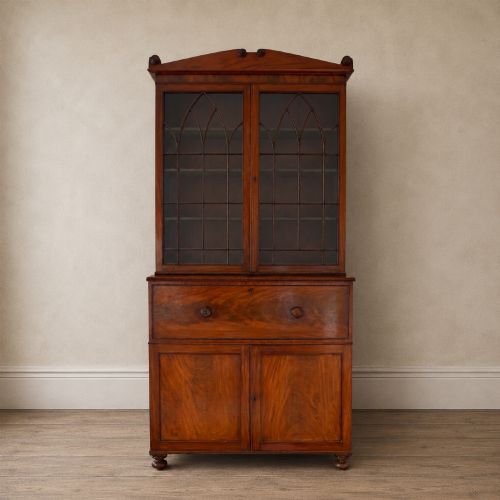
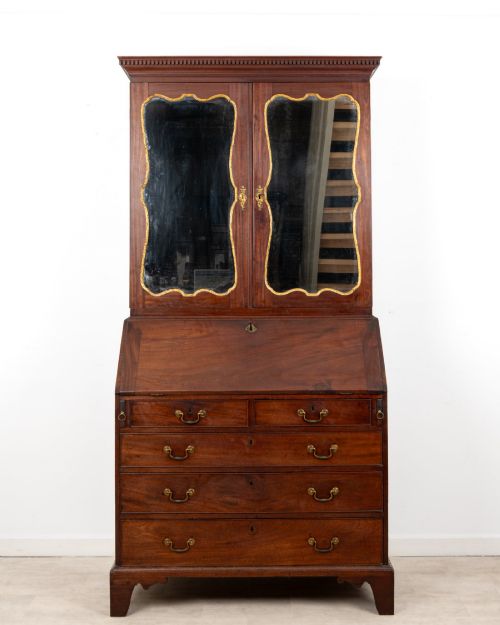
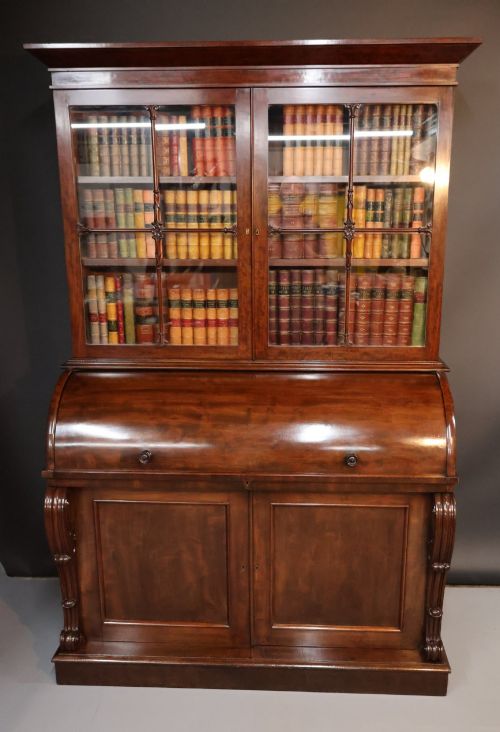
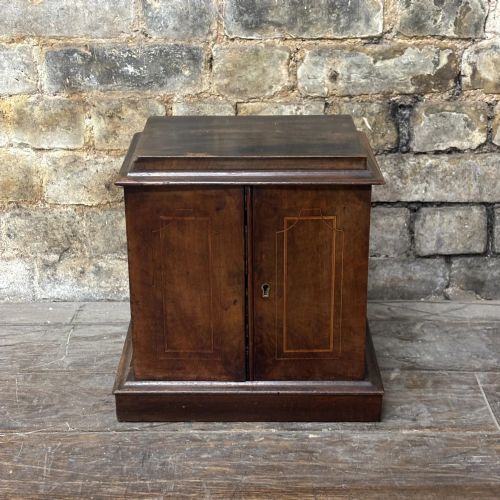
A dark mahogany writing cabinet encompasses bureau bookcases, secretaire cabinets, and writing desks spanning from the eighteenth century through the Edwardian period. The versions most commonly encountered on this page combine upper glazed bookcases or stationary sections with a drop-down writing flap or fitted drawer.
Makers and workshops constructed these items in styles running from George II and Georgian through Regency and William IV to Victorian and Edwardian. The forms serve both storage and writing, often integrating pigeonholes and small drawers behind the main fall-front.
What varies in quality
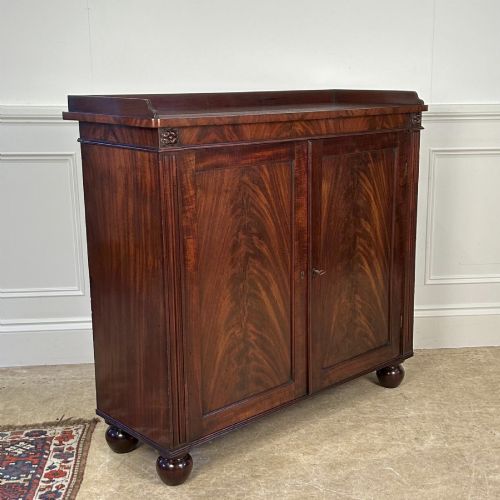
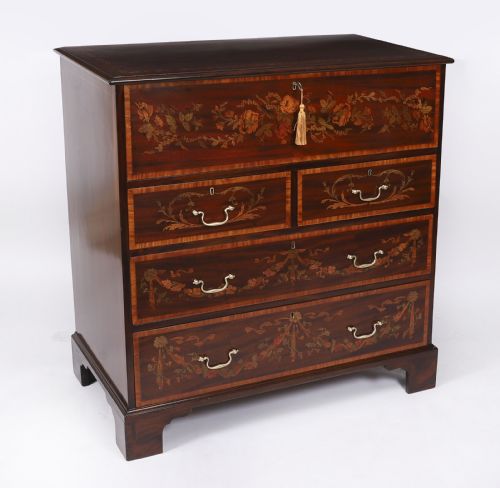
The distinction between standard examples and the finest pieces lies in the choice of timber figure, such as richly marked flame mahogany veneer, and the crispness of any marquetry inlay or brass mountings. Cabinet work by known workshops demonstrates superior precision in the fitted interior drawers and pigeonholes.
Proportion and the handling of secondary woods also dictate the tier of a piece, where cleaner lines and more substantial structural oak linings separate workshop masterpieces from ordinary utility furniture.
Many writing cabinets hide secret drawers behind dummy pigeonholes, built specifically to guard family receipts and private correspondence from prying eyes.
George Oakley·Gillows·J A Mein Edinburgh Cabinet Maker
The Dark Mahogany Writing Cabinet Glossary
- Secretaire
- A piece of furniture containing a drawer or compartment that folds down to form a writing desk. It often conceals smaller drawers and pigeonholes inside.
- Astragal
- A moulding profile applied to glass doors to hold individual panes in a geometric grid. This framing is typical of eighteenth and nineteenth-century bookcases.
- Bureau
- A desk with a sloping hinged lid that covers compartments for papers. When combined with shelving above, it becomes a bureau bookcase.
- Veneer
- A thin layer of figured wood, such as mahogany, applied over a sturdier base timber. This technique creates decorative surfaces without wasting scarce materials.
- Davenport
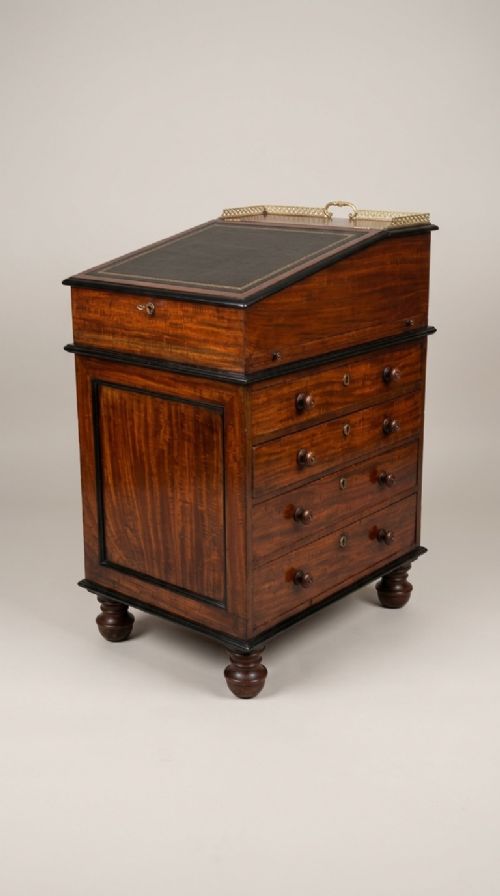
- A compact form of writing desk featuring a sloping top and drawers opening to the side. Examples often incorporate a small stationery compartment on top.
Dark Mahogany Writing Cabinet: Frequently Asked Questions
How do I use a writing cabinet?
Lower the fall-front flap or pull out the secretaire drawer to reveal the fitted interior and writing surface. Use the internal compartments for letters and stationery while keeping books stored in the upper section.
Close the flap when finished to conceal papers and maintain a neat appearance in the room. The integrated storage keeps writing materials organised in a single piece of furniture.
How do I distinguish Georgian from Victorian pieces?
Examine the proportions, timber selection, and hardware style to identify the period. Georgian examples often feature restrained classical lines and fine flame mahogany veneers.
Victorian pieces tend to be heavier in construction and sometimes incorporate bolder mouldings or different secondary woods. Looking at the drawer linings and backboards helps confirm the age of the timber.
What is the difference between a bureau and a secretaire?
A bureau typically uses a sloping front flap that rests on pull-out supports when opened. A secretaire usually looks like a standard chest of drawers or a cabinet until the top drawer pulls out and folds down.
Both types conceal fitted pigeonholes and small drawers inside. The choice depends on whether you prefer a sloping desk lid or a drawer-front that converts into a writing surface.
Where should I place a writing cabinet in my home?
Position the piece against a solid interior wall away from direct sunlight and heat sources to protect the mahogany timber and veneer. Ensure there is enough floor space in front to pull out a chair or drop the writing flap.
Rooms with stable humidity levels help preserve the joints and the leather writing inserts. Pairing the cabinet with a matching antique chair completes a functional study corner.