





18th Century Apprentice Chest
An 18th century apprentice chest is a small-scale piece of cabinetmaking that offers the presence of full-size furniture in miniature.
18th Century Apprentice Chest
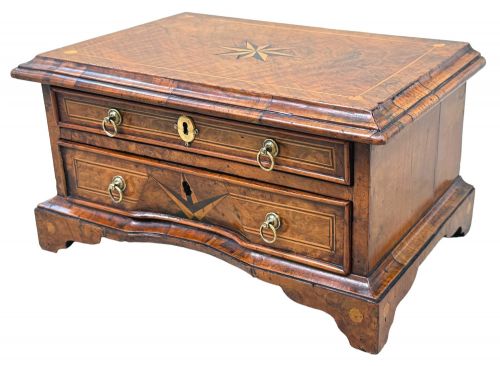
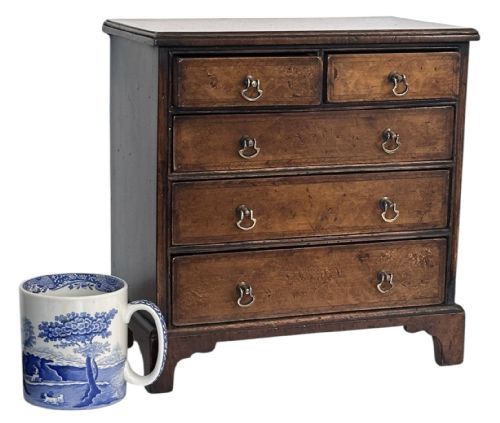
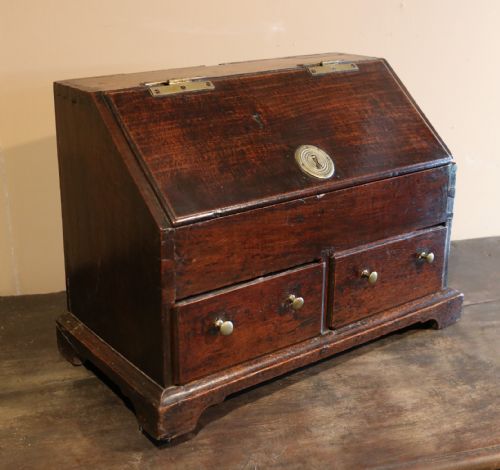
An 18th century apprentice chest encompasses miniature chests of drawers, small boxes, miniature court cupboards, and small bureaux found on this page. These diminutive items reflect the domestic furniture forms of their day, scaled down for display, travel, or demonstration purposes.
You are most likely to encounter oak and mahogany examples originating from the Georgian period and the wider eighteenth century. These pieces range from plain utilitarian boxes to refined walnut and marquetry cabinets.
How they were made
Cabinetmakers constructed these small chests using native and imported timbers including oak, walnut, mahogany, elm, fruitwood, and yew. Wood inlay and burr veneers frequently adorned the finer surfaces to add visual depth.
Joinery was executed with the same care as full-sized furniture, incorporating fitted drawers and sometimes brass handles or escutcheons. Surfaces were finished to achieve a natural patina over centuries of handling.
Materials recorded across the selection include brass, oak, walnut, fruitwood, mahogany, burr walnut, wood inlay, and elm.
What varies in quality
The distinction between ordinary and superior pieces rests on the choice of timber and the sophistication of the cabinetmaker's hand. Dense burr walnut or fine mahogany veneers combined with delicate inlay set the higher examples apart from simpler oak or elm boxes.
Proportion and detail govern the overall success of the miniature form. Well-balanced drawer arrangements and crisp mouldings indicate a maker who worked with genuine precision rather than simply scaling down a design at random.
The 18th Century Apprentice Chest Glossary
- Miniature furniture
- Small-scale pieces made by cabinetmakers either as masterpieces to demonstrate skill or for domestic display. These items replicate every feature of standard furniture.
- Apprentice chest
- A traditional term for a small chest or box traditionally attributed to the training period of a young cabinetmaker. They showcase fundamental woodworking joints on a reduced scale.
- Marquetry
- The art of applying decorative veneer pieces in wood to form geometric or floral patterns. This technique appears on specific Dutch examples.
- Patina
- The surface sheen and colour developed by wood over long periods of handling, polish, and exposure to light. A desirable finish deepens naturally with age.
- Escutcheon
- A flat plate of brass surrounding a keyhole to protect the surrounding wood. They provide both a functional guard and a decorative accent.
18th Century Apprentice Chest: Frequently Asked Questions
What is an apprentice chest?
An apprentice chest is a small-scale model of a chest of drawers or cabinet made during the eighteenth and nineteenth centuries. These items mirror the construction methods and styles of full-sized furniture.
Cabinetmakers and trainees produced these miniature pieces to demonstrate competency in joinery and design. They served as portable display pieces or samples of craftsmanship.
How were apprentice chests used?
Historically, these small chests functioned as desktop storage for valuables, letters, or small personal items. Their compact size suited the domestic spaces of the period.
Travelling merchants or craftsmen also utilised portable miniature pieces to showcase their skills to prospective clients without transporting heavy furniture.
Are these pieces actually from the eighteenth century?
Many examples date directly from the eighteenth century and the Georgian era, constructed using period timbers and traditional joinery techniques. Materials such as oak, walnut, and mahogany help establish this timeframe.
Nineteenth-century interpretations also exist on the market, maintaining similar forms. Examining the wood species and construction methods assists in identifying the correct period.
How do I care for antique miniature furniture?
Keep wooden miniature chests away from direct sunlight and strong heat sources to prevent the timber from drying out or warping. Stable room temperatures protect fragile veneers and joints.
Apply a light application of traditional beeswax occasionally to nourish the wood and preserve the surface patina. Avoid modern liquid polishes that can damage older finishes.
What woods were used for these chests?
Cabinetmakers utilised a variety of native and imported hardwoods depending on regional availability and fashion. Oak and elm appear frequently in earlier or more utilitarian pieces.
Finer examples incorporate mahogany, walnut, burr walnut, fruitwood, and yew wood. Decorative elements often feature contrasting wood inlay.