


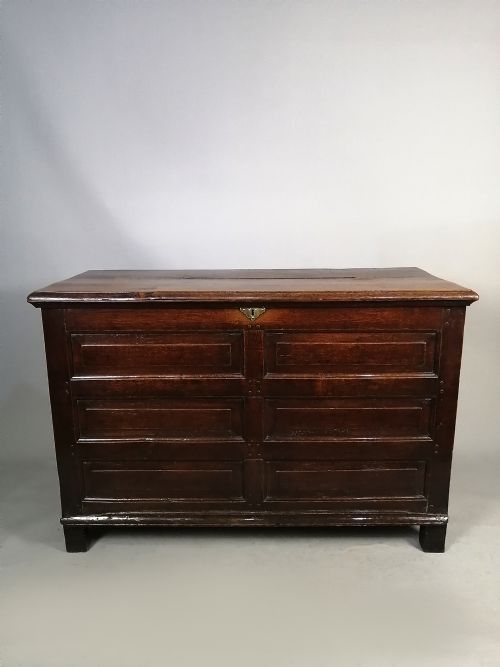
17th Century Storage Box
A 17th century storage box brings heavy timber framing and centuries of domestic utility directly into a modern room.
17th Century Storage Box
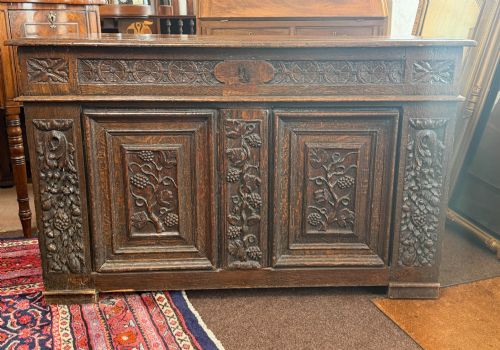
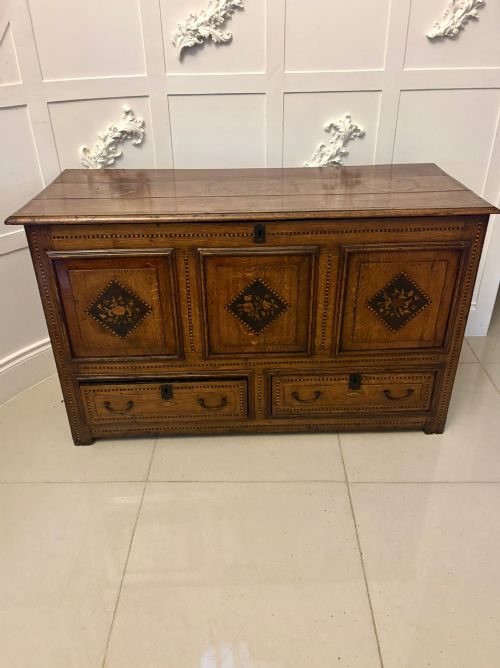
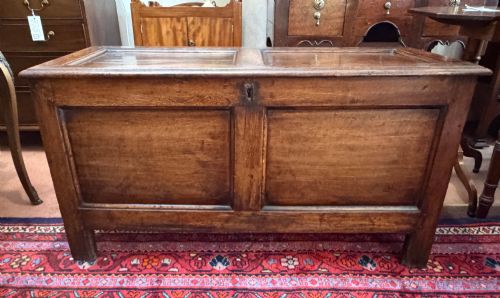
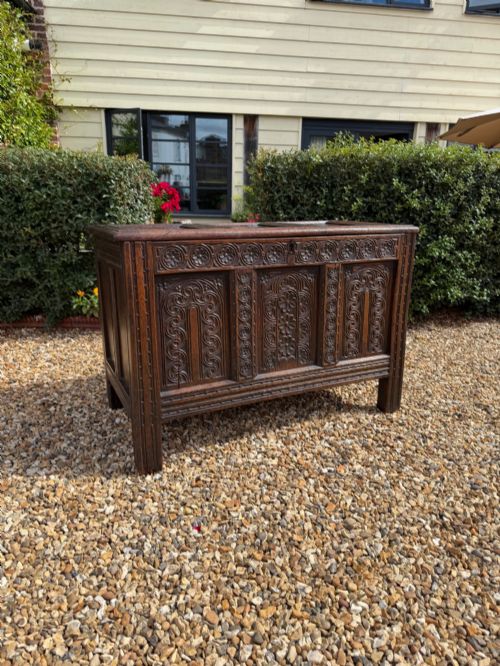
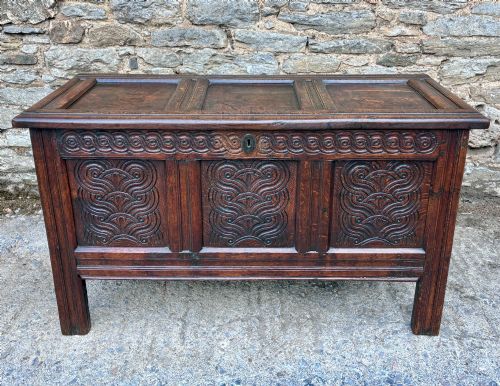
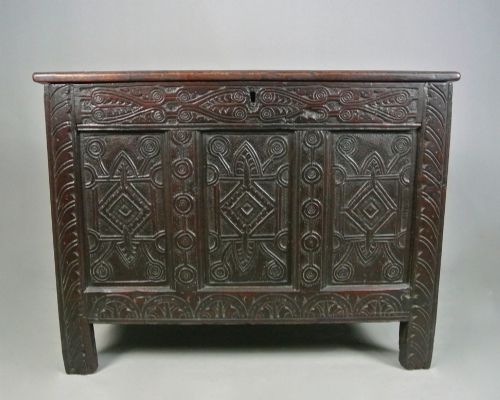
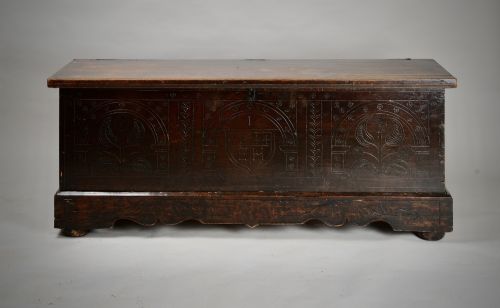
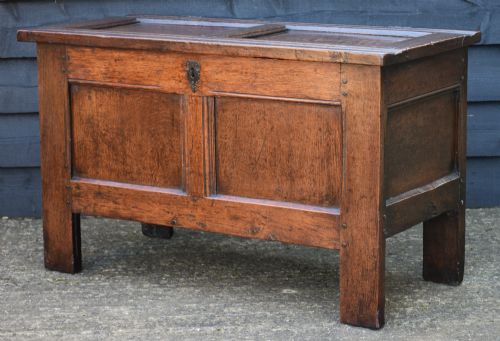
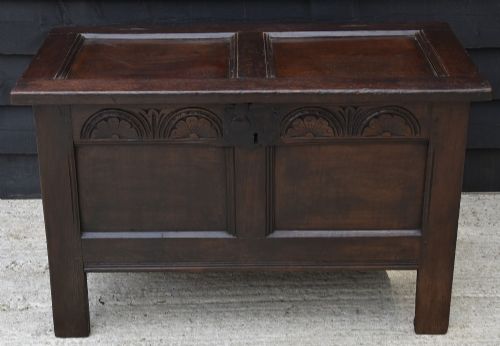
A 17th century storage box spans regional forms such as coffers, panelled chests, mule chests, sword chests, box stools, and Bible boxes. These items functioned to secure household textiles, documents, and valuables in early domestic spaces.
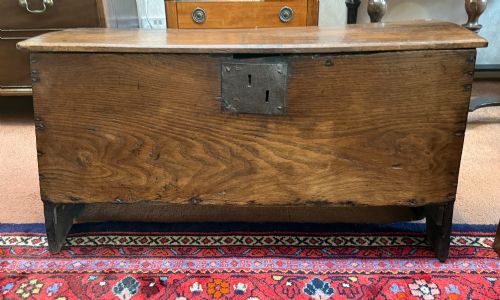
The dominant material across the selection is oak, though pieces also appear in elm, cypress wood, and mahogany. Construction ranges from joined frame-and-panel assemblies to simpler six-plank vernacular formats.
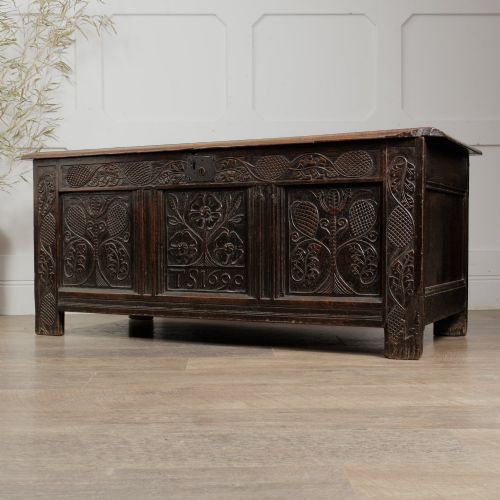
While many examples date strictly to the 1600s, shoppers also encounter later interpretations spanning the eighteenth through the early twentieth centuries, including Jacobean revival pieces and items bearing specific dates.
Materials and Construction
Makers utilised solid native timbers, predominantly oak and elm, shaping panels and framing members with hand tools. Joinery relied heavily on pegged mortise and tenon joints to build rigid, durable structures.
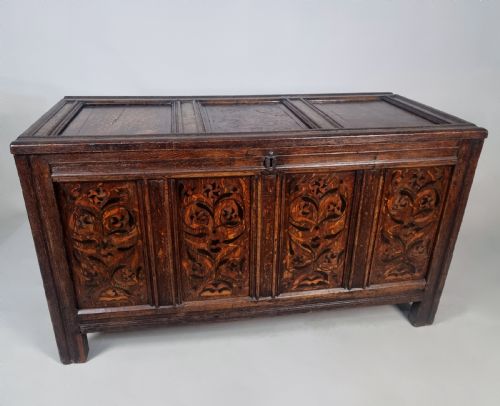
Surface enrichment involved carved decoration, applied mouldings, and occasionally marquetry inlay using mixed woods. Hardware such as iron hinges and brass lock plates secured the lids and provided structural reinforcement.
Several boxes double as seating, proving that seventeenth-century ancestors appreciated multi-functional furniture just as much as modern flat-dwellers.
Character and Proportion
Quality rests in the integrity of the original timber and the depth of the surface patina accumulated over generations. Untouched aged surfaces demonstrate superior retention of character compared to heavily restored examples.
Proportion and decorative ambition dictate distinction, moving from utilitarian six-plank boxes to intricately carved panelled coffers with regional provenance.
The 17th Century Storage Box Glossary
- Coffer
- A heavy wooden chest traditionally used for storing valuables or clothing. These pieces often feature hinged lids and sturdy framed construction.
- Mule chest
- A storage chest fitted with one or more drawers beneath the main compartment. This form bridges the gap between the simple coffer and the chest of drawers.
- Box stool
- A small seated piece of furniture incorporating a concealed storage compartment beneath the seat. Examples from the period occasionally double as close stools.
- Marquetry inlay
- A decorative technique applying fitted pieces of contrasting wood veneer to create surface patterns. It appears on select refined storage boxes from the period.
- Six-plank coffer
- A primitive box construction formed simply by joining six individual boards together at the edges. This vernacular method represents an early form of chest building.
17th Century Storage Box: Frequently Asked Questions
What did people store inside a 17th century storage box?
These boxes held domestic textiles, household linen, dried provisions, and personal valuables that needed protection from dampness and pests.
Smaller variants like Bible boxes and box stools kept ecclesiastical texts and writing implements secure in homes and churches.
How do I tell an original 17th century piece from a later revival?
Original pieces display authentic tool marks, hand-cut joinery with wooden pegs, and timber shrinkage appropriate to age.
Revival examples from the nineteenth or twentieth century often show machine cutting, different pegging methods, and less convincing surface wear.
Where were these storage boxes originally made?
Makers constructed them across England, Wales, and continental Europe, utilising regional woods and local carving traditions.
Specific regional styles, such as Welsh Gower peninsula pieces or Flemish imports, display distinctive local building traits.
How can I integrate a heavy oak chest into a modern interior?
A sturdy timber chest functions effectively as a window seat, a coffee table, or a functional hallway storage unit.
The substantial lid provides a flat surface for display while the interior conceals modern clutter.