

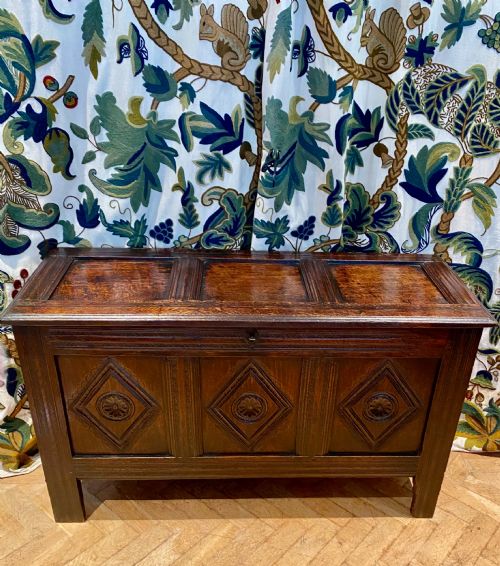
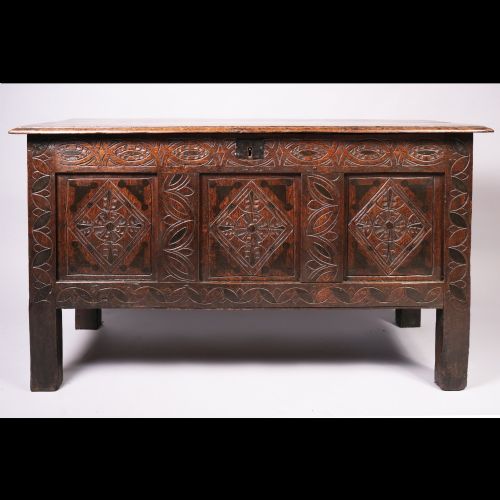


Carved Lozenge Panel Box
These carved lozenge panel box pieces are solid timber storage chests built to last generations, offering both historic utility and robust character.
Carved Lozenge Panel Box
A carved lozenge panel box typically takes the form of a sturdy coffer or chest utilised for secure domestic storage. These items present heavy timber construction intended to house household goods safely.
The versions most commonly met on this page date predominantly from the seventeenth century, though nineteenth-century interpretations and earlier sixteenth-century walnut examples also appear. Their primary forms span storage chests, coffers, and enclosed armchairs featuring distinct panel work.
How they were made
Makers utilised native hardwoods, predominantly oak and walnut, fashioned into sturdy planks and joined by traditional methods. Iron and brass fittings such as hinges and locks reinforced the heavy wooden structures.
Surfaces received intricate carving and occasional ebonising or inlay work to define the geometric lozenge patterns. The joinery relied on pegged frames and panel construction to accommodate seasonal wood movement.
Carved Lozenge Panel Box Retail Price Guide 2026
Typical asking prices for carved lozenge panel box among the pieces listed under this phrase on Sellingantiques today, from the lower quarter to the upper quarter. They describe what is for sale here now, not the wider market.
The listings span from the sixteenth century through the nineteenth century, dominated by seventeenth-century oak coffers and storage chests.
What varies in quality
The standard of a carved lozenge panel box depends upon the crispness of the timber carving and the integrity of the original construction timbers. Superior examples retain their early surfaces, patination, and primary structural elements without extensive modern timber replacement.
Proportion and decorative ambition also set pieces apart, as denser geometric arrangements and refined mouldings indicate greater skill from the original maker. The presence of period brass or iron hardware further distinguishes higher-grade specimens from utilitarian items.
The Carved Lozenge Panel Box Glossary
- Cofer
- An antique chest or box used chiefly for storing valuables and textiles. These sturdy receptacles typically feature hinged lids and heavy timber sides.
- Lozenge
- A diamond-shaped geometric motif frequently carved into the wooden panels of early furniture. This decorative form defines much of the surface ornamentation on seventeenth-century woodwork.
- Ebonised
- Wood treated with a dark finish to imitate the appearance of ebony. This technique provided sharp visual contrast on select seventeenth-century pieces.
- Inlay
- Material embedded into the surface of a wooden object to form decorative patterns. Craftsmen utilised contrasting woods to enhance the visual depth of panel fronts.
Carved Lozenge Panel Box: Frequently Asked Questions
What were these chests used for?
Historic households utilised these heavy wooden chests primarily for storing valuable textiles, documents, and domestic provisions safely away from damp floors. Their robust construction and lockable lids made them ideal repositories for household wealth.
Over time, their roles evolved within the home, transitioning from travelling trunks to static furniture pieces that doubled as seating or display surfaces.
How do I date an oak coffer?
Dating relies heavily on examining the construction methods, tool marks, and specific joinery techniques visible across the timber frame. Pegged joints, hand-riven boards, and period-specific carving styles like Jacobean lozenges provide reliable chronological indicators.
Comparing the timber shrinkage and surface patination against known comparative examples helps confirm whether a piece belongs to the sixteenth, seventeenth, or later centuries.
Are these chests heavy to move?
Solid oak and walnut construction makes these storage pieces exceptionally heavy and dense. They were designed for permanence within a room rather than frequent relocation.
Lifting requires multiple people to protect the historic joinery and prevent structural strain on the original base and feet.
How do I care for antique oak?
Maintaining antique timber involves keeping pieces away from direct heat sources and sudden humidity changes that cause the wood to split. A light application of traditional beeswax helps nourish the historic surface without building up modern chemical residues.
Regular dusting with a soft cloth prevents particulate accumulation in the deep crevices of carved lozenge panels.