




Dark Timber Blanket Chest
A dark timber blanket chest offers substantial storage and centuries of craftsmanship, spanning robust oak coffers and exotic hardwood trunks.
Dark Timber Blanket Chest
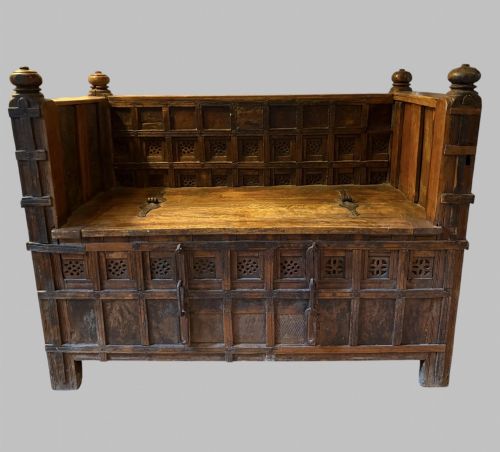
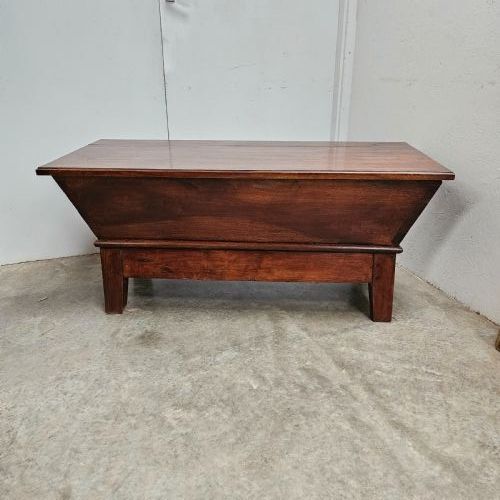
When you search for a dark timber blanket chest, you are looking at utilitarian storage forms built from sturdy woods like oak, elm, walnut, and teak. These pieces serve as practical household repositories while anchoring a room with deep, rich tones.
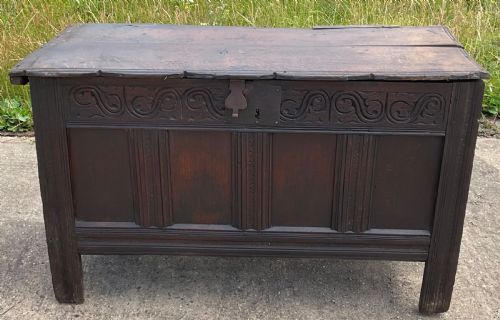
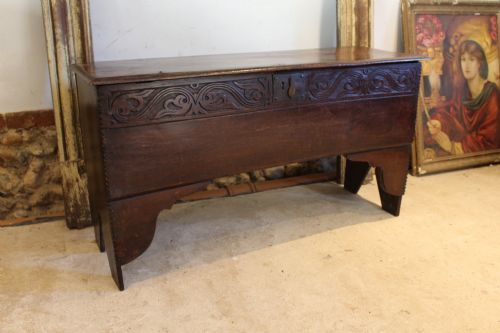
The versions you are most likely to meet on this page range from vernacular six-plank coffers dated to the seventeenth century through to Georgian oak chests and nineteenth-century worldly trunks. They appear in various regional styles including Welsh, Flemish, and Jacobean.
Origins stretch across European workshops and international trade routes, bringing together domestic British timbers and foreign hardwoods like camphor. Each object reflects the utilitarian demands of its era, primarily housing textiles, valuables, or household provisions.
How they were made
Construction methods rely heavily on traditional joinery, such as frame-and-panel assembly or the straightforward board joining seen in six-plank elm coffers. Makers utilised durable local timbers like oak and elm alongside dense imported hardwoods to ensure longevity.
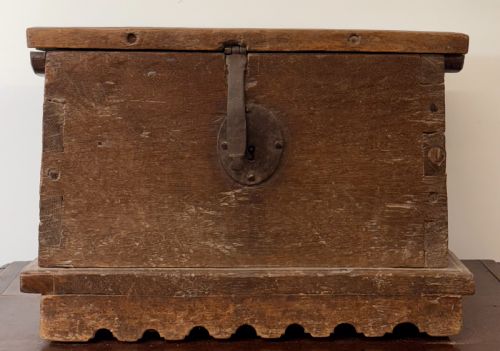
Hardware played an essential structural role, incorporating hand-forged iron hinges, latches, and wrought iron straps that reinforced the heavy timber walls. Decorative treatments included simple carved motifs, ripple moulding, and occasionally painted surfaces.
Surface finishes developed naturally through decades of handling and wax application, deepening the natural colour of the grain. Joiners shaped thick planks using hand tools, leaving behind subtle tool marks that distinguish early hand-worked furniture.
Dark Timber Blanket Chest Retail Price Guide 2026
Typical asking prices for dark timber blanket chest among the pieces listed under this phrase on Sellingantiques today, from the lower quarter to the upper quarter. They describe what is for sale here now, not the wider market.
Several chests show subtle wear patterns where generations of hands reached blindly for hidden dowry linen.
What varies in quality
The integrity of the original timber and joinery dictates the calibre of a piece, distinguishing untouched vernacular examples from heavily restored ones. Original boards, floorboards, and period hardware command greater appreciation among collectors.
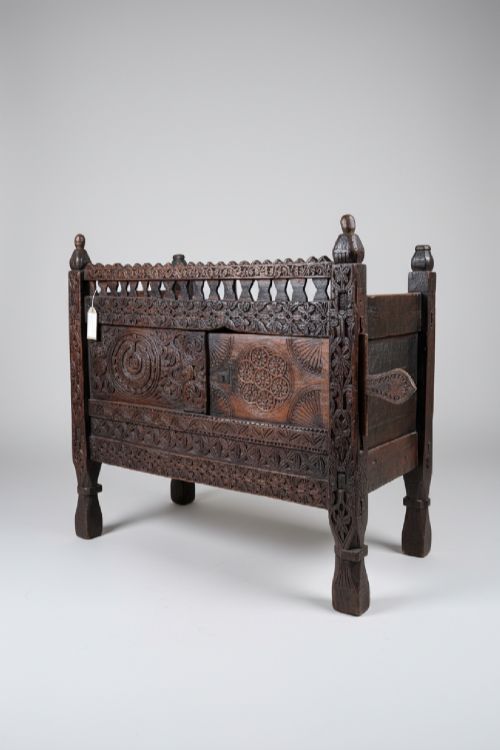
Carving depth and execution separate standard utility items from higher status commissions, particularly on seventeenth-century joined pieces and Flemish Renaissance coffers. The crispness of relief work and the balance of proportion reveal the maker's skill.
The Dark Timber Blanket Chest Glossary
- Six-plank coffer
- A simple chest constructed from six individual boards pinned together with wooden dowels or nails. This form represents some of the earliest surviving domestic storage furniture.
- Cassone
- A large Italian or continental chest used for storing household linen and bridal goods. These often feature rich carvings and walnut construction.
- Mule chest
- A storage chest fitted with one or more drawers beneath the main compartment. They bridge the design gap between simple coffers and full chests of drawers.
- Ripple moulding
- A decorative, undulating wooden profile carved in low relief onto the surface of seventeenth-century furniture. It creates a distinctive rippled texture across the timber.
- Joined oak
- Furniture constructed using mortise and tenon joints secured with wooden pegs rather than simple nailed boards. This method provides superior structural strength.
Dark Timber Blanket Chest: Frequently Asked Questions
What is a dark timber blanket chest used for?
These chests were historically designed for storing heavy textiles, blankets, clothing, and domestic valuables away from dampness and pests.
In modern interiors, they function effectively as coffee tables, end-of-bed storage, or statement hallway furniture while concealing household clutter.
How do I date an old wooden chest?
Dating relies on examining construction techniques, tool marks, wood species, and stylistic motifs like Jacobean carving or Georgian proportions.
Hand-forged ironwork and pegged mortise and tenon joints typically indicate earlier seventeenth-century origins, whereas later pieces show machine-sawn timber.
Are all these chests made of British oak?
Not at all, while British oak and elm are common in vernacular pieces, the listings include continental walnut, Portuguese teak, and Asian camphor.
Global trade routes also brought Indian iron-bound trunks and Chinese hardwood chests into circulation during later centuries.