


17th Century Relief Carving
17th century relief carving brings depth and architectural weight to a room through centuries-old woodwork and figurative panels.
17th Century Relief Carving
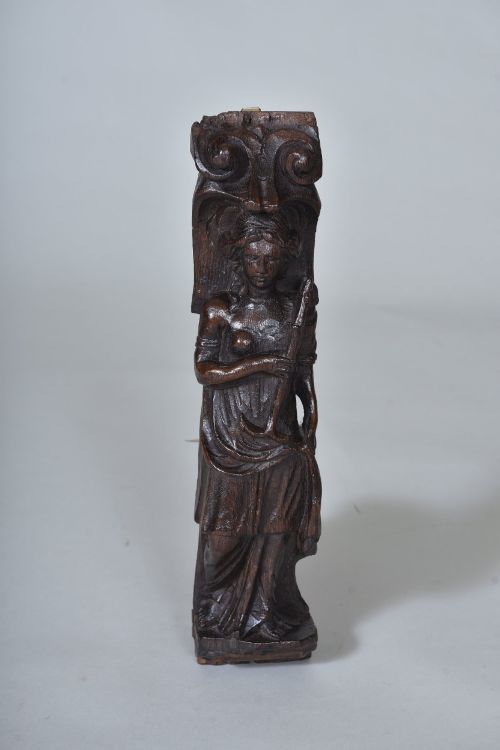
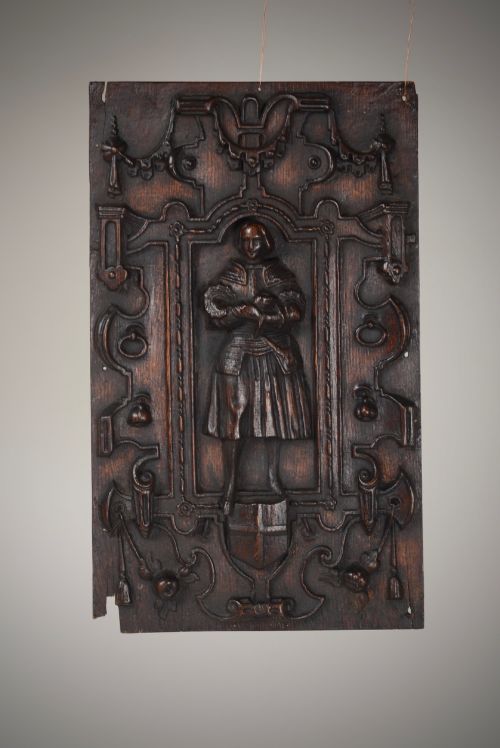
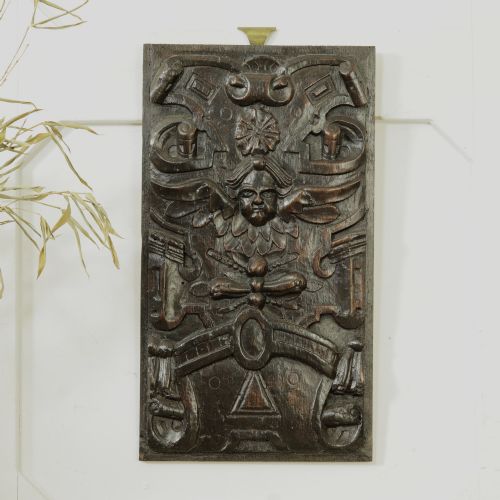
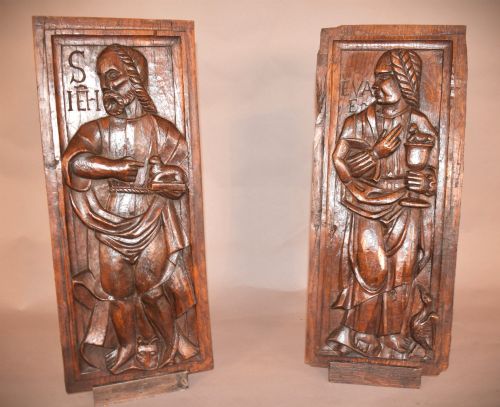
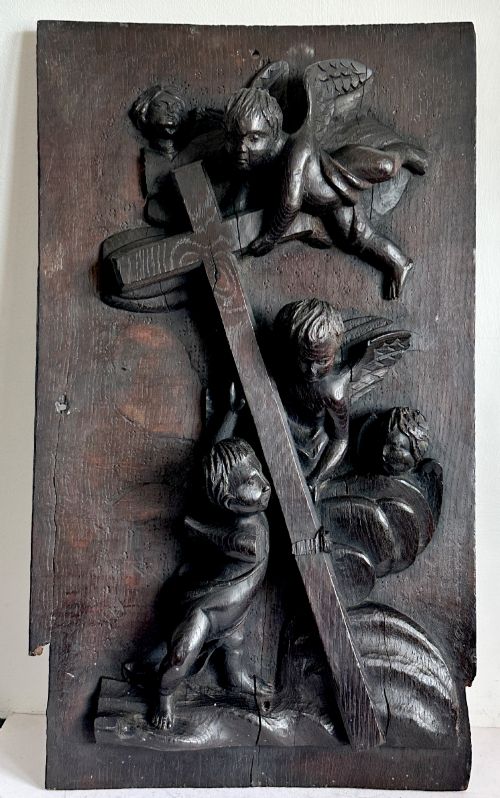
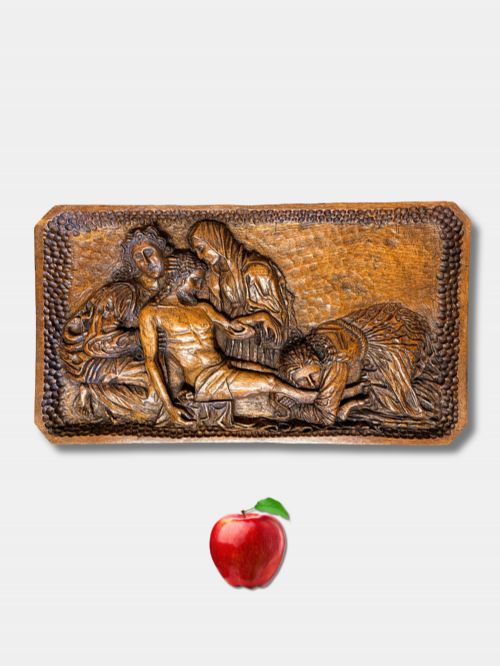
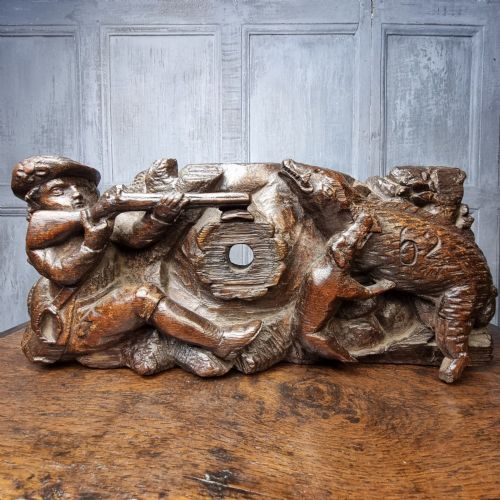
When you search for 17th century relief carving, you encounter architectural salvage, wall reliefs, and carved wooden panels that once formed parts of larger buildings, furniture, or ecclesiastical settings. The versions most commonly met on this page are individual oak panels, friezes, and figurative plaques dating from the 17th century.
These pieces encompass various regional manifestations, including English oak work, French Louis XIII walnut panels, and Italian Baroque marble or wood carvings. Subjects range from figural narratives such as Joan of Arc and the Baptism of Christ to purely decorative acanthus leaves and armorial motifs.
The objects frequently take the form of overdoor panels, staircase elements, corbels, and framed wall art. Surviving fragments demonstrate how interior woodwork was executed with deep projection, casting strong shadows in domestic and public spaces.
How these pieces were made
The primary material across the majority of pieces is oak, though walnut, chestnut, and occasionally marble also appear in the listings. Artisans worked these dense timbers using hand chisels and gouges to achieve high-relief and pierced carving effects.
Joinery and timber selection dictated how panels were constructed for domestic interiors or architectural settings. Carvers utilised the natural grain of the wood to accentuate sculptural drapery, facial expressions, and complex foliage like acanthus leaves.
What varies in quality
Depth of projection and crispness of chisel work distinguish master carvers from standard joiners. Pieces attributed to specific practitioners demonstrate superior anatomical proportion and intricate undercut details that catch the light.
The complexity of the subject matter and the integrity of the surviving timber define the standing of a panel. Intact figurative scenes with clear iconography hold greater visual presence than repetitive geometric friezes.
Edward Pearce
The 17th Century Relief Carving Glossary
- High-Relief
- A method of carving where the figures project substantially from the background surface. This technique creates strong shadow lines and a three-dimensional effect.
- Frieze
- A long, narrow band of sculpture decorating a wall, mantel, or upper section of furniture. In these listings, they often feature scrolling foliage or figures.
- Corbel
- A structural piece of stone or wood projecting from a wall to support a weight. Examples from this period are carved into figurative or grotesque shapes.
- Pierced Carving
- Openwork technique where the wood is cut entirely through to create a lace-like pattern. This style is frequently seen in acanthus leaf decorations.
- Overdoor Panel
- A decorative carving positioned immediately above a doorway. These pieces tend to be monumental in scale and display armorial bearings or figural allegories.
17th Century Relief Carving: Frequently Asked Questions
How do I hang a heavy carved wooden panel safely?
Large oak and walnut panels carry substantial weight and require secure fixing directly into wall studs or masonry using appropriate metal brackets. Professional installation ensures the timber remains free from warping stress.
Weight distribution must be calculated carefully so the historic wood structure does not bear undue strain from hanging hardware.
Can these architectural panels be used in modern interiors?
These carvings integrate well into contemporary spaces when mounted simply on plain walls as focal artworks. They provide textural contrast against minimalist plaster surfaces.
Placement should avoid direct sunlight and rapid temperature fluctuations to protect the ancient timber from splitting.
What is the difference between Jacobean and Baroque styles in these carvings?
Jacobean carving tends to feature more rigid, geometric strapwork and flatter relief patterns. Baroque work introduces exuberant curves, deep undercut foliage, and dynamic figurative movement.
Regional origins also shape the aesthetic, with Italian and French pieces displaying different compositional rhythms compared to English oak work.
How should I clean historic wood carvings?
Dusting gently with a dry, soft bristle brush prevents particle buildup in deep crevices. Avoid liquid cleaners, oils, and waxes unless advised by a specialist conservator.
Maintaining a stable indoor humidity level remains the best method for preserving the condition of the wood.