




17th Century Cabinet Stand
When you search for a 17th century cabinet stand, you are looking at elevated storage furniture built to display prized possessions.
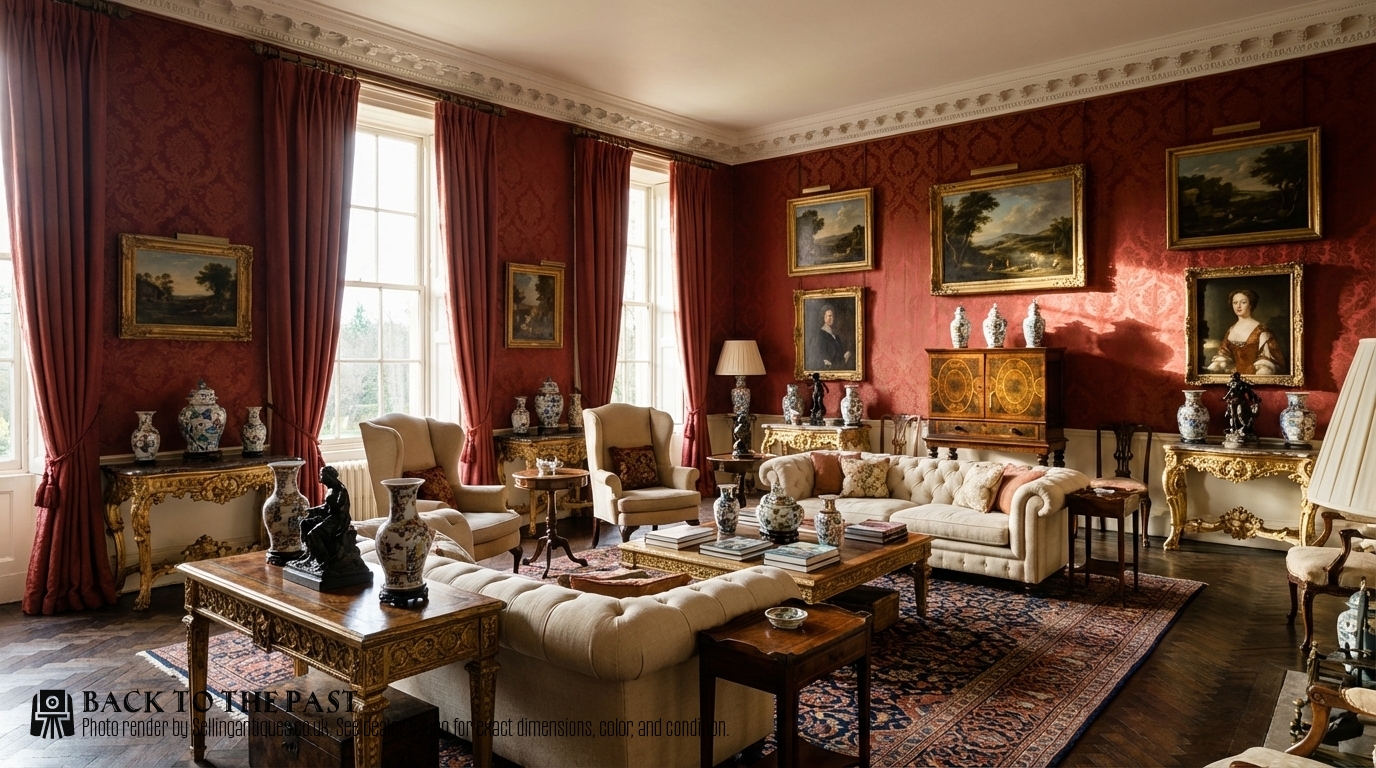
17th Century Cabinet Stand
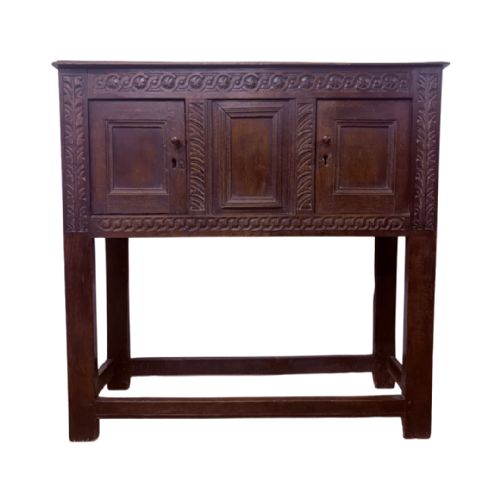
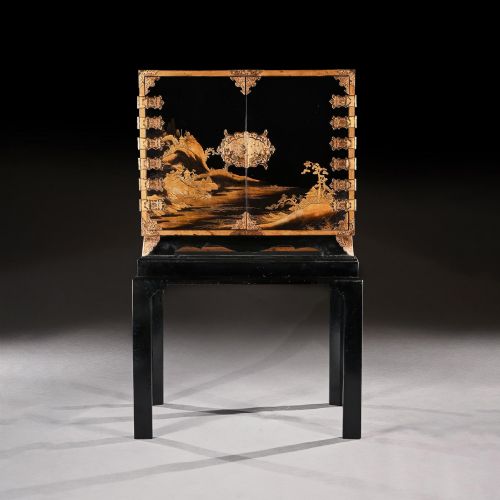
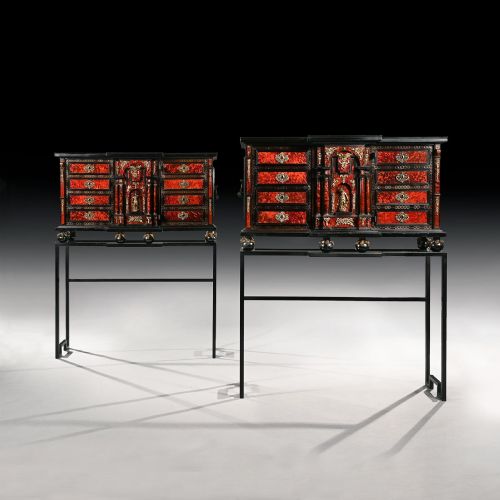
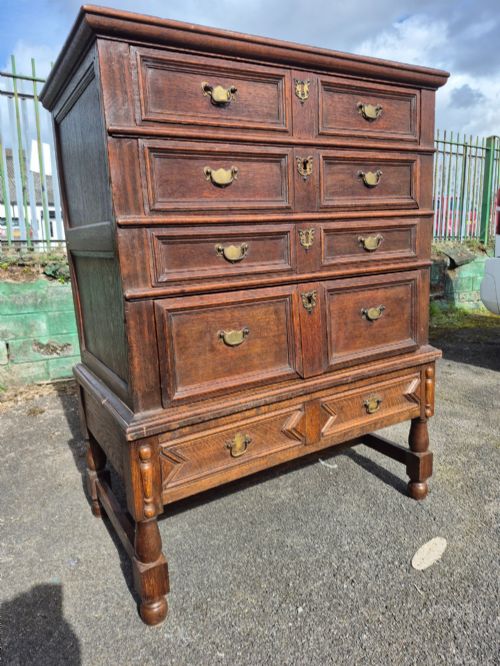
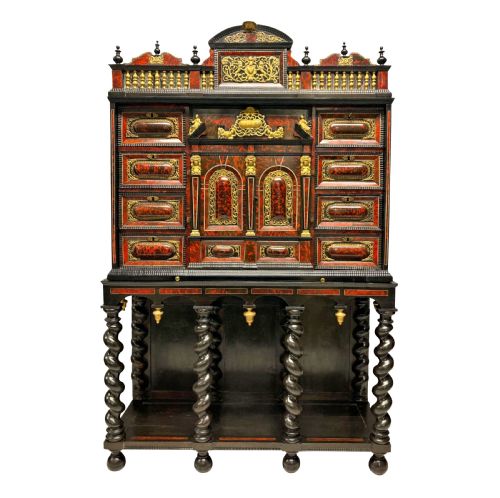
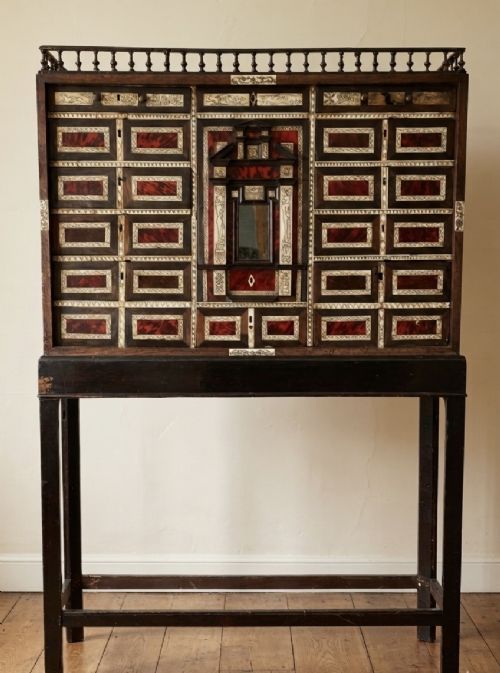
A 17th century cabinet stand combines a raised upper storage box with a supporting underframe, designed to lift precious objects off damp floors and into the line of sight. These pieces range from sturdy English oak cupboards and strong boxes to highly decorated continental cabinets covered in tortoiseshell, bone, and intricate marquetry.
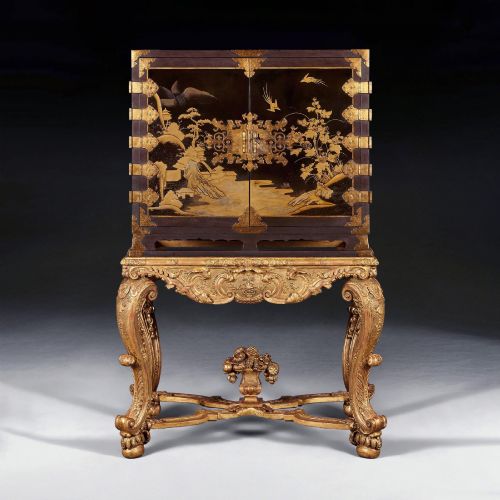
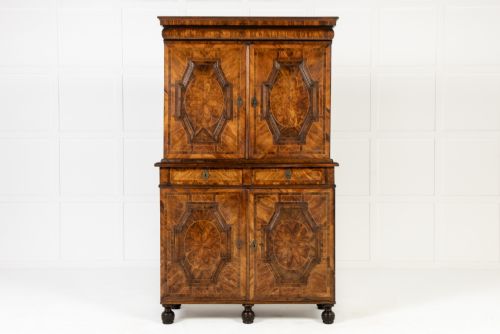
The version you are most likely to meet on this page is constructed from walnut, often featuring oyster veneers or seaweed patterns associated with the William and Mary period. Alongside these, continental examples in ebony, kingwood, and lacquer appear regularly on raised stands.
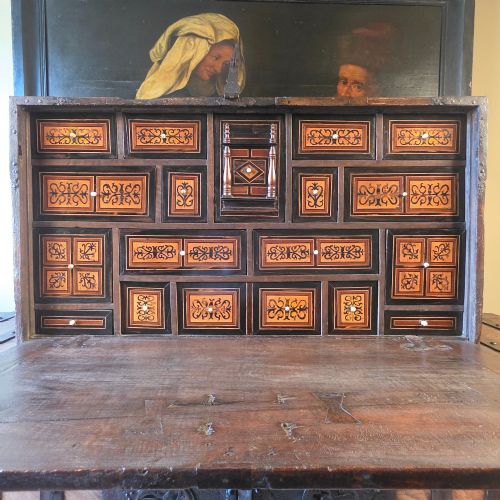
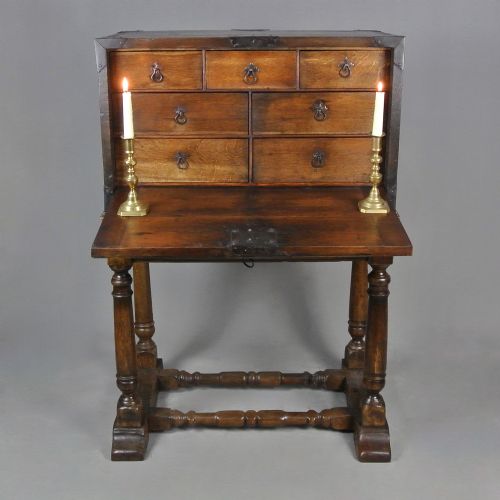
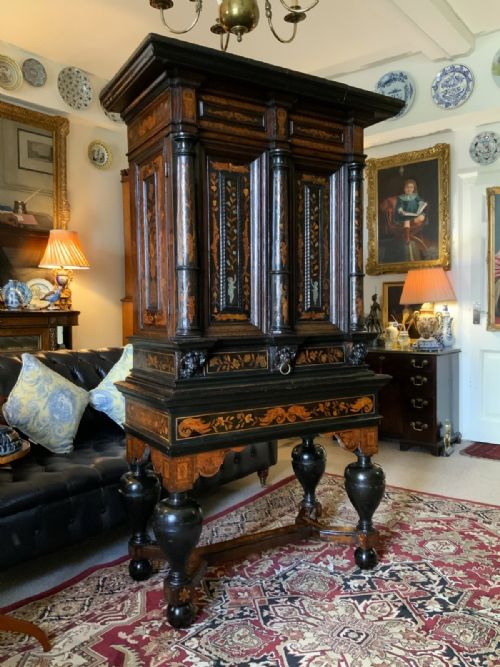
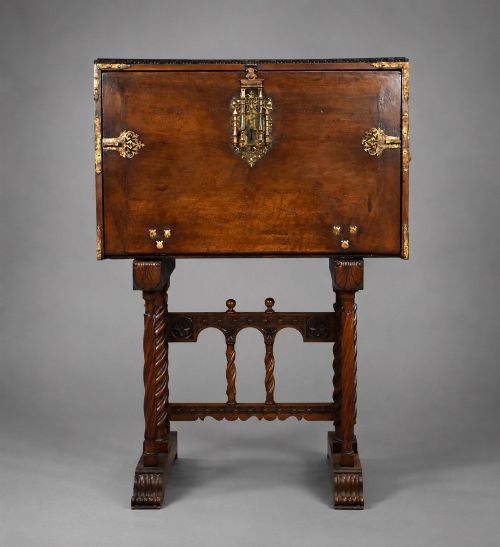
Forms vary from court cupboards and chest-on-stand pieces to specialised drop-front varguenos and architectural cabinets. Each combines the functional utility of drawers or compartments with the architectural presence of a dedicated base.
How they were made
Cabinet makers utilised heavy timbers like oak for structural framework, while applying decorative veneers of walnut, olive wood, and kingwood to visible surfaces. Oyster cutting - slicing small branches transversely to create circular patterns - demanded immense skill from the carpenter.
Exotic materials such as tortoiseshell, bone, brass, and pewter were inlaid or mounted onto ebony and ebonised wood to create rich surface textures. Stands were turned, carved, or gilt to support the substantial weight of the upper cabinet.
The furniture spans multiple regional styles, including Spanish Baroque, Flemish Baroque, and Japanese Export lacquer.
What varies in quality
The standard of a 17th century cabinet stand rests upon the precision of its marquetry and veneer work, alongside the integrity of the underlying timbers. Superior examples maintain the original relationship between the upper cabinet and its supporting base, preserving matching wood grains and proportional harmony.
Mastery in handling difficult materials, such as thin sheets of tortoiseshell or fragile bone inlay, separates utilitarian workshop output from elite cabinet work. The sharpness of carved details on the stand and the complexity of internal drawer configurations further distinguish finer pieces.
Waring and Gillow
The 17th Century Cabinet Stand Glossary
- Vargueno
- A traditional Spanish cabinet with a drop-front panel that opens to reveal numerous small drawers and compartments. These pieces were frequently mounted on dedicated wooden or iron-braced stands.
- Oyster veneer
- Slices of small branches cut across the grain to produce circular or ovoid patterns resembling oyster shells. This decorative technique became prominent during the late seventeenth century on walnut and olive wood furniture.
- Marquetry
- Inlaid patterns of wood, metal, or other materials applied to the surface of a cabinet to form pictures or geometric designs. Craftsmen carefully fitted contrasting veneers into prepared channels.
- Bargueño
- An alternative spelling for a Spanish drop-front cabinet designed for writing and storage. They often feature elaborate bone or gilt metal ornamentation.
- Court cupboard
- An early form of open and enclosed shelving used for displaying plate and storing provisions. These sturdy oak pieces frequently form the basis for early cupboard-on-stand designs.
17th Century Cabinet Stand: Frequently Asked Questions
What is a 17th century cabinet stand?
A 17th century cabinet stand is a piece of furniture comprising an enclosed storage box mounted on a raised wooden or metal frame. These constructions kept valuable items away from damp floors and displayed them at a convenient height.
They emerged across Britain and continental Europe, incorporating local timbers like oak alongside exotic materials such as tortoiseshell and kingwood.
How were these cabinets used?
Owners used these cabinets to store and secure precious documents, writing equipment, textiles, and collection curiosities. The raised stands elevated the contents so they could be examined without stooping.
Drop-front versions served as portable writing desks, while shelved cupboards held prized silver and glassware.
How do you identify William and Mary style?
William and Mary style pieces often feature oyster veneers in walnut or olive wood, arranged in geometric or seaweed marquetry patterns. The stands typically display inverted cup or trumpet turning connected by flat stretchers.
This aesthetic reflects Dutch influences introduced to English cabinet making around the turn of the eighteenth century.
What are Spanish vargueno cabinets?
Spanish vargueno cabinets are rectangular storage boxes featuring a drop-front writing flap that conceals an array of small, highly decorated drawers. They rest upon architectural stands or trestles, sometimes incorporating iron braces.
The interiors frequently utilise gilded, painted, and bone-inlaid surfaces to create a striking contrast with plain exterior woods.