


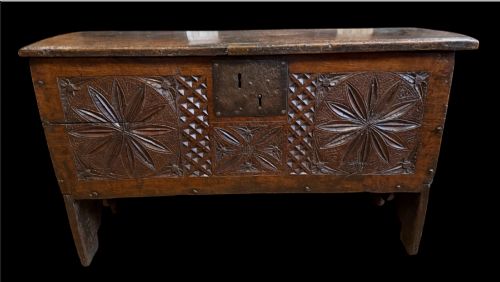


16th Century Coffer
A 16th century coffer is a heavy domestic storage chest built to hold valuables, documents and provisions in early modern households.
Forms and Origins
A 16th century coffer is a robust wooden storage chest originating from domestic, ecclesiastical or parish settings across England, Wales, France, Italy and Germany. These pieces served primarily for the safekeeping of valuables, church plate, documents and provisions in an era when furniture was scarce and mobile.
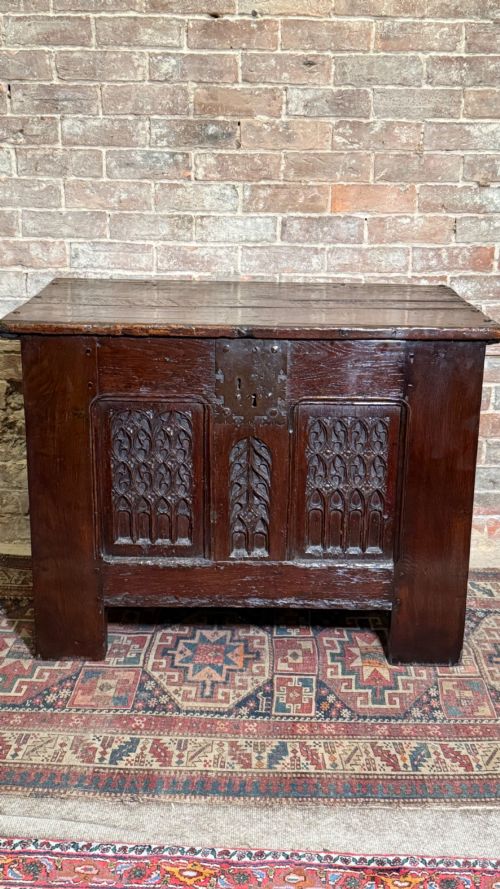
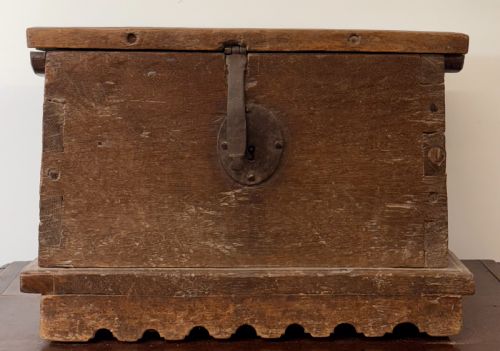
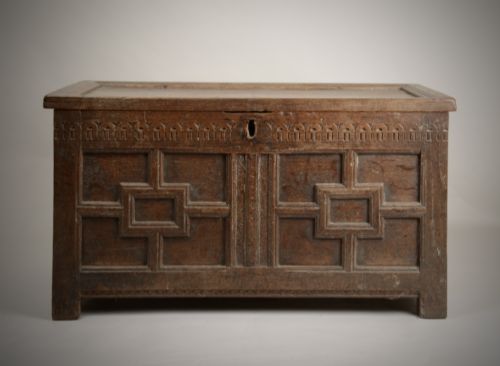
The pieces appearing on this page span the 16th century and extend into the 17th century, incorporating regional British types alongside continental examples. Boarded construction, planked forms, and frame-and-panel assemblies dominate the structural layouts found in the listings.
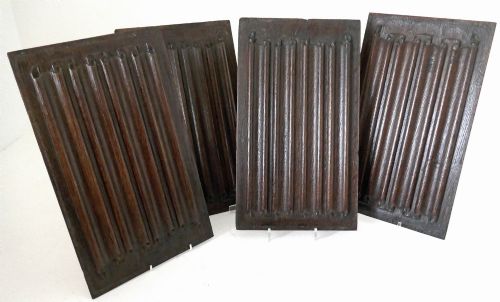
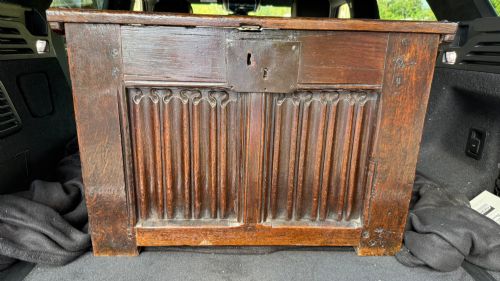
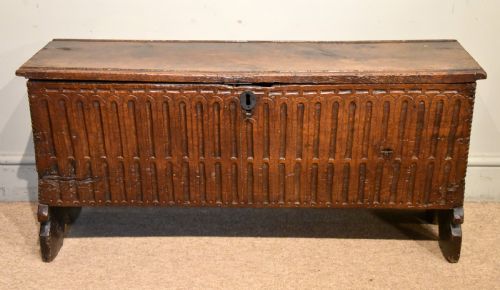
Buyers meet sturdy country furniture alongside heavily carved urban workshop pieces. Common domestic iterations include linenfold panels, plain six-plank constructions, and elaborate figurative carvings depicting mythological or biblical scenes.
Materials and Construction
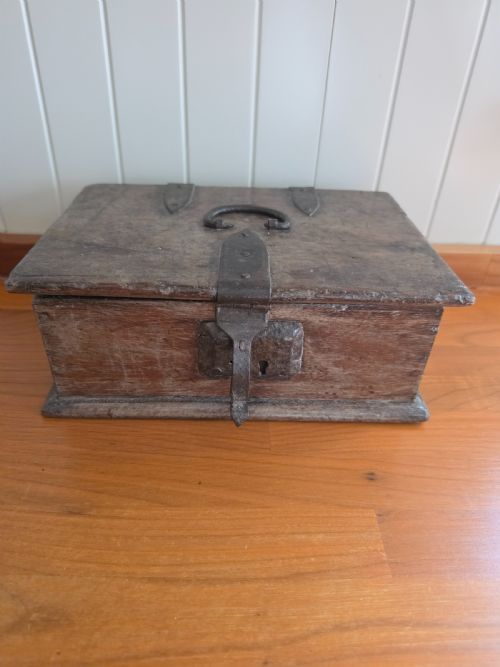
Makers utilised solid timbers predominantly from oak, supplemented by walnut, elm, fruitwood such as cherry, cypress, and occasionally iron bindings. Boards were hand-rived or sawn, joined by pegs, housing joints, and sturdy iron strapwork.
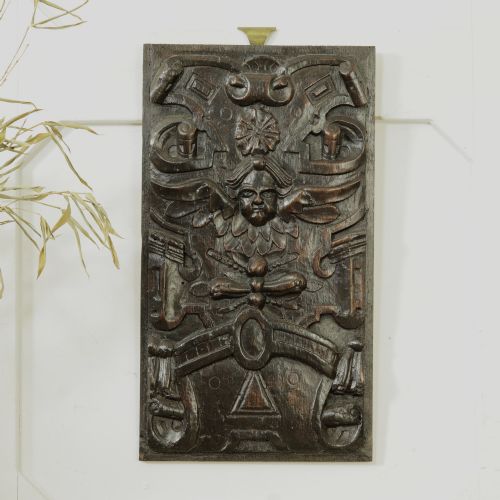
Surface ornamentation relied on gouge work, chip carving, linenfold panelling, and deeply carved figural reliefs cut directly into the solid wood. Lockplates and hinges were fashioned from wrought iron, secured by hand-hammered nails.
Retail Price Guide 2026
Typical UK retail prices for 16th century coffer, calculated from the Sellingantiques database of over a million retail prices indexed since 2003. This retail price guide relies exclusively on Sellingantiques data; no external sources or auction records are used, so the figures do not describe the wider market.
Historical carvers populated early panels with fighting birds and mythological figures like Venus and Dido.
Assessing the Pieces
Quality rests upon the integrity of the original timber and the depth and complexity of the hand carving. Pieces with untouched patination and original ironwork sit above examples that have undergone extensive timber replacement or later re-carving.
The sophistication of the joinery distinguishes simple utilitarian boarded trunks from ambitious architectural workshop commissions. Structural survival, such as intact original bases and lids, dictates the standing of an individual coffer.
The 16th Century Coffer Glossary
- Cooperman
- An obsolete term for a maker of wooden vessels and related storage containers. Such craftsmen occasionally turned their skills to heavy domestic chests.
- Boarded coffer
- A simple chest constructed from thick planks joined directly at the edges with nails or pegs rather than a frame. This method represents one of the earliest forms of case furniture.
- Linenfold
- A carved wooden panel motif imitating folded drapery or linen cloth. This decorative style gained widespread popularity during the Tudor period.
- Wrought iron
- Iron heated and hammered into shape by a smith to create durable hinges, straps, and lockplates. It displays irregular surface textures from hand tools.
- Kist
- A regional northern or Scottish term for a chest or coffer used for household storage. These items held textiles, meal, or personal belongings.
- Plank coffer
- A primitive chest formed from six primary planks making up the top, bottom, sides, front, and back. Surviving examples often display high degrees of rustic utility.
Frequently Asked Questions
What did they store inside?
A 16th century coffer held valuable textiles, church plate, important documents, and dry provisions. Because houses lacked fitted closets, these chests served as the primary secure wardrobe.
Heavier examples protected silver and title deeds against theft and dampness in wealthy households and parish churches.
How do I spot a replacement lid?
Examine the hinge attachment areas and the wear patterns along the top edges of the side boards. Original lids often retain early wrought iron strap hinges and matching peg holes.
Discrepancies in timber colour, grain direction, or tool marks between the body and the top indicate later restoration work.
Where were they placed in the home?
These chests stood against walls in halls, chambers, and private parlours, frequently doubling as seating benches. Their heavy weight kept them stationary in domestic spaces.
In ecclesiastical contexts, parish chests rested near altars or vestries to secure liturgical books and parish funds.
How do I tell English from continental pieces?
English examples typically rely on native oak with boarded or frame-and-panel construction and linenfold or geometric carvings. Continental pieces frequently employ walnut, fruitwood, or cypress.
Italian and French workshops introduced Renaissance motifs such as figurative relief panels long before they became common in rural Britain.