


Antique Chronographs
A chronograph is a watch with a seconds hand you can start, stop and return to zero, built for timing races, aviation, motoring and military work alongside the ordinary business of telling the time.
Antique Chronographs
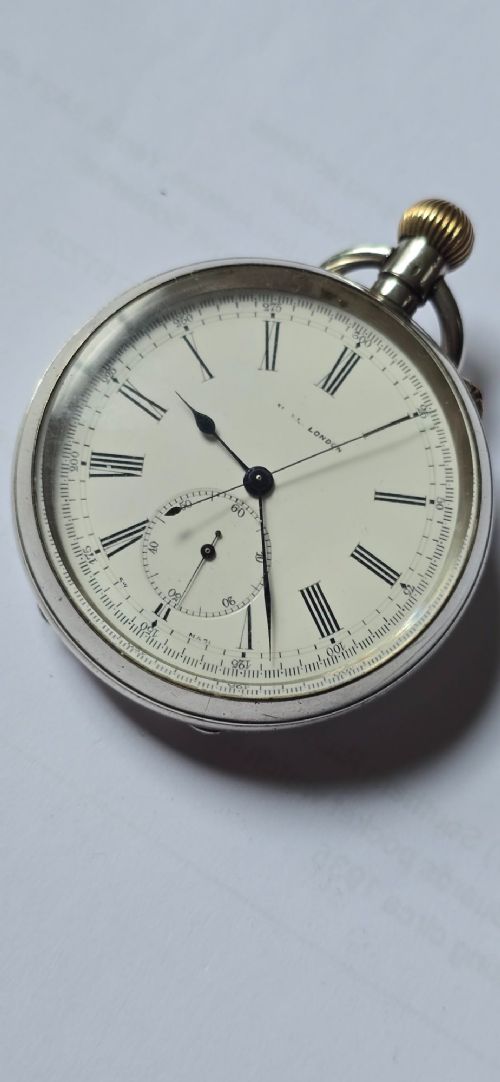
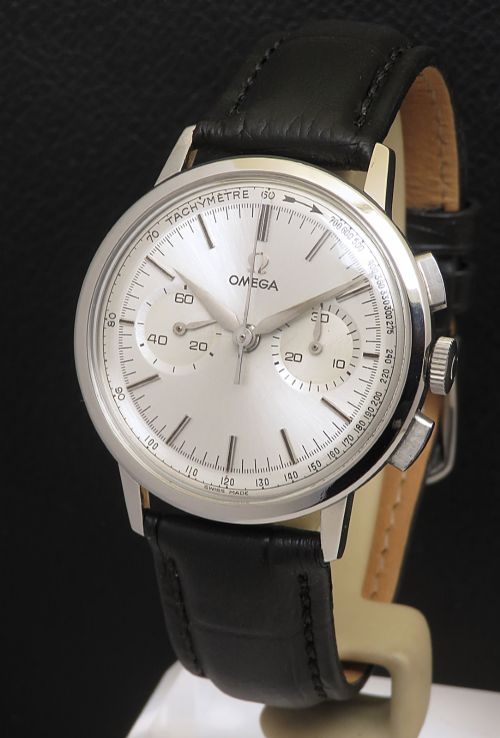
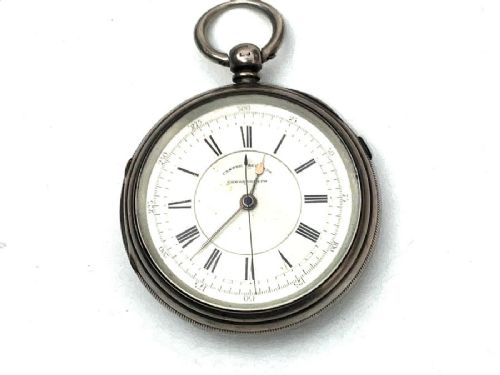
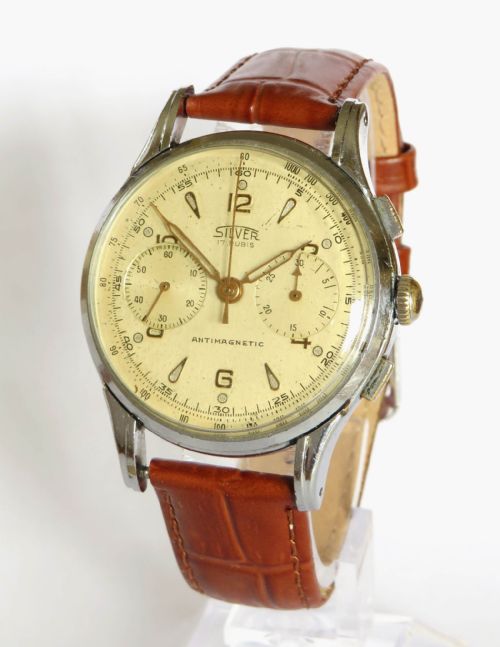
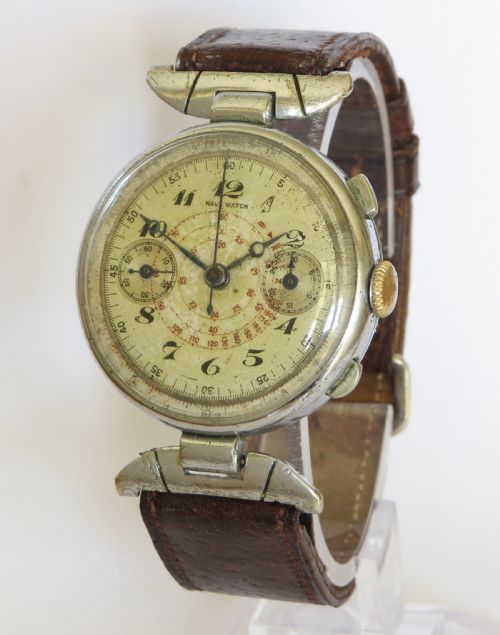
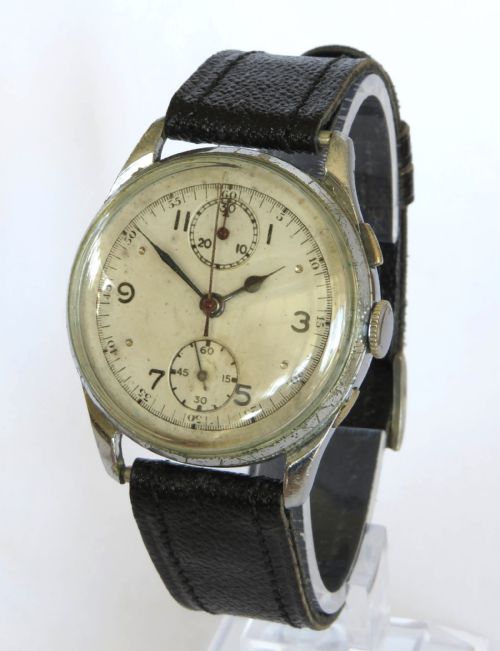
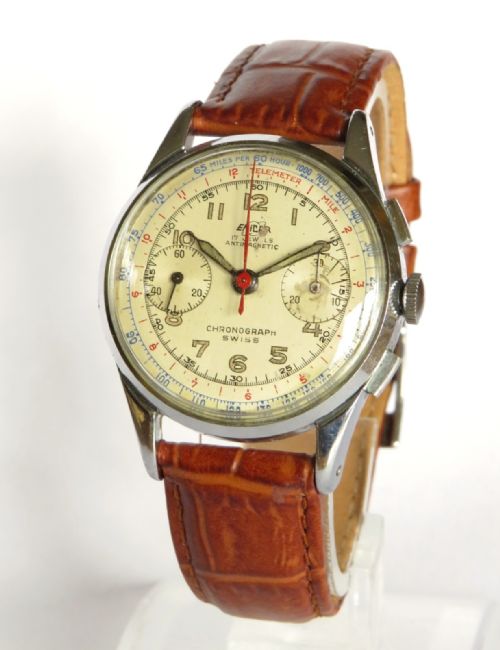
Two bodies dominate the category. One is the gents' Swiss manual-wind wristwatch of the 1940s to 60s, the form behind roughly half the listings and the one you're most likely to meet. The other is the silver or gun-metal centre-seconds pocket watch of about 1870 to 1930, roughly a third of the run.
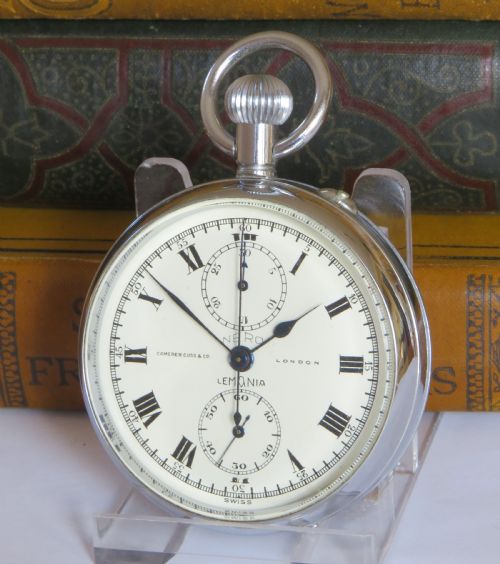
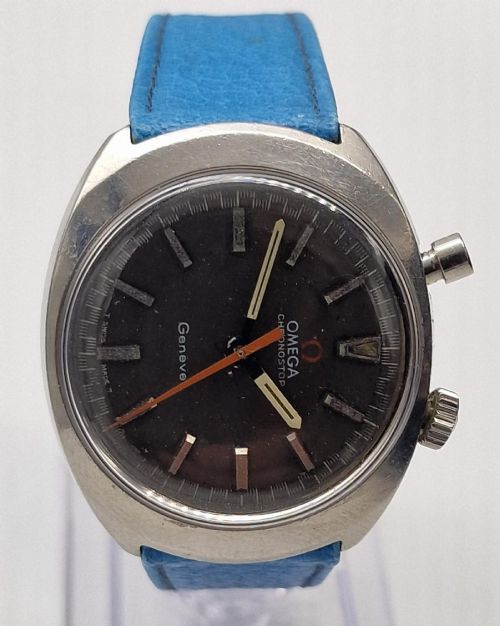
The wristwatches are catalogued in a particular way: by movement rather than by brand. Landeron is named in twelve titles, and Venus 188, Valjoux, Lemania and Omega calibres 320 and 321 all appear outright. Where a case name is unfamiliar, the calibre is often doing the identifying work.
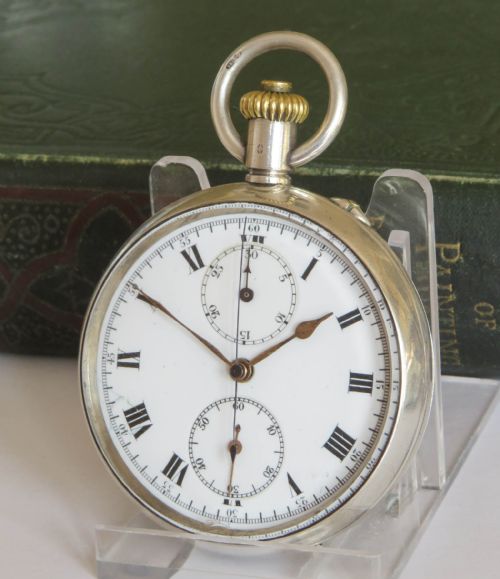
The pocket pieces are the older half. Silver is the most common stated case metal at twenty-nine titles, with gun metal covering the cheaper Continental end and gold running through both bodies. English provenance shows through hallmarking towns and firms, Chester and Coventry cases among them, and the earliest sampled piece is an 1879 Chester-hallmarked silver fusee.
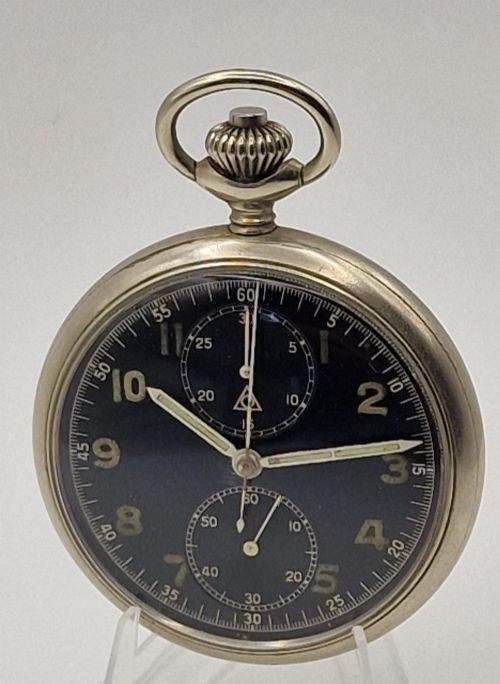
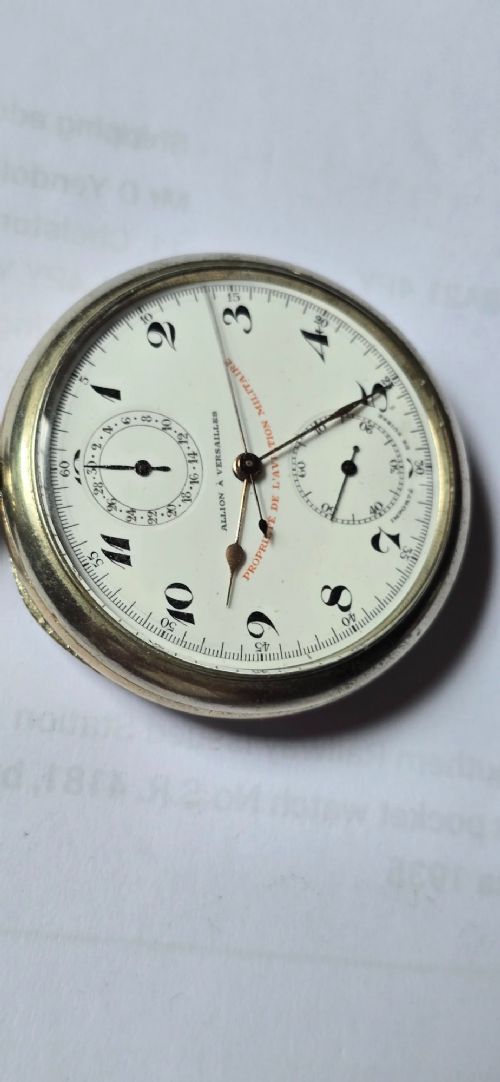
Around the edges sit the service and issue watches, about a dozen listings, and a small tier of complications: split-seconds rattrapante, quarter repeating, a minute repeater, triple date and one moonphase. Seventeen dealers have listed in the category and around twenty-two come to market a year on Sellingantiques.
Top And Bottom
The name on the dial does most of the sorting. Omega appears in twenty titles, with Breitling, Heuer, Eterna, Universal, Eberhard & Co and Audemars Freres in the same upper reaches. Sada, Printania, Freeson, Wega, Desotos and private-label work sit at the other end, and plenty of dials carry only the generic legend Chronographe Suisse.
Case metal moves in step. Nineteen titles carry gold, nine of them 18k, and those cluster at the top; the twenty-nine silver pieces and the gun-metal cases sit low. Complication lifts a watch out of the ordinary run too, since split-seconds, repeating work, triple date and moonphase turn up only once or twice each across the whole category.
Two smaller things carry weight. A documented issue reference in the title, RCAF, Vixa Type 20, Hanhart type 41, Junghans J88 Bund, Kriegsmarine Artl. 5980, Seikosha naval, puts a watch near the top of the range. So does hard identification: a stated calibre, a reference number, or inner and outer boxes still with the watch.
Antique Chronographs Retail Price Guide 2026
Typical UK retail prices for chronographs, calculated from the Sellingantiques database of over a million retail prices indexed since 2003. This retail price guide relies exclusively on Sellingantiques data; no external sources or auction records are used, so the figures do not describe the wider market.
The 1960s is the decade that leads for chronographs on Sellingantiques, with the 1950s next and the 1940s third.
The Antique Chronographs Glossary
- Chronograph
- A watch whose seconds hand can be started, stopped and reset for timing, working separately from the running time.
- Centre seconds
- The timing hand mounted on the central arbor, sweeping the whole dial. It's the standard layout on the English pocket chronographs here.
- Calibre
- The movement model, and the way a great many of these are identified: Landeron 248, Venus 188, Omega 321.
- Ébauche
- A bought-in movement blank from Landeron, Valjoux, Venus or Lemania, finished and cased under another name.
- Mono-pusher
- Start, stop and reset all worked through a single button, usually the crown. It appears in Pierce and Rodania titles.
- Rattrapante
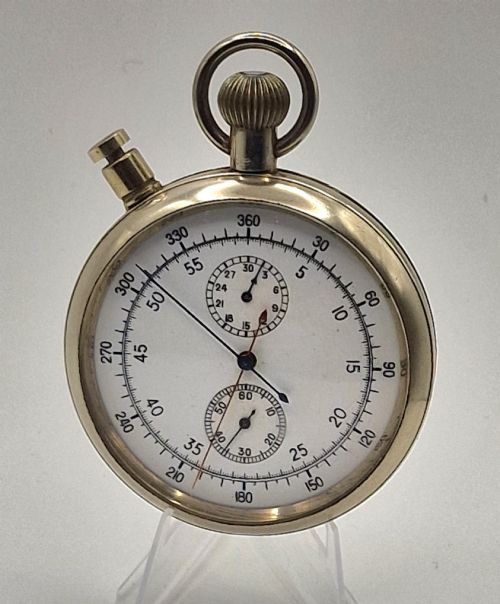
- Two superimposed timing hands, so a second interval can be read without stopping the first. Also called split second.
Antique Chronographs: Frequently Asked Questions
What period do most of them come from?
The dated field runs from 1870 to 1960, but it leans hard to the late end. Ninety-six of the 147 clean years fall in the 1960s, 1950s and 1940s.
Pocket-watch decades are thinner: seventeen listings in the 1900s, ten in the 1920s and 1930s each, nine in the 1910s. A handful are filed only as 19th Century or Victorian, which are era labels rather than years.
Why do titles name a movement instead of a brand?
Swiss chronographs of this era were built on bought-in ébauches, so the movement often says more about the watch than the name on the dial does. Landeron appears in twelve titles and the word calibre in nine.
On less familiar names, the calibre is what places the watch. Venus 188, Valjoux 61, Lemania and Omega 320 and 321 all get named outright.
Are military chronographs a big part of the category?
About a dozen listings, but they sit at the top of the range. The issuing authorities are unusually varied: the RCAF, the French Air Force, the Luftwaffe, the Kriegsmarine, the Bundeswehr, the Japanese Navy and the Admiralty have all turned up.
Civil issue runs alongside them. GPO, British Railways and Lancashire & Yorkshire Railway pieces have appeared.
How large are the wristwatches?
Case sizes are stated only rarely. Where they are given, they're small by modern taste.
A 37mm square case and a 36mm round case are among the largest wristwatch measurements recorded across the run.
Which complications turn up?
Split-seconds rattrapante appears in three titles, triple date or triple calendar in five, quarter repeating in two, and there is a single minute repeater and a single moonphase.
That's the whole complicated tier. These sit in the upper half of the range wherever they appear.
Do unusual one-off pieces come up?
They do. A 1920s regatta yachting chronograph retailed at Cowes, a doctor's chronograph with a pulsation scale, and an oversized silver pocket piece hung with a mining tug-of-war fob have all been listed on Sellingantiques.
Soviet Strela cosmonaut chronographs have appeared in several examples. English work shows through the Lancashire Watch Company, Thomas Russell, J W Benson, W. Ehrhardt and S. Smith & Son, the last a pocket chronograph made for early automobile speed testing.