





A 2026 Guide by Sellingantiques

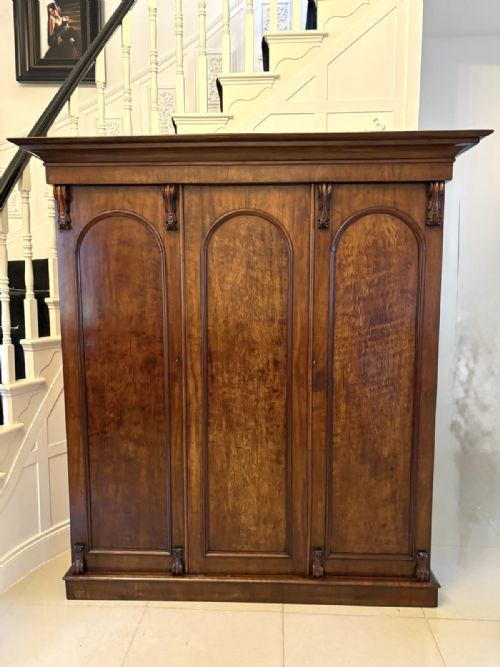
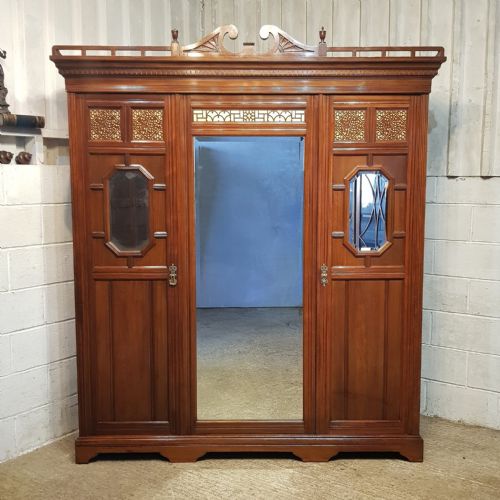
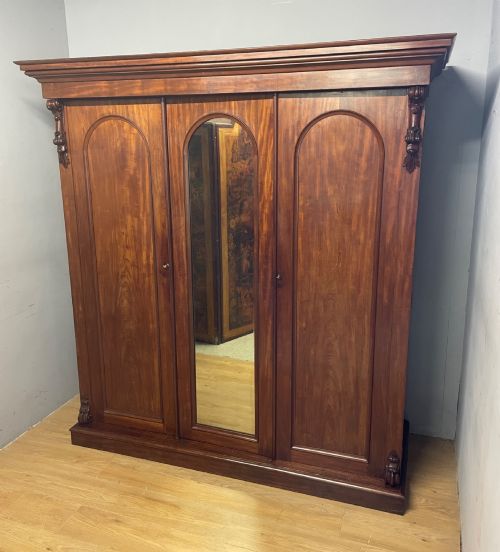
An Edwardian Mahogany Triple Wardrobe C1900, Edwardian
Priced at £845 from Castleforge Antiques Ltd
Early bedrooms relied on chests and presses for storing clothes flat.
Built-in closets were rare before the twentieth century. People bought freestanding antique triple wardrobes to keep their growing clothing collections organised.
The shift to hanging clothes upright drove the design. Hangers meant tall spaces became necessary for suits and dresses.
Look at Victorian examples to see the form take its final shape. These massive pieces dominated wealthy bedroom suites.
Holland & Sons produced heavy mahogany suites in London during the mid-nineteenth century. They supplied large domestic houses with these grand forms.
Gillows of Lancaster made fine examples from the late eighteenth century onwards. Their stamped drawer edges often confirm a Northern origin.
Provincial cabinet makers built thousands. Regional variations dictate the layout rather than a famous workshop.
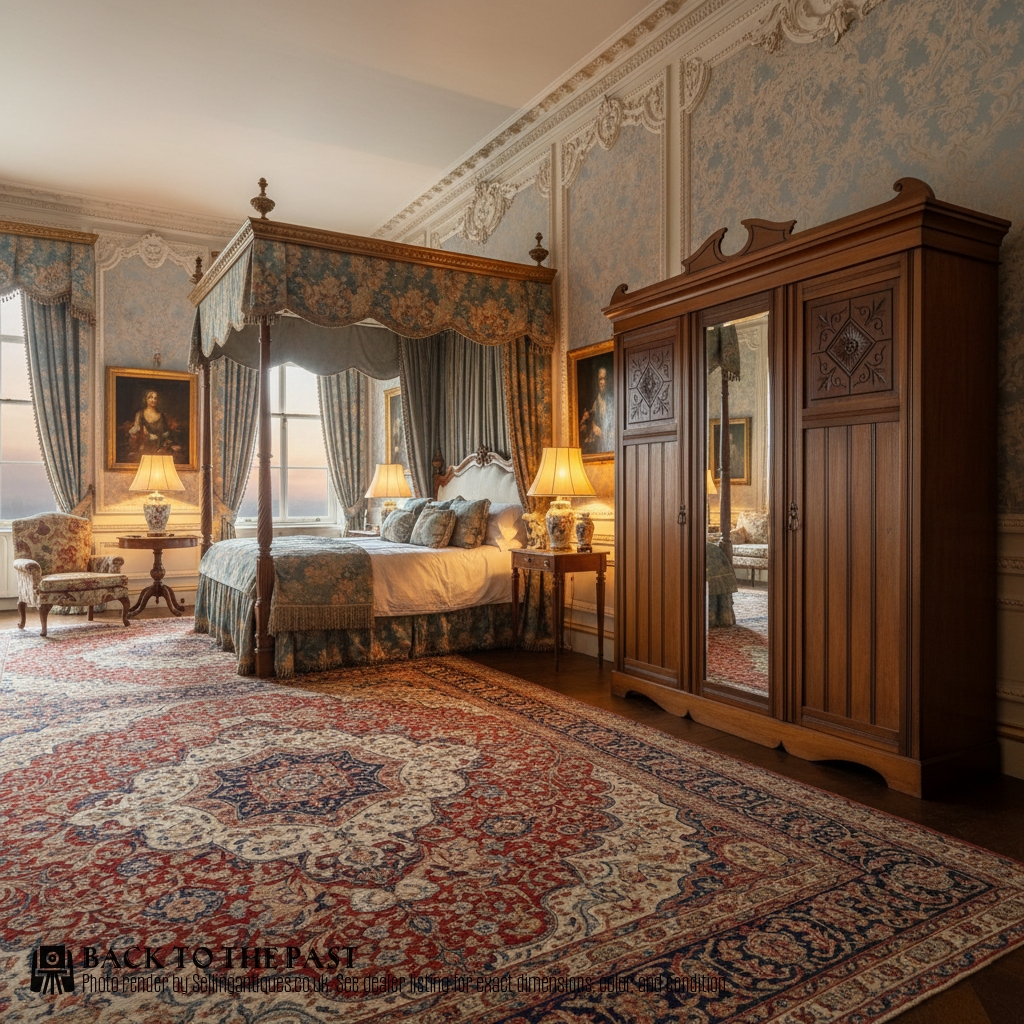
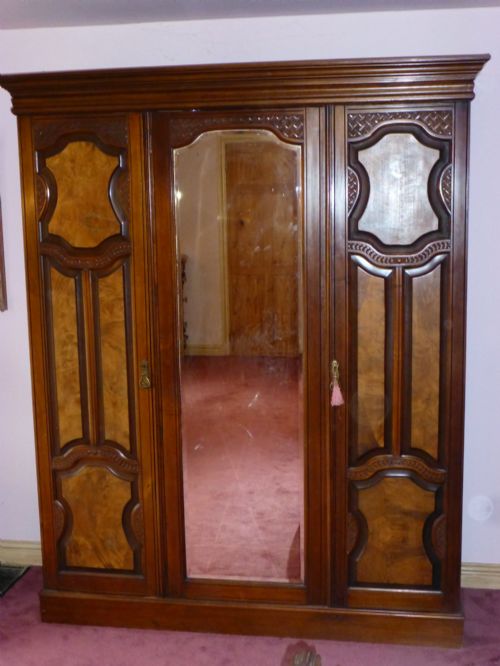
19th Century Walnut Triple Wardrobe, 19th Century
Priced at £495 from Christopher Buck Antiques Ltd.
The 2026 retail price guide for Antique Triple Wardrobes is drawn from a proprietary archive of over 1.1 million retail prices indexed by Sellingantiques since 2003. This guide relies exclusively on their own internal data; no external sources or auction records are used.
Analysing nearly 25 years of UK antique market history alongside current retail values, the data indicates that typical UK retail prices for Antique Triple Wardrobes range between £800 and £2,000. Entry-level prices generally fall under £800 and premium examples upwards of £2,000.
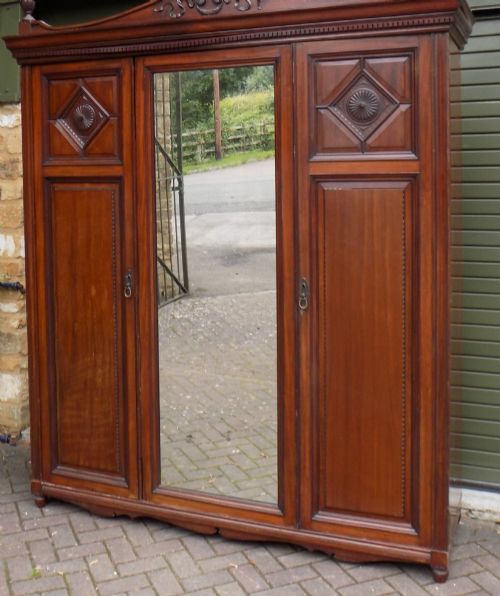
Three doors define the front elevation. The middle door often features a full-length mirrored plate.
Central sections usually hide a stack of sliding linen trays. Hanging space flanks this core on both sides.
Check the cornice. A stepped or moulded top crowns the piece, while a plinth base grounds the heavy structure.
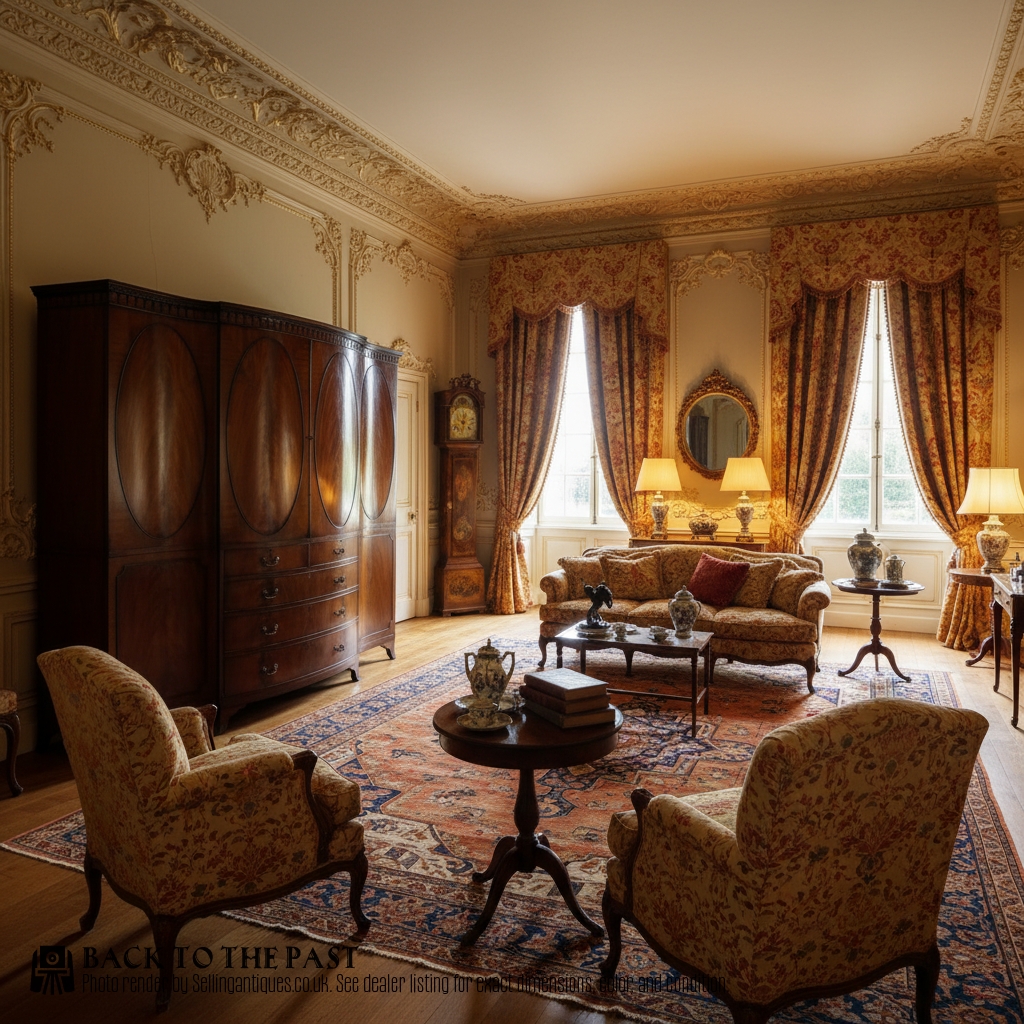
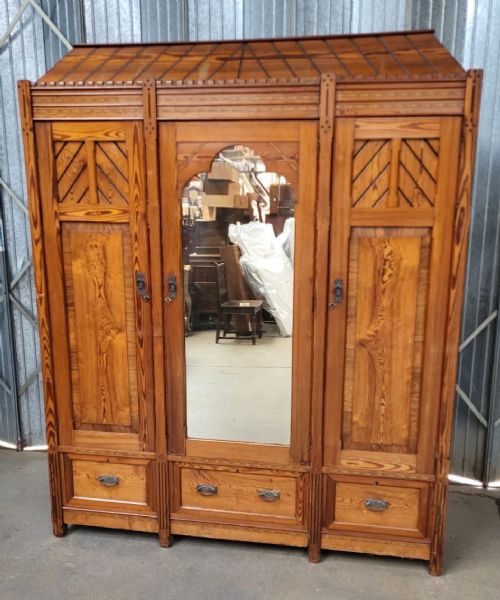
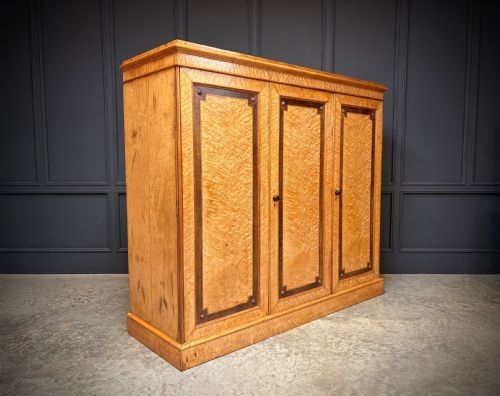
An Antique Large Serpentine Bow Fronted Breakfront Triple Wardrobe C1920, 1920
Priced at £1,795 from Castleforge Antiques Ltd
Joiners relied on heavy wooden pegs to align the huge carcase sections. Metal bolts eventually replaced these in later decades.
Hand-cut dovetails secure the internal drawer boxes. Look at the pins to see the lack of machine uniformity.
Thick veneers were laid flat by hand using hot animal hide glue. This allowed bold grain patterns to match across the doors.
"The hollow bases sometimes provided a discreet place to slide out a chamber pot."
"Many middle doors look like they should open but are actually fixed panels. Access to the centre relies on opening the side sections first."
"You will find brass hooks placed right under the ceiling of the hanging space. Hanging garments from the top rather than a rail saved space."
Based on almost 25 years of Sellingantiques UK antique market data, Antique Triple Wardrobes appeared 1765 times (out of 1,100,000 antiques) which gives it a rarity score of 70/100.
This score measures scarcity within the Sellingantiques archive only and is not a survey of the entire antiques market, so these statistics may not be indicative of the general availability of Antique Triple Wardrobes elsewhere.
Most antique triple wardrobes are designed to dismantle. You don't usually have to move the whole bulk in one go.
The cornice lifts off the top. The base is a separate plinth. The main body separates into three individual boxes held together by bolts hidden just inside the door frames.
Take the doors off first to reduce the weight. This protects the hinges from straining while you navigate staircases.
Cabinet makers fitted these shallow trays to hold starched shirts and folded textiles. They slide forward so you don't disturb the stack.
People use them today for heavy winter jumpers or shoes. They keep everything flat and aired.
You can leave the cornice off, but it doesn't look finished. The top edges of the carcase are often raw pine and lack polish.
Dust will settle straight onto the top of the doors. The cornice acts as a dust seal and ties the three structural boxes together.
If height is an issue, consider modifying the plinth base instead. Removing the feet or reducing the base often works better than losing the top moulding.
That musty odour is usually trapped moisture in the unpolished back panels. It builds up when these large pieces sit against damp walls for decades.
Wash the bare wood interior with a weak solution of white vinegar and warm water. Let it dry with the doors wide open in a well-ventilated room for a few days.
Some dealers place a bowl of coffee beans inside for a week to absorb lingering odours. Avoid lining the shelves with sticky plastic film as it stops the timber breathing.
Please note: This Antique Triple Wardrobes guide and its associated pricing data are provided for general informational purposes only. It does not constitute formal financial, investment, or appraisal advice and should not be relied upon as the sole basis for any commercial activity, purchasing, or sales decisions. Sellingantiques.co.uk accepts no liability for any actions taken in reliance on this information. Always consult with a qualified professional or independent appraiser.
