
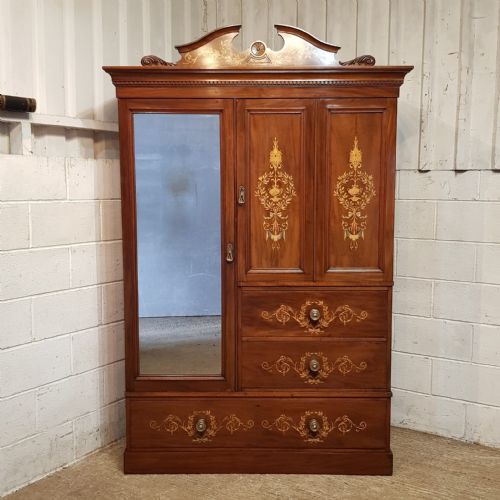
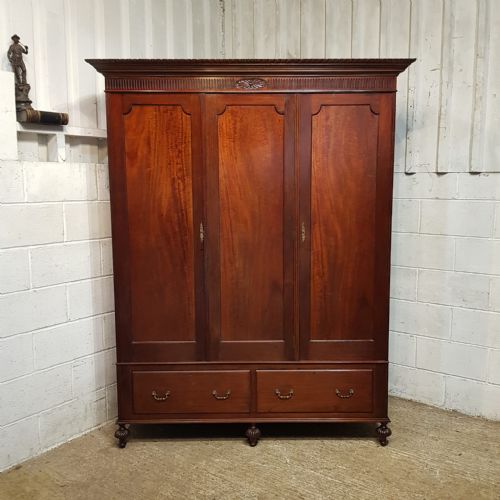
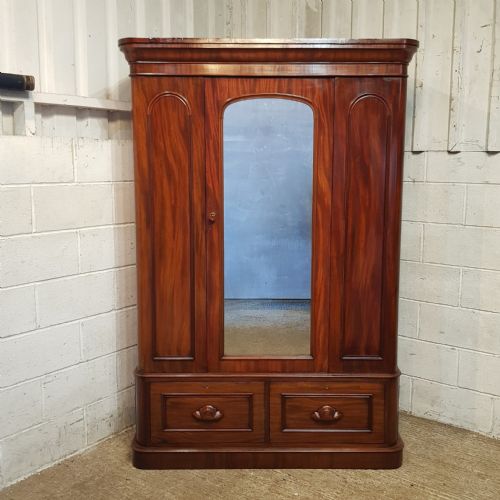
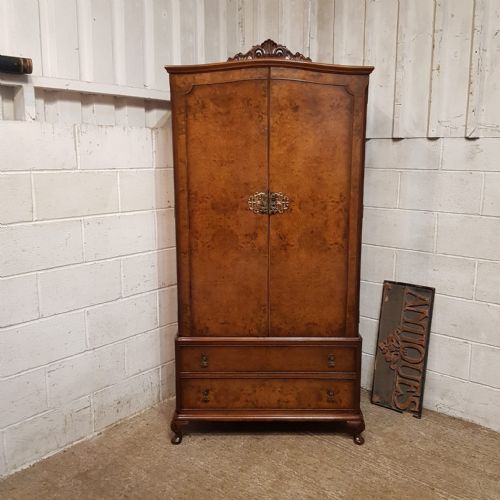




A 2026 Guide by Sellingantiques
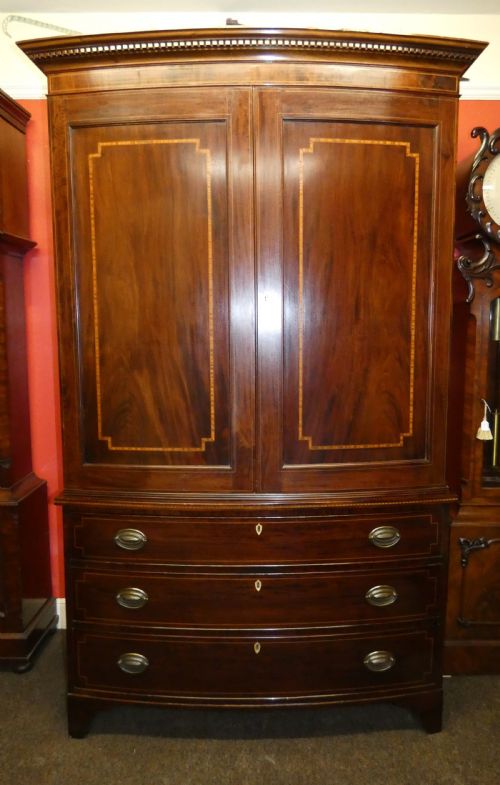
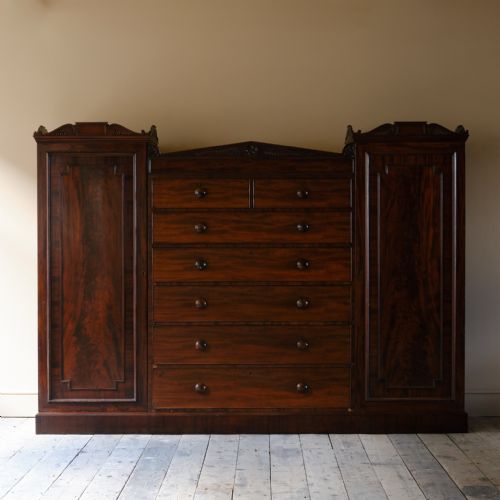
18th Century George III Sheraton Breakfront Wardrobe / Linen Press, Georgian
Priced at £6,825 from A Brookes
Originating in the late seventeenth century, antique linen presses replaced traditional oak chests for storing bedding and domestic cloth.
Wealthy households needed them. Keeping expensive damask tablecloths folded neatly in the upper sliding trays preserved the crisp edges.
Lower drawers held heavier woollen blankets or folded garments out of season.
Look at the shift in shape over time. Georgian examples stand tall and architectural, dominating the bedrooms they furnished.
By the late Victorian period, fitted wardrobes gradually made the freestanding press obsolete in townhouses.
Thomas Chippendale produced several documented mahogany linen presses during the 1760s and 1770s, supplying them to large country house commissions.
Gillows of Lancaster made solid, well-proportioned examples in the late eighteenth and early nineteenth centuries. Their stamps occasionally appear on the top drawer edge.
Most provincial pieces carry no maker's mark. Local tradesmen built them to standard regional patterns using locally sourced timber.
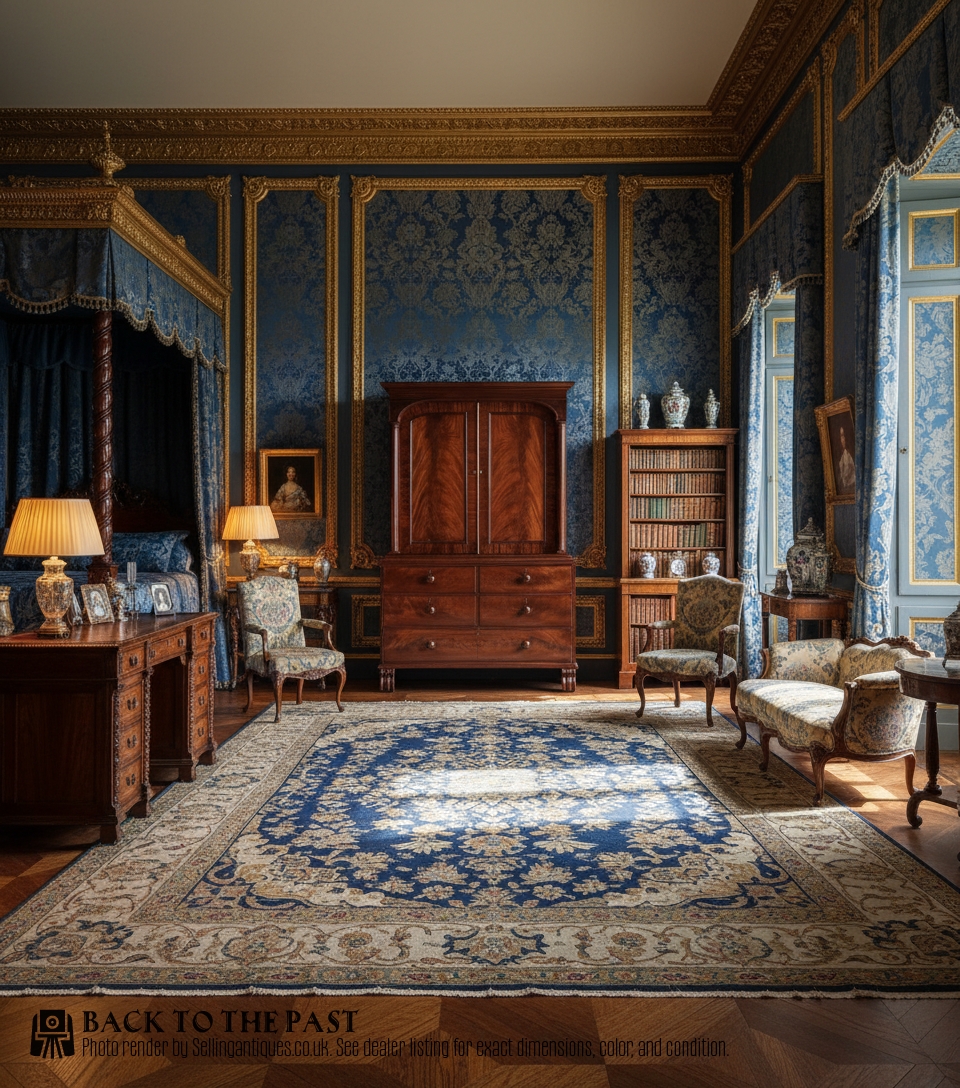
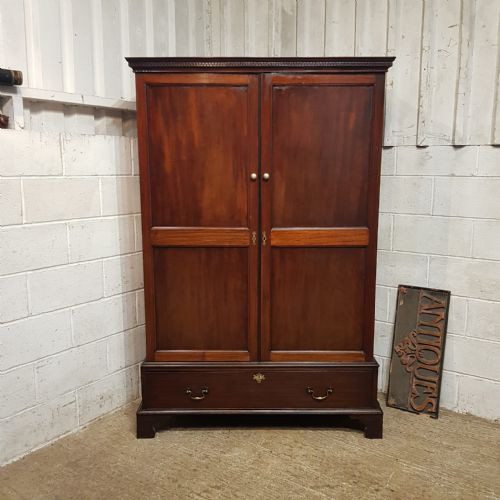
Scottish Mahogany Linen Press Cupboard, 19th Century
Priced at £1,275 from LTANTIQUES.CO.UK
The 2026 retail price guide for Antique Linen Presses is drawn from a proprietary archive of over 1.1 million retail prices indexed by Sellingantiques since 2003. This guide relies exclusively on their own internal data; no external sources or auction records are used.
Analysing nearly 25 years of UK antique market history alongside current retail values, the data indicates that typical UK retail prices for Antique Linen Presses range between £1,000 and £3,700. Entry-level prices generally fall under £1,000 and premium examples upwards of £3,700.
Twin panelled doors enclose the upper section. These hide a stack of three to five sliding oak or pine trays.
The base section features a graduated chest configuration, normally two short drawers over two long ones.
Check the cornice. It should lift cleanly off the top of the upper cupboard on dowels.
Early construction relied on frame and panel joinery. Stiles and rails held loose floating panels to allow the wood to expand.
Cabinet makers shifted to wide flat surfaces later in the Georgian period, laying figured mahogany veneers onto stable softwood cores.
Notice the doors. Matched flame veneers required precise hand cutting to create symmetrical mirrored patterns across the front panels.
"Some early presses were built straight into the panelling of a room. The piece integrated seamlessly with the architecture of the house."
"The sliding action of the trays naturally polishes the wooden runners over decades. They glide smoothly under the weight of heavy linens."
"Pull-out brushing slides feature on certain high-end models. A servant would pull this board out to brush down woollen garments before storing them."
Based on almost 25 years of Sellingantiques UK antique market data, Antique Linen Presses appeared 3552 times (out of 1,100,000 antiques) which gives it a rarity score of 49/100.
This score measures scarcity within the Sellingantiques archive only and is not a survey of the entire antiques market, so these statistics may not be indicative of the general availability of Antique Linen Presses elsewhere.
They are heavy pieces of furniture. A solid mahogany or densely veneered press easily needs two strong people to move it safely. You have to handle the top and base separately.
Taking the piece apart makes a big difference. Once you lift the cornice off and slide out the interior trays, the upper carcase becomes manageable to manoeuvre up a staircase.
Yes, you can slide them straight out. The trays just sit on horizontal timber runners screwed to the inner sides of the cupboard. Pulling them out leaves the main carcase empty.
Many people fit a brass rail across the top to hang short jackets or shirts. The internal depth varies, so check your hangers will actually fit before drilling any holes. Wide modern hangers often catch on the doors when you close them.
The deep lower drawers take heavy folded items. Blankets, thick quilts and winter woollens fit well in the graduated chest section.
They offer deep storage that the shallow upper trays lack.
Wide unbraced cabinet doors do warp as humidity changes over the years. Uneven moisture absorption causes the timber on the face to shrink or expand differently from the back.
Check the floor levels first. Old floorboards dip, throwing the heavy carcase slightly out of square. Slipping a thin wooden wedge under one of the front feet often squares the frame and brings the doors back into alignment without any carpentry.
Please note: This Antique Linen Presses guide and its associated pricing data are provided for general informational purposes only. It does not constitute formal financial, investment, or appraisal advice and should not be relied upon as the sole basis for any commercial activity, purchasing, or sales decisions. Sellingantiques.co.uk accepts no liability for any actions taken in reliance on this information. Always consult with a qualified professional or independent appraiser.
