


Antique Howard & Sons Sofas
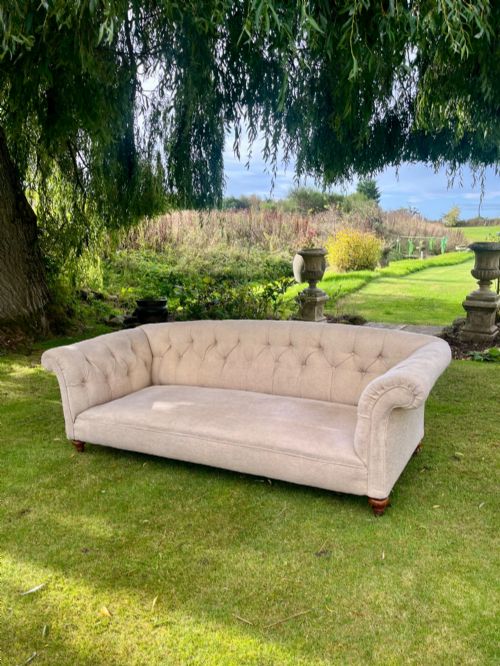
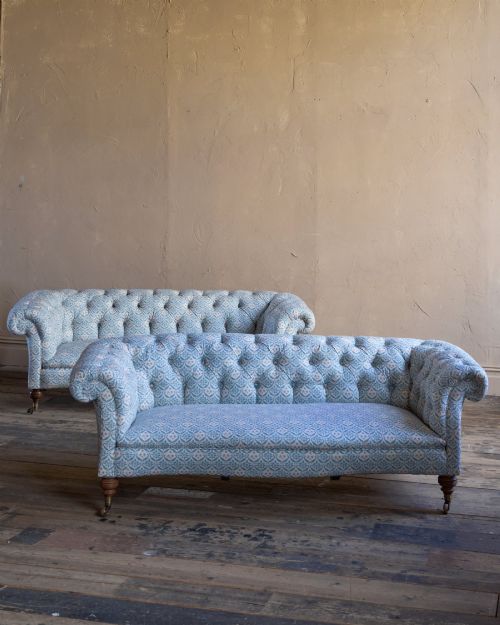
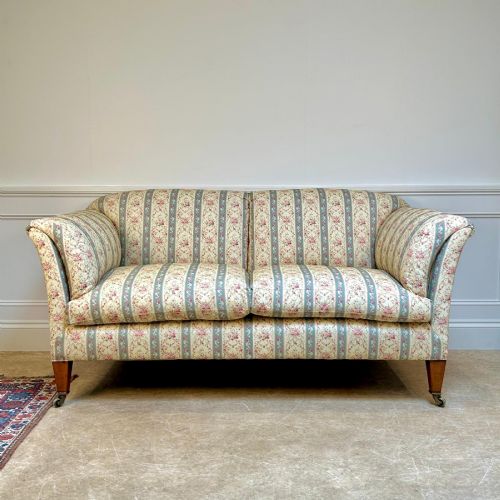
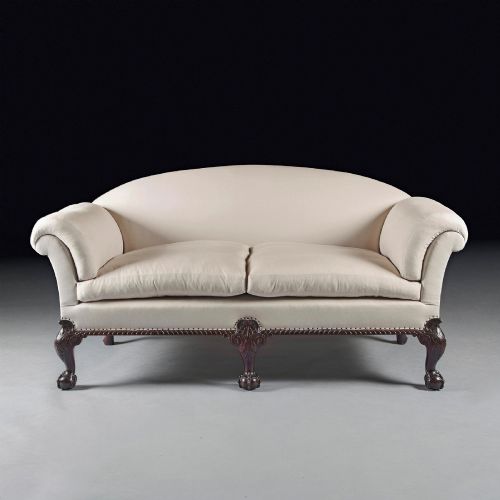
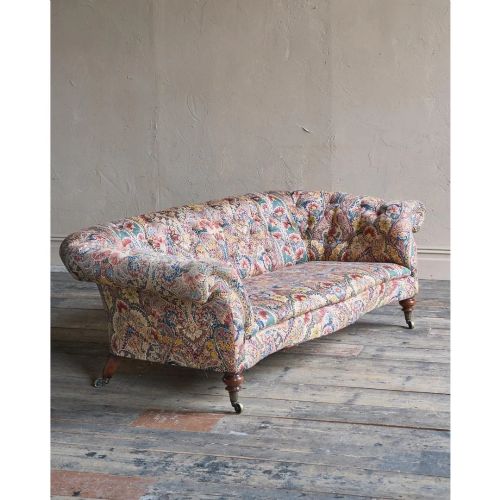
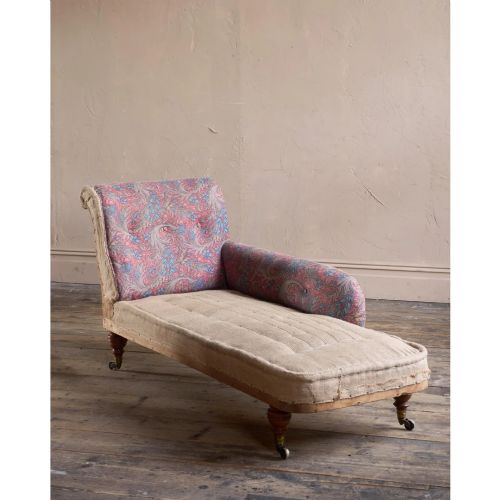
Deep-seated upholstered sofas, settees, chaises and buttoned chesterfields from the London firm Howard & Sons, made for the drawing rooms and country houses of the 19th and early 20th centuries.
Antique Howard & Sons Sofas
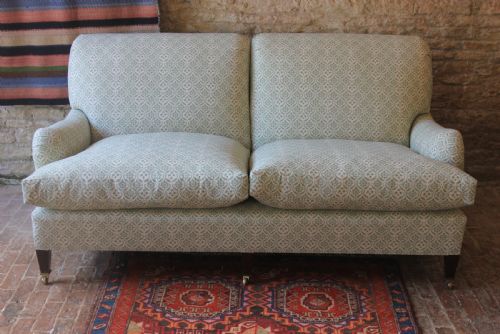
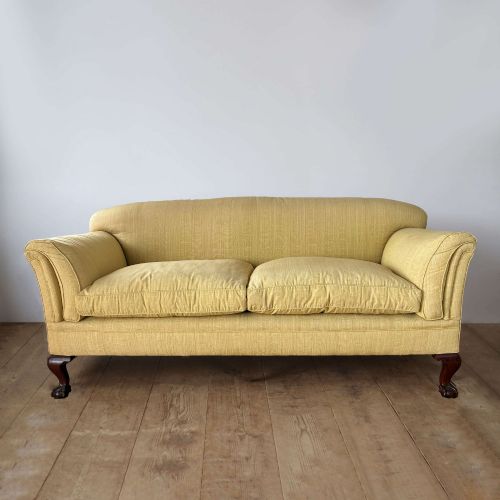
Howard & Sons was a London upholstery and cabinet-making firm working in the era when sprung, deep-seated seating for the country house took over from lighter show-wood forms. Its sofas were sold as named models from a standing range, which is why model names still travel with them.
The piece you're most likely to meet on Sellingantiques is a single 19th-century sofa or settee with no model name in the title. Thirty of the hundred-odd titles carry "19th", and the plain "Howard and Sons Sofa" formulation recurs a dozen times. About fourteen come to market in a year, listed by eighteen different dealers.
Named house models are the organising fact of the category and account for roughly a third of listings. Portarlington leads with eight titles, ahead of Baring, Ingleby, Castellane, Grantley, Beckett, Chaplin and Wimborne. Ramsden, Leeds, Ivor and a deep-seated Bridgewater suite of two chairs and a sofa each surface once.
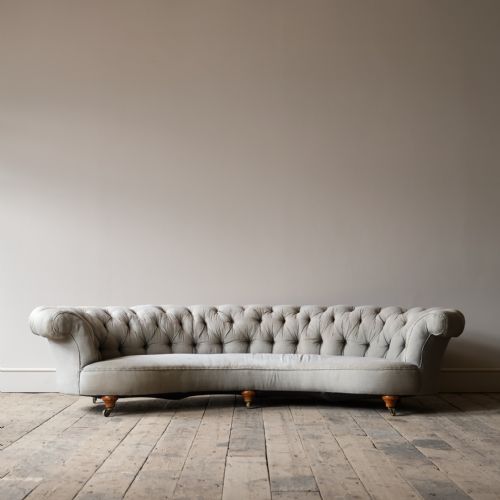
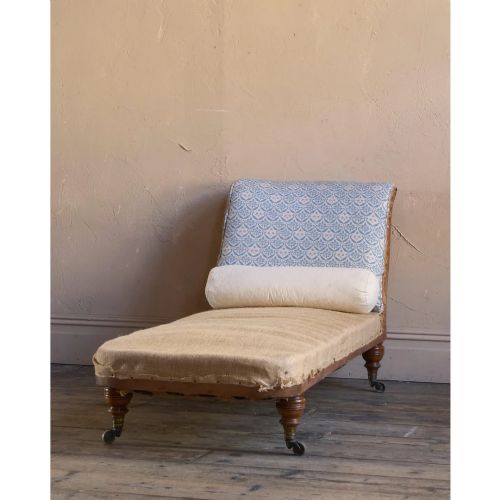
Beyond the model names sit two smaller groups: chesterfields, in about one title in seven and including crescent, curved and chaise-form versions, and chaises longues and daybeds at roughly one in six. Curved plans turn up throughout as a minority - three kidney-shaped sofas, two crescent chesterfields, one serpentine front.
Where The Range Splits
The name in the title does most of the work. Portarlington, Baring, Wimborne, Chaplin and Bridgewater titles cluster in the upper half of the sampled range, while unnamed sofas spread across the middle. Titles that read "style of", "attributed", "att' to" or "after" all sit in the lower part.
Documentation lifts a piece. A handful of titles advertise a stamp or a paper label, one of them naming Berners St., and dealers call these out as selling points rather than leaving them in the body of the description.
Form and scale separate the rest. Full sofas and chesterfields occupy the upper half; chaises longues and daybeds sit almost entirely below them. Size counts too: two seven-foot Portarlingtons, a three-seater, a suite and a pair of sofas sit at the top, while three titles are flagged simply as "small".
Antique Howard & Sons Sofas Retail Price Guide 2026
Typical UK retail prices for howard & sons sofas, calculated from the Sellingantiques database of over a million retail prices indexed since 2003. This retail price guide relies exclusively on Sellingantiques data; no external sources or auction records are used, so the figures do not describe the wider market.
19th Century is the period label used most on Sellingantiques for these sofas, with Edwardian next and the 1910s third.
The Antique Howard & Sons Sofas Glossary
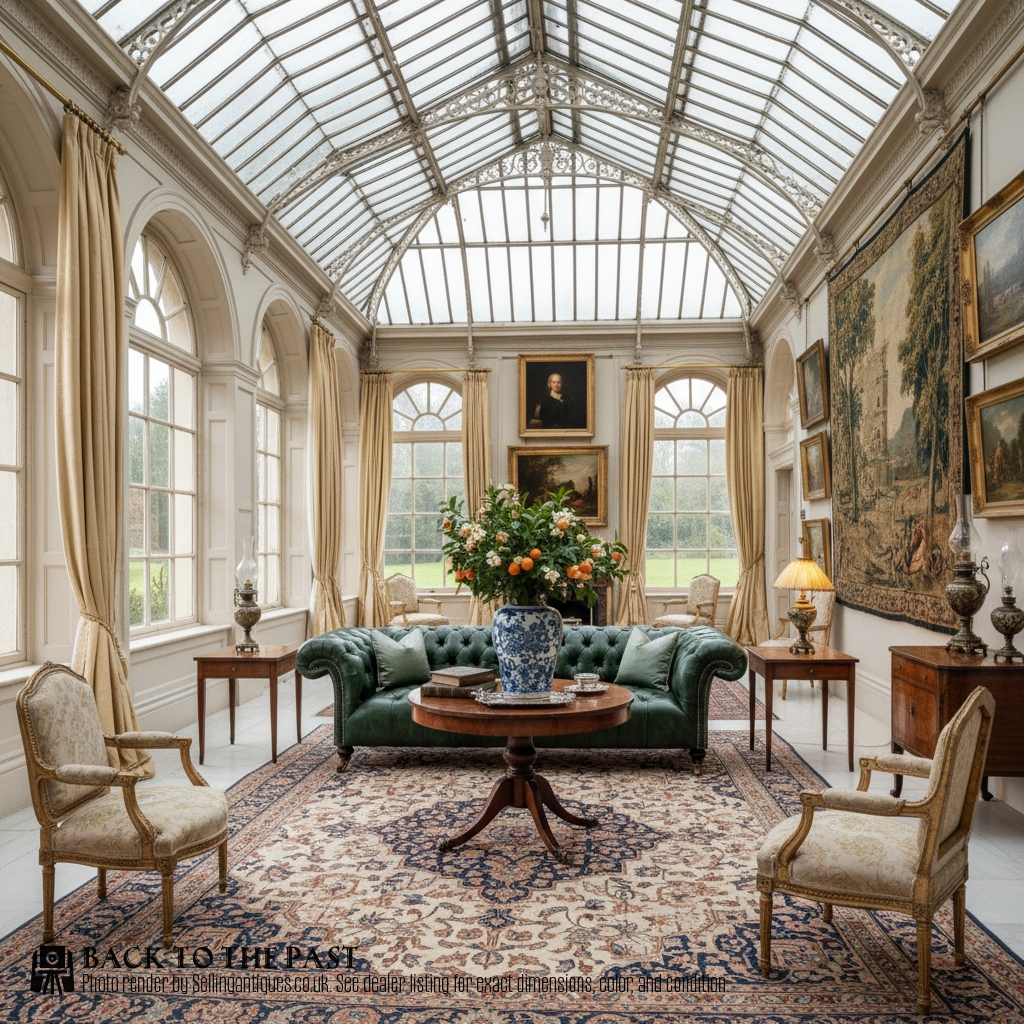
- Chesterfield
- Deep-buttoned sofa with arms and back at one height. It appears in about one title in seven, including curved and chaise-form versions.
- Chaise longue
- Single-ended day-seat long enough to recline on. Both "longue" and "lounge" spellings appear in titles on Sellingantiques.
- Daybed
- Low upholstered couch for reclining. Four appear in the archive, one of them with a reclining back.
- Settee
- Used interchangeably with sofa across several titles, with no consistent difference in the form described.
- Portarlington
- The most frequent named model in this category, with eight titles. Two of them are stated at seven feet, the largest pieces recorded.
- Open arm
- Sofa with an exposed rather than fully covered arm. Four titles use the term, including one aesthetic movement example.
Antique Howard & Sons Sofas: Frequently Asked Questions
What are the Howard & Sons model names?
Titles are dominated by named house models. Portarlington is the most frequent with eight, followed by Baring, Ingleby, Castellane, Grantley, Beckett, Chaplin and Wimborne.
Ramsden, Leeds and Ivor each appear once, as does a deep-seated Bridgewater suite of two chairs and a sofa. The names come from the firm's standing range, sold as models rather than one-offs.
How old are these sofas?
More than half the archive is dated no more precisely than "19th Century", with a further handful simply "Victorian". Edwardian is the next largest group.
Only 26 listings carry a clean year, and those run from 1850 at the earliest to 1930 at the latest. Behind Edwardian come the 1910s, 1860s, 1880s, 1900s and 1920s, with the 1870s and 1930s barely represented.
Does a stamp or label make a difference?
Titles that advertise "Stamped", "Fully Stamped" or "Labelled" are pushed forward as selling points, and they sit toward the upper part of the range. One title records Berners St.
The titles say only that a stamp or label is present. They don't record where it sits or how it reads.
What does "in the style of Howard and Sons" mean?
It means the piece is being offered as the form rather than the firm. Six titles read "Howard and sons style", and others use "attributed", "att' to" or "after".
Those titles all sit in the lower part of the sampled range, below sofas given to the firm outright.
Are chaises longues cheaper than the sofas?
Chaises longues and daybeds account for roughly one listing in six and concentrate almost entirely in the lower half of the range.
Full-length sofas and chesterfields occupy the upper half. Scale reinforces it: the biggest pieces stated are two seven-foot Portarlingtons, while three titles are flagged only as "small".
Do curved and unusual shapes turn up?
Yes, as a persistent minority. Three kidney-shaped sofas, two crescent chesterfields and one serpentine front appear across the archive.
Single oddities include an oak corner sofa of about 1900, the only corner form recorded, and one aesthetic movement open-arm sofa. Pairs are uncommon, with two appearing, one at the very top of the range.