


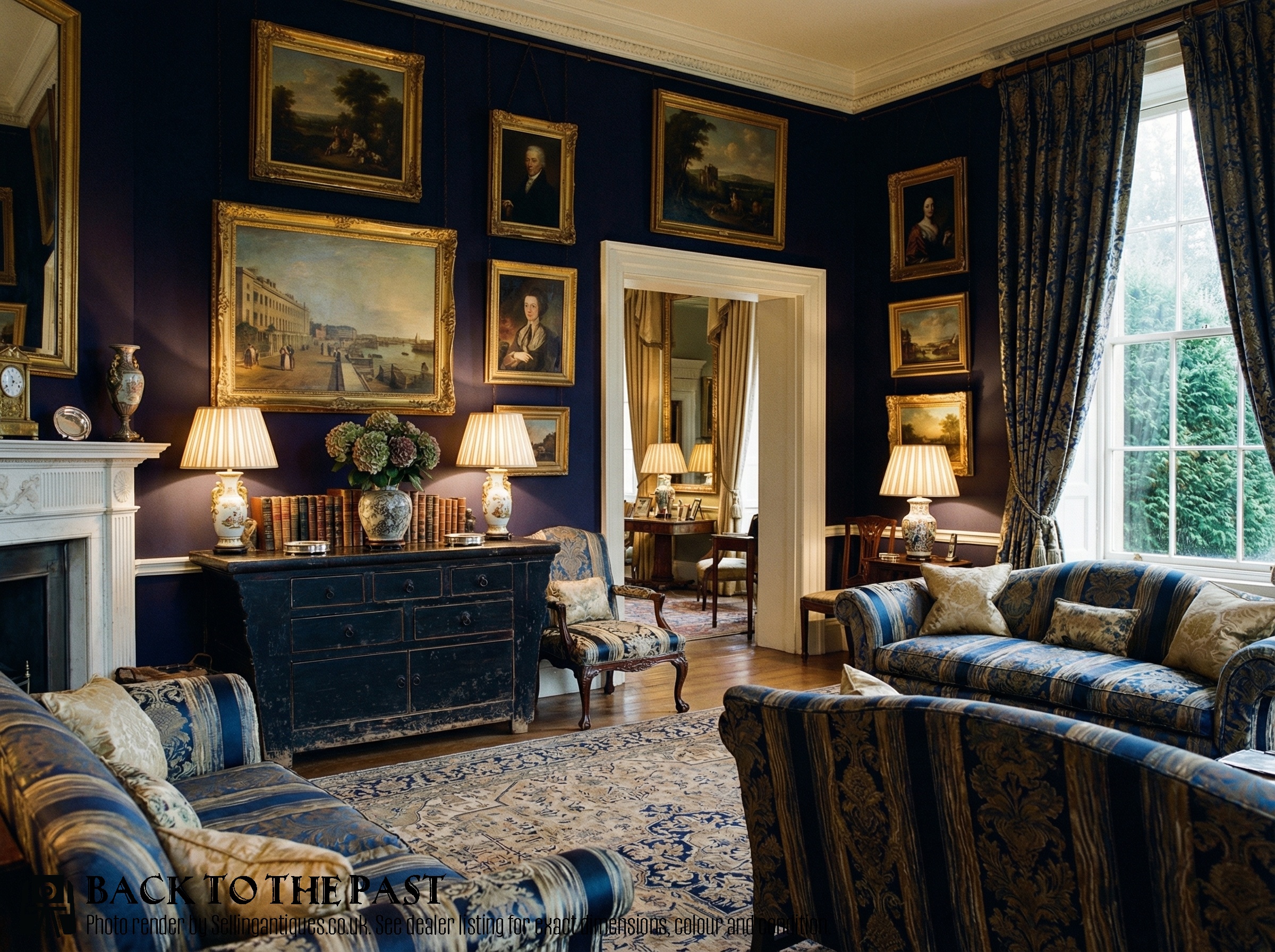
A 2026 Guide by Sellingantiques
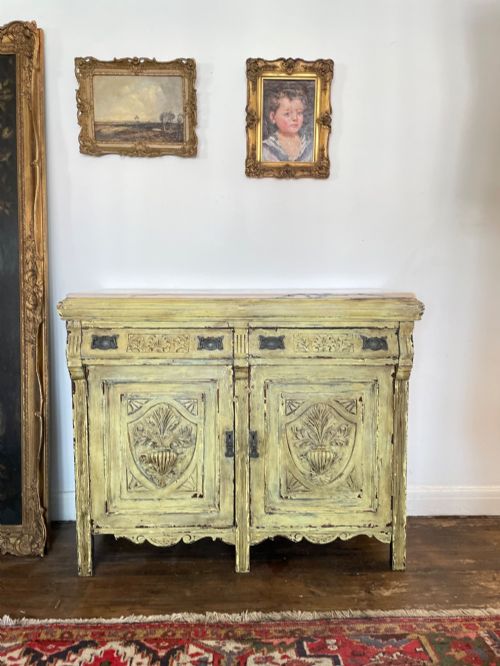
19th Century Chest of Drawers, 19th Century
Priced at £1,650 from Dean Antiques Ltd
Dining room storage units became essential domestic furniture during the late eighteenth century.
Paint offered an economical way to make cheaper provincial woods look smart inside country houses.
Trace the regional variations across European trade routes when looking at antique painted sideboards.
Swedish and French provincial workshops produced vast numbers of these heavy storage cabinets to meet the growing demands of wealthy farmsteads.
Adapted to local household needs over several generations of country living.
Most documented makers of grand town furniture ignored painted pine.
Rural workshops passed specific paint recipes and decorative motifs down through families of craftsmen over decades.
Coastal trade routes spreading similar sideboard patterns between Baltic port towns and eastern English counties.
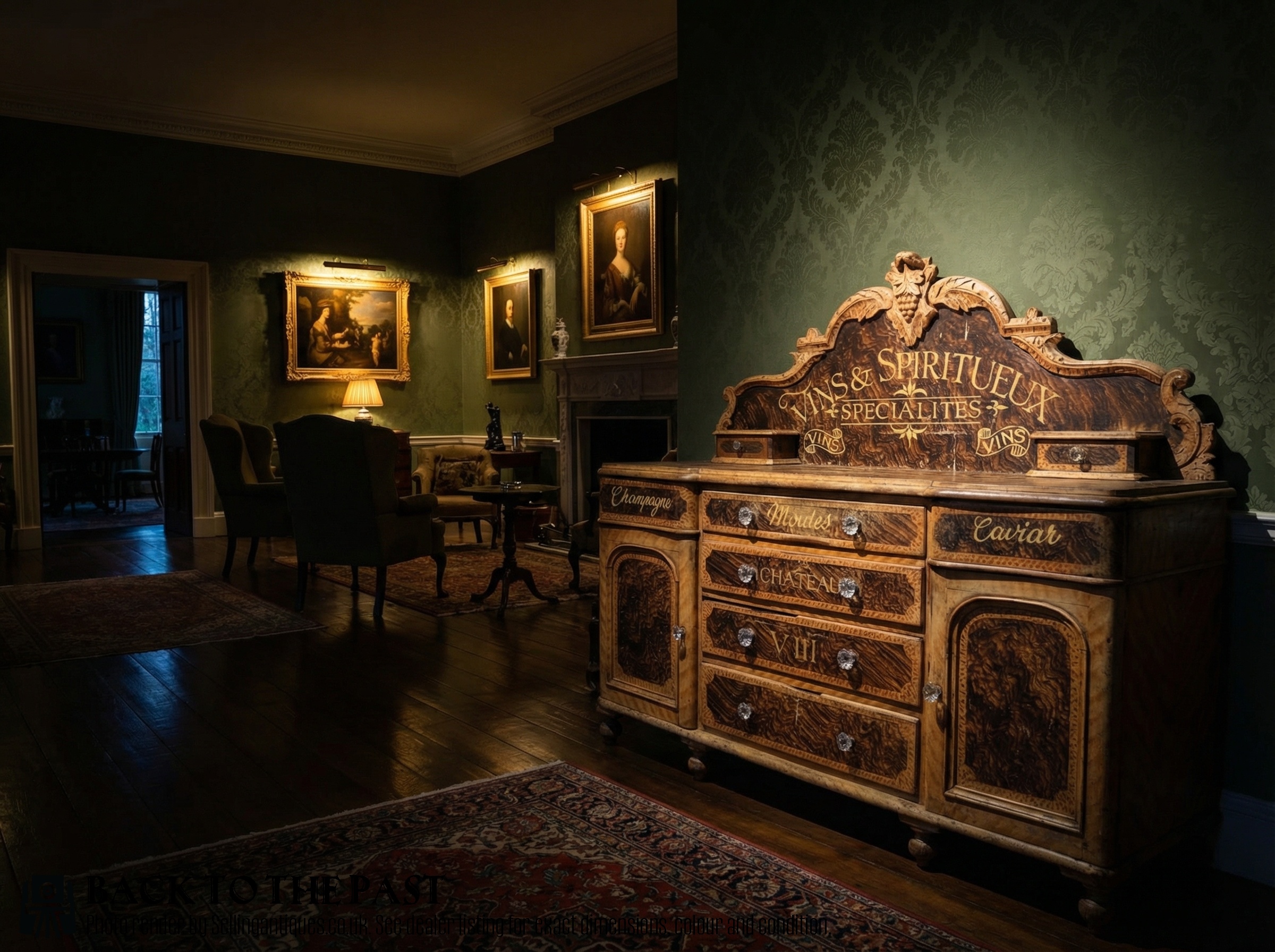
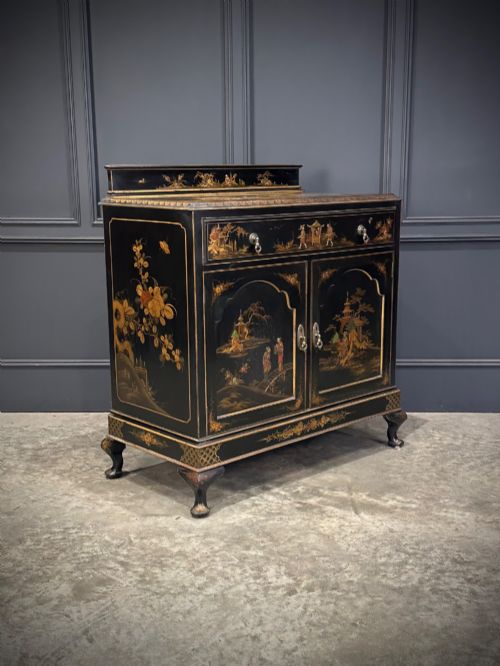
19th Century French Chateau Style Walnut Sideboard, 19th Century
Priced at £1,195 from Designer Antiques4u
The 2026 retail price guide for Antique Painted Sideboards is drawn from a proprietary archive of over 1.1 million retail prices indexed by Sellingantiques since 2003. This guide relies exclusively on their own internal data; no external sources or auction records are used.
Analysing nearly 25 years of UK antique market history alongside current retail values, the data indicates that typical UK retail prices for Antique Painted Sideboards range between £400 and £3,500. Entry-level prices generally fall under £400 and premium examples upwards of £3,500.
Multiple shallow drawers line the top section to hold flatware and silver serving spoons.
Look for cupboard doors below that conceal fixed shelves meant for storing larger platters.
Working iron locks on antique painted sideboards are a useful functional detail to find intact today.
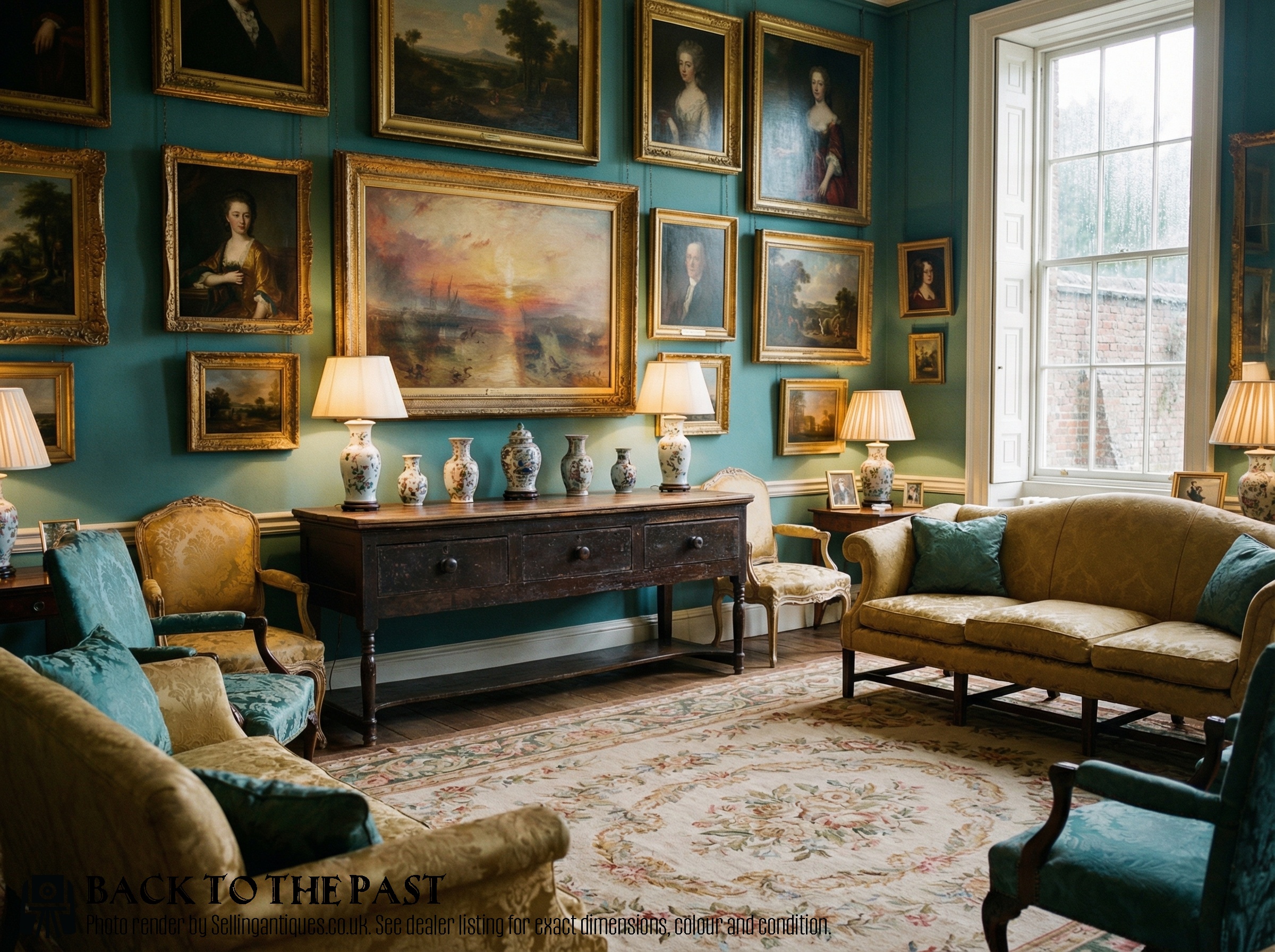
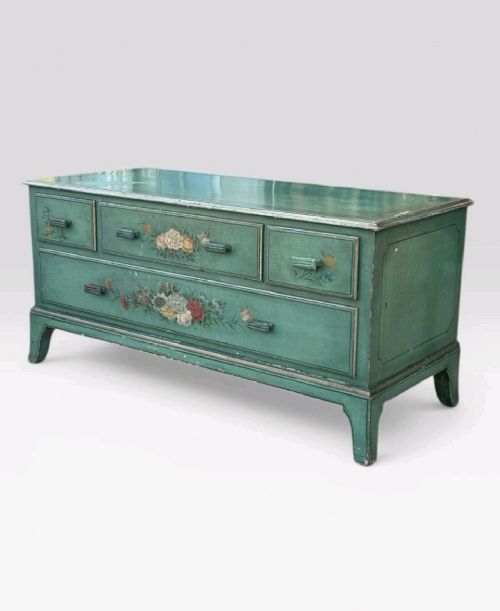
18th Century West Country Painted Potboard Dresser Base, 18th Century
Priced at £3,600 from Pappilon
Joiners cut wooden pegs to secure the main mortise and tenon joints in early examples.
Later nineteenth-century makers frequently switched to mass-produced iron nails and industrial glues to speed up their workshop assembly times.
Traditional hand-cut dovetails holding the drawer boxes together firmly even after centuries of heavy daily pulling.
"Thick layers of old paint actively preserve the underlying soft timber from woodworm and dry rot."
"Many flat tops were built specifically to double as strong pastry rolling surfaces in busy country kitchens."
"Different paint colours or specific floral patterns indicating exactly which farming region the piece originally came from."
Based on almost 25 years of Sellingantiques UK antique market data, Antique Painted Sideboards appeared 63808 times (out of 1,100,000 antiques) which gives it a rarity score of 1/100.
This score measures scarcity within the Sellingantiques archive only and is not a survey of the entire antiques market, so these statistics may not be indicative of the general availability of Antique Painted Sideboards elsewhere.
Start with a soft dry cloth to gently remove loose dust. You'll want to avoid lifting any flaking paint. Dampen a second cloth slightly with warm water if there are sticky marks on the top surface.
Rub carefully in small circles without pressing hard into the wood. Never use chemical spray polishes on antique painted sideboards. They leave a greasy film that traps dirt and darkens the original colour over time.
Constant heat will cause issues for antique provincial furniture. The pine carcase shrinks as it dries out in warm air. This movement forces the joints apart and splits the large side panels.
Paint layers respond differently to the wood underneath them. When the timber shrinks, the older paint bubbles and flakes off. Don't keep painted pieces on interior walls next to direct heat sources.
Yes, putting hot mugs or wet glasses straight onto old paint is a bad idea. Heat softens traditional oil finishes and leaves permanent white marks.
Water causes just as much trouble if it sits on the surface. Use thick mats for serving dishes and coasters for your drinks.
Uneven floors twist the wooden carcase slightly out of square. This puts pressure on the hinges and stops the latches from catching properly.
Slip a small wooden wedge or a piece of folded card under the front corners. Adjust the thickness until the doors hang straight and close with a click. It's a simple fix that puts no stress on the antique frame.
Don't plane the feet down to match the floor. You might move house again and need the original flat base.
Please note: This Antique Painted Sideboards guide and its associated pricing data are provided for general informational purposes only. It does not constitute formal financial, investment, or appraisal advice and should not be relied upon as the sole basis for any commercial activity, purchasing, or sales decisions. Sellingantiques.co.uk accepts no liability for any actions taken in reliance on this information. Always consult with a qualified professional or independent appraiser.
