


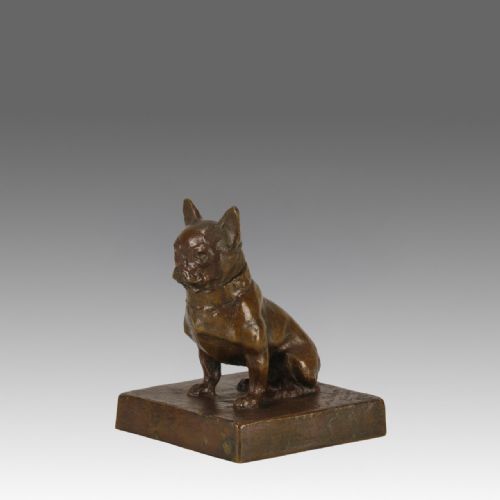
Antique Dog Sculptures
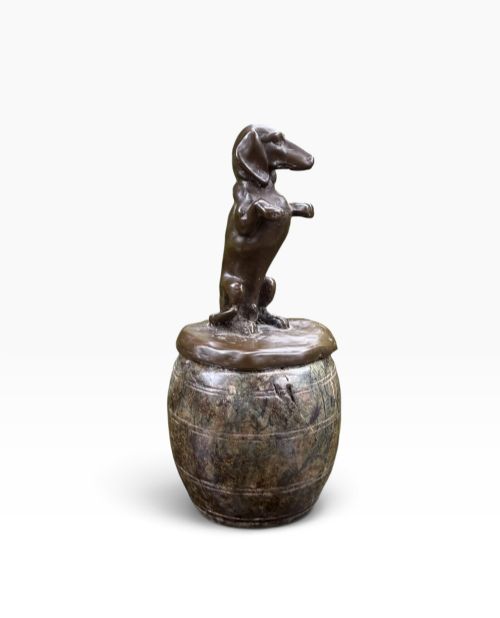
Free-standing models of dogs, mostly a foot or less high, made for a mantelpiece, desk or hall table, and cast in bronze more often than anything else.

Antique Dog Sculptures
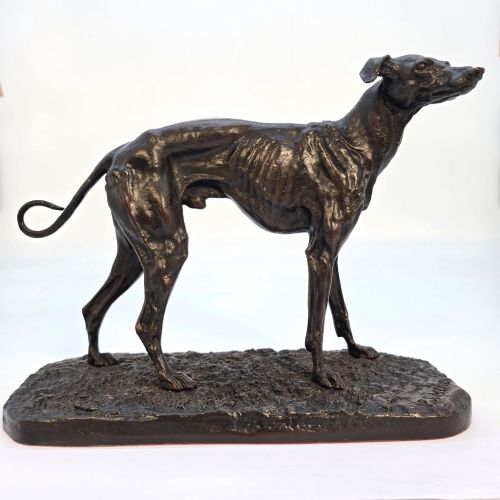
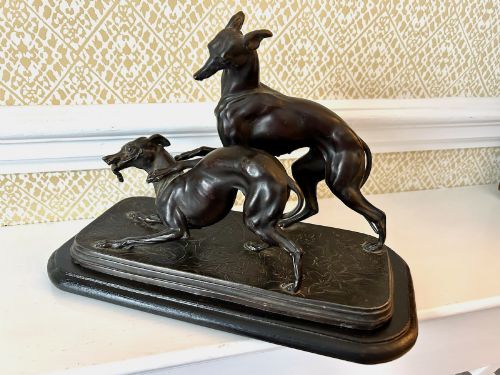
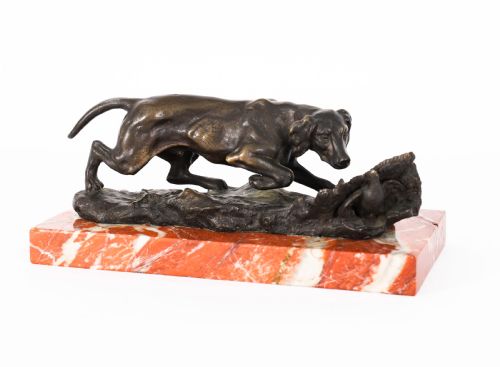
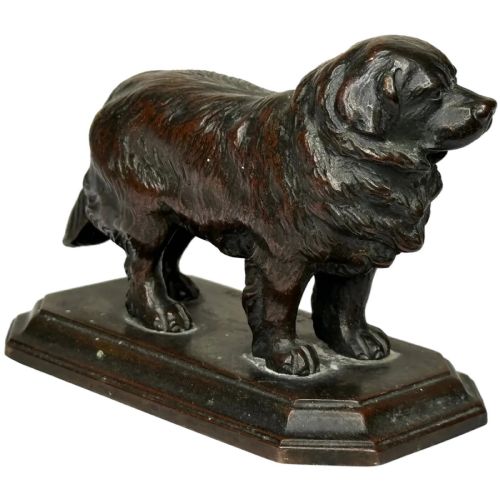
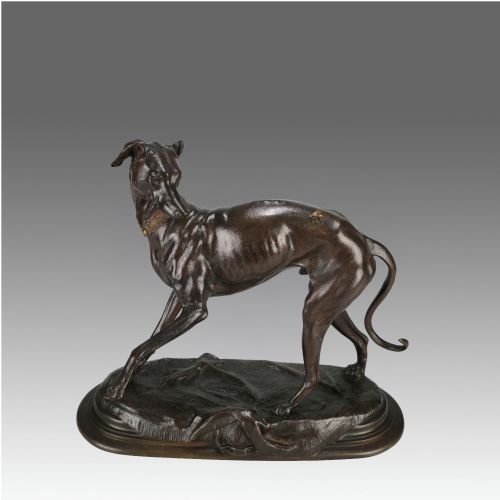
Bronze dominates. Of 159 listings on Sellingantiques, 86 say bronze, and the single commonest thing a buyer meets is a 19th-century French animalier bronze of a sporting breed or a sighthound, signed on the base and often mounted on a marble plinth. Small-scale animal sculpture became a commercial genre in 19th-century France, where foundries issued cast studies in editions for the drawing room, and dogs were among the subjects reproduced most.
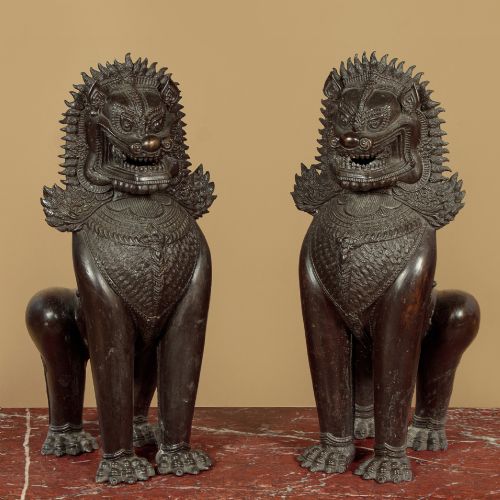
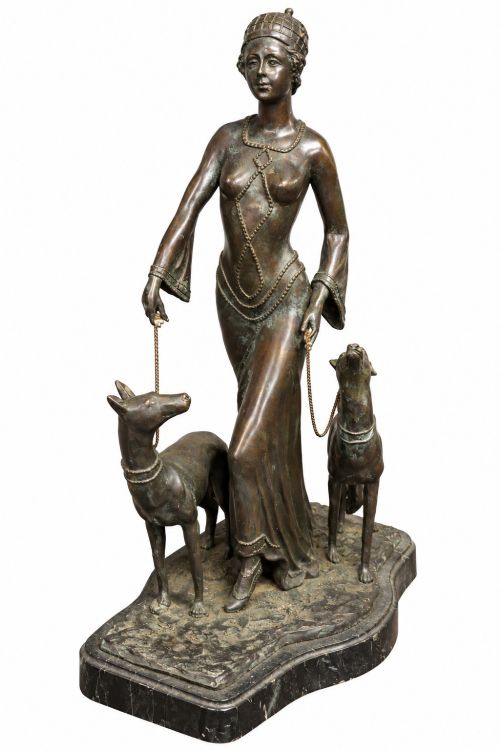
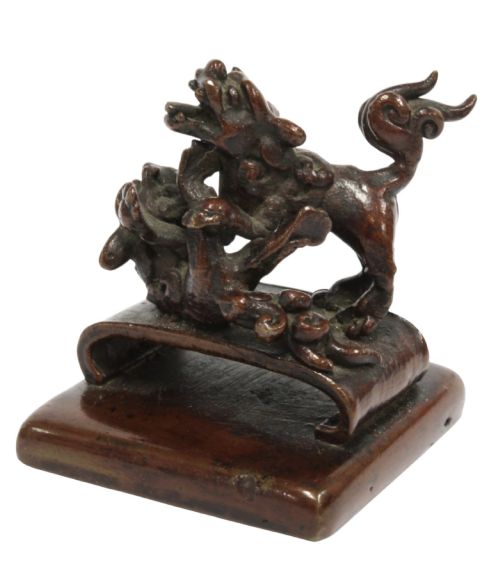
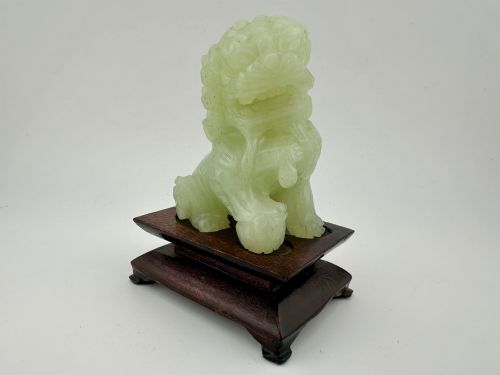
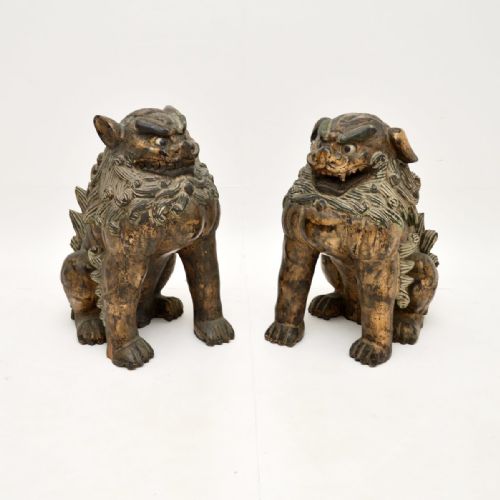
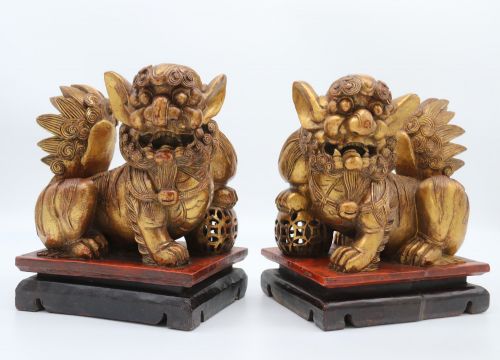
Three traditions sit under the one heading. Alongside the French animaliers come Art Deco pieces of the 1920s and 1930s, where a borzoi or greyhound stands alone or a dog accompanies a woman or child, in bronze, spelter and ivorine. Then Chinese and Japanese guardian lions, sold in the West as Foo dogs, together with shishi and okimono in wood, stone, jade, bronze and iron.
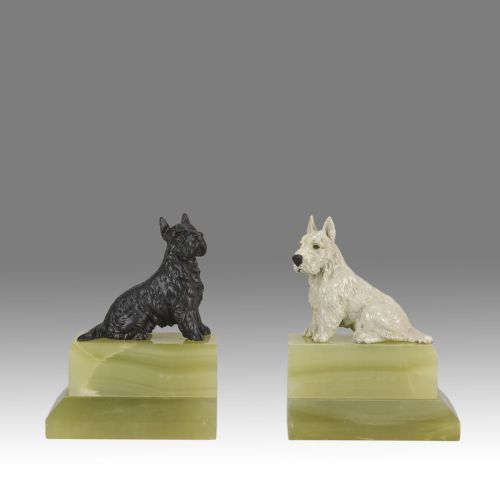
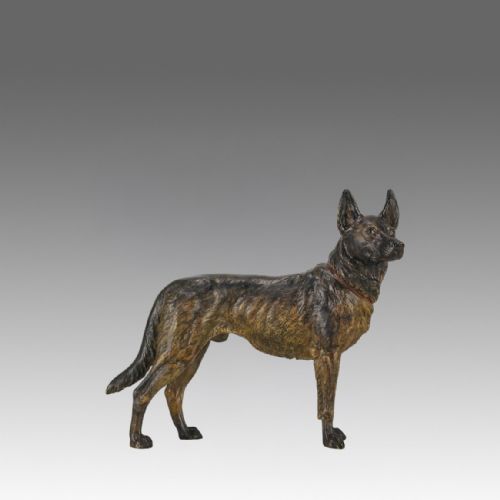
Two smaller strands turn up throughout. Carved wood accounts for 22 titles, eight of them Black Forest, chiefly St Bernards and hunter-and-dog groups in lime, walnut and boxwood. Austrian cold-painted bronze brings pugs, Pekingese, Scotties and Alsatians, some modelled in terracotta instead of metal. The Dog of Alcibiades, also called the Jennings Dog, recurs as a copy in marble, green serpentine and bronze.
Dating is loose. The dated field runs 1800 to 1940, and 100 listings carry a clean year, but the largest single bucket is '19th Century' on 40 of them, a hundred-year span rather than a decade. Where decades are given, the 1930s lead, then the 1880s, 1900s, 1920s and 1910s. Nineteen titles are pairs.
Where The Range Splits
A name carries the most weight. Signed pieces sit consistently in the upper half of what has sold, while entries catalogued only as 'Art Deco Sculpture' or 'Dog Sculpture', with no sculptor attached, cluster near the bottom. Material works the same way: cast bronze and cast iron reach the top, spelter and bronzed plaster stay low.
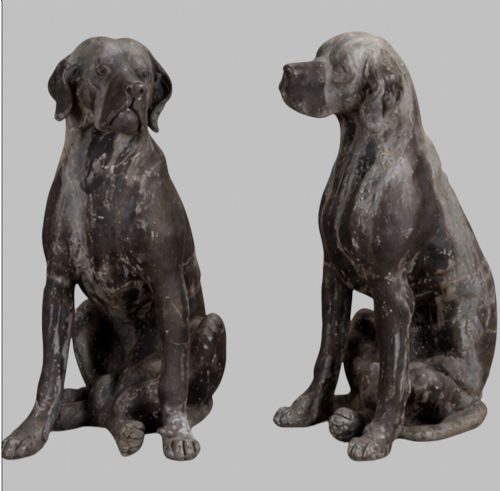
Scale pushes hard. Life-size work in terracotta, carved wood and cast lead sits well above the middle, and a pair of Tibetan temple lions weighing 35kg shows how far the category stretches beyond the desk-top model. Matched pairs also do better than singles, whether Foo dogs, Alcibiades hounds or greyhounds.
Composition matters after that. A hunter with his dog, a dog with a pheasant, a horse and dog, a boy and dog, all sit above single studies of the same material. Japanese work is scarce at nine titles, yet an iron okimono and a bronze okimono account for the very top of the range recorded.
Antique Dog Sculptures Retail Price Guide 2026
Typical UK retail prices for dog sculptures, calculated from the Sellingantiques database of over a million retail prices indexed since 2003. This retail price guide relies exclusively on Sellingantiques data; no external sources or auction records are used, so the figures do not describe the wider market.
One-offs from the archive: a netsuke of a shishi in sea ivory, a bronze greyhound car mascot and a cast-iron Russian hunting spaniel.

Alfred Dubucand·Louis Riche
The Antique Dog Sculptures Glossary
- Animalier
- A sculptor specialising in animal subjects, and by extension the 19th-century French bronzes they produced. The word appears in 12 titles.
- Cold-painted
- Bronze coloured with unfired paint rather than chemical patination. Eight titles use it, mostly on Austrian work.
- Spelter
- A zinc alloy cast as a cheaper substitute for bronze, common in the Art Deco group and priced accordingly.
- Foo dog
- The Western name for the Chinese guardian lion, usually sold in facing pairs; ten titles here. Dog of Fo is the same thing.
- Okimono
- A Japanese display ornament, seen in this category in bronze and iron, and behind the highest-reaching pieces in the archive.
- Ivorine
- An ivory substitute used for faces and hands on Deco figures, so a group can be part metal, part ivorine.
Antique Dog Sculptures: Frequently Asked Questions
What breed turns up most often?
Sighthounds are the one breed group with enough presence to show in the counts. Greyhound appears in ten titles, with whippets, borzois and Italian greyhounds alongside them.
Sporting dogs follow: setters, pointers, gun dogs and hounds, usually in the French bronzes. Hunting appears in 14 titles.
Beyond that, pugs, Pekingese, Scotties, Alsatians and St Bernards all appear, but in ones and twos.
Why are so many listed only as 19th century?
Because a cast bronze rarely dates itself. Forty listings carry '19th Century' rather than a decade, and six say only 'Victorian', so roughly a quarter sits on a hundred-year span.
Where decades are given, the 1930s lead with 22 listings, then the 1880s with 14.
Are Foo dogs actually dogs?
No. They are Chinese guardian lions, and the name Foo dog is a Western trade term that stuck. The Japanese equivalent is the shishi.
They were made as facing pairs, and pairs are how they generally come up: thirteen Chinese titles and ten mentioning Foo, in wood, stone, jade and bronze.
How is spelter different from bronze?
Spelter is a zinc alloy, cast as a cheaper stand-in for bronze. It appears mostly in the Art Deco group.
In what has sold, spelter and bronzed plaster pieces sit low in the range, while cast bronze occupies over half the category and reaches much higher.
What is the Dog of Alcibiades?
An antique marble molossian hound, also called the Jennings Dog, copied repeatedly by Grand Tour workshops for travellers buying souvenirs after the antique.
It recurs across the archive in marble, green serpentine and bronze, dated between 1850 and 1890, and often as a pair.
Do many dealers specialise in dog sculpture?
Hardly any. Around 20 come up a year on Sellingantiques, and 80 different dealers have handled them, close to one dealer per listing.
So the category is spread thin across general dealers rather than held by a handful of specialists.