


A 2026 Guide by Sellingantiques
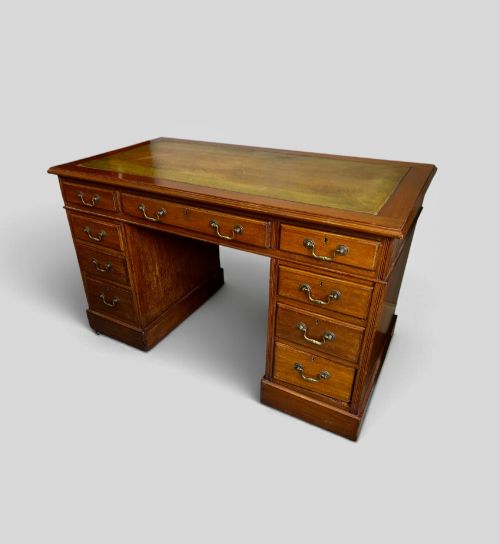
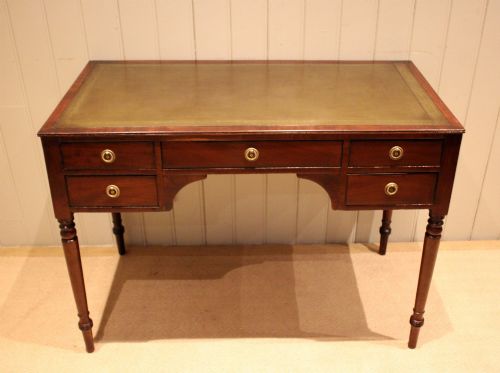
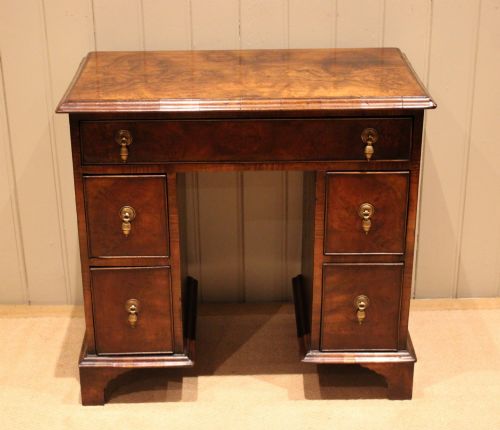
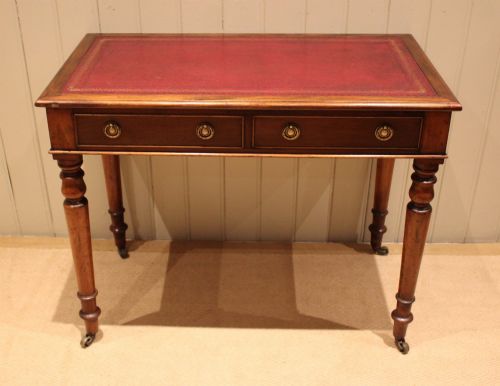
Sheraton Revival Mahogany Writing Desk, 1880
Priced at £1,495 from Philip Hunt Antiques
Started as simple slanted boxes. People carried them from room to room before dedicated furniture became the norm.
Eighteenth-century homes began setting aside library spaces. Writing desks grew legs and became permanent fixtures rather than portable items.
Look at how the nineteenth-century postal expansion changed things. People wrote more letters, which meant desks needed larger surfaces and extra storage for an increasing volume of daily correspondence.
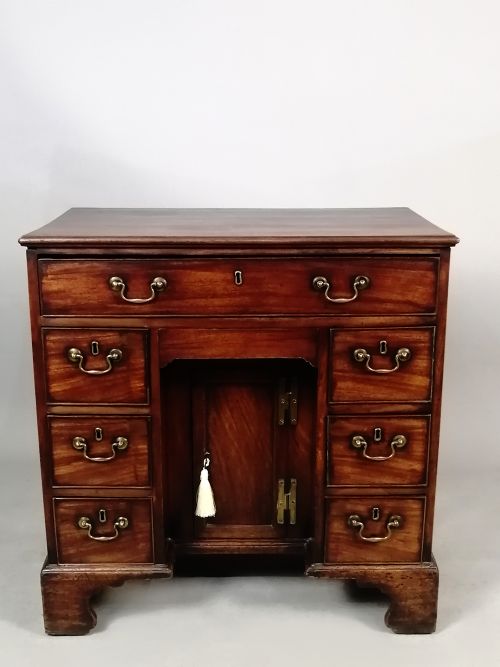
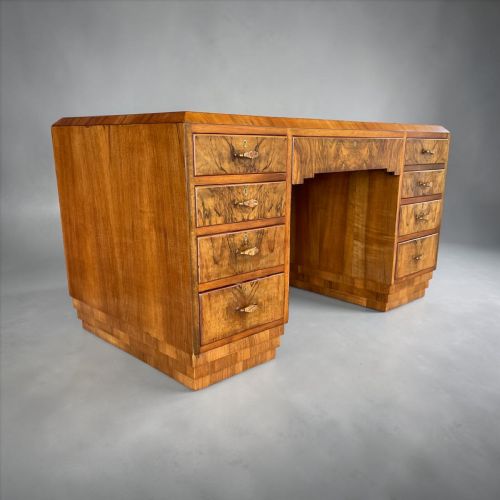
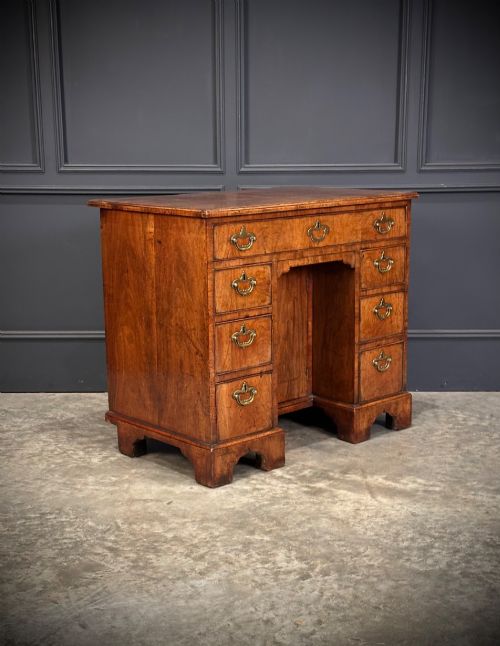
Kneehole desks offered a practical solution. They provided an alcove for the sitter while flanking them with drawers on both sides.
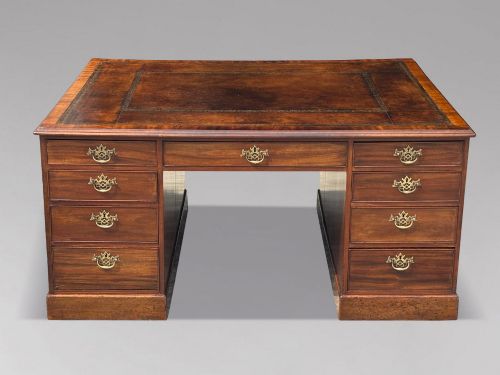
Pedestal models arrived later. Victorian clerks and merchants needed serious filing capacity, leading to heavier twin-bank designs.
Gillows of Lancaster produced hundreds of writing desks. Their late eighteenth-century Davenport designs are heavily documented in the firm's surviving sketchbooks.
Thomas Chippendale supplied large pedestal variants to wealthy clients. His pattern books show several complex kneehole arrangements.
Maples grew into a major retail force. By the late nineteenth century they were supplying thousands of plain mahogany writing tables to banks and offices.
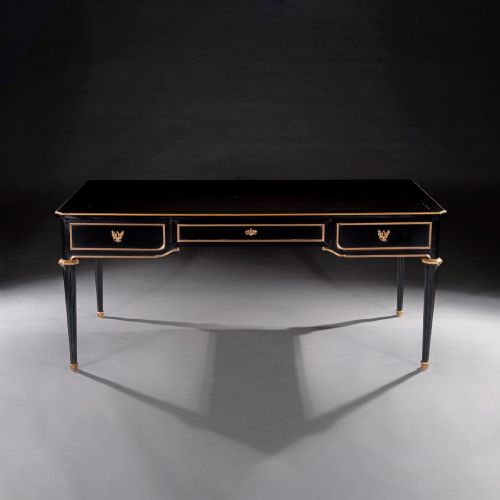
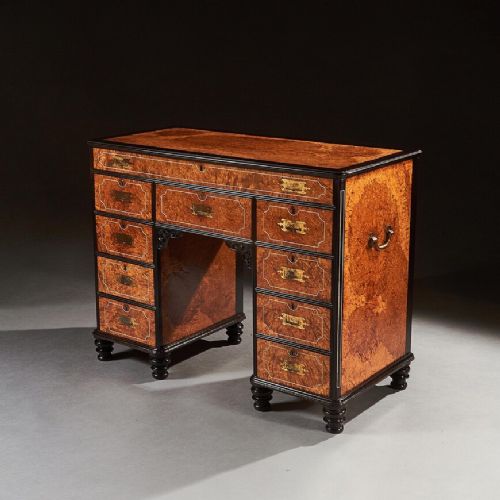
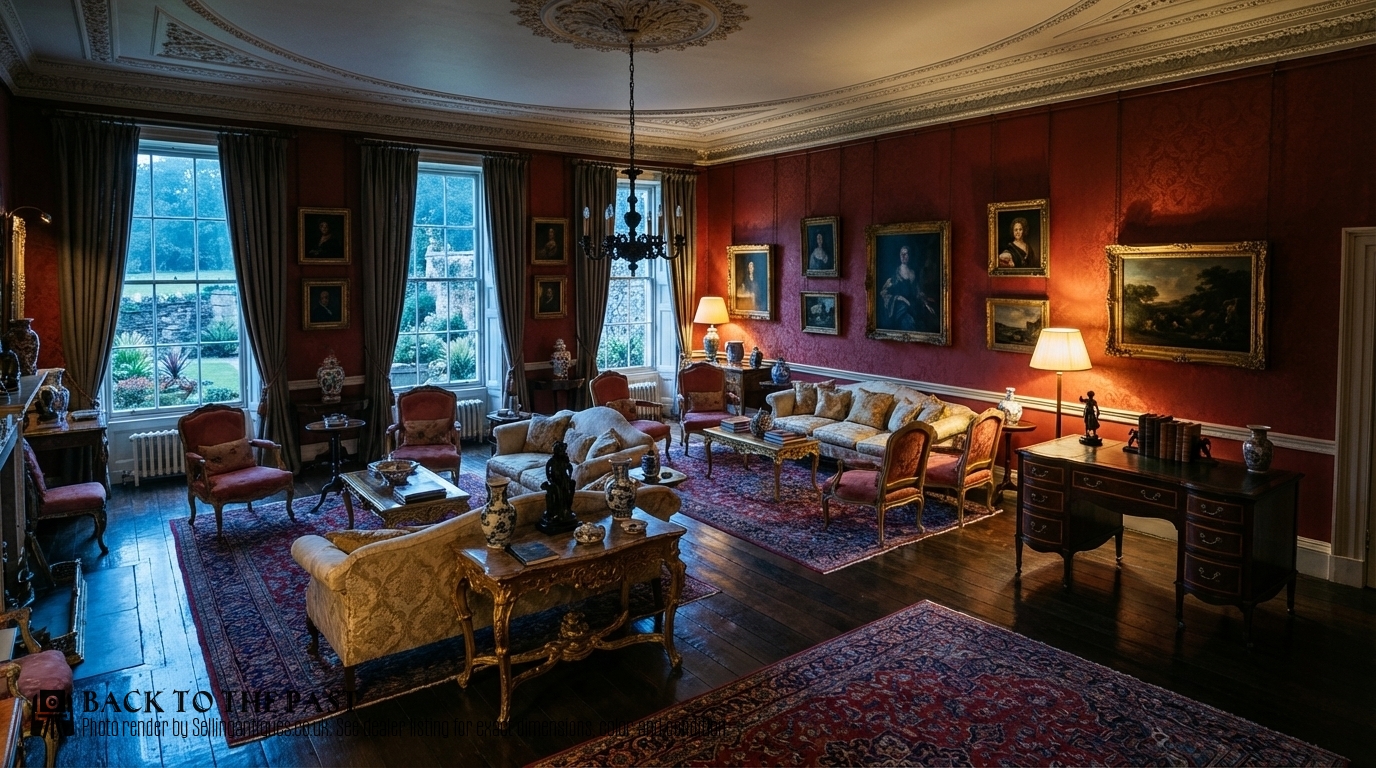
Louis Xv1 Style Bureau Plat Desk by Edwards & Roberts, London, 19th Century
Priced at £9,500 from Baggott & Co.
The 2026 retail price guide for Antique Writing Desks is drawn from a proprietary archive of over 1.1 million retail prices indexed by Sellingantiques since 2003. This guide relies exclusively on their own internal data; no external sources or auction records are used.
Analysing nearly 25 years of UK antique market history alongside current retail values, the data indicates that typical UK retail prices for Antique Writing Desks range between £600 and £3,800. Entry-level prices generally fall under £600 and premium examples upwards of £3,800.
Pigeonholes sit at the back of the writing area. They sort envelopes and receipts into easy vertical stacks.
Pull-out slides often appear above the top drawers. These provide a little extra resting space for a candlestick or a referenced document.
Notice the central lock. A single mechanism on the kneehole drawer sometimes secures the flanking side banks through an internal wooden lever system.
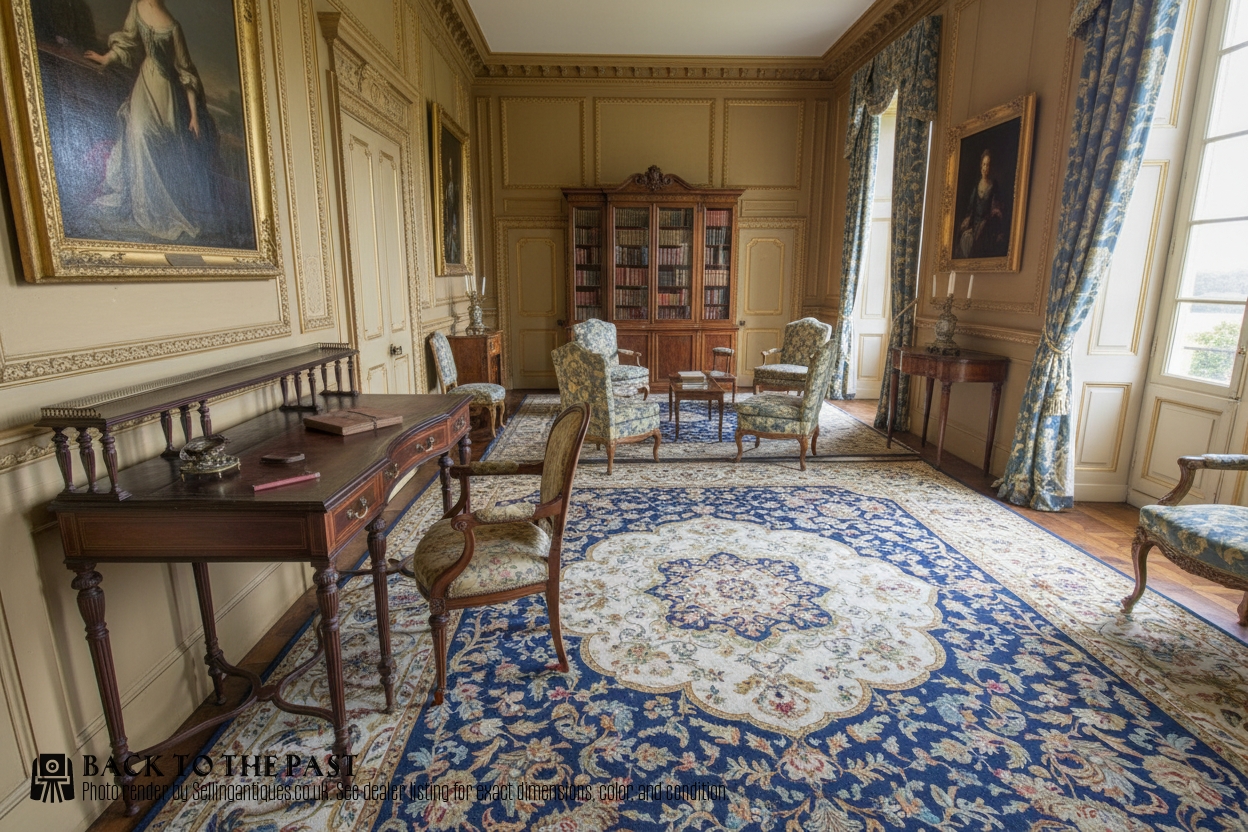
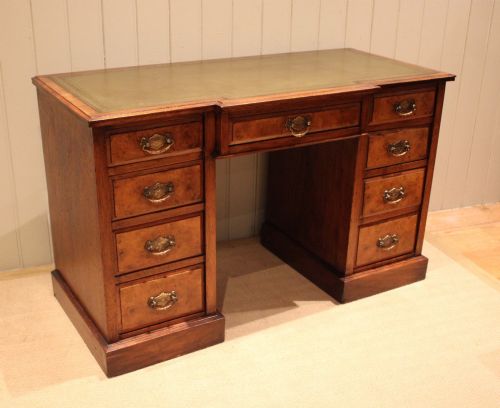
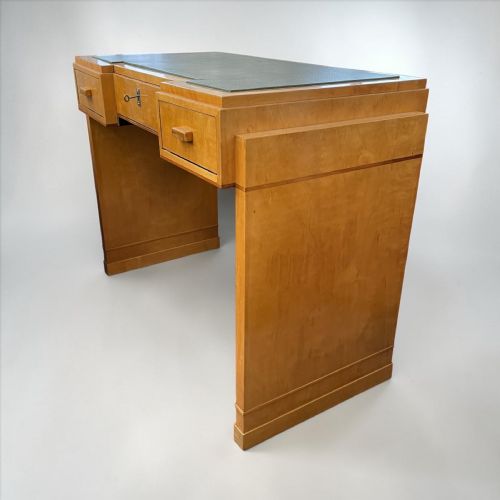
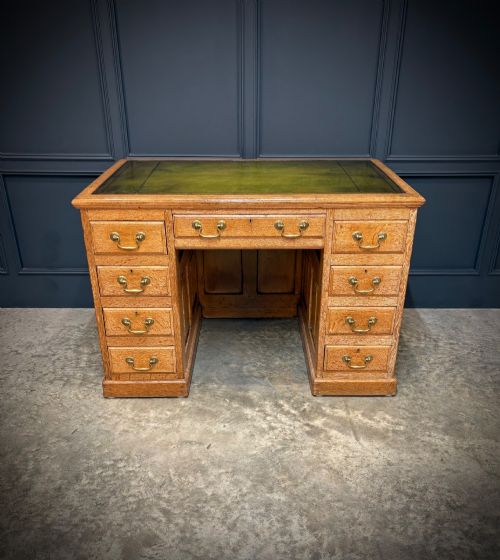
Inlaid Mahogany Writing Desk by Collinson and Lock, 1880
Priced at £1,650 from Camden Antiques
Dovetails join the drawer sides. Early ones are thick.
Frame and panel construction keeps large timber sections stable. The floating central panels shrink and expand without splitting the glued outer framework.
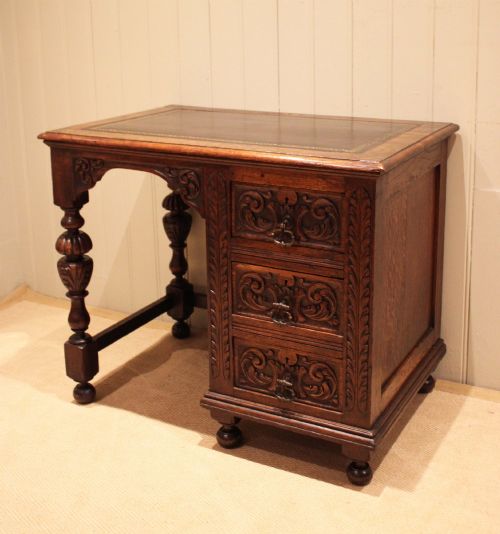
Examine the drawer fronts. Cabinetmakers took expensive figured timbers and sliced them into thin veneers, applying these over plain pine cores to display complex grain patterns without wasting heavy boards.
"Many modular designs exist. Large pedestal versions often break down into three separate parts, making them simple to carry up narrow staircases."
"Secret compartments are quite common. Small false bottoms or hidden spring-release boxes hide behind the central pigeonholes on better models."
"Casters are a deliberate feature. Owners wanted to turn the desk towards the window to catch the afternoon daylight."
Based on almost 25 years of Sellingantiques UK antique market data, Antique Writing Desks appeared 13007 times (out of 1,100,000 antiques) which gives it a rarity score of 7/100.
This score measures scarcity within the Sellingantiques archive only and is not a survey of the entire antiques market, so these statistics may not be indicative of the general availability of Antique Writing Desks elsewhere.
Dust it with a dry cloth. You can apply a specialist leather cream sparingly a few times a year. Keep standard furniture polish away from the surface as it degrades the finish.
If the leather is already flaking, leave it alone. Feeding a heavily degraded skin only turns the dust to a sticky paste. It is a working surface and some wear is part of the character.
Any competent locksmith can cut a key for a period lock. You need to remove the lock itself from the drawer and take it to their shop. They decode the internal levers and shape a blank to match.
Most desks use standard brass lever locks. They are simple mechanisms and rarely need replacing. Just unscrew the backing plate to slide the lock out, and the locksmith handles the rest.
A Davenport is a compact writing desk with a sloping top and drawers set into the side. The sitter works at the slant, rather than a flat table.
They take their name from a Captain Davenport. He commissioned the first known version from Gillows in the late eighteenth century.
Modern laptops generate enough heat to soften traditional shellac or wax finishes. Over time, sitting a hot battery directly on the timber will leave a cloudy white mark known as heat bloom.
You should always use a barrier. A simple desk mat or a small felt pad provides enough insulation to protect the antique surface. It takes very little effort to prevent lasting damage to the polish.
Please note: This Antique Writing Desks guide and its associated pricing data are provided for general informational purposes only. It does not constitute formal financial, investment, or appraisal advice and should not be relied upon as the sole basis for any commercial activity, purchasing, or sales decisions. Sellingantiques.co.uk accepts no liability for any actions taken in reliance on this information. Always consult with a qualified professional or independent appraiser.
