




A 2026 Guide by Sellingantiques
Victorian Walnut Marquetry Inlaid Davenport Desk, 1880
Priced at £1,150 from LTANTIQUES.CO.UK
The postal system expanded rapidly after 1840. Suddenly everyone needed a proper surface for regular letter writing.
Look at the sheer variety produced as literacy rates climbed. Factories turned out thousands of basic cylinder and pedestal types.
Antique Victorian desks reflect a shift from purely aristocratic library pieces to everyday domestic necessity.
Clerks sat at vast sloping davenports in counting houses. Smaller versions found a place in domestic drawing rooms.
Gillows of Lancaster produced writing furniture throughout the century. Their stamped marks sometimes appear on the top edge of a drawer.
Holland and Sons supplied heavy mahogany pedestal models to government offices during the 1850s.
Regional workshops built most surviving stock without ever signing their work. Identifying a specific provincial builder is rare.

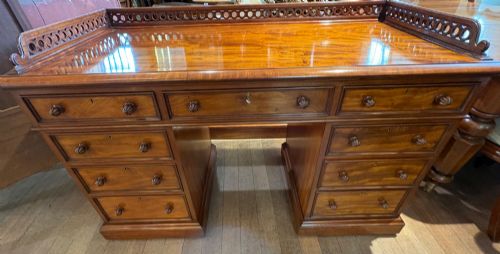
Late Victorian Solid Ash Writing Desk – 9 Drawers
, 1890
Priced at £1,200 from Richie Perrott Antiques
The 2026 retail price guide for Antique Victorian Desks is drawn from a proprietary archive of over 1.1 million retail prices indexed by Sellingantiques since 2003. This guide relies exclusively on their own internal data; no external sources or auction records are used.
Analysing nearly 25 years of UK antique market history alongside current retail values, the data indicates that typical UK retail prices for Antique Victorian Desks range between £500 and £2,800. Entry-level prices generally fall under £500 and premium examples upwards of £2,800.
Leather writing surfaces, known as skivers, usually feature blind or gold tooling around the edges.
Turned legs ending in brass castors support many freestanding writing tables of the era.
Galleries sometimes run along the back edge. A low rail stops inkwells and pens rolling off the top.
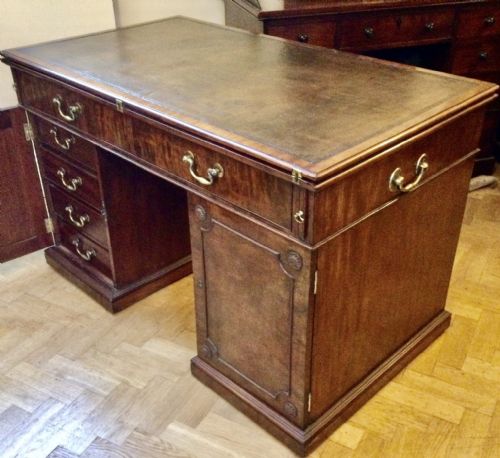
Late Victorian Freestanding Mahogany Pedestal Desk, 1890
Priced at £1,350 from John Howkins Antiques
Hand-cut dovetails hold the drawer boxes together. You can spot the slightly irregular pin sizes left by a manual saw.
Machined joints started appearing in cheaper factory pieces by the 1880s. Circular saw marks sometimes show on the underside of panels.
Observe the thick veneers used early in the century. Cabinet makers sliced them by hand before industrial steam mills took over.
"Secret drawers often sit behind the main gallery compartments. Cabinet makers fitted hidden spring releases for locking away private correspondence."
"Kneehole models break down into three pieces for transport. The top lifts cleanly off the two supporting side columns."
"Stamped brass handles from the later years polish up well. The underlying metal retains a crisp pattern despite decades of use."
Based on almost 25 years of Sellingantiques UK antique market data, Antique Victorian Desks appeared 13988 times (out of 1,100,000 antiques) which gives it a rarity score of 6/100.
This score measures scarcity within the Sellingantiques archive only and is not a survey of the entire antiques market, so these statistics may not be indicative of the general availability of Antique Victorian Desks elsewhere.
A damp cloth lifts surface dust safely. Avoid soaking the hide or using modern chemical sprays, as they break down the old surface.
Feed dry areas sparingly with a dedicated leather balsam. Wipe off any excess immediately to stop it turning sticky.
Those are portable writing boxes, often termed lap desks. Travellers carried them on trains and ships to draft letters away from home.
You rest them on a dining table or your knees. Opening the box forms a sloped writing surface, usually with small glass inkwells held near the hinge.
Clerks used larger versions in commercial offices.
Turned wooden handles suited the heavier aesthetic of early-to-mid century furniture. Mahogany or rosewood knobs blend quietly into the drawer fronts.
Cabinet makers turned them on lathes, often fitting a wooden screw thread to secure them. They rarely tarnish like brass, though they can split if pulled carelessly from a bad angle.
Heavy carcases twist slightly on uneven floors, pinching the drawers tight.
Slide thin wooden shims under the plinth corners. Levelling the base squares the frame and solves the binding.
Please note: This Antique Victorian Desks guide and its associated pricing data are provided for general informational purposes only. It does not constitute formal financial, investment, or appraisal advice and should not be relied upon as the sole basis for any commercial activity, purchasing, or sales decisions. Sellingantiques.co.uk accepts no liability for any actions taken in reliance on this information. Always consult with a qualified professional or independent appraiser.
