




A 2026 Guide by Sellingantiques
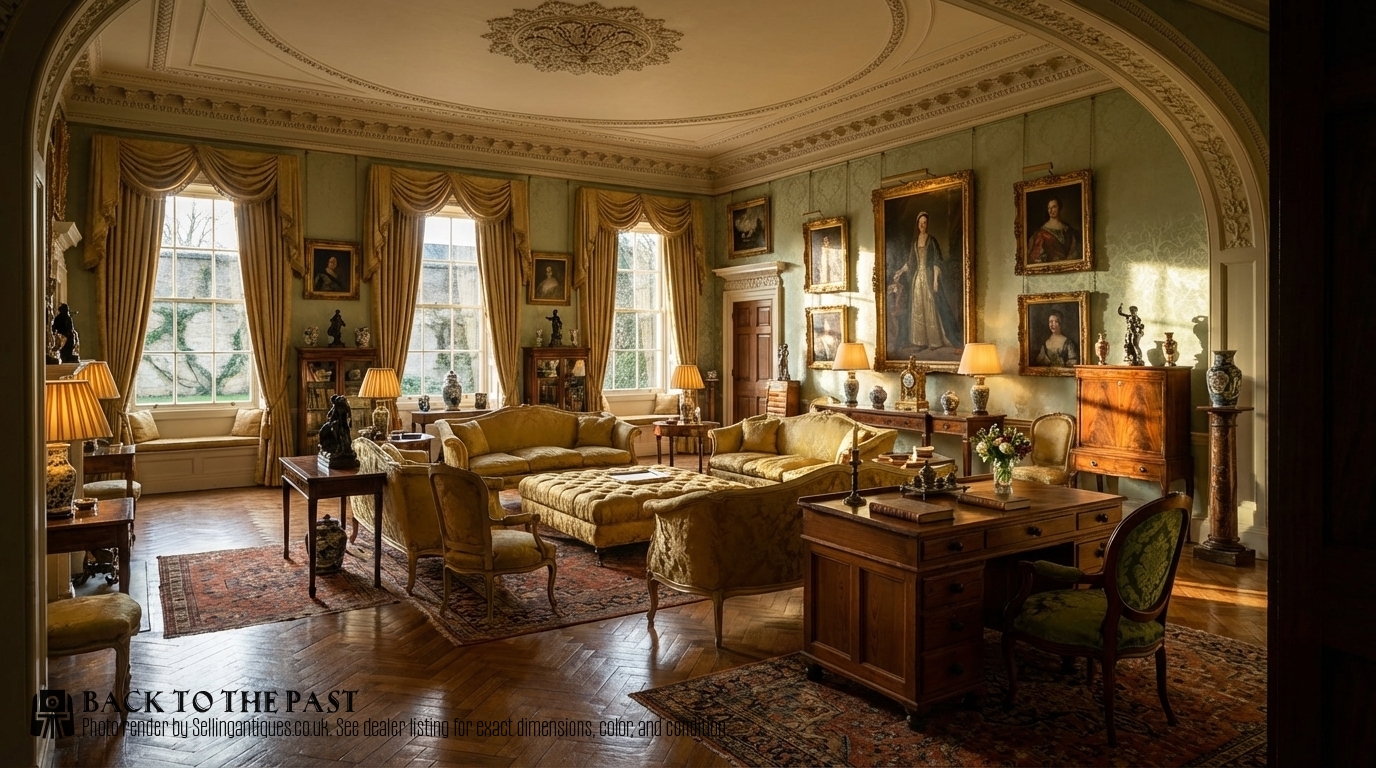
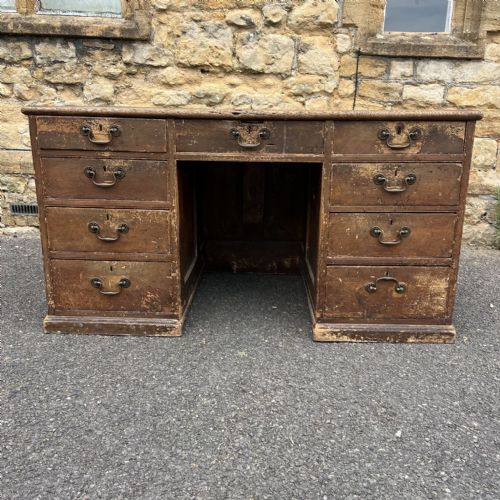
Late Victorian Pitch Pine Kneehole Pedestal Desk., Victorian
Priced at £265 from Rupert Hitchcox Antiques
Most Victorian and Edwardian examples began life in commercial settings. Factories and workshops needed cheap, sturdy furniture for their clerks.
Look at the broader shift in domestic literacy. By the late nineteenth century, ordinary homes required dedicated surfaces for writing letters and sorting bills.
Often painted or grained originally to mimic mahogany. Stripped finishes only became standard practice later.
Antique pine desks were the standard workhorses of rural schools. Generations of pupils sat at long, sloping versions across Europe and North America, copying out their daily lessons.
Few signed examples exist. This category was dominated by anonymous provincial joiners and large-scale urban workshops churning out catalogue pieces for the masses.
The London firm of Oetzmann & Co produced commercial pine furniture during the late nineteenth century. They supplied offices and institutions across Britain with basic writing furniture.
Look for regional construction habits. Distinctive drawer dovetails point to local provincial workshops.
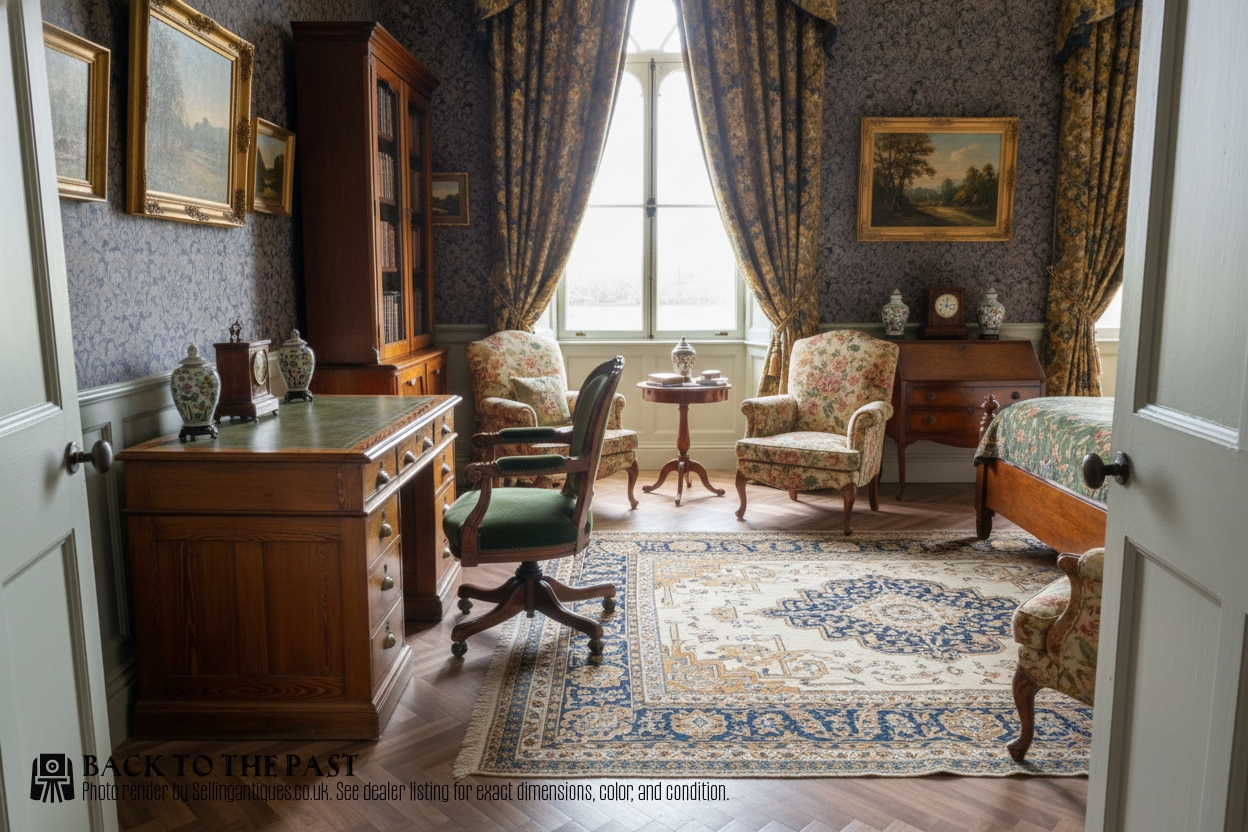
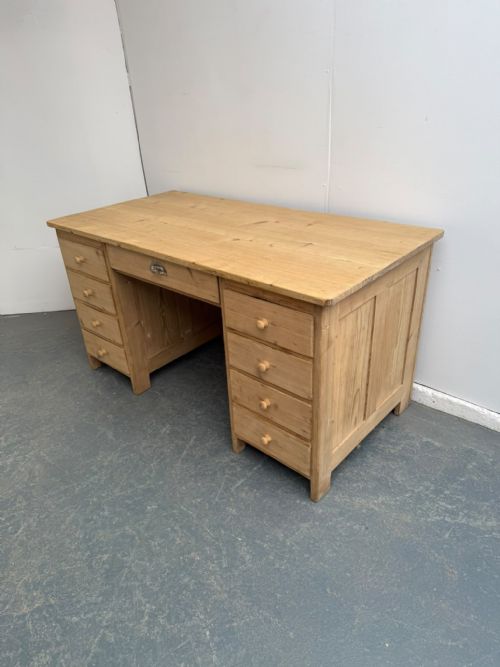
Heavy Quality Late Victorian Pitch Pine Pedestal Desk, Victorian
Priced at £1,250 from Elmgarden
The 2026 retail price guide for Antique Pine Desks is drawn from a proprietary archive of over 1.1 million retail prices indexed by Sellingantiques since 2003. This guide relies exclusively on their own internal data; no external sources or auction records are used.
Analysing nearly 25 years of UK antique market history alongside current retail values, the data indicates that typical UK retail prices for Antique Pine Desks range between £400 and £1,400. Entry-level prices generally fall under £400 and premium examples upwards of £1,400.
Kneehole configurations dominate the market. A central shallow drawer sits above an open space, flanked by deeper storage on either side.
Sloping tops feature heavily on clerk and school models. Some have a hinged lid opening to reveal a shallow storage well beneath for keeping paper flat.
Turned wooden knobs as standard. Brass cup handles sometimes appear on heavier industrial pieces.

Pine Clerks Desk and Stool, 1900
Priced at £595 from Desired Effect Antiques Ltd
Early nineteenth-century construction relied on hand-cut dovetails and nailed backboards. Carcases were built to withstand heavy daily use in demanding environments.
Mechanisation changed the joints by the 1890s. Machine-cut dovetails and circular saw marks become obvious on drawer sides and runners.
Solid plank tops gradually gave way to jointed boards. Glues improved enough to stop wide panels splitting.
"The resinous nature of pitch pine naturally repels woodworm. Pieces made from this timber survive in damp outbuildings better than most hardwoods."
"Many slope-fronted versions were designed for standing at. Clerks stood all day for better posture before ergonomic chairs were invented."
"Stripped antique pine desks take on a warm honey colour over time. Sunlight reacts with the natural oils remaining in the wood, creating a rich patina."
Based on almost 25 years of Sellingantiques UK antique market data, Antique Pine Desks appeared 686 times (out of 1,100,000 antiques) which gives it a rarity score of 87/100.
This score measures scarcity within the Sellingantiques archive only and is not a survey of the entire antiques market, so these statistics may not be indicative of the general availability of Antique Pine Desks elsewhere.
Wipe it down with a damp cloth and mild soap. Avoid soaking the wood or leaving water sitting on the surface.
Applying a clear beeswax polish twice a year feeds the timber. Buff it out with a soft rag to maintain the sheen.
That groove is a pen rest. Clerks used dip pens that were prone to rolling off sloping surfaces and snapping their nibs or spilling ink on the floor.
It sits at the top flat edge to keep writing tools secure. Sometimes you find small circular holes drilled next to the groove which held glass inkwells.
Not usually. Old iron gall ink penetrates deep into the cellular structure of pine.
Leave them alone. They belong to the history of the piece.
People were generally shorter when these were made. Chair heights and desk clearances were scaled to the average nineteenth-century user.
They were also designed for flat wooden chairs rather than thick padded seats on castors.
Adding wooden blocks to the desk legs is a common way to raise the kneehole clearance for daily use.
Please note: This Antique Pine Desks guide and its associated pricing data are provided for general informational purposes only. It does not constitute formal financial, investment, or appraisal advice and should not be relied upon as the sole basis for any commercial activity, purchasing, or sales decisions. Sellingantiques.co.uk accepts no liability for any actions taken in reliance on this information. Always consult with a qualified professional or independent appraiser.
