


A 2026 Guide by Sellingantiques
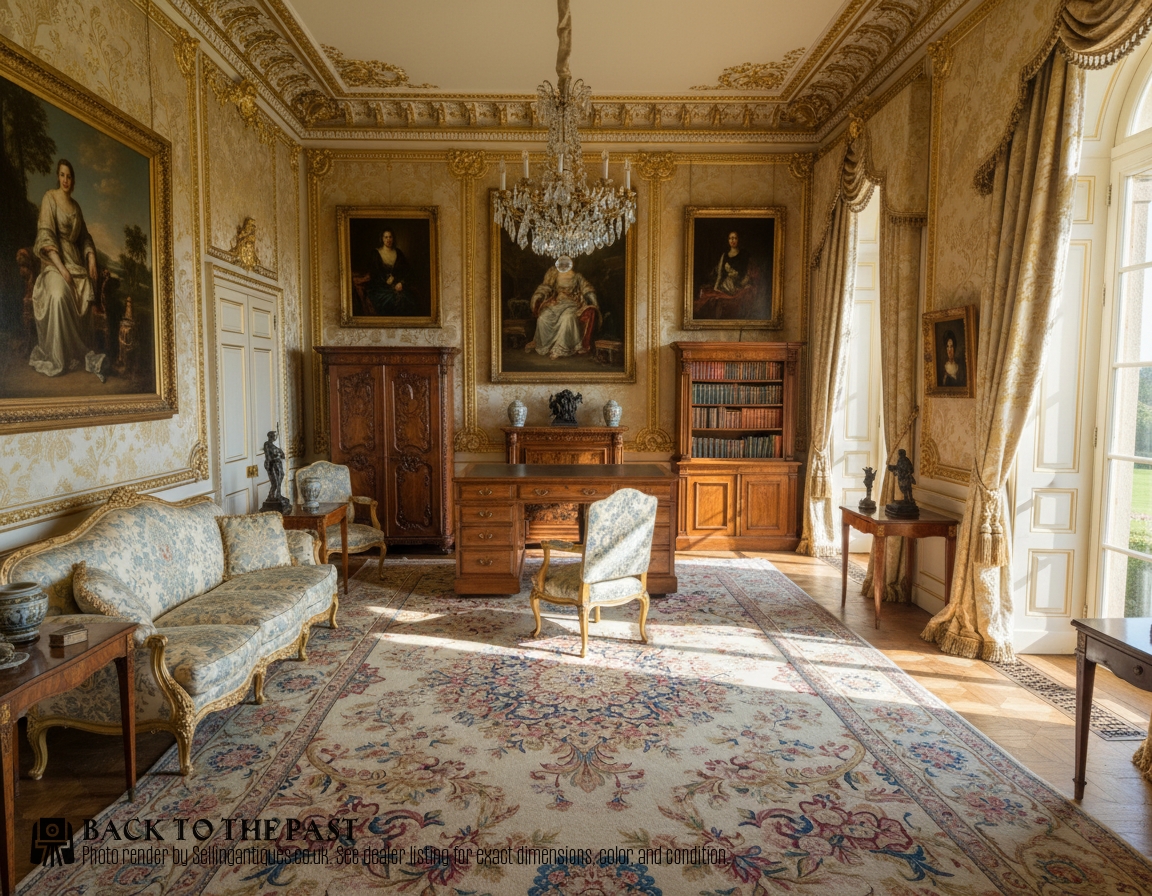
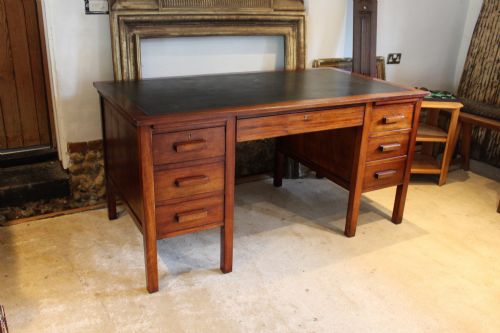
An Early 20th-century Oak Partner's Desk, 1910
Priced at £1,395 from Richie Perrott Antiques
Introduced in the late eighteenth century. These large workspaces allowed banking clerks to share ledgers without passing heavy books back and forth across a room.
Demand surged during the Victorian period. You will find many more nineteenth-century pieces built for city commerce and legal chambers than early Georgian examples.
Antique partners desks usually take the centre of the floor to give access from both sides. Standard single-sided pedestal versions sit against a wall.
Libraries often housed them. Two family members could write letters at the same time.
Gillows of Lancaster and London supplied high-quality pieces throughout the late eighteenth and nineteenth centuries. Their stamps sometimes appear on the top edges of drawer sides.
During their mid-nineteenth-century peak, Holland & Sons produced heavy mahogany versions for government offices.
Maple & Co built hundreds of these for commercial clients from the late Victorian period into the twentieth century.
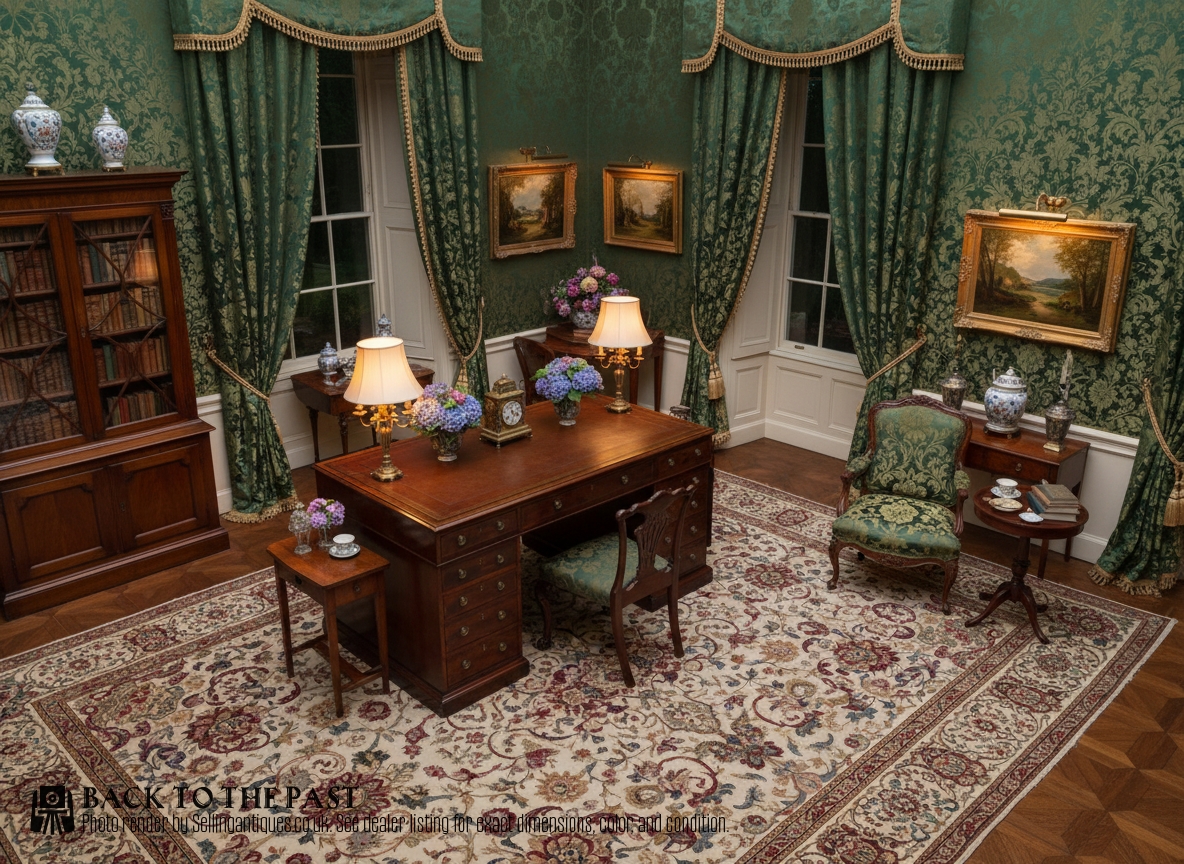
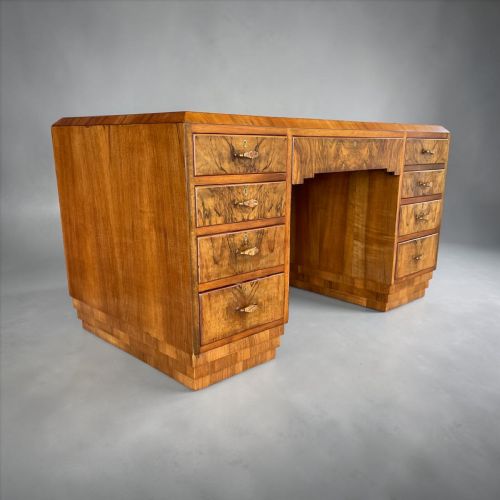
19thc Kneehole Partners Desk, 1850
Priced at £2,800 from Millers Antiques
The 2026 retail price guide for Antique Partners Desks is drawn from a proprietary archive of over 1.1 million retail prices indexed by Sellingantiques since 2003. This guide relies exclusively on their own internal data; no external sources or auction records are used.
Analysing nearly 25 years of UK antique market history alongside current retail values, the data indicates that typical UK retail prices for Antique Partners Desks range between £1,700 and £6,500. Entry-level prices generally fall under £1,700 and premium examples upwards of £6,500.
Matching drawer configurations on opposing faces. One side might have drawers while the other features cupboards, but external dummy fronts keep the look symmetrical.
A substantial leather writing surface covers the top. This section usually lifts off the pedestals for transport.
Check the depth. An antique partners desk is significantly deeper than a standard library table to give two adults enough knee room.
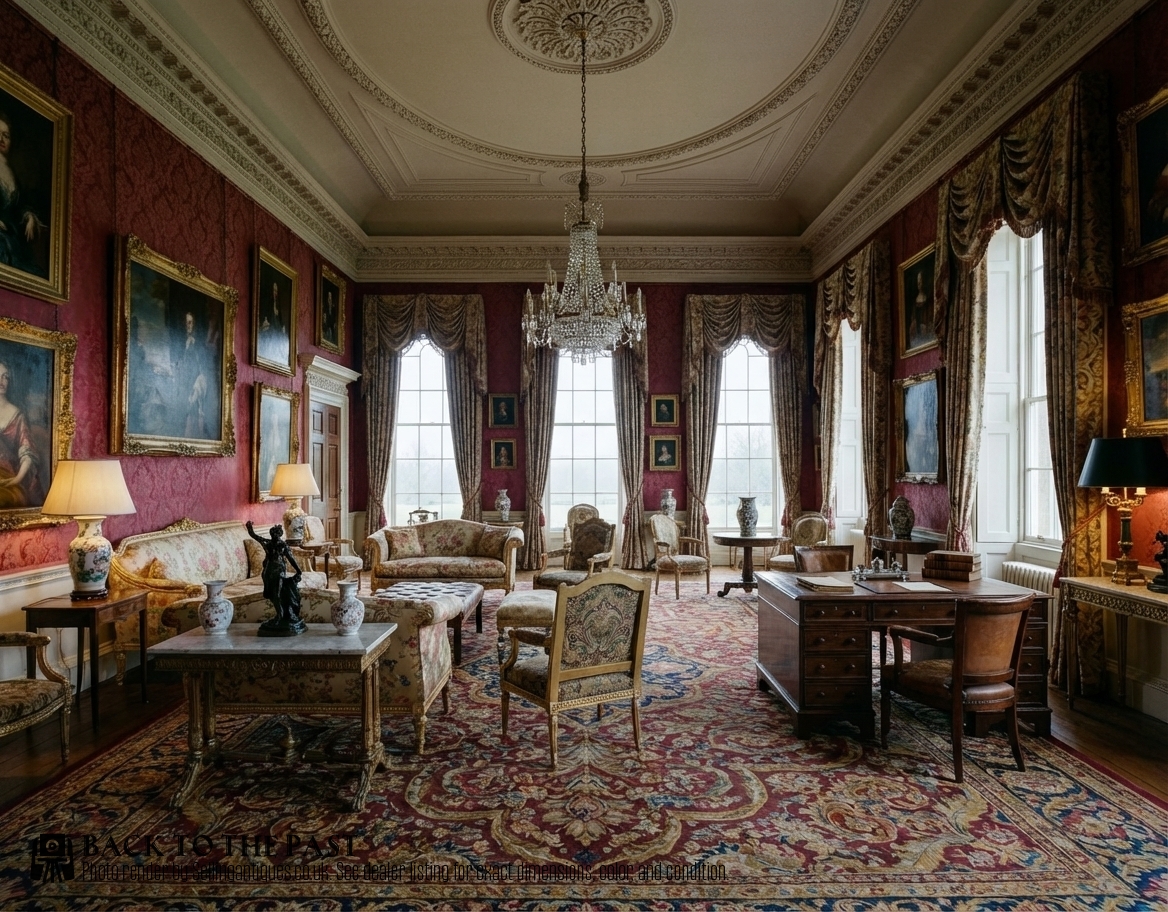
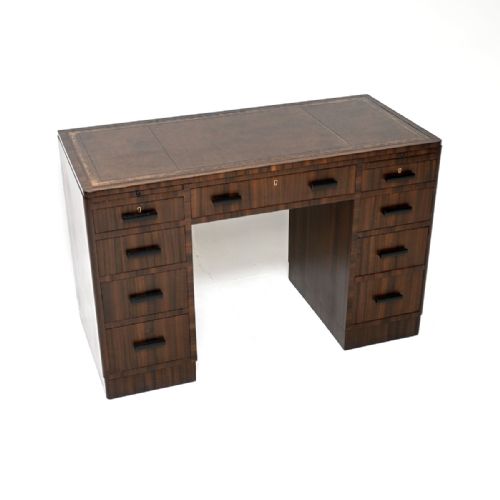
Victorian Mahogany Twin Pedestal Partners Desk., Victorian
Priced at £230 from Rupert Hitchcox Antiques
Early makers carved hand-cut dovetails for every drawer. The pins and tails grip tightly without relying solely on animal glue.
Pedestal assembly relies on heavy frame-and-panel joinery. This allows the solid side panels to expand and shrink with changing seasons without splitting.
Check how the top locates. Wooden blocks or stout dowels drop into the pedestals, holding the upper section secure while remaining easily dismantled.
"Look out for hidden sovereign drawers inside the main compartments. Bank clerks used these concealed wooden slides to store gold coins securely during the working day."
"The design is modular. Most break down into three separate pieces, making transport up narrow stairs manageable."
"Heavy frieze sections offer plenty of dead space. This adapts well for routing modern computer cables out of sight."
Based on almost 25 years of Sellingantiques UK antique market data, Antique Partners Desks appeared 2656 times (out of 1,100,000 antiques) which gives it a rarity score of 59/100.
This score measures scarcity within the Sellingantiques archive only and is not a survey of the entire antiques market, so these statistics may not be indicative of the general availability of Antique Partners Desks elsewhere.
Most British makers used sheepskin or calfskin for the writing surface. Sheepskin skivers are thinner and more common on commercial pieces.
Calfskin tooling hides are thicker and resist writing pressure better. Dealers prefer calfskin when replacing a worn surface today.
Antique partners desks are built large. They had to accommodate two working adults with enough legroom and surface area to manage ledgers.
You might find a standard single-sided pedestal desk better for a small room. They share the same visual style and drawer layout but sit flush against a wall to save floor space.
It depends on the original order. Some have identical drawers on both faces.
Others mix drawers on one side with cupboards opposite.
Most sit on flat plinth bases rather than individual legs. A plinth spreads the weight across a larger footprint, which helps absorb minor floor variations.
If the desk rocks, check underneath. Many retain their original castors recessed inside the plinth. You can often adjust the stance by placing a small wooden shim under a castor wheel until the top sits level.
Please note: This Antique Partners Desks guide and its associated pricing data are provided for general informational purposes only. It does not constitute formal financial, investment, or appraisal advice and should not be relied upon as the sole basis for any commercial activity, purchasing, or sales decisions. Sellingantiques.co.uk accepts no liability for any actions taken in reliance on this information. Always consult with a qualified professional or independent appraiser.
