






A 2026 Guide by Sellingantiques

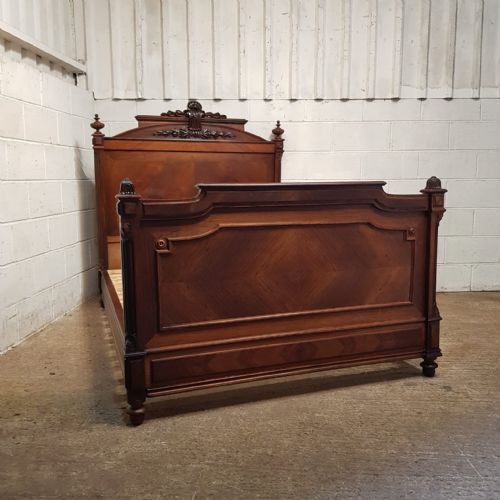
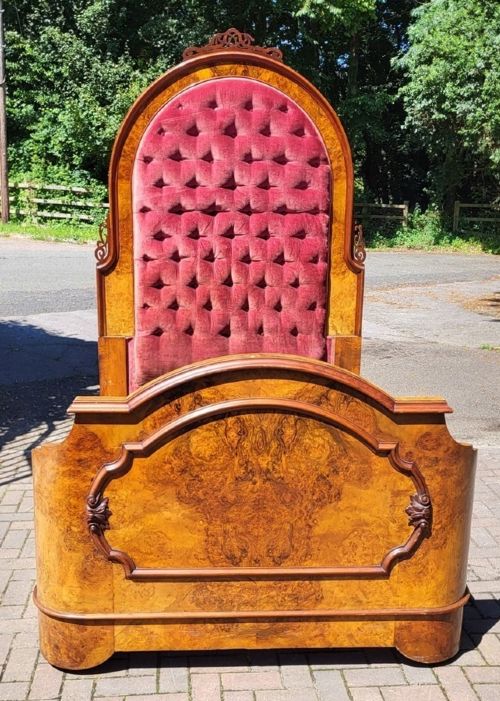
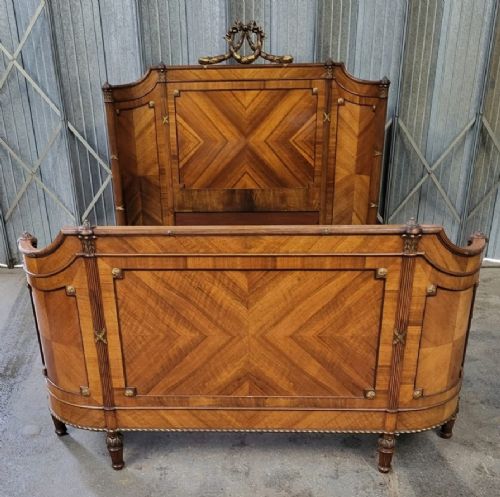
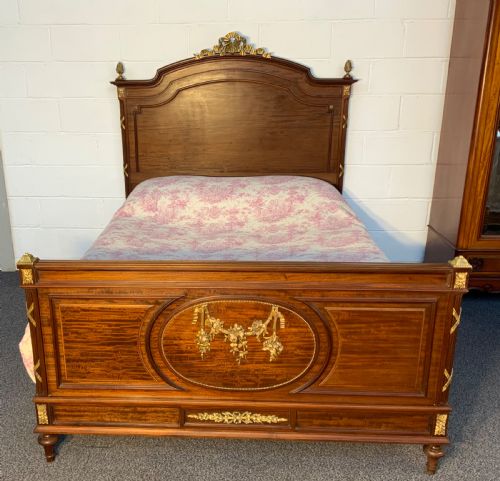
French Empire Style Art Deco Bur Walnut 5ft Double Bed, 1900
Priced at £1,250 from Elmgarden
Solid walnut became a prominent choice for bedframes during the late seventeenth century across Europe.
Earlier frames often incorporated massive canopy structures designed to support heavy draperies.
By the Victorian period, antique walnut beds shifted towards lower headboards and open footboards.
Inspect the carved motifs carefully to spot regional variations. Provincial cabinetmakers frequently adapted high-style metropolitan patterns.
Machine cutting in the late nineteenth century sped up factory production for the expanding middle classes.
Documented makers of these beds are rare. Provincial workshops rarely stamped their domestic output.
Gillows of Lancaster produced fine walnut examples during the nineteenth century, occasionally stamping the top edges of the rails.
Large retail furnishers like Maple & Co supplied many of the late Victorian frames you encounter.
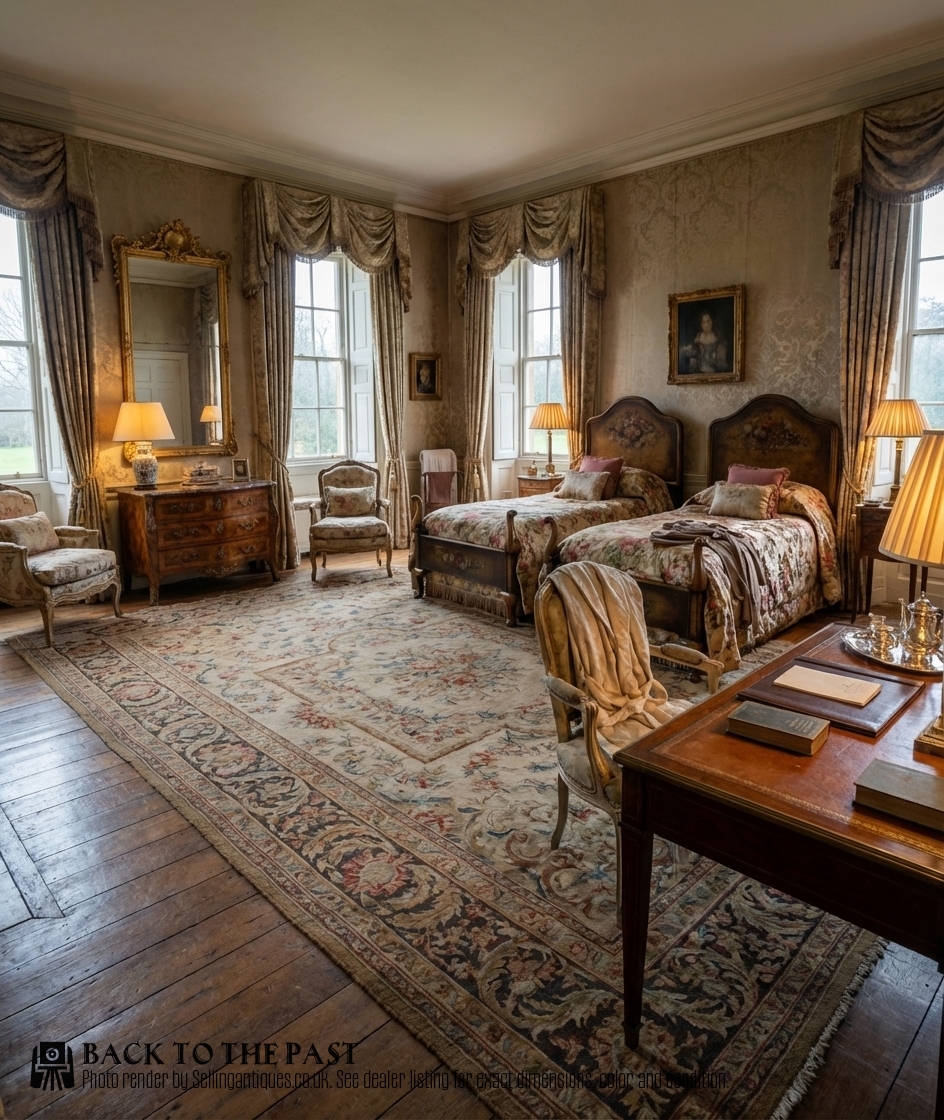
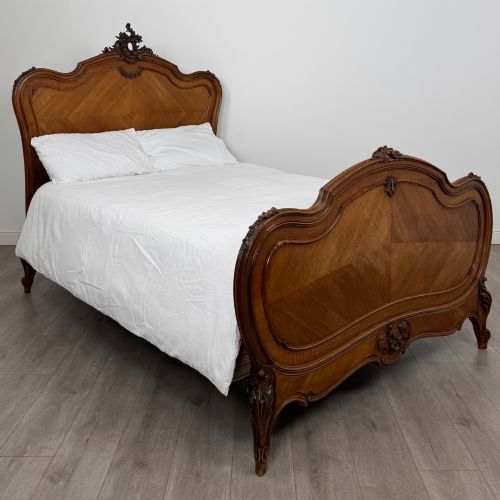
Pair of Walnut Single Beds with Painted Leather Panels., 1920
Priced at £465 from Rupert Hitchcox Antiques
The 2026 retail price guide for Antique Walnut Beds is drawn from a proprietary archive of over 1.1 million retail prices indexed by Sellingantiques since 2003. This guide relies exclusively on their own internal data; no external sources or auction records are used.
Analysing nearly 25 years of UK antique market history alongside current retail values, the data indicates that typical UK retail prices for Antique Walnut Beds range between £600 and £2,500. Entry-level prices generally fall under £600 and premium examples upwards of £2,500.
High panelled headboards dominate the shape of most Victorian antique walnut beds.
Matched veneers. These create symmetrical patterns across the wide flat surfaces at the head and foot.
Heavy turned finials frequently sit atop the upright posts to cap the vertical lines of the frame.
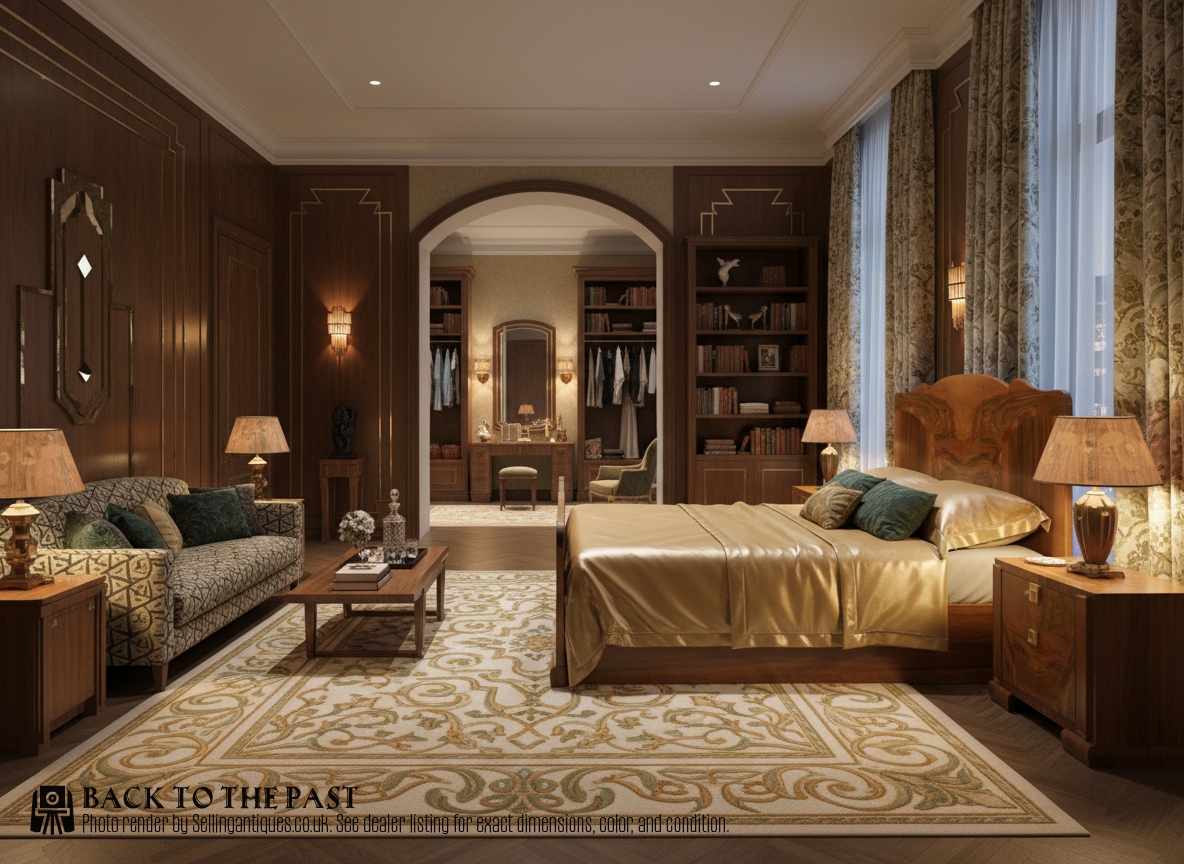
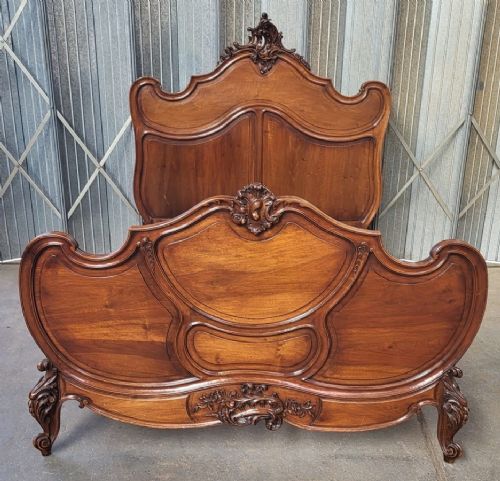
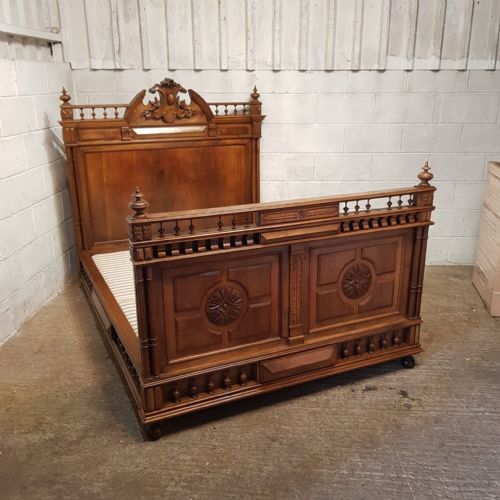
Original 1930s Art Deco Odeon Walnut Double Bed, 1930
Priced at £2,150 from Art Deco World
Traditional cabinetmakers used hot animal glue to press thin walnut veneers onto the flat headboard carcase.
Mortise and tenon joints secure the horizontal rails to the vertical posts for lasting stability.
Hand carving is evident on older frames. You often see slight tool marks in the deeper recesses.
"The complex grain of burr walnut comes from natural growths on the tree trunk, producing tight swirling patterns."
"Antique bed bolts were designed to be tightened regularly using a special square-headed iron wrench."
"French polish finishes bring out a golden hue in the timber that darkens gracefully as the bed ages."
Based on almost 25 years of Sellingantiques UK antique market data, Antique Walnut Beds appeared 1349 times (out of 1,100,000 antiques) which gives it a rarity score of 76/100.
This score measures scarcity within the Sellingantiques archive only and is not a survey of the entire antiques market, so these statistics may not be indicative of the general availability of Antique Walnut Beds elsewhere.
Antique walnut beds rarely match modern standard mattress dimensions. The side rails and internal structures were built before universal sizing became common practice.
You usually need a custom-made mattress to fit the frame properly. Many specialists manufacture these specifically for antique furniture.
Heavy wooden beds cope well with uneven floors because the joints allow for slight movement. The corner bolts pull the frame together tightly but remain adaptable.
Use small wooden shims under the feet if the wobble is noticeable. This stops the side rails from straining under the weight of the sleeper.
Over-tightening the bolts to compensate for a bad floor will eventually damage the threads.
Most frames break down into four main pieces for transport. The head and foot separate from the two side rails when you undo the bolts.
Store the iron hardware safely during transit.
A soft bristle brush works best for clearing dust from deep walnut carvings. Avoid using modern aerosol polishes as they build up a sticky residue in the recesses.
Pass the brush gently over the cresting and side panels. A dry microfibre cloth is enough to wipe down the flat veneer sections.
Please note: This Antique Walnut Beds guide and its associated pricing data are provided for general informational purposes only. It does not constitute formal financial, investment, or appraisal advice and should not be relied upon as the sole basis for any commercial activity, purchasing, or sales decisions. Sellingantiques.co.uk accepts no liability for any actions taken in reliance on this information. Always consult with a qualified professional or independent appraiser.
