



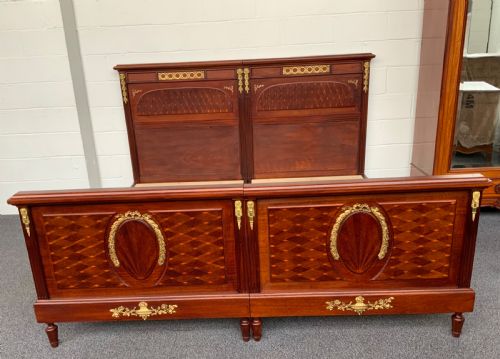

A 2026 Guide by Sellingantiques
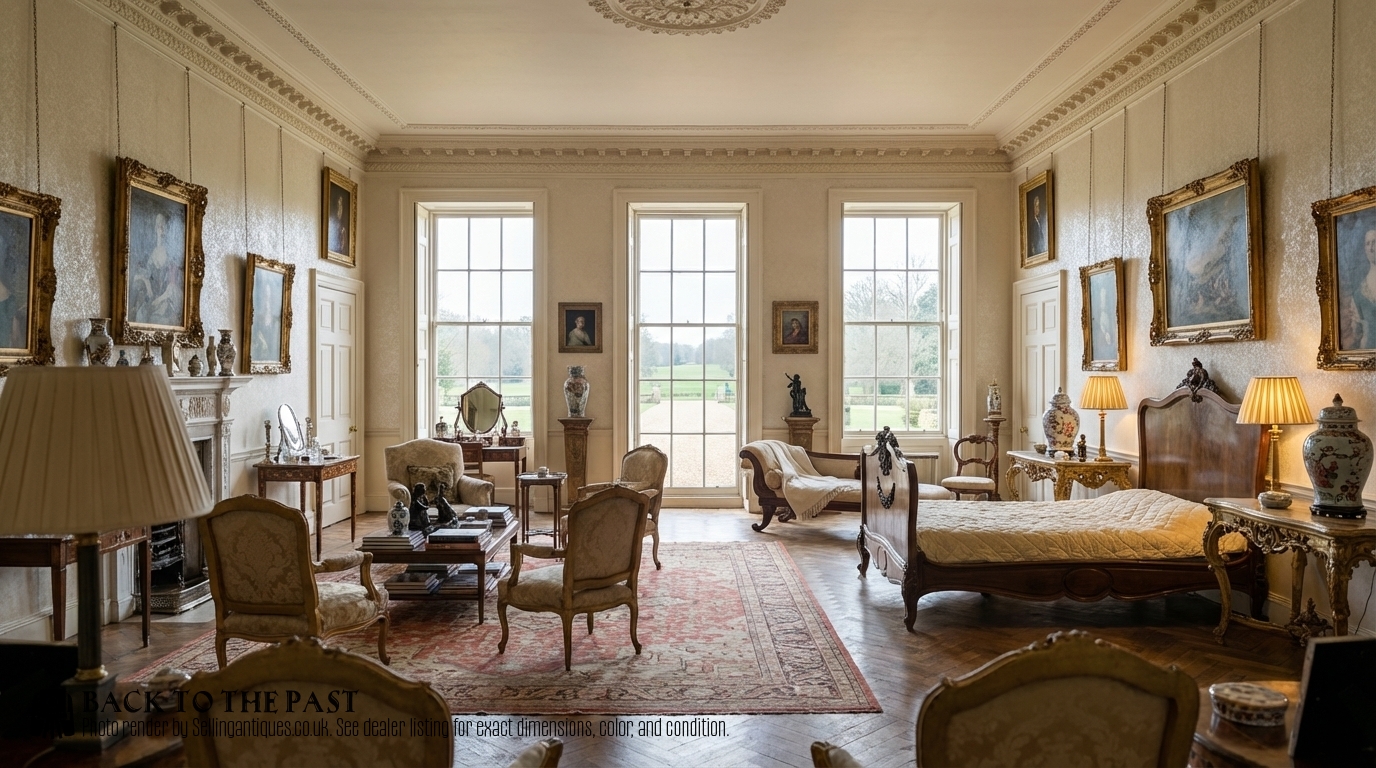
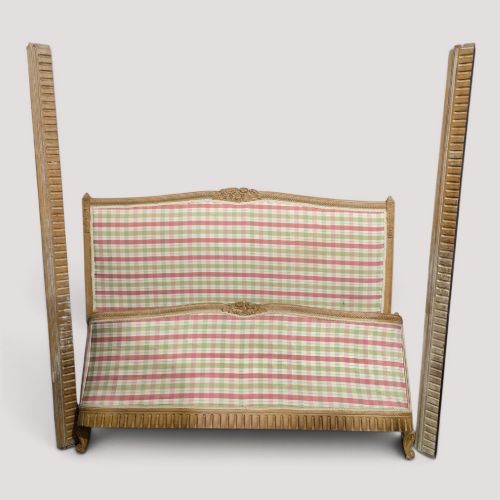
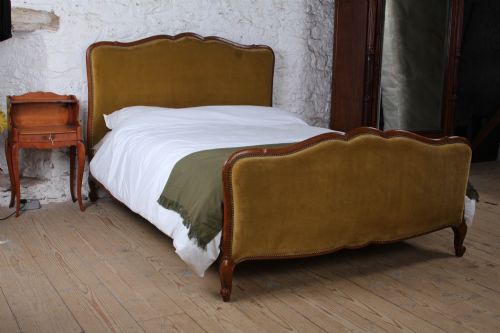
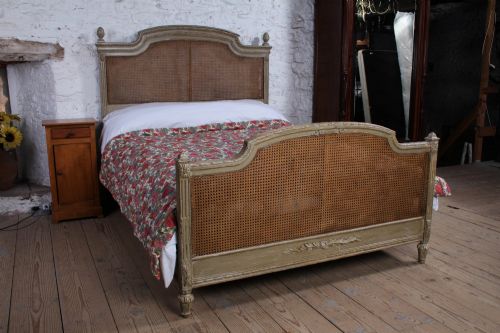
Louis Xv Style French Golden Walnut Bed, 19th Century
Priced at £895 from Elmgarden
Deeply rooted in regional carving traditions across the rural provinces before styles centralised in Paris.
Many Antique French Beds reflect the changing tastes of different monarchs, shifting from heavy baroque curves to straighter neoclassical lines as the eighteenth century progressed.
Look at the varied regional styles that developed alongside court fashions.
Provincial craftsmen often adapted high-style Parisian designs using locally available timber, simpler carving tools and a heavy reliance on traditional jointing techniques passed down through local guilds.
Georges Jacob produced highly refined neoclassical sleeping furniture during the late eighteenth century, supplying the royal palaces.
Jean-Baptiste Tilliard is recorded supplying carved rococo beds to the court in the mid-eighteenth century.
Most regional examples lack a maker stamp entirely, relying on local guild traditions rather than individual fame.
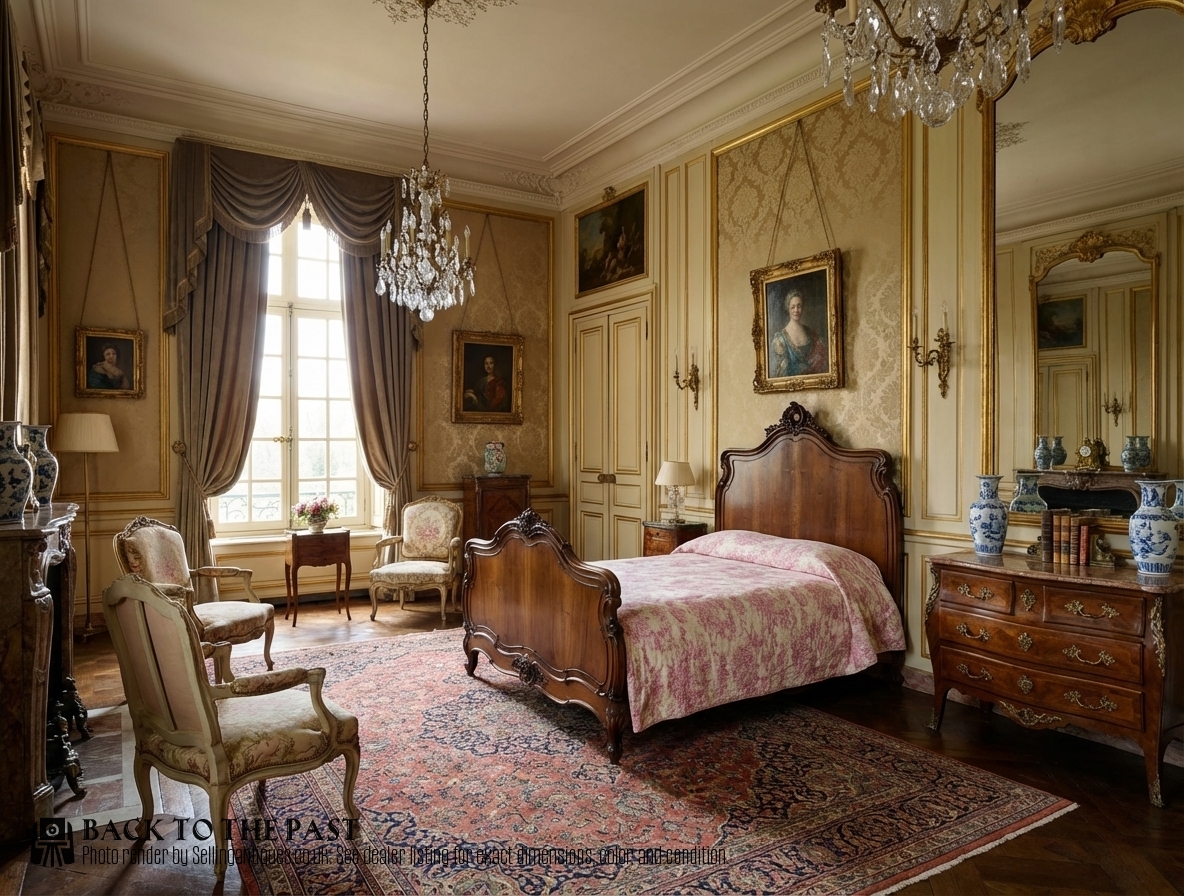
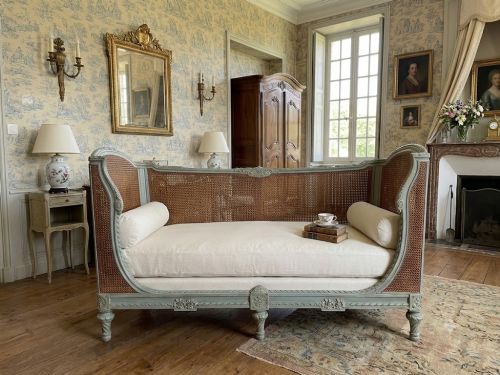
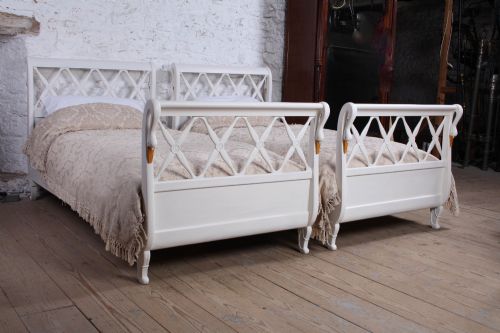
Kingsize Walnut French Bed, 1910
Priced at £1,295 from The Vintage Interiors
The 2026 retail price guide for Antique French Beds is drawn from a proprietary archive of over 1.1 million retail prices indexed by Sellingantiques since 2003. This guide relies exclusively on their own internal data; no external sources or auction records are used.
Analysing nearly 25 years of UK antique market history alongside current retail values, the data indicates that typical UK retail prices for Antique French Beds range between £700 and £2,500. Entry-level prices generally fall under £700 and premium examples upwards of £2,500.
Upholstered panels on both the headboard and footboard appear frequently on formal city examples designed for comfortable reading.
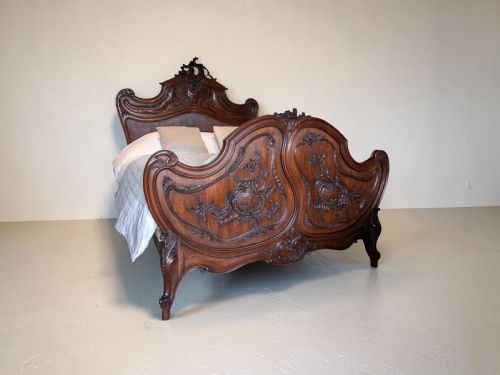
Cabriole legs ending in scroll feet on many rococo-style frames.
Notice the deeply carved floral crests that often crown the top rails of walnut Antique French Beds.

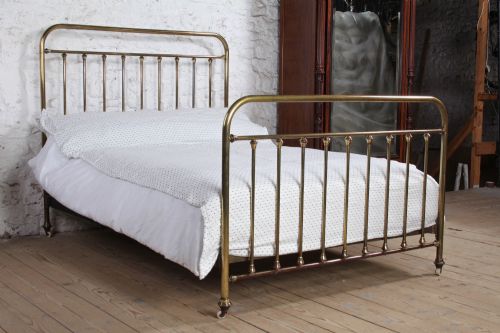
Gorgeously Detailed French All Brass Double Bed, 1900
Priced at £1,560 from Bedsteads
Pegged mortise and tenon joints hold the main carcase together without modern metal screws.
Carvers used specialist chisels to work the solid walnut into deep floral relief motifs across the panels, adapting classical patterns to suit the proportions of the headboard.
Inspect the hand-cut iron bolts that secure the side rails.
"Their distinct internal dimensions often closely match standard modern mattresses, making them surprisingly easy to use today."
"Some regional designs incorporated ingenious flat-pack features to help families move them up narrow spiral staircases inside rural stone houses."
"High wooden side panels initially doubled as draught excluders in large farmhouses with poor heating."
Based on almost 25 years of Sellingantiques UK antique market data, Antique French Beds appeared 3613 times (out of 1,100,000 antiques) which gives it a rarity score of 49/100.
This score measures scarcity within the Sellingantiques archive only and is not a survey of the entire antiques market, so these statistics may not be indicative of the general availability of Antique French Beds elsewhere.
Most nineteenth-century standard beds from France will accept a modern double mattress without any major modification.
You might find some slight gaps at the curved edges on a corbeille frame. A standard modern base usually drops right onto the original wooden side rails.
Swapping an old sprung base for modern pine slats is standard practice. It makes the bed much firmer and puts less inward stress on the old side rails.
Cut the slats to size and rest them across the supporting lip of the side beams. You can screw them down gently, but resting them loose works fine if they fit snugly.
Most rely on a heavy square-headed bolt passing through the bedpost. It threads into a captive nut buried inside the side rail.
You tighten them with a spanner. It pulls the joint firmly together.
Never cut the legs to suit a wonky floor. You will permanently alter the proportions of the piece and ruin the original feet.
Slide a small wooden shim or a piece of dense felt under the hovering foot until it takes the weight. Old houses move and settle, so making adjustments underneath is always the sensible route.
Check the joints on the side rails too. Sometimes loosening the bolts slightly allows the frame to settle onto the floor naturally before retightening.
Please note: This Antique French Beds guide and its associated pricing data are provided for general informational purposes only. It does not constitute formal financial, investment, or appraisal advice and should not be relied upon as the sole basis for any commercial activity, purchasing, or sales decisions. Sellingantiques.co.uk accepts no liability for any actions taken in reliance on this information. Always consult with a qualified professional or independent appraiser.
