



A 2026 Guide by Sellingantiques
Woven hangings used to insulate cold stone walls in medieval European castles.
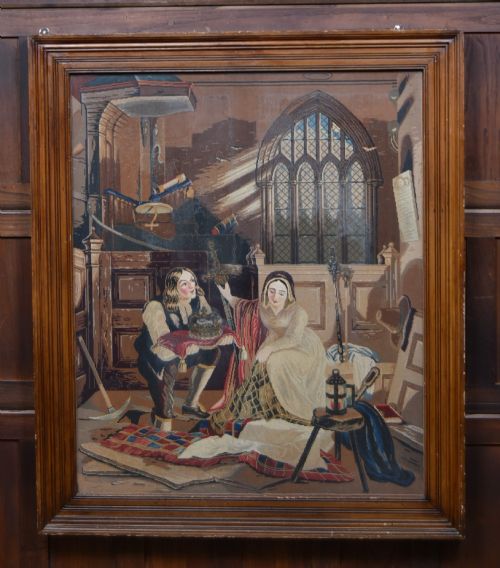
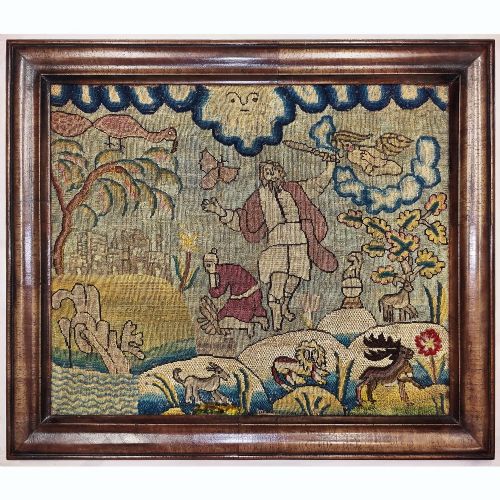
Look for scenes from mythology or hunting. Antique tapestries told stories to an audience that often could not read.
Royal courts moved between estates and rolled up these heavy textiles to take with them.
Production shifted away from Paris to Arras and Tournai during the fifteenth century.
Brussels emerged as a major weaving centre shortly after this period.
The Gobelins manufactory operated in Paris. They supplied the French crown with massive historical series from the seventeenth century onwards.
Mortlake established a major works near London. They copied European designs for wealthy English patrons.
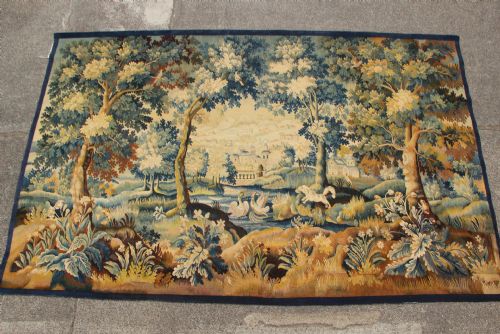
Aubusson workshops produced commercial domestic hangings throughout the eighteenth century. They focused heavily on pastoral scenes and greenery.
The 2026 retail price guide for Antique Tapestries is drawn from a proprietary archive of over 1.1 million retail prices indexed by Sellingantiques since 2003. This guide relies exclusively on their own internal data; no external sources or auction records are used.
Analysing nearly 25 years of UK antique market history alongside current retail values, the data indicates that typical UK retail prices for Antique Tapestries range between £400 and £3,600. Entry-level prices generally fall under £400 and premium examples upwards of £3,600.
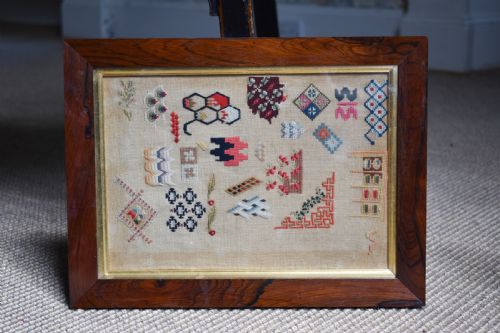
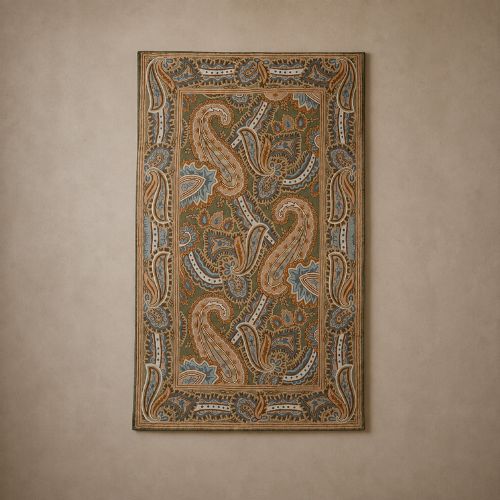
Borders usually frame the central image. These can be narrow geometric bands or wide floral arrangements.
Check the lower edges for woven marks. Cities and workshops sometimes required a shield or monogram to identify origin.
Hatching creates a sense of shading. Weavers mixed light and dark threads in short alternating lines to give the illusion of depth.
Low-warp looms have horizontal warp threads. The weaver uses pedals to separate them while passing the bobbin.
High-warp looms stand vertically on the floor. The worker controls the threads by hand and works from the back of the textile.
Both methods leave loose ends on the reverse side. The front shows a flat continuous surface.
"Large panels were sometimes cut into smaller sections. They fitted smaller rooms when houses changed hands."
"The back often preserves the original bright colours. Turn a loose corner over to see how the textile looked when new."
"Workshops reused successful designs for decades. A popular mythological scene might exist in multiple versions with different borders."
Based on almost 25 years of Sellingantiques UK antique market data, Antique Tapestries appeared 2388 times (out of 1,100,000 antiques) which gives it a rarity score of 62/100.
This score measures scarcity within the Sellingantiques archive only and is not a survey of the entire antiques market, so these statistics may not be indicative of the general availability of Antique Tapestries elsewhere.
Dusting is usually enough. Use a soft brush attachment on a vacuum with low suction. Keep the nozzle slightly away from the surface.
Never wash a tapestry yourself. Wet cleaning risks colour bleed and shrinking. Always find a textile conservator for serious dirt.
Standard sewing thread causes damage. The tension pulls against fragile historic wool and tears the hole further.
Leaving a small hole alone is often safer than a quick repair.
Velcro is the standard method today. A conservator sews the soft loop tape across the top edge.
The hook tape goes on a wooden batten attached to the wall. This spreads the weight evenly across the entire width.
Hanging by rings or nails pulls the fabric out of shape.
Fresh air helps. Lay it flat on a clean sheet on the grass on a dry overcast day. Avoid direct sunlight as the rays fade the dyes rapidly.
Leave it for a few hours. Do not spray air fresheners onto antique tapestries. The chemicals can react with the historic dyes.
Please note: This Antique Tapestries guide and its associated pricing data are provided for general informational purposes only. It does not constitute formal financial, investment, or appraisal advice and should not be relied upon as the sole basis for any commercial activity, purchasing, or sales decisions. Sellingantiques.co.uk accepts no liability for any actions taken in reliance on this information. Always consult with a qualified professional or independent appraiser.
